
GMP Seoul Study Trip Showcases Student Competence in Global Business Practice
- Posted
- Mon, 16 Feb 2026
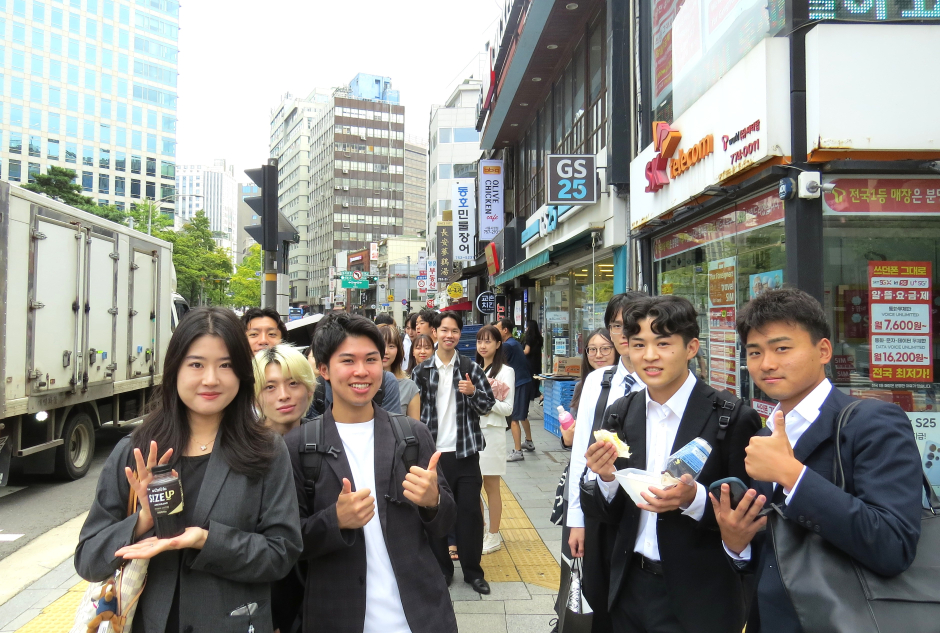
From September 24 to 28, 2025, 68 students from the Global Management Program (GMP) participated in an overseas study trip to Seoul, South Korea, with Sungkyunkwan University serving as the primary host institution. Over the five-day program, students attended two lectures at Sungkyunkwan University, took part in exchange activities with local students, and visited South Korean and Japanese companies operating in South Korea. Through corporate research workshops, professionals from these companies provided feedback on presentations delivered by GMP students. In addition, the GMP Career Forum in Seoul, held with the support of the Seoul Tomonkai branch of the Waseda University Alumni Association, as well as a visit to the Samsung Innovation Museum, offered further opportunities for meaningful learning and professional development. Overall, the study trip proved to be a highly productive, student-driven program that yielded significant educational outcomes.
Below are detailed reports from selected participating students, sharing the valuable learning experiences they gained during the study trip.
Corporate Visits (Group A: MUJI Korea and Hana Bank)
On September 25, students in Group A visited MUJI Korea in the morning and Hana Bank in the afternoon.
At MUJI Korea, three student teams delivered business proposals under the theme “MUJI Korea’s Management Strategy for Achieving Sustainable Growth in South Korea amid Rapid Population Aging and Regional Depopulation.” The teams proposed strategic initiatives from three perspectives: childcare support, youth housing support, and a dual urban-regional strategy. During the Q&A session, MUJI employees posed insightful and thought-provoking questions that challenged the students’ underlying assumptions.

In response to the strategies developed by the students based on theoretical frameworks, company employees shared insights grounded in their day-to-day business experience. Through this exchange, students gained a clearer understanding of the gap between conceptual strategy design and its practical application in real business contexts. The discussion underscored the importance of continually considering what distinctive value an organization can contribute when addressing social challenges. By engaging directly with practitioners’ perspectives, students were encouraged to reassess their proposals and to reflect more critically on social issues, examining them with both breadth and depth while identifying contributions that are uniquely achievable by a given organization.

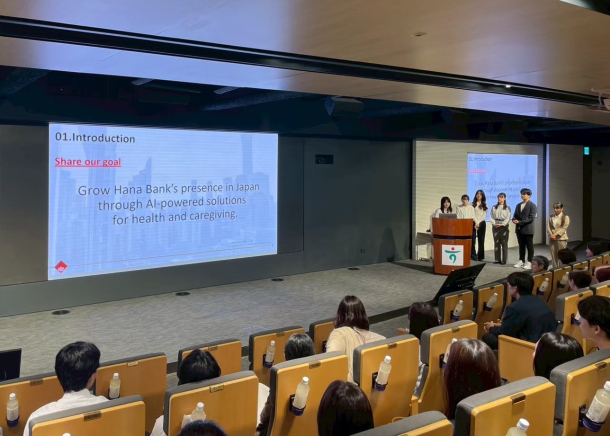
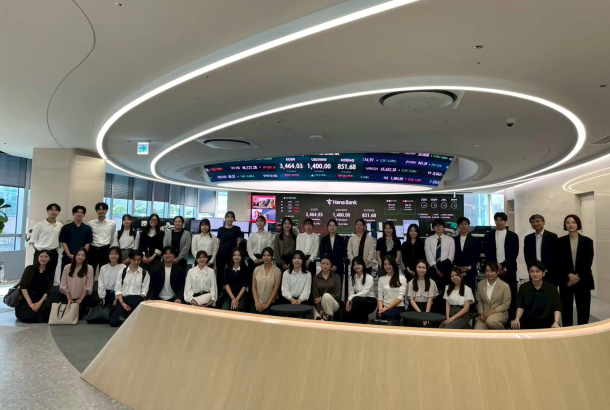
In the afternoon at Hana Bank, students participated in a company briefing, after which another three student teams delivered presentations and received detailed feedback from bank employees. The briefing offered an overview of the bank’s operations within global financial markets, and students were also given the rare opportunity to observe employees at work and tour the trading room, making the visit particularly informative. The student presentations focused on the theme, “What Strategies Should Hana Bank Adopt to Improve Sales Performance and Achieve Sustainable Growth in Japan?” During the subsequent Q&A session, employees shared valuable insights into overseas banking markets, future strategic directions, and the practical realities of conducting international business.
Through visits to both companies, students deepened their understanding of each industry and sharpened their overall grasp of business practices. Moreover, developing strategies for the Japanese market from an external perspective enabled them to view Japan from a new angle. These experiences proved highly meaningful for their future studies and career development.
Corporate Visits (Group B: Korean Re and KPMG)
Group B visited Korean Re, a South Korean reinsurance company, in the morning. Prior to the visit, the company provided the theme “Korean Re’s Future Overseas Strategy.” Although reinsurance was unfamiliar to many students, each team first built foundational knowledge, conducted extensive research, and engaged in discussions before preparing their presentations.
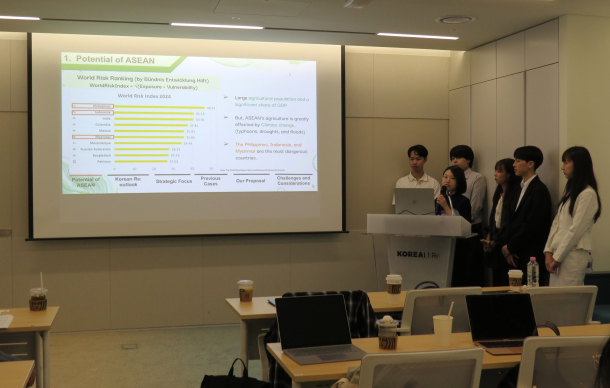
On the day of the visit, teams presented proposals from three perspectives: insurance collaboration addressing agricultural and climate risks in ASEAN, expansion into India’s retrocession market, and reinsurance initiatives related to natural disasters and renewable energy in Africa. In addition to constructive feedback, Korean Re representatives shared valuable insights into the company’s operations and future vision.
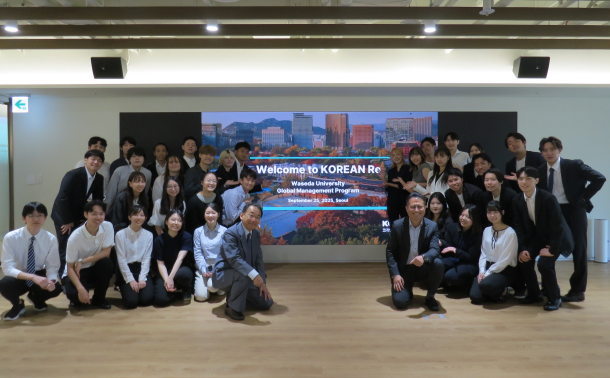
Through the visit, students gained a deeper understanding of how reinsurance companies manage large, unpredictable risks and the challenges of achieving profitability under such uncertainty. At the same time, they learned how reinsurance plays an important social role by supporting economic stability across countries and regions. Hearing directly from industry professionals and engaging with this globally oriented field provided students with a highly meaningful learning experience.
In the afternoon, the group visited Samjong KPMG. After an overview of the firm’s services and organizational structure, students delivered presentations in English, followed by an office tour guided by company employees.

The presentations focused on the theme “Market Entry Strategies for a Major Italian Restaurant Chain from Japan Expanding into South Korea,” with three student teams each presenting for 15 minutes. After two months of preparation, students had carefully developed their strategic proposals and business ideas, incorporating financial projections. Their proposals included concepts such as positioning affordable, high-quality Italian restaurants as study-café-style spaces targeting young consumers in South Korea, launching a new brand through joint ventures with local companies, and opening directly operated stores through strategic alliances.
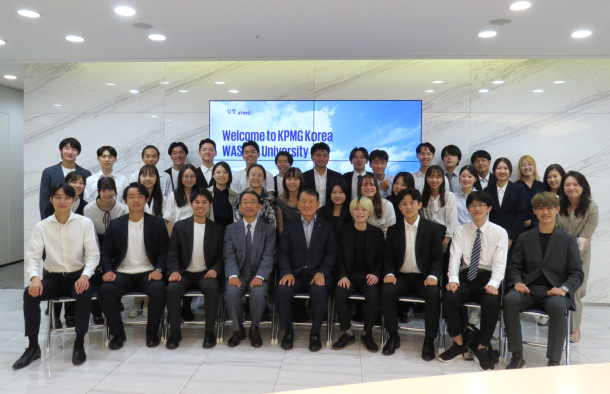
Following the presentations, professionals from the Corporate Strategy and Deal Advisory divisions provided detailed feedback. While noting the high quality of the presentations, they also pointed out areas for improvement, particularly the need for more robust quantitative indicators such as customer profiles and foot-traffic estimates. The experience enabled students to fully apply the cross-border strategic thinking, risk awareness, and English presentations skills cultivated through regular GMP Forum activities, making the visit a particularly valuable learning opportunity.
GMP Career Forum in Seoul
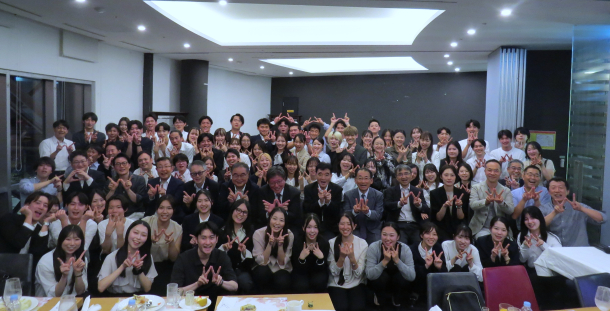
On the evening of September 25, the GMP Career Forum in Seoul was held with the participation of more than 20 alumni invited from the Seoul Tomonkai (Waseda University Alumni Association in Seoul). Alumni active across a wide range of industries in Japan and South Korea, including the finance, aviation, and automotive sectors, shared their professional experiences.

During the forum, students and alumni sat together in small groups of approximately six students and two alumni per table. The relaxed dinner setting fostered open conversation and meaningful exchange. For GMP students aspiring to global careers, the opportunity to hear directly from alumni working in South Korea about their professional responsibilities, as well as the challenges and rewards of living and working abroad, proved particularly valuable. Students actively asked questions as alumni rotated among tables to engage with as many participants as possible, offering diverse perspectives and advice that proved highly instructive for future career planning.
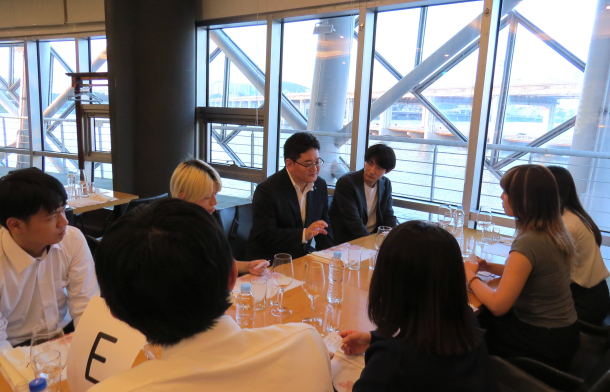
One particularly impactful message that left a strong impression on the students was the advice not to rely solely on the name of one’s university or employer, but to actively accumulate experience and continually internalize the lessons gained from it. Inspired by these words, many students reaffirmed their commitment to continuous self-development, aiming to build global careers while taking pride in being part of the Waseda alumni network and leveraging their own experiences and strengths.
Visit to Samsung
On the morning of September 26, students visited the Samsung Innovation Museum (SIM). As group visits are not commonly accepted, the opportunity proved particularly valuable. Guided by museum staff, students learned about Samsung’s development history as well as the broader evolution of the electronics industry. By interacting directly with products and viewing multimedia exhibits, they gained a deeper understanding of the company’s vision.
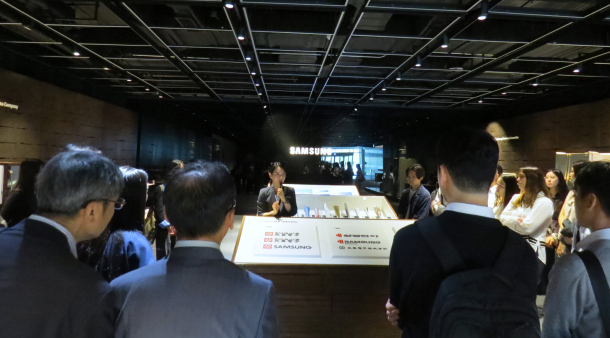
Inside the museum, the history of the electrical and electronics industries was presented systematically, from early inventions in electricity and telecommunications to the spread of consumer electronics and the development of modern semiconductor technologies. This experience encouraged students to think beyond a single company and reflect on the broader trajectory of technological advancement and its social significance.

Experiencing Samsung’s future vision and latest products also helped students appreciate how technology enriches people’s lives and creates value for society. At the same time, they developed a stronger awareness of the continuing pace of technological innovation and the significant social responsibilities companies are expected to fulfill.
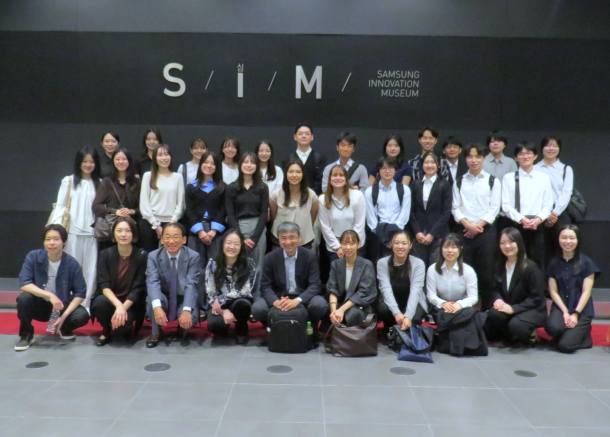
Through this visit, GMP students not only deepened their understanding of innovation but also recognized that companies are expected not merely to pursue profit, but also to contribute to society and improve people’s quality of life. For students aspiring to become global business leaders, these insights represent valuable learning that will inform their future studies, careers, and professional practice.
Visit to Sungkyunkwan University
On the afternoon of September 26, students visited Sungkyunkwan University, the oldest university in South Korea, founded in 1398. The visit included a campus tour, special lectures by two distinguished and highly popular professors, and networking activities between Waseda and Sungkyunkwan students, making it a highly enriching learning opportunity.

During the campus tour, students experienced firsthand the distinctive atmosphere of Sungkyunkwan University, where traditional buildings coexist with modern facilities, reflecting a dynamic blend of history and innovation.
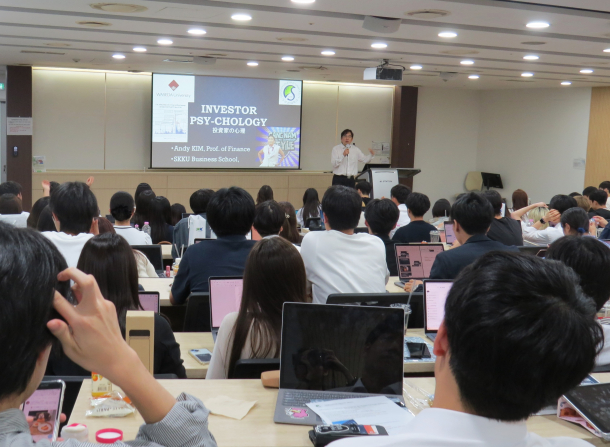
In the special lectures, Professor Yongsuk Kim delivered an engaging talk titled “From Data to Decisions: AI’s Evolution in Platform Business,” providing a clear overview of the development of AI in platform businesses. Professor Andy Kim presented “Investor Psychology,” explaining investor behavior in stock markets in an accessible and engaging manner, often incorporating humor to help students grasp complex concepts intuitively. Both lectures combined intellectual depth with a warm, enjoyable atmosphere, with frequent moments of laughter throughout.

During dinner, a student networking session enabled Japanese and Korean students to exchange views on campus life and future careers, quickly narrowing the cultural and psychological distance between them. This was followed by recreational activities organized by mixed teams of two Waseda and two Sungkyunkwan students. Although the activities were designed with potential language barriers in mind, students from both universities communicated enthusiastically, interacting naturally and sharing many smiles. The interactions clearly demonstrated their ability to build connections beyond differences in nationality and language.

Through this study trip, students reaffirmed the value of learning collaboratively across national and linguistic boundaries. Beyond academic stimulation, the program also highlighted the importance of building international networks, offering insights that will support their future academic and professional development.