
Developing Better Decision-Making Skills: Highlights from the fifth GMP Forum of 2025
- Posted
- Tue, 20 Jan 2026
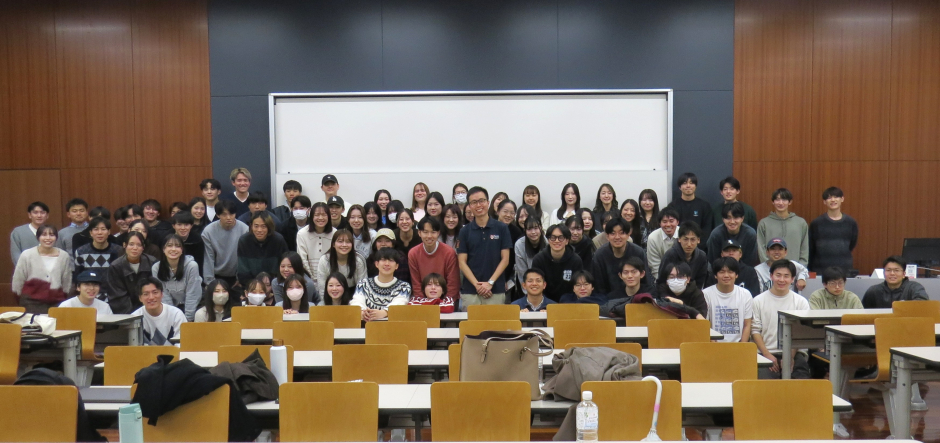
The 5th GMP Forum of the 2025 academic year was held on Tuesday, November 25, from 15:05 to 18:40, in Room 505 of Building 11. The forum featured an interactive lecture titled “Making Better Decisions,” delivered by Professor Sam Yam of the National University of Singapore (NUS).
The forum opened with Professor Yam introducing his international academic career and sharing how his interest in human behavior and organizational behavior developed. He previously delivered a lecture to GMP students during their visit to NUS as part of the GMP Singapore Study Trip in 2024, and his return to the program was warmly welcomed by participants.
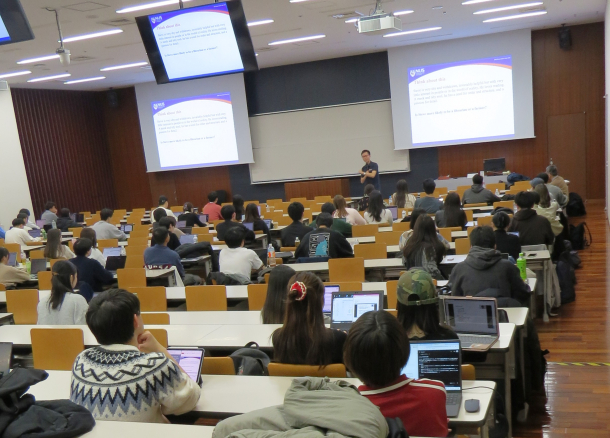
During the lecture, Professor Yam engaged students through interactive discussions on decision theory, human behavior, and behavioral economics. Drawing on concrete examples of unconscious cognitive biases and cases introduced in the bestselling book “Factfulness,” he encouraged students to think critically about how to make sound judgments when interpreting data and news reports.
Building on the lecture, GMP students were divided into groups of seven to eight and worked on two case studies.
The first case examined an article published by a major strategy consulting firm on the appointment of women to executive positions. By closely scrutinizing the data and information used in the article, students identified selectively chosen data and arbitrary timelines. This exercise strengthened their critical thinking skills in data analysis and highlighted the importance of questioning how data are framed and presented.
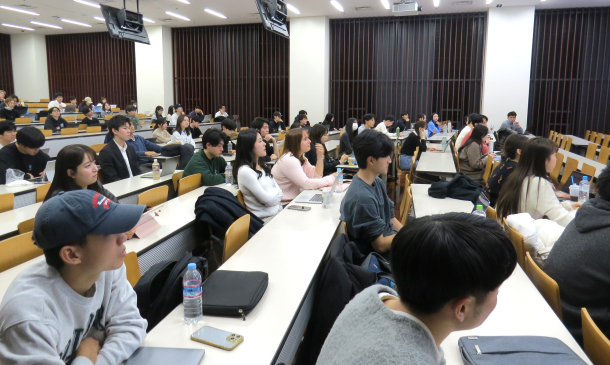
The second case study, titled “Cater-Racing,” proved particularly engaging. Students discussed whether a team should participate in a high-profile car race with significant economic benefits despite concerns about engine instability. Each group was required to make a decision based on limited information, including engine test data and past race results. Although participation appeared to be the rational choice when judged solely on expected monetary value, the data provided contained serious flaws, and a careful analysis ultimately led to the conclusion that the team should not compete. Based on a real-world incident, this case illustrated how improper data analysis can lead to serious and tragic consequences.
Reflecting on the forum, Norihito Tezuka, a third-year GMP student, said, “I experienced firsthand the cognitive biases that people often fall into when interpreting data. By practicing critical thinking in data analysis, I also came to realize that ethical considerations are indispensable in the decision-making process.”