
Waseda University Hosts First Global Enterprise and Management Student Summit (GEMS)
- Posted
- Fri, 25 Sep 2026
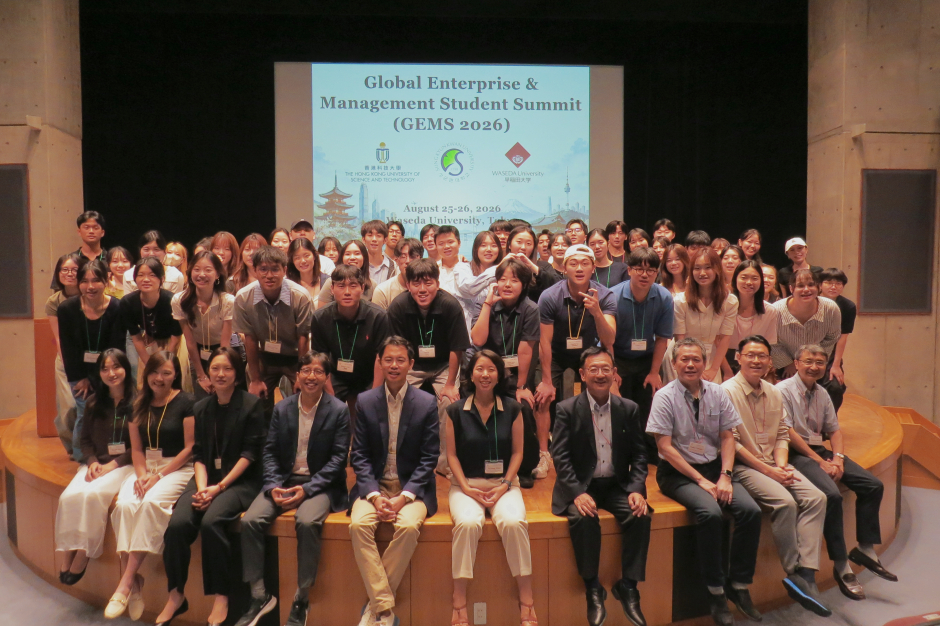
Waseda University hosted the first Global Enterprise and Management Student Summit (GEMS) on August 25 and 26, 2026. The two-day international student event was jointly organized by the Global Management Program (GMP) of Waseda University School of Commerce, the Global Business Program (GBUS) of The Hong Kong University of Science and Technology (HKUST) Business School, and the Global Business Administration Program (GBA) of Sungkyunkwan University (SKKU) Business School.
GEMS is a new international exchange program that brings together students from three business programs in Japan, Hong Kong, and Korea. Over the two-day program, students from the three universities worked together in multinational teams, participating in discussions, fieldwork, and presentations focused on global business and management issues.
GEMS Opening Ceremony
At the opening ceremony, faculty members from Waseda University, HKUST, and SKKU encouraged students with different values and perspectives to work together and make the most of the two-day program. They also expressed hope that GEMS would give students the chance to meet peers from different countries and build relationships based on mutual trust that would continue well beyond the program.
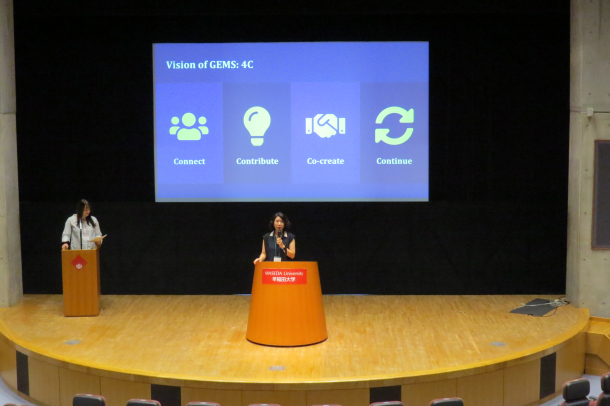
GEMS brings together students studying business and management from different countries. Beyond providing opportunities for international exchange, one of its key aims is to help students build networks that can support them as they pursue their future careers in a global environment. The faculty members’ remarks conveyed hope that GEMS would be more than just another event in the students’ university experience, offering them the chance to form connections that could extend into their future careers and professional lives.
Global Knowledge and Cultural Exchange
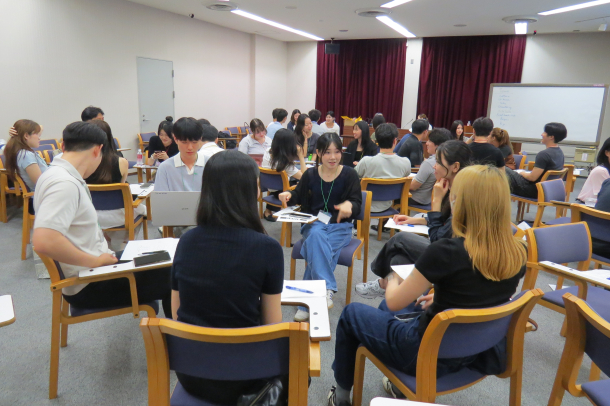
Session 2 focused on cultural exchange, with students taking part in self-introductions, bingo, and trivia quizzes about the participating countries. The winning team received prizes, and all teams took part enthusiastically in the games. As the session progressed, students learned more about one another and each other’s countries, which helped ease some of the initial nervousness.
These activities helped students get to know one another and laid the groundwork for greater mutual understanding, which carried over into the discussions and presentations that followed.
Lunch and Team Meeting
During the lunch session, students took a break before the afternoon presentations and shared snacks from the three countries, which had been awarded as prizes in Session 2. Although the teams had already held their discussions online, lunch gave students a chance to chat more casually about cultural differences, places they had visited in Japan, and other topics beyond their group work.
Social Enterprises Addressing Global Challenges
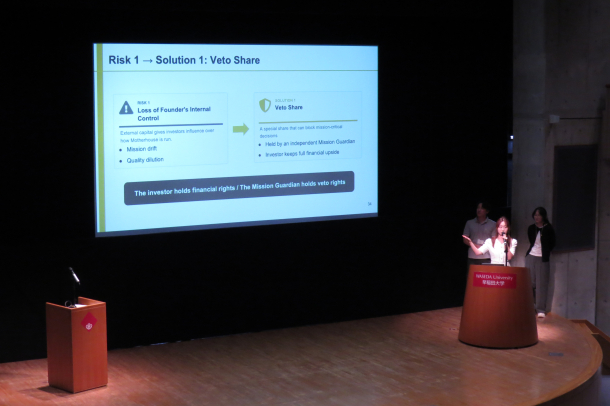
In this session, students presented their work on a case they had received and studied in advance. The assignment focused on whether venture businesses should pursue rapid or more controlled expansion. Despite the challenging topic, each team presented an in-depth analysis of its selected company. Through the assignment, students learned more about the social environments surrounding venture businesses overseas and the diverse ways in which they operate, broadening their perspectives on business in different countries.
Mixer Dinner
The first day ended with a Mixer Dinner, giving students from the three universities an opportunity to connect in a more informal setting. As part of the program, third-year GMP student Daigo Shinahama worked with two students from HKUST and SKKU to plan and organize an interactive game called the “Table Photo Challenge.”
They conducted all planning in English, and bringing together different ideas was not always easy for the three students who had just met and came from different cultural backgrounds. Rather than moving straight into planning the activity itself, they made time to meet and talk several times, so they could get to know one another first. Once they became more familiar, discussions flowed more smoothly, and they were able to exchange ideas more openly.
On the day of the event, more than 50 students took part in the Table Photo Challenge, taking photos at their tables based on a series of prompts. The game provided a relaxed atmosphere where conversations could develop naturally, even among students meeting for the first time.
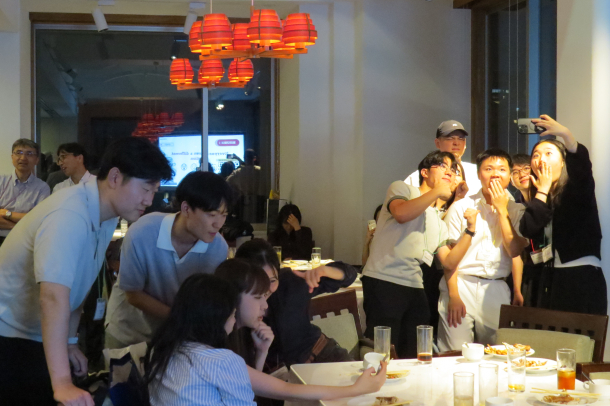
Reflecting on the experience, Daigo shared: “I learned that taking the time to build relationships may seem like a longer route at first, but it can ultimately be the most effective way forward. I hope to carry this approach with me when working with people from different countries and backgrounds in the future.”
Tokyo Field Study
On the second day, students took part in the Tokyo Field Study. Working in mixed teams from three Universities, they explored the streets of Tokyo to identify challenges facing society and businesses.
Under the theme “From Observation to Innovation,” the field study went beyond sightseeing. Students closely observed aspects of the city that might otherwise go unnoticed, including streets, shops, and people’s behavior, and documented what they saw through photographs and notes. The teams then analyzed the causes behind the issues they had identified and developed business ideas with feasibility and sustainability in mind.
Team E visited Asakusa, where the students came across a shop selling strawberry daifuku and spoke with the owner. Through this conversation, they identified a challenge facing long-established local shops: some are forced to close due to aging owners and a lack of successors rather than poor business performance.
To address this issue, Team E proposed “TSUGU Tokyo,” a business succession platform designed to connect shop owners looking to retire with young entrepreneurs interested in taking over an existing business. The platform’s concept was “Retire without Closing.”
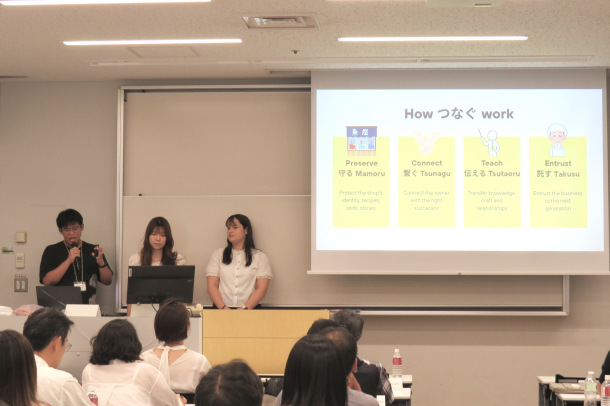
To preserve each shop’s history, expertise, and customer relationships for the next generation, Team E developed several succession options tailored to the owner’s preferences. In addition to a complete sale, the options included owner-led successor training, future revenue sharing, and continued involvement by the former owner as an advisor after retirement.
After the field study, the students returned to the university to prepare their presentations. Each team then gave a five- to seven-minute presentation covering the issues they identified during the field study, the photographs they took, the causes behind those issues, and their ideas for addressing them.
Following the judging, Team E was selected as the best team. Despite the limited time for fieldwork and preparation, team members from different countries and universities brought together their perspectives and strengths to develop a single proposal.
Fourth-year GMP student Milana Bashutskaya reflected on Team E’s experience: “I was very happy that our idea was recognized not only for supporting aging shop owners as they retire, but also for creating new opportunities for young entrepreneurs and helping preserve Tokyo’s local culture and traditions for future generations.”
Closing Ceremony
At the closing ceremony, participants looked back on the two-day program and celebrated what they had accomplished together. The program took students from classroom discussions and fieldwork in Tokyo to final presentations, with teams working across language and cultural differences to develop their ideas. Milana described the summit as an extremely valuable experience.
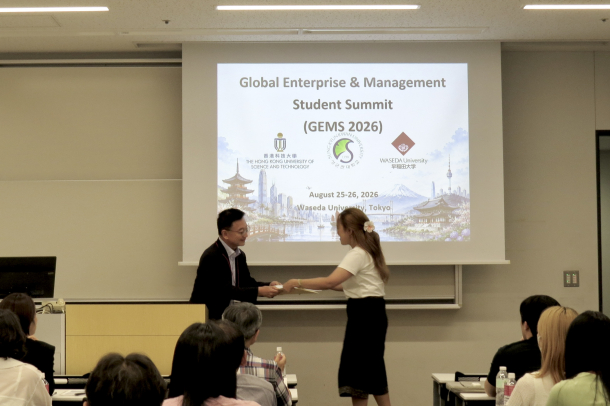
Through GEMS, students had the opportunity to apply what they had learned in business and management to real-world issues while experiencing both the challenges and rewards of working with people from diverse backgrounds. Students also formed friendships and connections through GEMS which they hope to maintain beyond the program.