Japanese cinema has long been framed through the familiar triad of directors, actors, and genres: a lens that has shaped both scholarly discourse and popular understanding of the nation’s film history. Yet this focus has obscured the crucial creative labour of scriptwriters, whose contributions were foundational to the studio system and to the imaginative horizons of audiences. This talk foregrounds their often‑overlooked role during the peak decades of studio filmmaking, from the 1930s through the 1960s, showing how writers not only structured the filmmaking process but also influenced the ways viewers conceptualised cinematic worlds. Central to this re‑evaluation is the emergence of a specialised readership capable of engaging with film scenarios as texts in their own right, made possible by the widespread serialisation and publication of scripts that circulated far beyond studio walls.
Drawing on key insights from my recent book, Tangible Images: Reading and Writing Classical Japanese Cinema (Venice UP, 2024), the talk explores how scriptwriting shaped the cultural and industrial life of Japanese cinema. It revisits the ambitions of the Scenario Literature Movement, whose advocates sought to elevate film scripts to the status of autonomous literary works. Their efforts illuminate the porous boundaries between cinema and literature in modern Japan, while underscoring the archival value of scripts as indispensable records for film preservation and historical reconstruction.
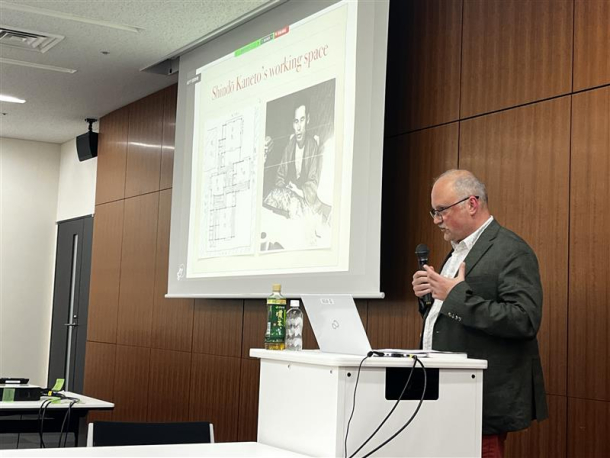
Finally, the talk turns to the social and spatial dimensions of scriptwriting, examining how writers navigated the collaborative—and often hierarchical—environments of the studio system. It considers the gendered dynamics of the profession, the communal spaces in which scripts were drafted and debated, and the practice of script scouting, which enabled many writers to assert creative agency through on‑site research. These practices reveal scriptwriters as mobile, observant figures whose work was deeply embedded in the textures of everyday life.
By repositioning scriptwriters at the centre of Japanese film history, this talk offers a renewed perspective on the collaborative foundations of the industry and on the diverse modes of audience engagement made possible through cinema’s textual forms.
![[SILS Faculty Seminar] Scripts in Motion: Rewriting the History of Classical Japanese Cinema](https://www.waseda.jp/fire/sils/assets/uploads/2026/04/Image-2.jpeg)