
Between Languages (Global Japanese Literary and Cultural Studies Program: Eriko Ikeda Kay)
- Posted
- Thu, 08 Oct 2026
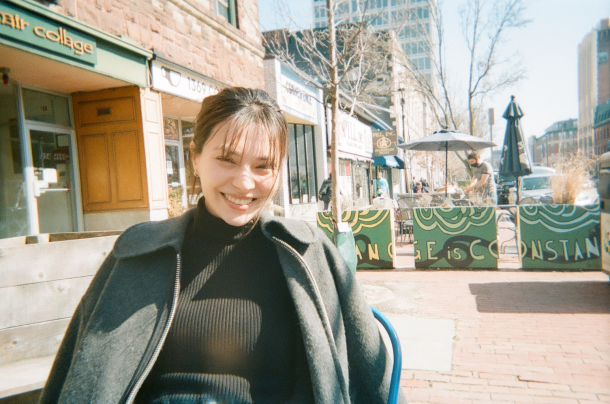
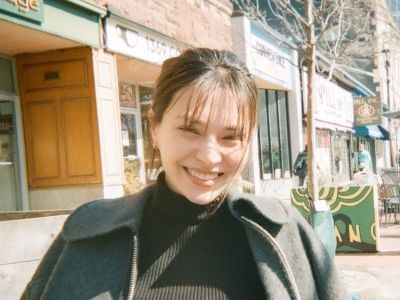
Eriko Ikeda Kay(Graduate of the Global-J MA Program)
Why I chose Global-J
One of my first jobs back in Tokyo after finishing my undergraduate degree in the U.S. was at a contemporary art gallery, where I was sometimes asked to translate exhibition texts and artist statements from Japanese to English. I had no formal training, but I loved the challenge of reading closely and thinking carefully about how to communicate not only the content but also the style in a completely different language. Around the same time, I was reading a lot of modern and contemporary Japanese literature, which felt like a new world opening up. Even though I grew up knowing Japanese, most of my reading life until then had been in English. Being back in Tokyo as an adult, especially working in a primarily Japanese-speaking environment, made me want to connect more with the Japanese side of my biracial and bicultural heritage. One way I did that was through the work of Japanese writers exploring gender and feminism. It was also right around the moment that translations of contemporary fiction by Japanese women started receiving a lot of attention, which felt like a big shift.
Soon, I realized I wanted to translate not just art writing but literary texts, and to do that, I needed to learn more about Japanese literature and translation itself. That’s what led me to search for graduate programs in Tokyo. When I found the Global-J program website, I was excited to see it offered exactly the kind of curriculum I was looking for, taught by faculty who not only pursued the kind of research I was interested in but were also practicing translators. I also remember learning that the Waseda International House of Literature was set to open soon, which felt like another encouraging sign.
My time in the program
The program was still quite small when I joined, but even then, my classmates were interested in a wide range of topics, from children’s literature to itan bungaku, and I learned a lot from them. The seminars were the heart of the experience, but I also appreciated the program’s flexibility, which allowed me to cross-register for classes taught in other graduate programs at Waseda. The campus is a hub of the Japanese literary community, with frequent workshops and talks, and another highlight was learning from faculty visiting from UCLA and Columbia University, where Global-J has strong ties.
Because I continued to work while doing my master’s, I ended up taking a year off between my first and second years to accommodate a particularly busy period at the gallery. I appreciated the support of my advisors, professors, and classmates during that time; even while on leave, I was still invited to events and made to feel like part of the community.
My research in Global-J
Initially, I considered doing a full-length literary translation as my thesis, but I realized that this program was a rare opportunity to receive feedback on critical work, so in the end I found a middle ground by deciding to write about three novels by Rieko Matsuura (b. 1958) and translate excerpts from them. When I read Matsuura for the first time—it was Natural Woman (1987)—I was drawn in by her dry humor and depictions of queer relationships, but as I read more of her recent work, I became even more interested in her experimental narrative structures. That’s why, in my thesis, I focused on different forms of what I called “collective storytelling” and how these strategies allowed characters to form new identities that resisted social expectations and expanded the discursive possibilities of fiction itself.
How Global-J informs my work today
Since graduating, I’ve transitioned into working full-time as a freelance translator. I continue to work on art-related projects, including exhibition catalogues, and I’m currently translating my first book-length project in that field, a feminist critique by the artist and writer Yurie Nagashima of the discourse surrounding photography by women in 1990s Japan. I’m also very happy that literary translation is slowly becoming a bigger part of my work. My translation of a short story by Tomoka Shibasaki was just published in Bessatsu GUNZOU (2026), and I’m currently working on Junko Takase’s Mizutamari de iki o suru, which will be published by Pushkin Press next year.
Looking back, the time I spent in Global-J and at Waseda has really shaped the direction of my work. More than anything, I’m grateful for the community I found, and for the ways that community has helped me grow even since finishing the program. I’m still on campus once a month for a literary translation study group led by Asa Yoneda, hosted by the Waseda International House of Literature, and I’ve been able to stay connected to the more academic side too through my role as a research assistant for Professor Hitomi Yoshio, one of my Global-J advisors. Recently, Professor Yoshio and I also co-translated one of the stories in Matsuura’s Natural Woman, which will be included in The Granta Book of the Japanese Short Story, edited by Sayaka Murata and David Karashima (forthcoming 2027). As I continue developing my translation process and practice, I know I will keep drawing on my time in the program and the kinds of questions we were encouraged to ask.
Profile
Eriko Ikeda Kay was born in Boston and raised in Japan and the U.S. She received a B.A. in visual art and gender studies from Harvard University and an M.A. in Global Japanese Literary and Cultural Studies from Waseda University, where she wrote her master’s thesis on collective storytelling in the fiction of Rieko Matsuura. She also attended the British Centre of Literary Translation (BCLT) Summer School at the University of East Anglia in 2023. She is currently a full-time freelance translator based in Tokyo, specializing in Japanese literature and art writing.
(Contributed October 2026)
- Links
- 先輩紹介ページ