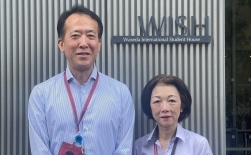
All the residents are growing up every day in WISH, acquiring sociability and organized life style through keeping the rules and concerning other residents in the communal life. We not only keep dormitory life safe and secure but also help them be able to lead fruitful university life, improving themselves with friends with different backgrounds.
Some of you might be worried about dormitory life since it would be the first time for you to live in a dormitory. However thanks to warm support by RAs and seniors, “Omotenashi”, new residents who looked anxious when they moved in, look different in a week as if they have already lived the dormitory for a year.
While developing your potential with SI Programs, you will be able to make many friends through attending welcome party to farewell reception.
In addition, when an international student got sick, one of seniors living in the same floor notified us immediately and took care of him. We were so proud of the senior.
We would like to make our dormitory much more progressive with current residents, alumni and many other people concerned.
RAs are student volunteers who provide guidance to international students living away from their families in a foreign country and culture and also assist Japanese students with their day-to-day living in the dormitory. They are carefully selected by the University, and reside in the dormitory to field any questions or concerns residents might have about their residential living.
RAs are reliable senior students can count on at any time.
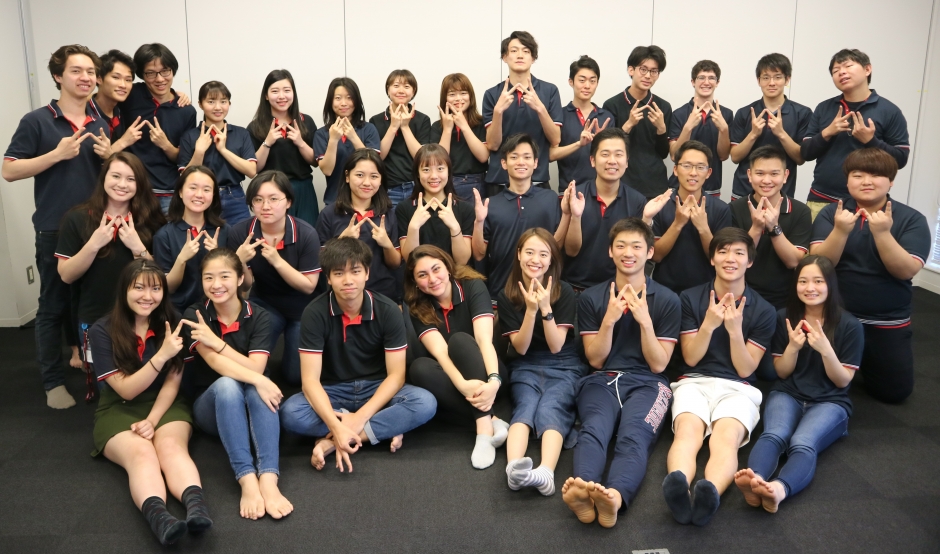
RAs in WISH
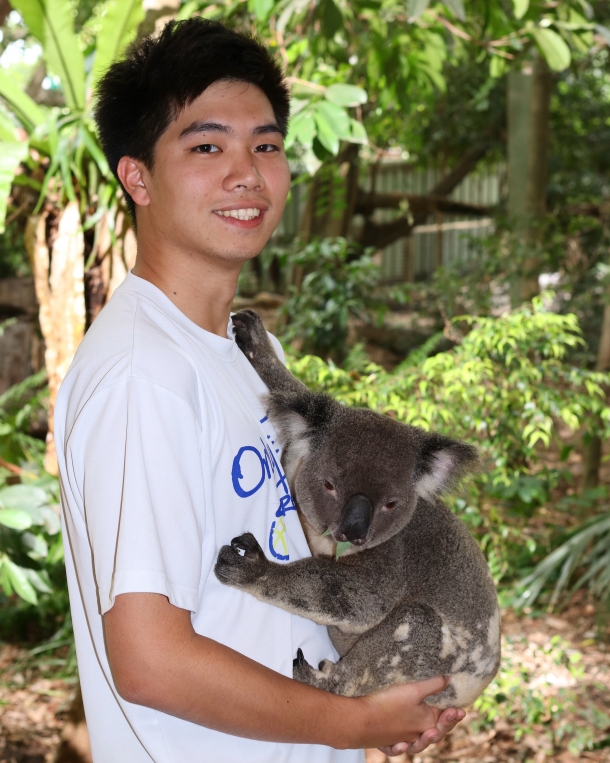
Li Yue, student at School of Political Science & Economics (English-based degree program)
Born in Nagoya but of Chinese descent, Li Yue lived in Japan until he was six because of his father’s work. While he did return to Beijing afterwards, Li Yue came back to Japan again during junior high school, this time in Tokyo. Three years later before entering high school, he had to move to Shanghai, once again due to his father’s work.
Although he is not Japanese by nationality and descent, Li Yue had thought that he was Japanese when he was young because he not only spoke the language but also knew no country other than Japan.
“It was not until I was older that I realized I was Chinese when I first saw my passport and other legal documents. As such, I’d experienced an identity struggle in a very different way compared to people who are born into a bi or multicultural family.”
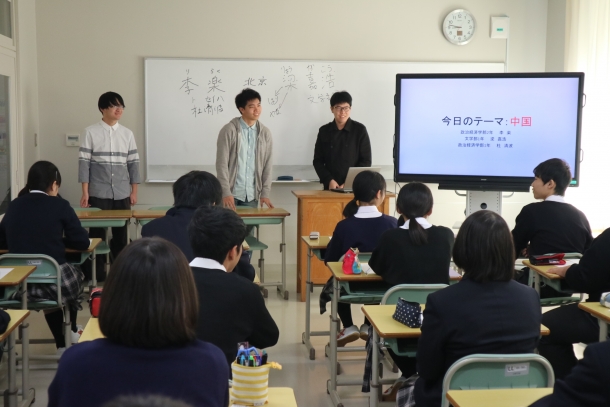
Li Yue (middle) giving a cultural presentation about China in Japanese at a local junior high school
While Li Yue did eventually come to terms with his identity as a Chinese, being in a diverse and international environment became important to him. That was one of the reasons why he decided to study at Waseda among all offers he received from other prestigious Japanese universities. Accordingly to Li Yue, Waseda does not only host the most number of international students among all Japanese universities, but also provides the most robust and comprehensive English-based degree programs. He specifically chose to study at the School of Political Science and Economics because he was interested in understanding how economies work.
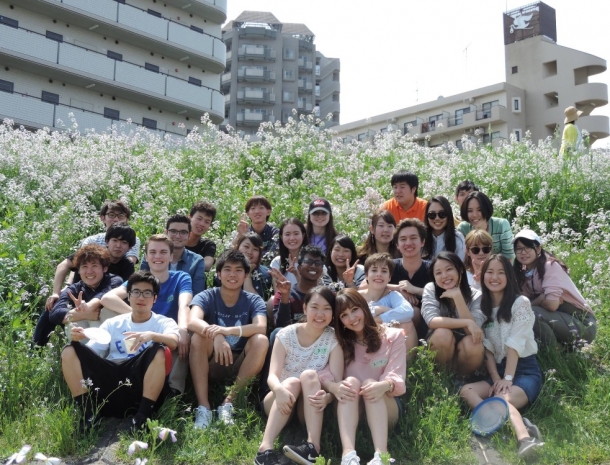
Li Yue (front-most male student in blue T-shirt) and friends he made at Waseda
“Besides being a highly internationalized Japanese university, the other best part about studying at Waseda lies in the university’s location. Waseda is located in the Shinjuku district, in the very heart of Tokyo. There are many internship opportunities that students can find to grow and improve themselves in Tokyo because this is where most headquarters of companies are located. If you are thinking of working in Japan after completing your studies, you want to bear in mind that most job interviews are conducted at the headquarters here in Tokyo. Not to forget that being constantly ranked as one of the best private Japanese universities, if not the best, the Waseda brand gives you tremendous advantage over its counterparts.”
Apart from internships and job opportunities, Li Yue also notes that studying in Tokyo simply adds colors to student life. It is arguably the most happening city in Japan with countless events taking place all year round. Additionally, it is also easy to travel out of the metropolis to other parts of Japan or overseas thanks to its highly sophisticated transportation infrastructure.
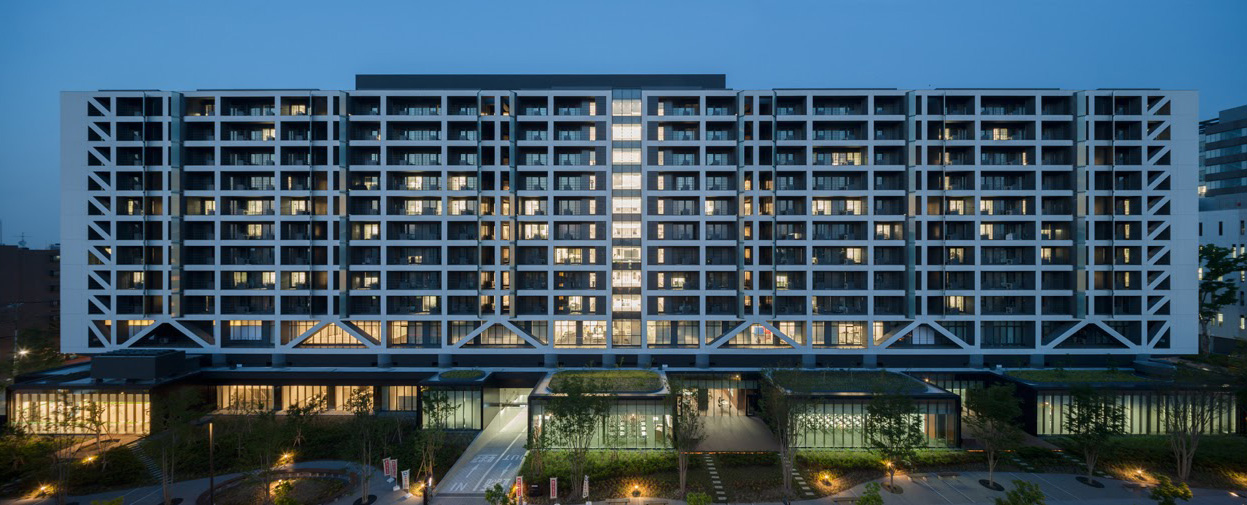
Photo of the exterior of Waseda International Student House (WISH) at dusk
Li Yue lives in the Waseda International Student House (WISH), first as a resident during his first two years of studies but now as a resident assistant (RA).
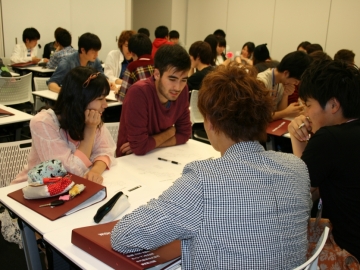
Students engaging in group discussion during SI program at WISH
Launched in March 2014, WISH is an international student dormitory with a total room capacity of 872, where domestic and international students of diverse backgrounds live and interact with one another under one roof. Moreover, the Social Intelligence (SI) program compulsory to all WISH residents intended at cultivating leadership, as well as communication and creative problem-solving skills, are also held at WISH throughout weekdays during term time. Through active participation in the SI program and by living together with students from all over the world, WISH residents can not only further develop their soft skills, but also attain a deep cross-cultural understanding, both necessary to become successful global leaders.
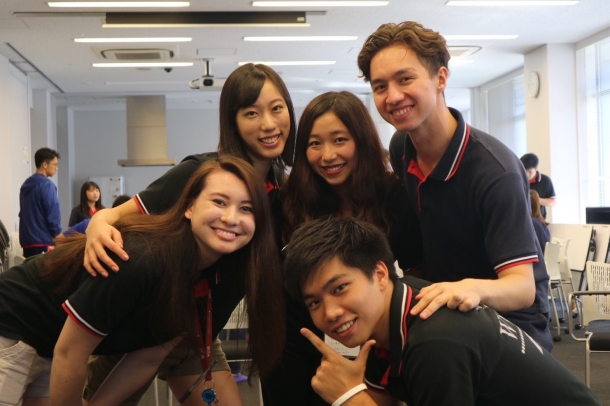
Li Yue (front-right) and four other RAs
“After becoming an RA at WISH, I realized that domestic students and international students need very different kind of support from us and the university. Waseda takes in many Japanese students from outside Tokyo and one of our jobs is to help these domestic students get used to the city life. On the other hand, we not only need to help international students get use to city life in Tokyo, but also assist them in adapting better into a country that is culturally different from their own. Not to mention that many international students, especially those enrolled in the English-based degree programs, would experience language barrier when they first arrive in Japan. ”
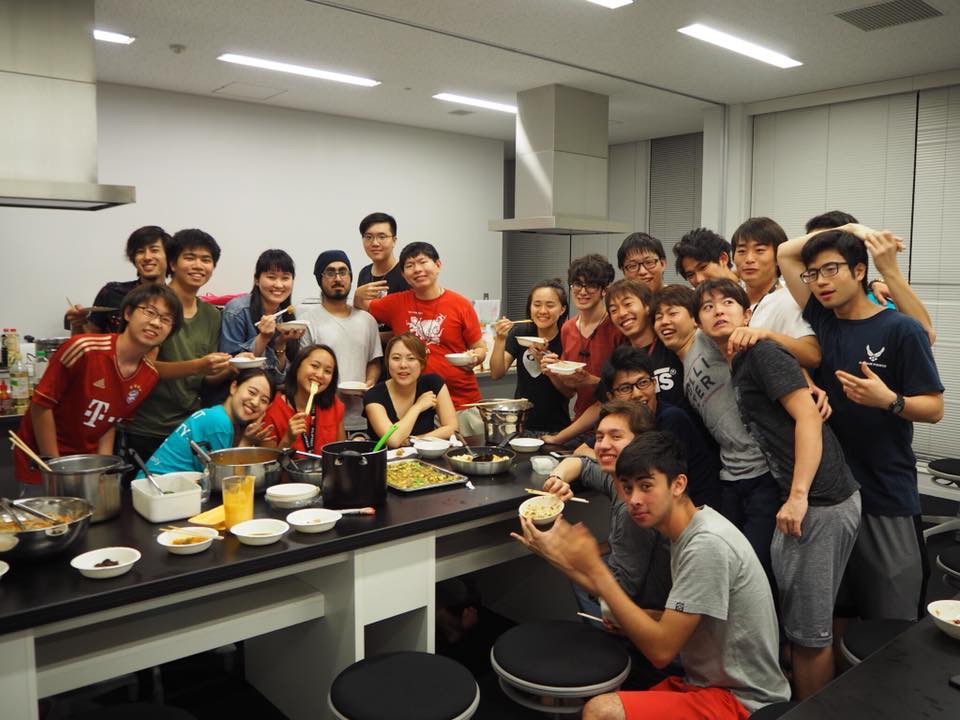
Cooking event organized by RAs for residents at WISH
While the RAs at WISH would always try to make themselves available for consultation and assistance, not all international students would approach them when they need help. As such, Li Yue thinks it is important that he and other RAs stay proactive in communicating with the residents. To build trust with the residents at WISH, the RAs would often organize events to create opportunities for RAs, domestic and international students alike to interact with one another. It could be a sports game event, cultural sharing session through a cooking class or even a language exchange.
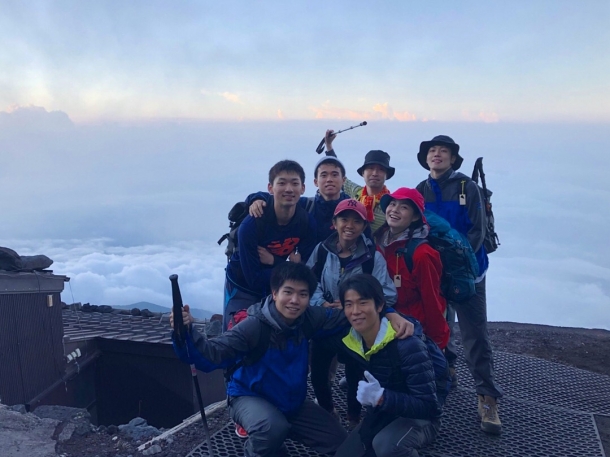
Li Yue (front left) and other WISH residents on Mt. Fuji
“Through participation in events organized by us, I hope residents would not only change their worldview by learning about various cultures and languages, but also treat these experiences as opportunities to reflect upon their very own culture and identity, something that I myself struggled with in the past.”
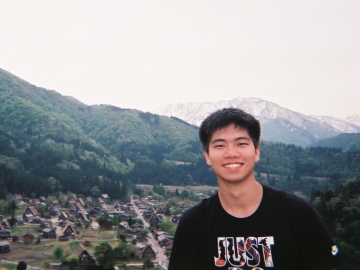
“I think comparing to other Japanese universities, Waseda as a whole is putting in a lot of effort into internationalizing itself and making a name for itself on the global stage. I definitely hope that it would become a university highly recognized by the international community in research and education. But from an international student’s perspective, I would also like to see more student support available in English for international students because some services are only available in Japanese. I could understand that because Waseda is still primarily a Japanese university, most administrative staff are Japanese. However, I do hope to see even more diversity on campuses in future by having more international staff who could provide alternative views and more thoughts to the huge international student body. If Waseda could achieve that, it would certainly achieve true internationalization.”
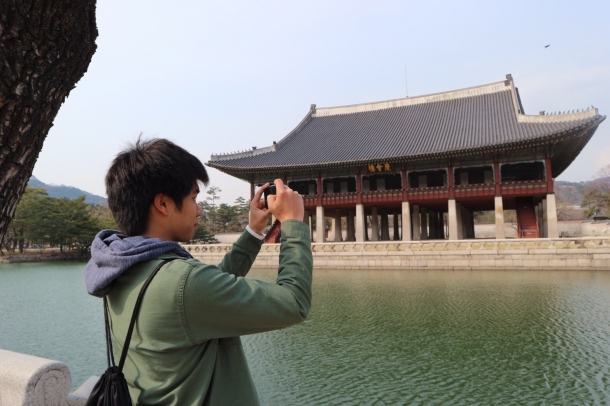
Solo trip to South Korea
“My first advice to students is to travel as much as you can. It can be a domestic travel and you don’t necessarily have to travel out of Japan if you cannot afford to. There are many things that you cannot see on news, from books or the Wikipedia. Sometimes, it is only through travelling that you can truly understand a place, culture, society or how things really are.”
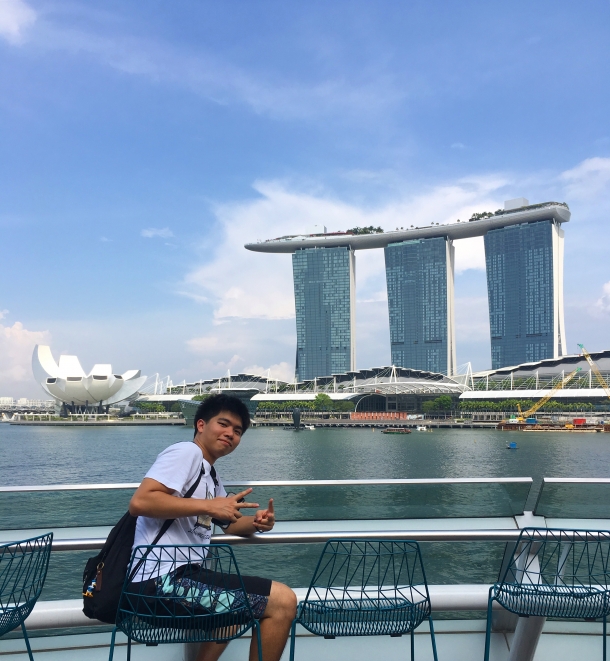
Photo taken opposite Marina Bay Sands, Singapore
To supplement his advice to students, Li Yue gave an example of his trip to Singapore to visit a friend. Situated in Southeast Asia, he had thought Singapore was a very “Asian” country. He was not wrong because geographically, the country is located in Asia and demographically, the Singaporean population is mainly made up of Chinese, Malays and Indians. But when he was there, he recalls seeing many foreigners from western countries working in the Singapore. In addition, many people there speak multiple languages and it is not at all rare to see, for example, a person who looks Indian by appearance speaking Mandarin. He stresses that such experiences are very much unimaginable without personally visiting the country.
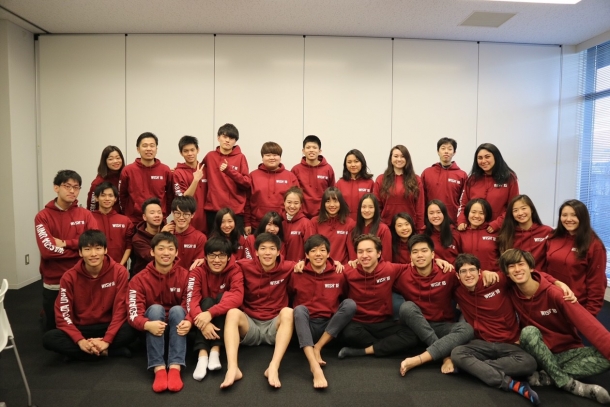
Full member of RAs at WISH
“My second advice to students is to “act first and think later.” Many times when we give too much thought to something, we end up not taking any actions. And as a result, opportunities simply slip away. I think the best part about us being students is that we are allowed to fail, unlike adults. Instead of worrying too much about failing or being obsessed with the outcome, why not take it as a challenge to learn and outgrow yourself? By taking the first step to try, you may end up meeting new people who would change the way you see the world. You may also end up opening doors to new opportunities that would have a great impact later in your life you would not have imagined. In any case, nothing would change if you do not act.”
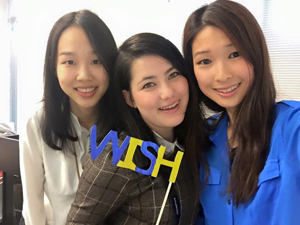
B.M. pictured middle
Arriving at a new destination is a big challenge for overseas students and cultural differences may be a struggle. This also applies to students from various places in Japan, living in Tokyo for the first time. When coming from Australia to Japan to enter Waseda University, I have had the same experience. Our mission as RAs is to help relieve the pressures and worries that follow your challenge, and to support you to spend an enjoyable university life.
The most attractive fact about WISH is that residents with different backgrounds can build friendships regardless of year groups or area of study. The SI program, seasonal events, cooking together in the kitchen, watching university sports is only the beginning to all the excitement. However, the best part is being able to listen to everyone’s everyday conversations. Us RAs are here as senior students and as fellow residents. We are always happy to listen to your stories and help out with any problems!
(RA of 2016, B.M.)

R.I.
To me living in Japan alone was a really stressful thing. Not only because I have been living in California for 19 years, but because everything was new to me. So when moving to Japan I decided to live in WISH, to not only get support in living in Japan, but to make friends who has the same background as me and understands my feelings.
One reason why I chose to become an RA, is because I thought that the students with the same backgrounds as me needed more support from someone who understands their situation better in WISH. To do so I thought that becoming an RA myself is the best choice I can take.
At WISH, the RA is involved in many various tasks.. Starting from planning event within WISH and to supporting the residence with various problems. RA is not just a senior that lives in the dorm but more like a friend who give support in and out of the dorm, and can rely on for help. As an RA I want to make WISH a place where the students can look back on and still recall the good memories many years after graduating.
(RA of 2016, R.I.)
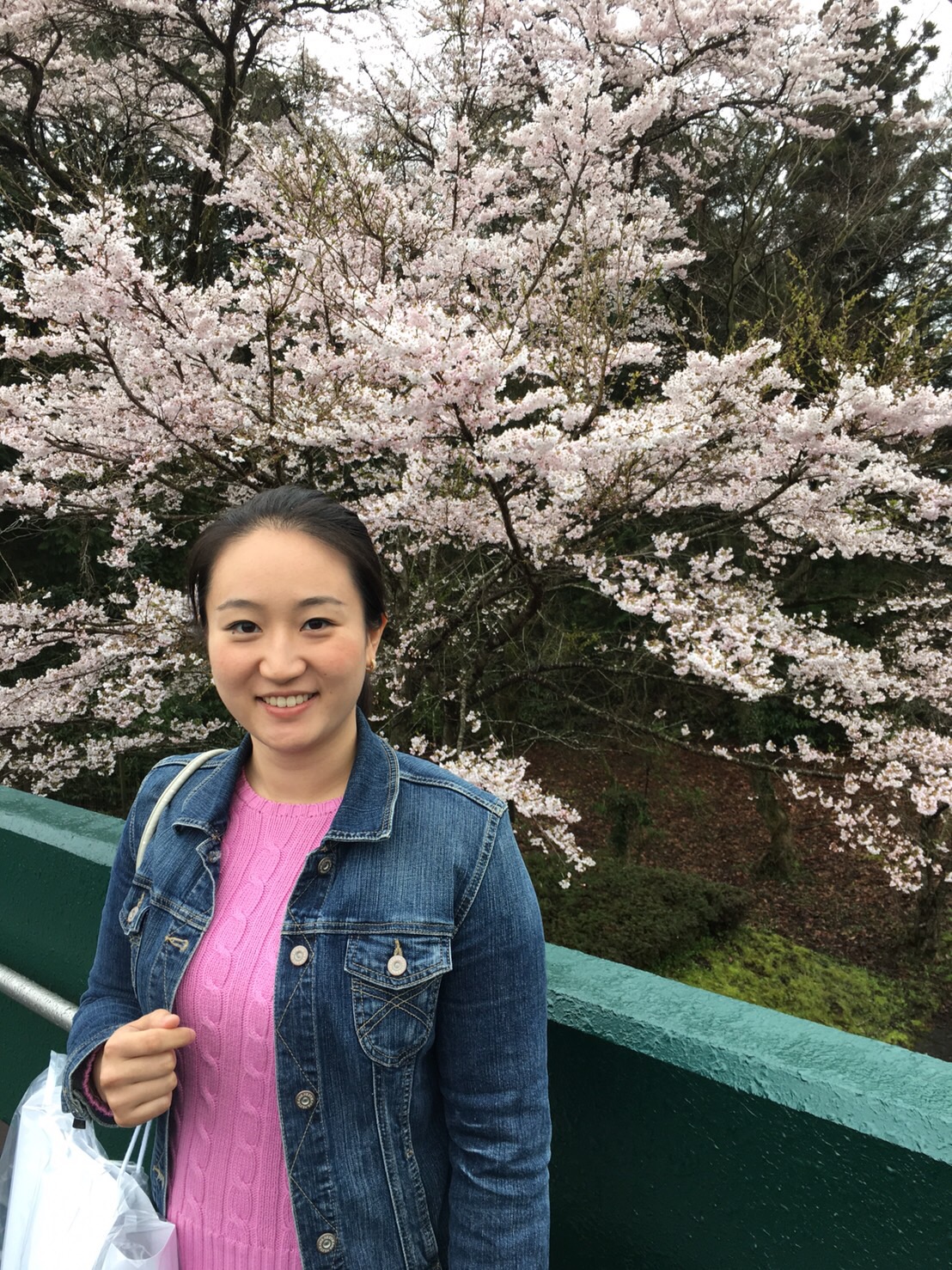
M.O.
Starting a new life in a new place can be fun and full of expectations, but at the same time many could find it worrisome. Moreover, some may feel a bit sad living apart from their parents for the first time in their life. Including myself, many of the new residents are like that, however we the RAs are always thinking about what we can do to support residents like that.
In WISH, Japanese students and international students are living together. Not only do we provide the opportunities where you can make friends and communications with new people by organizing monthly events and SI programs, but also those are the chance for residents to learn new things. Through doing such RA jobs, I have learned many things such as accepting the diversity, always learning something new, having purpose for all my actions, and much more. I want to make WISH a special place where you can learn a lot of things, not just a normal dormitory as a place to live.
(RA of 2016, M.O.)
Their top priority is the safety of residents in the student housing and the security maintenance of the entire premises. Duties of the security guards also include dealing with visitors, monitoring in the Disaster Control Center, handling initial responses to emergencies, checking and informing residents of urgent situations such as suspension of water supply or power outages.
Facility Staff run, watch, check, install and maintain many of facility equipments in the Nakano International Community Plaza and analyze records regularly to keep equipments in good condition. Facility Staff are engineers well versed in the entire equipment at the Plaza and responsible for controlling its organic nexuses.