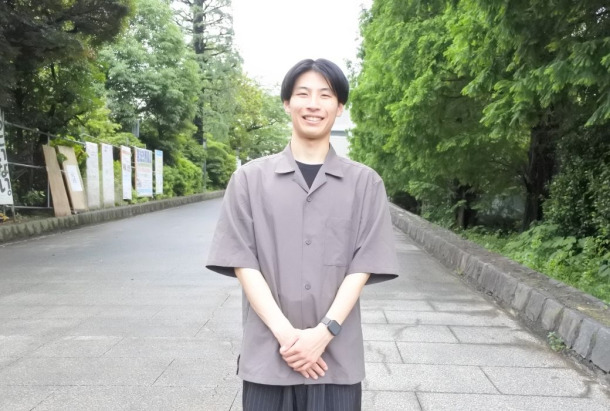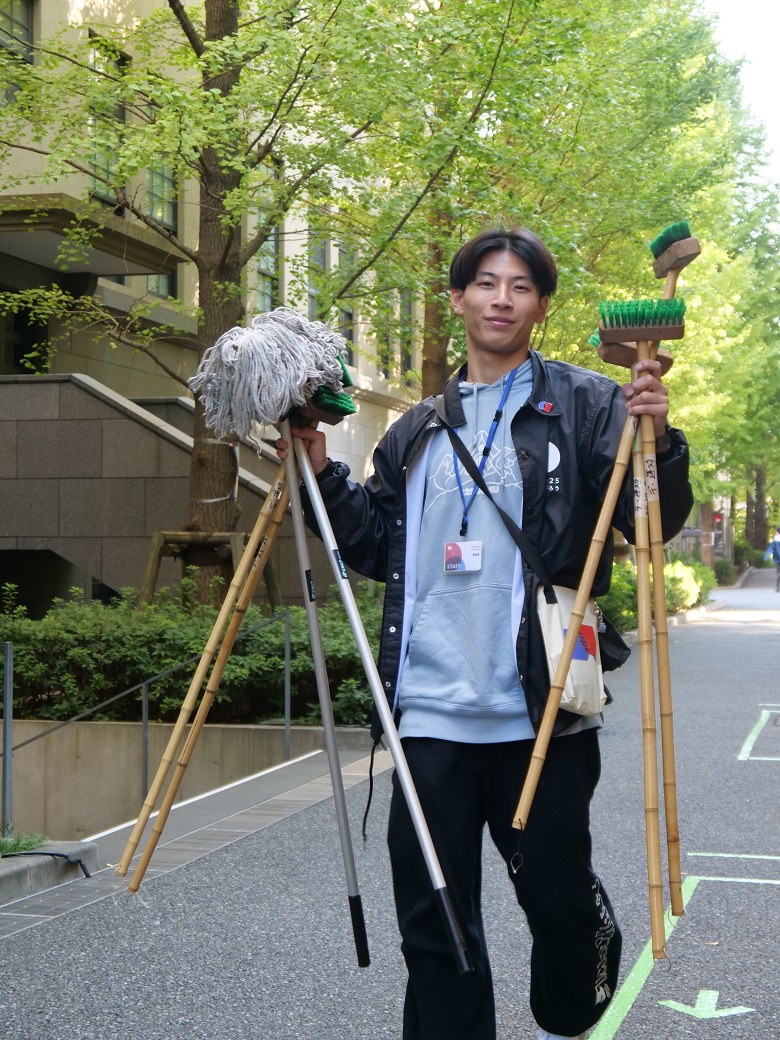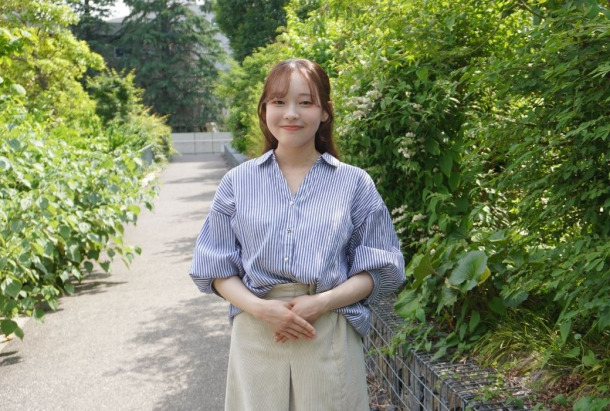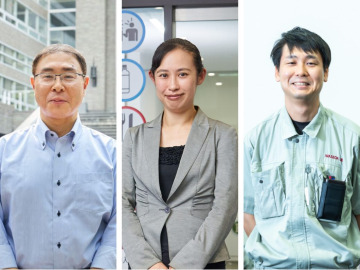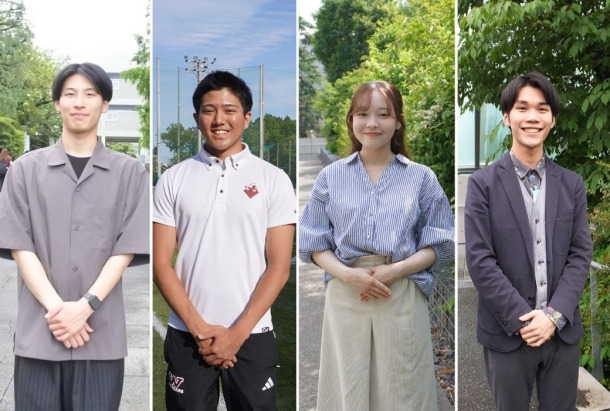
From left to right: Takahashi, Matsui, Kurakawa, and Matsuura.
Did you know that at Waseda University, you can acquire various qualifications and eligibility requirements by completing the necessary courses? There are qualifications that can be obtained simply by earning the required credits, qualifications that only require fulfilling some of the requirements, qualifications that require passing a national examination after acquiring the necessary skills, and qualifications that require practical experience, and many students are studying for them every day. This time, we interviewed students aiming for Teaching Licenses (teaching course), Athletic Trainers, Museum Curators, and Certified Psychologists. We asked them about what motivated them to pursue these qualifications and what kind of studies they are doing.
*Qualifications that can be obtained and eligibility requirements vary depending on the faculty and graduate school, so please check the website for details.
INDEX
▼The Case of Takahashi in the Teacher Training Program
▼The Case of Athletic Trainer Matsui
▼The Case of Museum Curator Kurakawa
▼The Case of Certified Psychologist Matsuura
The Case of Takahashi in the Teacher Training Program
Kei Takahashi, 4th year student, School of Humanities and Social Sciences

At Toyama Campus
My goal is to become a teacher like my high school mentor, Faculty who can guide students to learn proactively.
—Please tell us your reasons for aiming to obtain a teaching qualification.

Takahashi, who served as the deputy director of the General Affairs Department for WASEDASAI organizing staff, is active in "WASEDASAI 2025".
From elementary and junior high school, I was often relied upon by others, and that's where my enjoyment of teaching began. In high school, meeting a Japanese history teacher whom I consider my mentor was the turning point.
Instead of just rote memorization, this teacher incorporated various anecdotes about his hometown, Aizu City in Fukushima Prefecture, into his lessons. His classes, which were designed to encourage active learning among students, were incredibly interesting, and I thought to myself, "I want to be a teacher like that."
—What do you learn in the teacher training program?
I am aiming to obtain Faculty licenses for social studies in junior high school and geography, history, and civics in high school. I am studying not only specialized subjects but also essential knowledge and teaching methods for education, such as educational history, student guidance, and child psychology.
Of the classes I took, I found Professor Masami Onodera's "Student Guidance and Career Guidance Theory (Junior and Senior High School)" (a subject offered School of Education) particularly interesting. Through lectures and mini-games, I learned how students can build good relationships within group activities. I think this has actually been useful in navigating smooth interpersonal relationships in my regular student club activities.
What left the biggest impression on me in class was the teacher's words, "empathy and sharing." I realized that understanding and communicating with others' feelings is necessary not only in education but in all situations, and it's especially important in the position of Faculty.

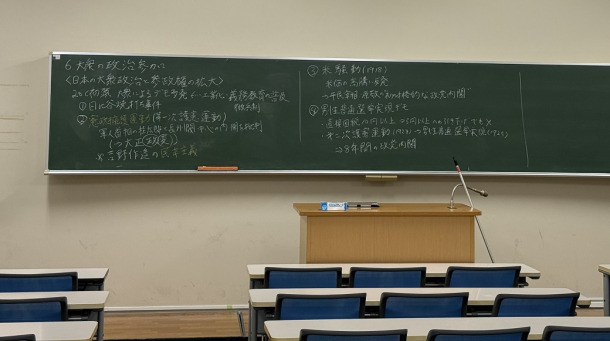
A photo taken during blackboard writing for "Geography and History Education Methods 2," at Building 16 on Waseda Campus.
—Were there any specific things you did to prepare when registering for courses? Also, how are you approaching assignments and preparing for Faculty recruitment exam?
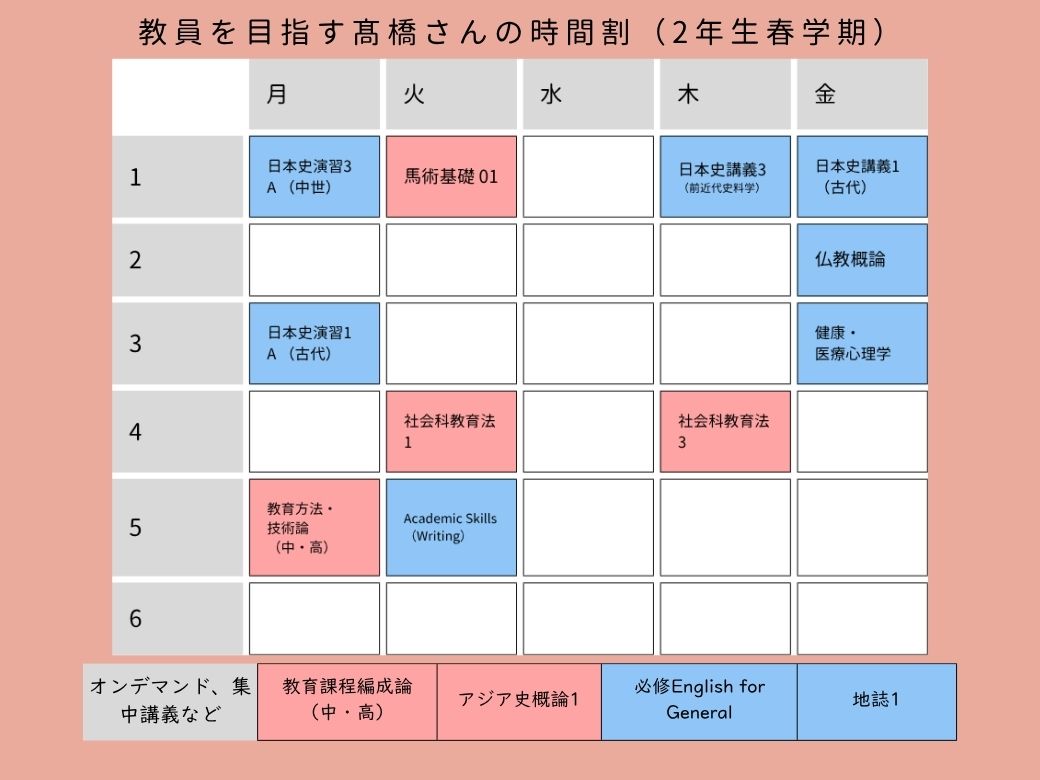
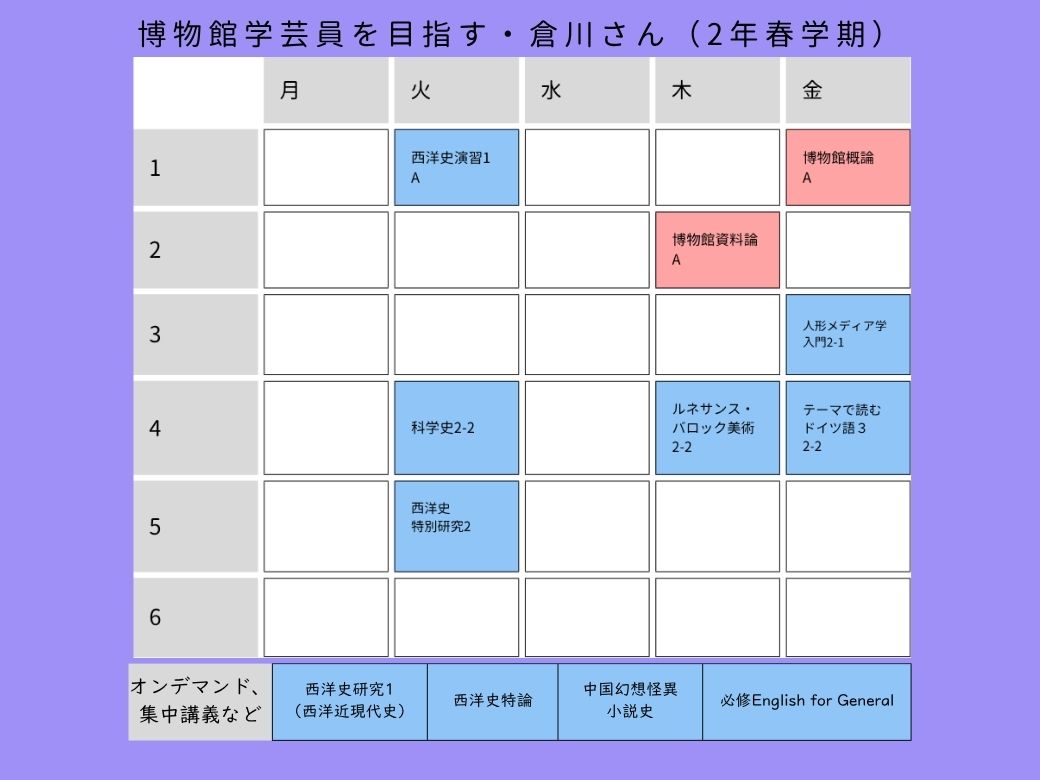
I need a lot of credits to graduate, and I take nearly 30 credits each semester, so I use a checklist to manage my schedule and make sure I don't miss any courses. Sometimes courses overlap with required classes, so I try to take as many as possible in advance during my early years.

The red squares indicate required courses for teacher training. Courses offered by the faculty, such as "Introduction to Buddhism," "Health and Medical Psychology," and "Regional Geography 1," can apparently be converted into credits for teacher training. *Click to enlarge
I have report assignments and other tasks not only in the teacher training program but also in other classes, so I set aside time to work on them. In my major, Japanese history, documents are very important, so I do thorough research at the library.

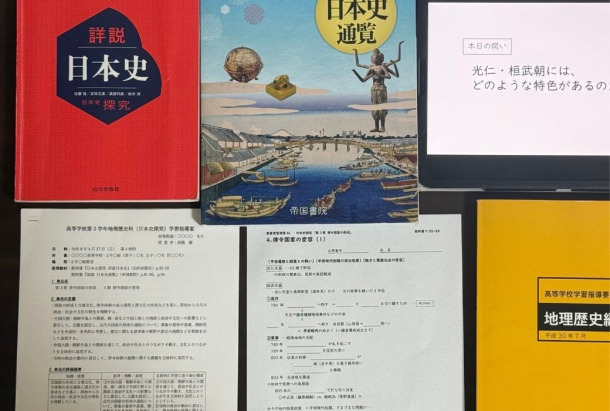
Textbooks, reference books, and materials created for the class.
For Faculty recruitment exam, I am diligently studying on my own, as the first stage of the exam tests academic ability and specialized knowledge. Furthermore, for the second stage interview, I am receiving individual consultations and interview guidance from a "Faculty employment advisor" at Faculty Employment Guidance Office (2nd floor, Building 14, Waseda Campus), who is a graduate of the university and has experience working in a management position.
—What were your impressions of your teaching practice?
It all went by so quickly. I prepared meticulously, but there was still a constant stream of unexpected events. Even with the same content, the level of understanding and reactions varied from class to class, making it difficult to tailor the lesson to each individual student. There's a saying that "lessons are living things," and I truly experienced that every day. On the other hand, based on the advice of my supervising teacher, I kept trying different approaches each lesson, thinking, "Next time for sure!" I think that's what made it fun and kept me so engrossed.
--Please tell us about your plans for the future.
I hope to return to my hometown and become Faculty. I want to nurture students who are proud of their hometown and can act proactively. Faculty is a unique job that allows you to watch students grow. Although there is a negative image of Faculty these days, I believe it is the right job for me, so I will continue to do my best.
[Teacher's License] (Teacher Training Course)
There are three types of Faculty licenses: advanced, first-class, and second-class. At this university, you can obtain a "first-class license" at the undergraduate level and an "advanced license" at the graduate level. To obtain Faculty license, you must meet the basic qualifications (a bachelor's degree for a first-class license and a master's degree for an advanced license) and acquire the credits for subjects (including teaching practice) stipulated in the Educational Personnel Licensing Act.
The types of schools and subjects for which you can obtain Faculty license vary depending on your faculty, department, major, specialization, course, or graduate school. For details, please refer to the latest "Guide to Teacher Training Programs" (click here for the relevant page).
The Case of Athletic Trainer Matsui
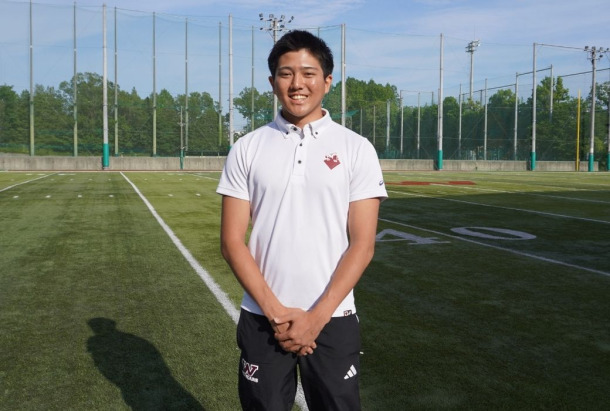
Yoshiki Matsui, 4th year student, School of Sport Sciences

At the American Football Field Higashifushimi Campus
We want to eliminate the situation where athletes are unable to play due to injury.
—Why do you aspire to become an athletic trainer (hereinafter referred to as "trainer")?
I played soccer in junior and senior high school, but I suffered a lot of injuries, including fractures. In my second year of high school, I received advice from the team's trainer on how to avoid injuries and about training menus, which was the turning point for me. After that, when I was thinking about my future career path, I decided to become a trainer.
--I heard you're working as a student trainer for the Waseda Football Team.
Yes. Since gaining practical experience is necessary to become a trainer, many students aiming to obtain this qualification belong to various sports clubs.
Initially, I was thinking of playing soccer, which I had experience in, but after hearing from seniors that it would be better to gain experience in American football or rugby, which involve using the whole body and dealing with injuries and conditioning in a wide range of ways, I chose to gain experience in the American football club. The club has more than 130 members, and the trainers are mainly students. Currently, there are six student trainers, and in their first year, they spend a year learning about injury prevention, first aid, taping, and recovery, along with their faculty classes. If they pass the club's test, they start working with players on a case-by-case basis from their second year.

At the Waseda Football Team, the coach is taping the players before practice.
When I was a freshman and joined the Waseda Football Team, there was Kazuto Kobayashi (graduated from Graduate School of Sport Sciences in 2026), who is still with the club as a trainer, and even back then, people around her were already relying on her, saying, "If anything happens, we can leave it to Kobayashi and feel at ease." My admiration for her also became a goal for me to aim for obtaining the necessary qualifications.

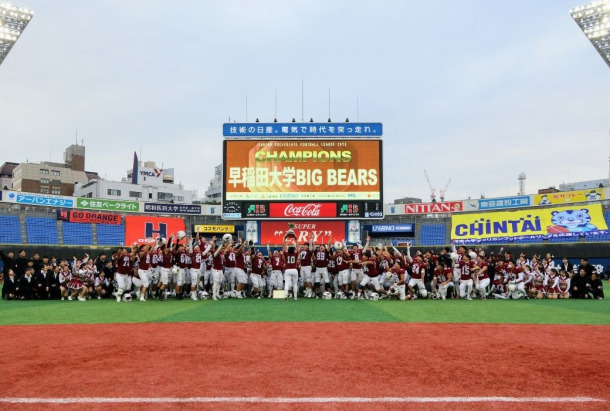
A commemorative photo taken in November 2025, when the Waseda Football Team won the league championship, featuring all the players and student staff.
—How are you studying in your undergraduate program?
First, we studied the fundamentals of sports science through lectures before moving on to applications. However, it's difficult to retake a course if you fail it once, so I planned my course load carefully from my first year. Obtaining the certification requires not only tests but also practical skills, so it's important to continue studying diligently.
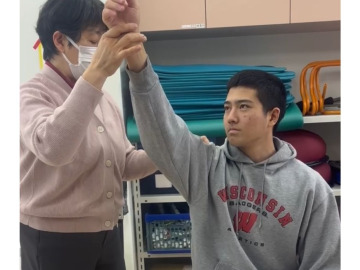
Photo on the left: 2024, Reconditioning Practice A scene of students learning practical skills in a course offered School of Sport Sciences.
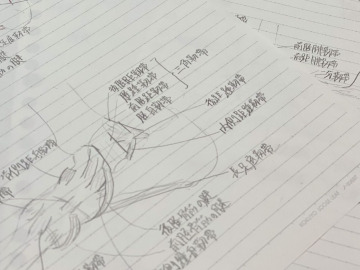
Photo on the right: A course taken in the fall semester of 2025, Sports Anatomy (Lower Limbs) Notes from a class in the Faculty of School of Sport Sciences)
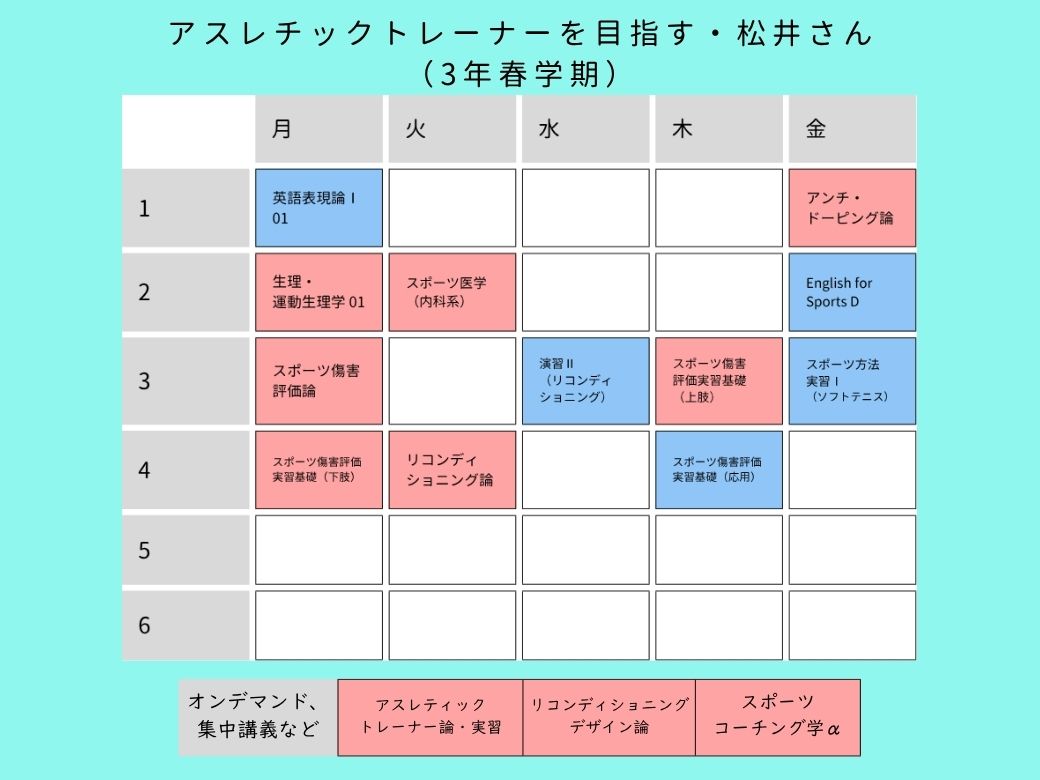
Since I have club activities almost every evening on weekdays, I work my part-time job in the mornings. Mondays are off from club activities, so I concentrate my classes there and try to study efficiently by making the most of my free time.
—Were there any classes that you found particularly interesting?
This is Professor Koki Sasabe's "Athletic Conditioning Practice" course (a subject offered School of Sport Sciences). We were able to hear from a professor who actually works as a strength and conditioning coach for the professional basketball team Alvark Tokyo, and we learned about training not only through lectures but also through practical exercises and by seeing what it's like in a real-world setting.
--Please tell us your future goals.
I have a big dream: to eliminate situations where athletes are unable to play due to injuries. I also aim to pursue graduate studies, where I will focus on research into training while striving to become a trainer who can work closely with athletes.
[Athletic Trainer]
This is a qualification certified by
the Japan Sports Association. Working closely with sports doctors and coaches, trainers are responsible for athlete health management, injury prevention, emergency treatment of sports injuries, athletic rehabilitation and training, and conditioning. For more information on obtaining the Trainer qualification in School of Sport Sciences, please click here.
The Case of Museum Curator Kurakawa
Miki Elisabeth Kurakawa, 3rd year student School of Humanities and Social Sciences.

At Toyama Campus Toyama Hill
Because it's something you "like," you can aim for it without feeling pressured.
—What motivated you to pursue a career as a museum curator (hereinafter referred to as "curator")?

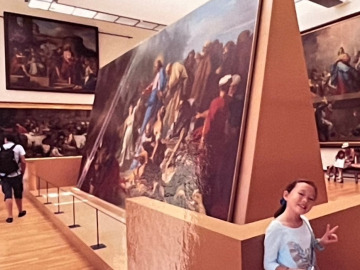
A photo from when I went to the Louvre Museum in the 5th grade of elementary school.
I've always loved drawing, and as a child, I was often taken to art museums and museums. Actually, when I was registering for courses in my first year, I was unsure whether to take the teacher training course, but after consulting with Kohai Navi, I realized that obtaining a curator's license wasn't as burdensome as other options, and that it suited me because I love drawing.
—Were there any specific things you did to prepare when registering for courses? Also, what kind of things are you learning?
I planned to take two curator courses each semester. Some courses are offered in both spring and fall, so if they clash with required courses, I make sure to take them in the following semester to avoid missing anything.
In our classes, we learn a wide range of topics, from the basics of museums, such as an introduction to museums, to management, preservation, exhibitions, information and media studies, and educational theory, as well as actual planning and practical training. For example, in the preservation class, we learn about things like which insects can harm the materials and what temperature and humidity are suitable for each type of material.
—Were there any classes that you found particularly interesting?
This is Professor Madoka Fujisawa's "Museum Education Theory" course (a subject offered School of Education). We planned and presented an exhibition in a simulated room of an actual museum, and I planned an exhibition on the evolution of clothing during the Baroque and Rococo periods. I enjoyed considering where to borrow dresses and works of art, and thinking about how to best display corsets and clothing models. There was also someone who planned an exhibition on Kabuki, and their workshop on drawing Kabuki makeup as illustrations was highly praised. Seeing and listening to everyone's plans was very inspiring.
I am currently participating in a hands-on workshop led by a curator fromThe Aizu Yaichi Memorial Museum. There is a storage facility for artworks in the basement of Building 8th on the Waseda Campus, where the School of Law is located, and I had the opportunity to tour this rare space that is normally off-limits to the public. I am looking forward to the upcoming group work sessions where we will develop exhibition proposals.
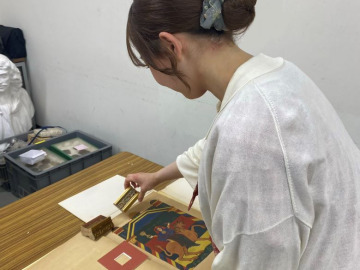
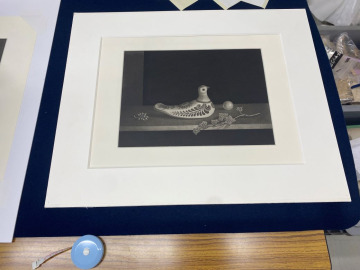
During an internship at the Aizu Yaichi Memorial Museum. While learning framing, I'm considering what kind of frame would suit the artwork. (Left) Practicing adjusting the position of the artwork and mat (backing board). (Right) Apparently, you need to allocate time for this internship throughout the year.
—Aside from classes, are there any other things you're doing on your own to obtain qualifications?
I actually go to museums and art galleries. I'm putting into practice what they say in class: "It's important to go and see things for yourself." Since taking the class, I've realized that museums, which I used to visit passively just to "go and look," aren't something to be taken for granted, and I've come to appreciate each and every exhibit. I've come to realize again how much thought goes into creating exhibits, from the height that makes them easy to see, to the way the light falls, to the readability of the explanations.
[Museum Curator]
Museum curators hold a national qualification based on the Museum Law. They are responsible for specialized matters such as the collection, preservation, exhibition, and research of museum materials at museums, art galleries, and archives. Waseda University offers "Museum Curator Related Subjects" within School of Education. By acquiring the necessary credits and obtaining a bachelor's degree, students can obtain the "Museum Curator Qualification." For more details, please click here.
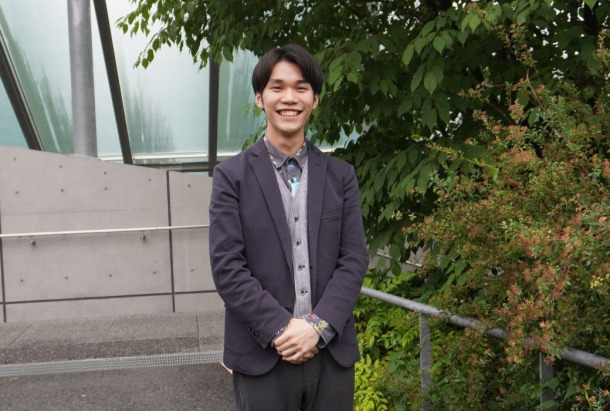
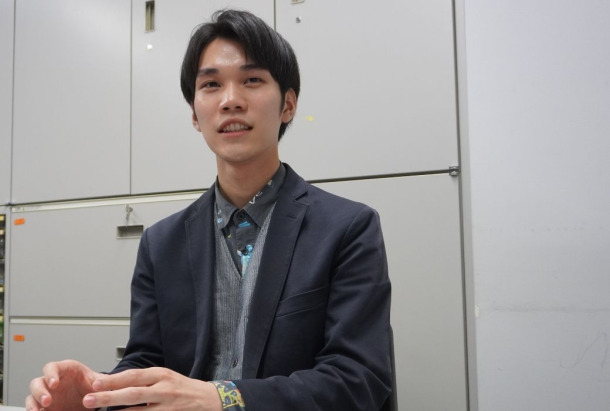
The Case of Certified Psychologist Matsuura
Sojiro Matsuura, 1st year Master's student Graduate School of Letters, Arts and Sciences

At Toyama Campus Toyama Hill
I want to continue to reflect on myself and grow.
—What kind of qualification is a certified psychologist?
This is a national qualification established by the Certified Psychologist Act. There are four main types of work in five areas: healthcare, welfare, education, justice, and industry. These are: "Observing and analyzing the psychological state of people who need support," "Providing psychological support to people who need psychological support," "Supporting those involved with the supporters," and "Providing education, information, and awareness-raising to disseminate knowledge about mental health." Examples include working as a psychological counselor or providing learning support to children with developmental disabilities.
—What motivated you to pursue this qualification?
Since childhood, they've vaguely enjoyed listening to people's problems and being helpful to others. They was also interested in emotions, and they wanted to support someone or turn my inner hospitality into a career.
—Could you tell us about your journey to obtaining the qualification?
The process involves completing a set number of credits and practical training during the four years of undergraduate study, followed by two years of graduate school to complete the required credits and practical training. Upon passing the national examination, the qualification is obtained. It requires a considerable amount of credit and a long timeframe to acquire the qualification.
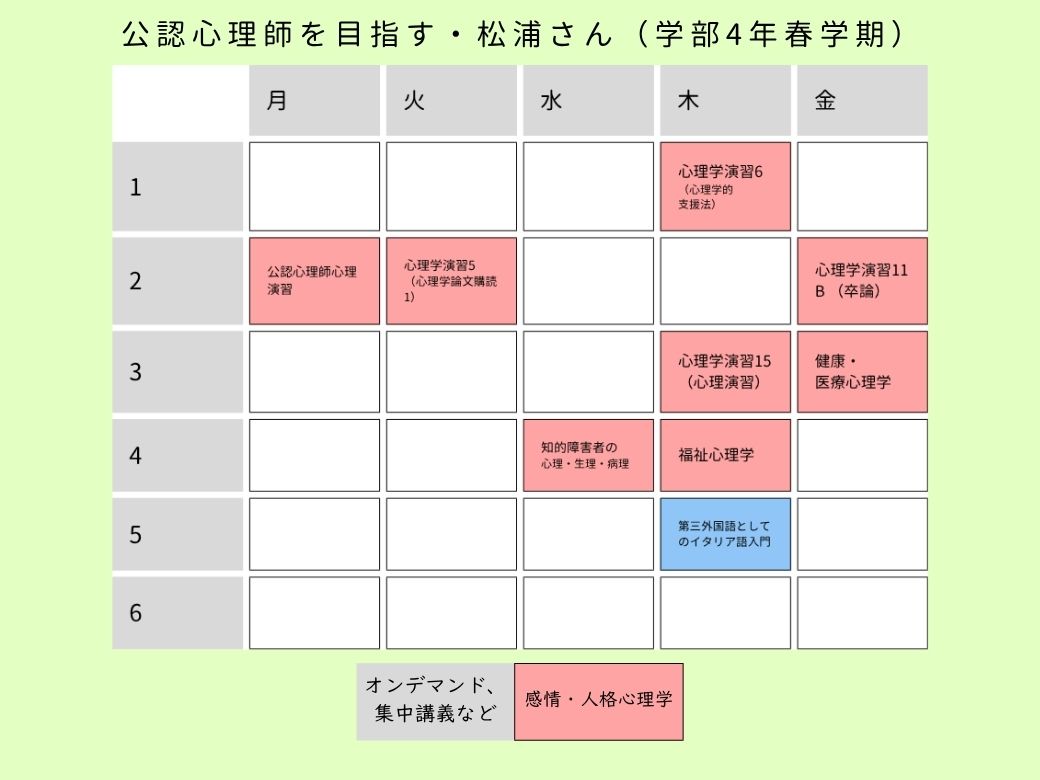
First, undergraduate studies begin with lectures, followed by exercises and practical training. Practical training amounts to 80 hours for undergraduates and 450 hours over two years for graduate students, and a distinctive feature is that medical practical training is always included. Of this, about 200 hours are spent on case studies, where students are responsible for one case (client). As a first-year master's student, They are also doing practical training in the welfare field, including working at a nursery school.
Although they are still in training, my internships involve working directly with individuals facing various challenges. For example, in my internship in the education field, They administered and analyzed intelligence tests to children with intellectual disabilities. Based on these results, They considered learning methods, created teaching materials, and had them work through them to see if they found them easy to understand. Through these internships, They've come to realize that they are doing work that is quite similar to that of a certified psychologist.
—Were there any classes that you found interesting?

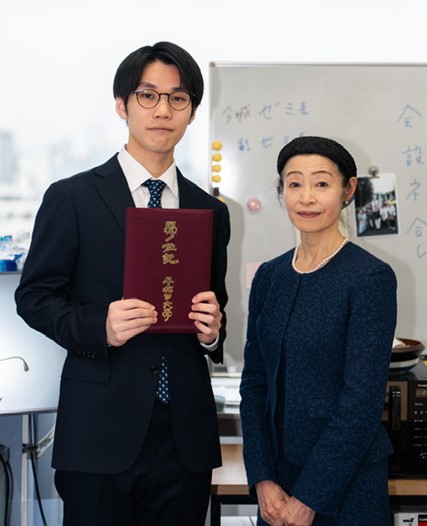
At the undergraduate Convocation in March 2026, with Professor Koshikawa from my research lab. They said, "The certified clinical psychologist program is maintained through the tremendous efforts of various teachers and facilities that accept interns, so They doesn't recommend that people who don't intend to actually work pursue it."
Professor Fusako Koshikawa (Faculty of Letters, Arts and Sciences Professor) wrote, "Psychology Seminar In this course, they were able to learn about cognitive behavioral therapy—a type of therapy that works on cognition to help patients feel better—and practice it with our fellow students.
Also, Professor Keiko Honda (Faculty of Education and Integrated Arts and Sciences Professor) wrote, "Psychology Practicum for Certified Psychologists In that course, we learned about intelligence tests, projective techniques, and counseling methods—including practical exercises—while drawing on educational and developmental psychology approaches. I only needed to take one of the two courses, but since Theywere interested in both, They ended up taking them both.
—How do you approach studying outside of class?
They are diligently studying for the national exam, including reading textbooks thoroughly. Since there are so many different methods for measuring psychological states, they understanding of the testing methods used in classes and practical training by practicing them with friends and seniors beforehand. Furthermore, even after obtaining my qualification, new knowledge and psychotherapies are being developed daily, so they believe they must constantly study to maintain my learning and expertise in individual cases.
Photo on the left: Notes used when classifying the content listed by children into "beginning, middle, and end" during a learning support internship in the fall of my fourth year of undergraduate studies.
Photo on the right: Finger puppets used in a learning support practical training session. They are used for training in categorizing and grouping subjects, and for training in acquiring perspectives from others.
—What are your plans for the future?
Currently, they are interested in the fields of healthcare and the judicial system. They are interested in becoming a psychological counselor working in hospitals, a legal officer (psychology) who professionally analyzes the causes of delinquency and crime using psychology and creates improvement guidance programs, and a family court investigator who investigates the causes and background of problems in juvenile cases and other cases, aiming to create a better future for children. My interests may change as they continue to learn, but they believe they need to confront myself and consider what kind of person they are and what they are capable of.
[Certified Psychologist]
The Certified Psychologist is a national qualification in Japan based on the Certified Psychologist Act. After being registered in the Certified Psychologist Registry and using the title of Certified Psychologist, we provide psychological support in fields such as healthcare, welfare, education, and possessing specialized knowledge and skills related to psychology. For more details, please check the Ministry of Health, Labour and Welfare's website. At Waseda University, you can aim to obtain qualifications through School of Human Sciences Graduate School of Human Sciences, School of Humanities and Social Sciences Graduate School of Letters, Arts and Sciences, and School of Education Graduate School of Education.
[Next Focus Preview] June 22nd (Mon) Release: "Writing Center, MSC/Information Face-to-Face Instruction Room Special Feature"


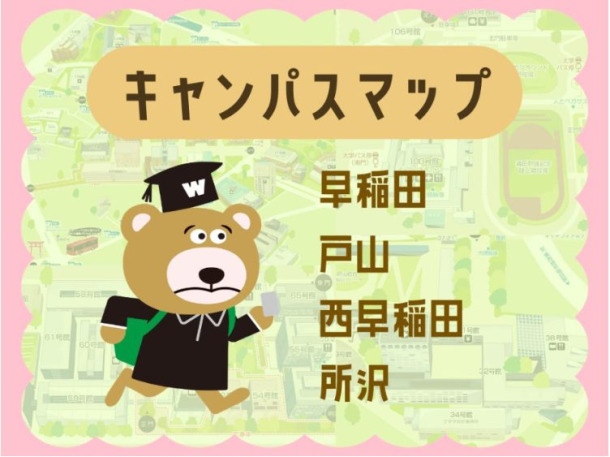
![[Save version] Map of the four main campuses](https://www.waseda.jp/inst/weekly/assets/uploads/2026/06/110d605cfac40346aad1d2df464a6586-940x705-1-1-610x457.jpg)