On July 20, 2026, the Office for Promotion of Equality and Diversity, Waseda University held a symposium commemorating the 10th anniversary of its establishment, titled“Be Different, Be Together: Embracing Differences, Shaping the Future.”
The symposium was organized as an opportunity to reflect on the University’s initiatives to date and consider the future of diversity, equity, and inclusion (DEI) in higher education. Speakers from a wide range of backgrounds, both within and outside the University, came together for a lively discussion on the direction Waseda should take over the next decade.
Opening Remarks
The symposium began with a video message from Aiji Tanaka, President of Waseda University. President Tanaka explained that the symposium was b
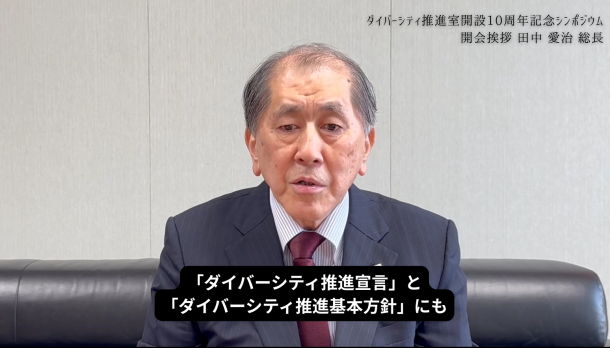 eing held as part of Waseda University’s 150th Anniversary Project (Global Citizenship Project), and expressed his hope that the event would also provide an opportunity to take a new step forward toward the University’s next 150 years.
He reaffirmed Waseda University’s longstanding spirit of turning diversity into strength and described the University’s various initiatives, including the advancement of women, support for students with disabilities, consideration for LGBTQ+ people, and internationalization, as strategies for enhancing the University’s competitiveness.
He emphasized Waseda University’s goal of becoming a university that brings together diverse people from around the world, where each member respects the differences of others with openness and flexibility and is able to realize their full potential. Diversity, he noted, should not be viewed as “special support for particular people,” but rather as a foundation for empowering every member of the University community and expanding the potential of the University as a whole.
 President Tanaka further expressed his conviction that truly innovative education and research can emerge from an environment where people with different backgrounds and values learn, take on challenges, and create the future together, ultimately contributing to Waseda University’s founding principle of contributing to the world and humanity.
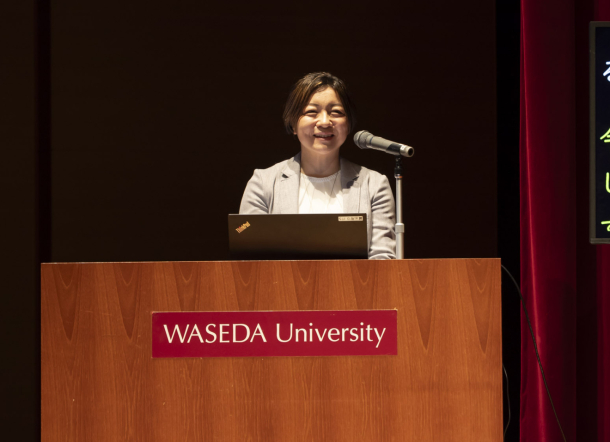
Next, Kyoko Ishida, Director of the Office for Promotion of Equality and Diversity, delivered remarks on behalf of the organizers. She reflected on Waseda University’s history of welcoming people from diverse backgrounds and harnessing their strengths to advance education and research. She also emphasized the University’s responsibility to carry this spirit forward while considering what diversity should mean in a new era.
Kyoko Ishida also introduced the idea of “restoring the proper balance between men and women,” advocated by Waseda University founder Shigenobu Okuma in 1897 when he emphasized the importance of women’s education. She noted that this forward-looking philosophy continues to resonate with the University’s efforts to promote diversity today. Referring to Waseda University’s Declaration on the Promotion of Diversity, she emphasized that creating an environment in which everyone’s dignity is respected and everyone can fully realize their potential, regardless of gender, disability, sexual orientation and gender identity, nationality, age, or other characteristics, is essential to the development of both the University and society.
She further noted that as society becomes increasingly globalized and technological innovation advances, the challenges surrounding diversity are also changing. She therefore emphasized the importance not only of establishing appropriate systems and policies, but also of fostering a culture and awareness that respect diversity. Looking back on the 10 years since the establishment of the Office for Promotion of Equality and Diversity, she stressed the need to recognize the invisible barriers that still remain and to regard this milestone as a new starting point for the future.
Kyoko Ishida expressed her hope that the keynote lectures and panel discussion would deepen participants’ understanding of the essence of diversity and encourage discussion about the perspectives universities will need in the years ahead. She concluded by expressing her hope that the symposium would inspire each participant to gain new insights and take action, helping Waseda University develop into an even more inclusive and vibrant community.
Keynote Lecture 1
Toward a University Where Different Experiences Resonate: Rethinking What We Consider “Normal” and the Future of Diversity
Speaker: Rina Komiya
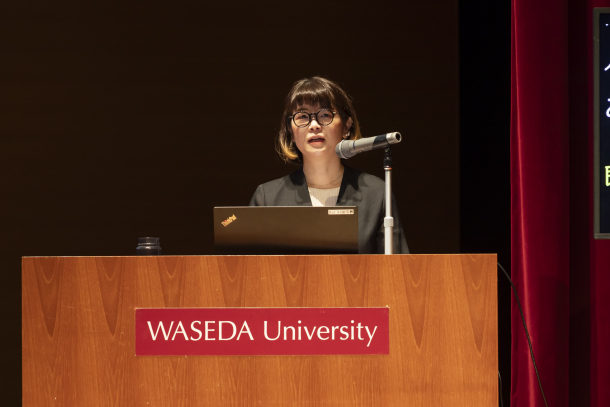
One important perspective in promoting diversity concerns the concept of what is considered “normal.” We often judge things unconsciously based on our own assumptions about what is normal. It is therefore important to ask who established those standards and how they came to be accepted.
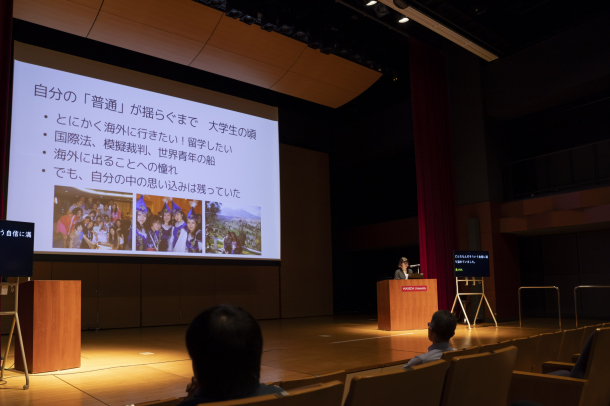 Diversity is not simply about bringing together people with different characteristics and backgrounds. It means recognizing from the outset that people have different experiences and perspectives, and reexamining the standards and systems that we have taken for granted as “normal.”
Traveling long distances geographically, what might be called a “horizontal journey,” does not necessarily free us from our assumptions or our own ideas of what is normal. What we need instead is a “vertical journey,” one that allows us, while remaining within the same society, to encounter the worlds of people who live under circumstances, in positions, and with realities different from our own.
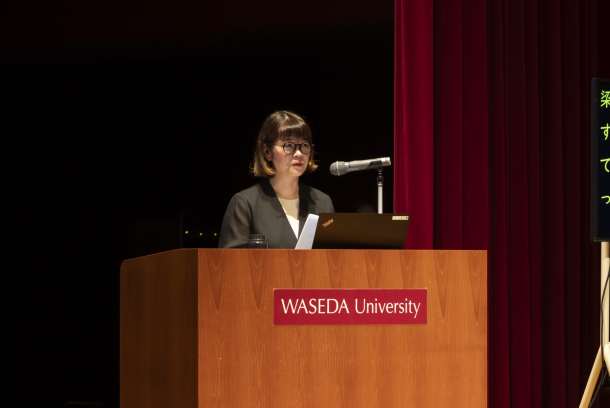 Inclusion also means more than simply inviting people on the margins into an existing center. Societies and organizations have values and standards that have unconsciously come to be regarded as self-evident. These form what we might call the “center.”
If that center is based on the experiences and perspectives of particular groups, however, it is not enough simply to add people who have been marginalized. Instead, we need to reconsider who occupies the center and whose voices are treated as the norm. We must reshape the center itself by incorporating the experiences and perspectives of diverse people.
Rather than gradually inviting people from the margins into the center, I hope Waseda will become a university that transforms the center itself. I believe that Waseda University possesses both the critical thinking and the spirit of freedom needed to accomplish this.
Keynote Lecture 2
Toward a Future Where Diversity Resonates: Innovation Starting at Waseda
Speaker: Junichi Kawai
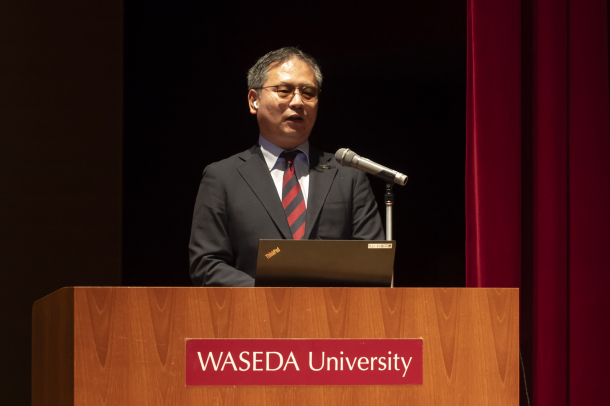
Based on my experience in the field of sports policy, I believe that promoting diversity in society is an essential part of creating an inclusive society. It is important for people with diverse backgrounds to understand one another’s differences and build society through continuing dialogue.
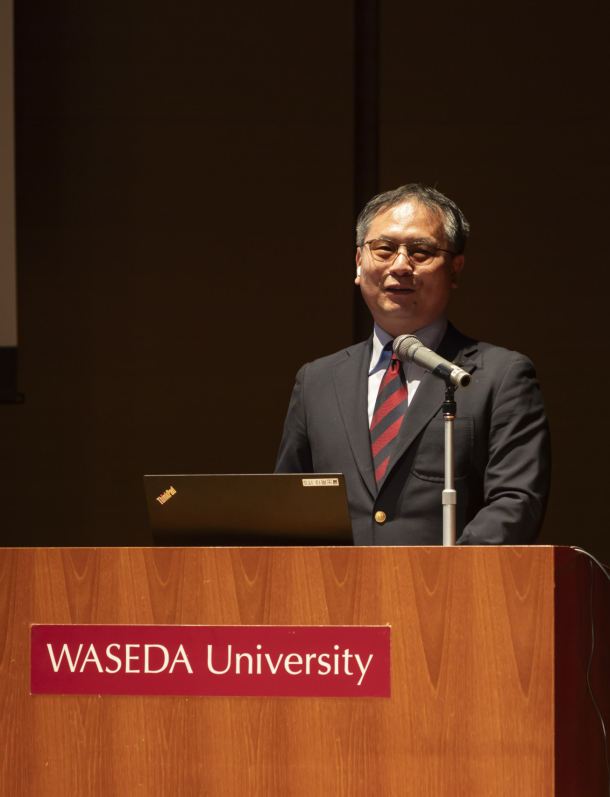 This process can sometimes require more time and resources. Yet it is precisely this process that creates new possibilities and becomes a driving force for greater creativity and vitality within organizations.
Another important perspective is the “social model” of disability, which views disability not as an issue arising from the individual, but as an issue created by society. Creating an environment in which everyone can realize their abilities by improving accessibility and providing reasonable accommodations is a responsibility shared by society as a whole.
When considering diversity, it is also important to be aware of the “homogeneity trap.” Organizations made up only of people with similar values and experiences may fail to incorporate diverse perspectives and overlook important insights. Organizations in which diverse people participate, on the other hand, tend to generate better results and greater innovation. These benefits do not necessarily emerge in the short term, however, and diversity should therefore be viewed as a long-term investment.
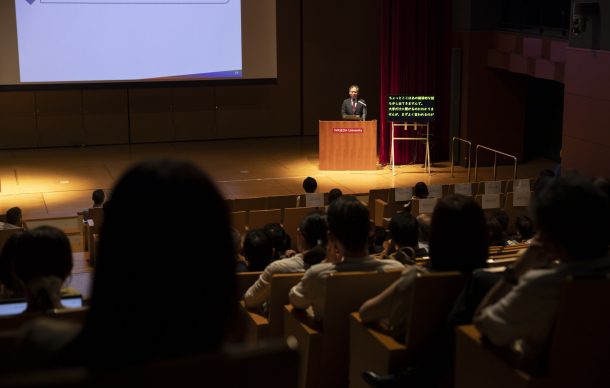 Changes to Japan’s Basic Act on Sport also demonstrate the expanding scope of inclusion. The Deaflympics and Special Olympics are now explicitly recognized within the legal framework, and sport is increasingly seen as contributing not only to athletic competition but also to the support of people with disabilities and the resolution of broader social issues.
Diversity is “being invited to the dance,” while inclusion is “being asked to dance.” Simply bringing together diverse people is not enough. True inclusion requires an environment in which everyone can participate, supported by reasonable accommodations, accessibility, and the perspective of equity.
Achieving the health and well-being of every student, faculty member, and staff member, as set out in Waseda Vision 150, also contributes to the advancement of education and research. Inclusion is not an end in itself, but a means of creating a better society and generating innovation. An environment with psychological safety, where people from different backgrounds and with different values can freely exchange ideas, provides the foundation for new ideas and transformation.
The ideal inclusive society is not like a “mixed fruit juice,” but rather a “fruit punch.” Instead of blending away individual characteristics, we need a society in which people live together while retaining and making the most of their individual differences and strengths. Inclusion is also essential if we are to embody Waseda’s pioneering spirit. As a Waseda alumnus, I hope to work together with all of you to help create a vibrant society in which everyone can thrive.
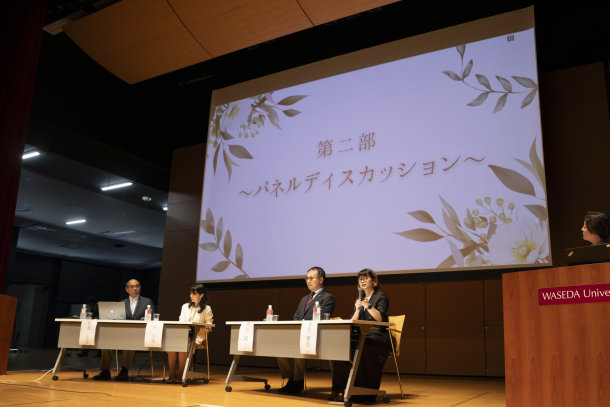
Part II: Panel Discussion
Building on the keynote lectures in Part I, practitioners from within and outside the University discussed the current state and future of diversity promotion.
Facilitator:
Kyoko Ishida, Director, Office for Promotion of Equality and Diversity
Panelists:
Junichi Kawai
Rina Komiya
Chiharu Tokoro, former Director, Office for Promotion of Equality and Diversity
Takeshi Akiba, Director, Student Diversity Center
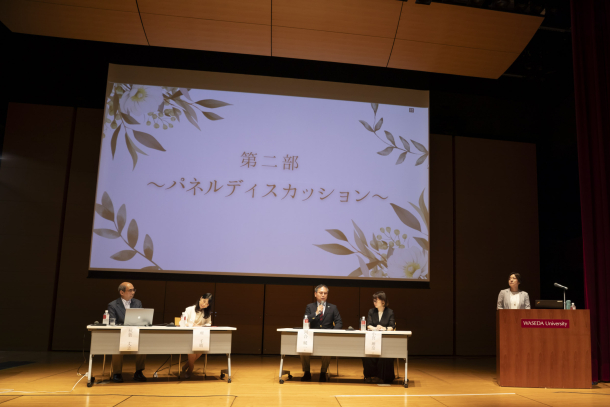
Chiharu Tokoro began by introducing herself and reflecting on the initiatives undertaken during her tenure as Director from 2018 to 2022. She highlighted various efforts that demonstrated the University’s commitment to diversity, including the introduction of a mentoring system, obtaining Kurumin Certification, and achieving Silver recognition under the PRIDE Index while working toward Gold recognition.
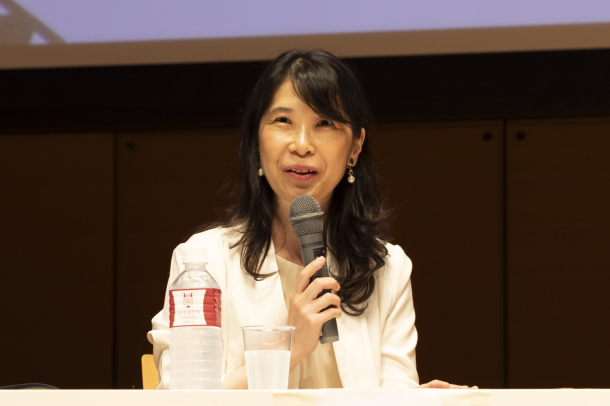
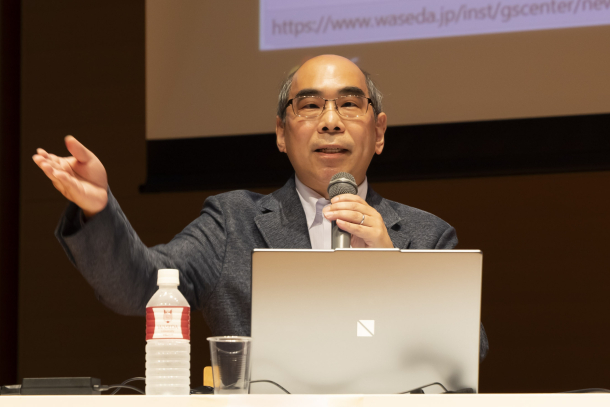 Next, Takeshi Akiba shared his hope that Waseda would be a university where every student has the opportunity to think about diversity, drawing on experiences from his own childhood. He introduced the four organizations that make up the Student Diversity Center: the Accessibility Resource Center (ARC), Intercultural Communication Center (ICC), Gender and Sexuality Center (GS Center), and Student Counseling Center (SCC). He also noted that the GS Center was established in response to a proposal from students.
As examples of recent initiatives, he introduced a Gender, Sexuality, DE&I Guidebook for Student Clubs and Extracurricular Activities, created under the leadership of GS Center student staff to help ensure that all students, including LGBTQ+ students, can participate in clubs and extracurricular activities with confidence. He also described how vegan options were introduced at campus cafeterias following a suggestion from a student who had participated in an ICC event. He emphasized the importance of supporting an environment in which students can better understand diversity on campus and respect one another.
Under Kyoko Ishida’s facilitation, the panelists, joined by keynote speakers Rina Komiya and Junichi Kawai, discussed how diversity should be promoted at Waseda University in the years ahead.
The first theme drew on Rina Komiya’s keynote observation that diversity initiatives often focus on “increasing the number of diverse people,” whereas what is really needed is to “resh ape the center itself.” Kyoko Ishida asked what Waseda University would have to look like before we could truly say that it had changed.
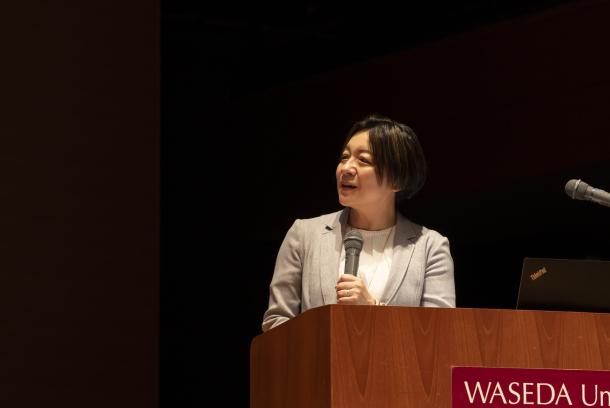
Rina Komiya responded that, paradoxically, she would consider it a success if the Office for Promotion of Equality and Diversity no longer existed in 10 years. Ideally, diversity promotion, which is currently led by a specialized office, would eventually become a natural part of the everyday work of every department, making a dedicated organization unnecessary. She also stressed that in an era that often prioritizes efficiency in terms of time and cost, universities should instead cultivate a culture that values thoughtful dialogue and consensus-building, involving people from diverse backgrounds in the discussion.
Takeshi Akiba emphasized the importance of enabling students who will become future leaders in a wide range of fields to develop the ability to put diversity and inclusion into practice naturally. He also noted that in supporting students with disabilities, there is no single “right answer.” Instead, the individuals concerned, faculty members, and staff must engage in dialogue to build consensus. Continuous dialogue, he stressed, is essential to achieving inclusion.
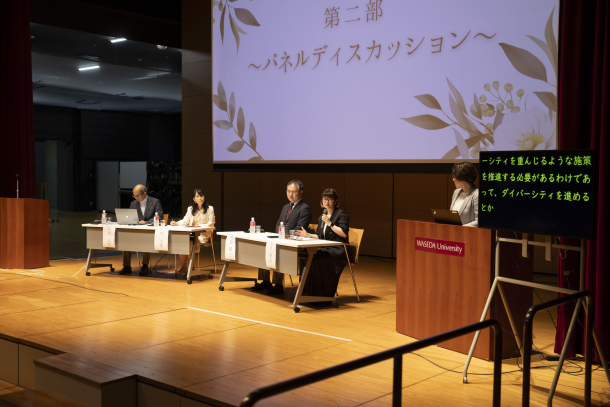 Chiharu Tokoro reflected that the discussion has progressed from a stage in which people were still developing an understanding of the very concept of diversity to one in which diversity is being harnessed to advance well-being and create a better society. She emphasized the importance of continuing to engage in dialogue with people whose values and backgrounds differ from our own.
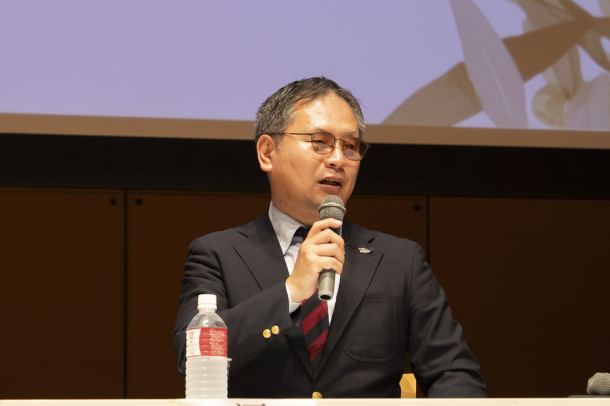 Junichi Kawai expressed agreement with Rina Komiya and noted similarities between disability policy and gender-related initiatives in both the structures of the challenges they address and their historical development. Referring to the work of Yutaka Nakamura, often described as the “father of the Paralympics” in Japan, he explained that the ultimate goal of diversity promotion is to create a society and organizations in which diverse people can thrive naturally, even without special measures or dedicated organizations. This idea of ultimately making such special structures unnecessary, he said, closely parallels Rina Komiya’s vision of success as a future in which the Office for Promotion of Equality and Diversity itself is no longer needed.
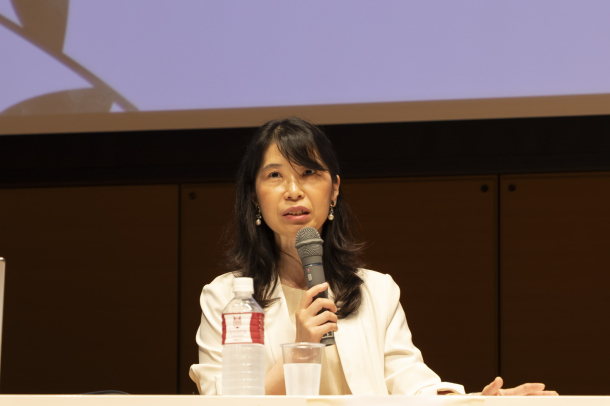
The discussion then turned to the “social model” and the “homogeneity trap” introduced in Junichi Kawai’s keynote lecture. Kyoko Ishida raised the question of whether social structures that create disability may themselves represent a form of the homogeneity trap. Groups consisting of people with similar experiences and values may initially feel comfortable. Yet by settling into that comfort, people may unconsciously exclude those who are different from themselves, ultimately creating social structures that generate numerous barriers. She asked what kind of diversity Waseda University needs in order to overcome this “homogeneity trap” and truly generate innovation.
In response, Junichi Kawai reflected on his own student days. He explained that beyond the fact that he had a visual impairment, he found reassurance in the Waseda environment, where people with a wide variety of individual characteristics were simply part of everyday life. He said that one of the great values of a university is the opportunity it provides for students to meet many different people, discover a sense of belonging and their own roots, and grow through these experiences. He also emphasized the need to further develop an environment where people from varied backgrounds, including women faculty members and students, international students, and faculty members and students with disabilities, can learn together.
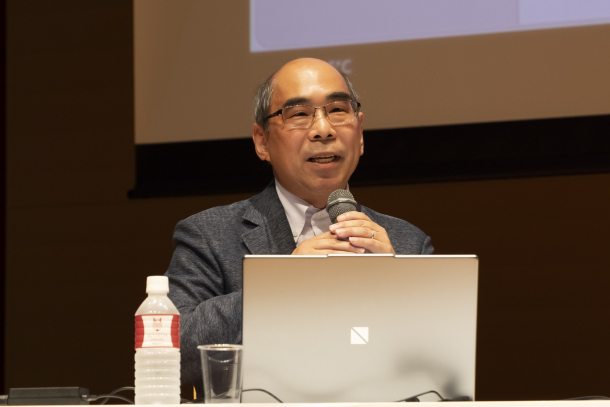
Chiharu Tokoro noted that women remain underrepresented in science and engineering and emphasized that innovation requires diversity not only in gender but also across nationality, academic discipline, generation, and other dimensions. She also pointed out that while society increasingly values efficiency in terms of time and cost, promoting diversity requires both. Because universities are less constrained than companies by the need to demonstrate short-term results, she argued, they are uniquely positioned to show students the process through which diversity can generate new value.
Takeshi Akiba observed that Waseda University already possesses rich diversity and said that the next challenge is to develop that diver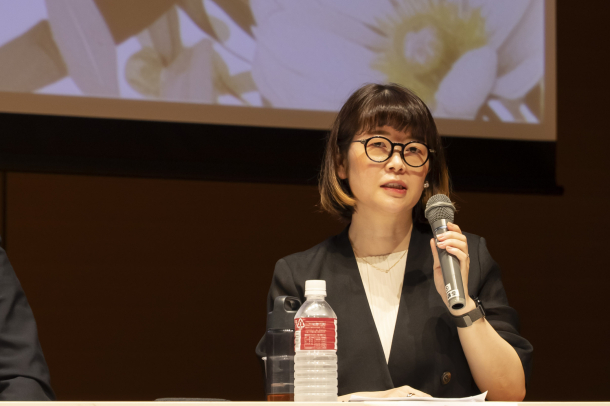 sity into genuine inclusion. He encouraged students to deliberately step beyond environments in which they feel comfortable and seek experiences that expose them to new people and unfamiliar values. He added that the Student Diversity Center also hopes to create more opportunities of this kind.
Finally, Rina Komiya emphasized that diversity is not merely a means of generating innovation, but a reality that already exists in society. Rather than debating what kinds of diversity are needed, she argued, universities should recognize the voices and needs that have previously been overlooked and continue to acknowledge and respect them. With this message, the panel discussion drew to a close.
Comments Following the Panel Discussion
After the panel discussion, Tetsuya Yaguchi, Professor at the Faculty of Education and Integrated Arts and Sciences and the first Director of the Office for Promotion of Equality and Diversity, offered comments from the audience. He described his involvement in diversity initiatives from the launch of the Office for Promotion of Gender Equality in 2007 through the subsequent establishment and development of the Office for Promotion of Equality and Diversity.
He reflected that although the principles underlying diversity promotion had been shared from an early stage, considerable trial and error was required before these principles became firmly established, expanded, and deepened through practical initiatives across the University. While acknowledging that various initiatives are now steadily taking root, he also noted that many challenges remain.
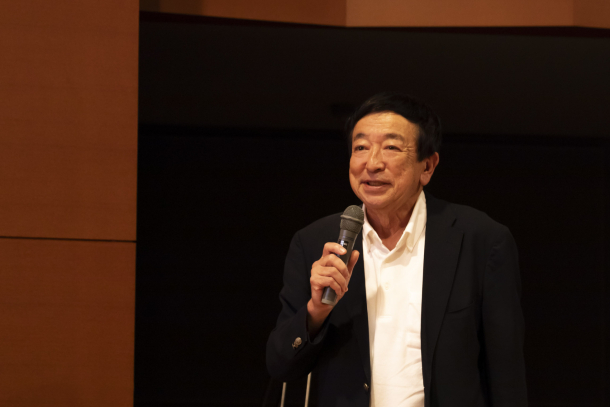
In particular, he pointed out that diversity promotion still relies in some respects on the goodwill and dedication of a limited number of people. He therefore emphasized the importance of active involvement by the entire University community, including faculty members, staff, and students. He expressed his hope that these initiatives will develop even further as more members of the community share a common desire to make Waseda University a better place.
He further noted that not only diversity initiatives, but many of the University’s activities have been supported by collaboration among numerous people. Such accumulated cooperation, he said, contributes to the growth of the University as a whole. He concluded by expressing his hopes for further progress over the next 10 years.
Messages for the Future of Waseda University
To conclude the panel session, each panelist shared a message expressing their hopes for the future of Waseda University.
Rina Komiya quoted the African proverb, “If you want to go fast, go alone. If you want to go far, go together,” emphasizing the importance of moving forward together through dialogue with diverse people rather than focusing solely on efficiency in terms of time and cost.
Junichi Kawai referred to a mindset shared among athletes competing at the highest international levels: maintaining the status quo and settling for stability means falling behind. He emphasized that Waseda University must continue taking on challenges in a wide range of fields if it is to remain a leader in Japan and around the world.
Chiharu Tokoro stressed the importance of each individual viewing the significance of diversity promotion as something personally relevant, and of continuing to reflect on it while responding to changes in society. Takeshi Akiba expressed his hope that this symposium would inspire the next generation of students to become agents of change within the University and to create new value.
Underlying all of these messages was a shared belief that continuing to take on challenges while respecting one another’s differences will contribute to the further development of both Waseda University and society as a whole.
Closing Remarks
In her closing remarks, Hatsue Shinohara, Executive Vice President responsible for diversity promotion, reflected that the symposium had offered many valuable insights into the question of what universities should aspire to become and how they should advance diversity and inclusion. She first referred to the unconscious biases and discrimination that can exist in everyday situations, as discussed in the keynote lectures, as well as Junichi Kawai’s message, “Dance Together and Be Happy.”
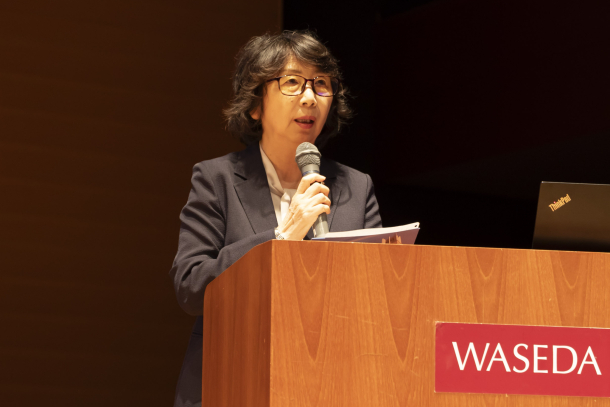 She explained that inclusion is not simply about inviting diverse people to join, but about creating an environment in which everyone can participate and engage together. In this sense, she expressed her hope that Waseda University would become like a “large dance floor” where diverse people can dance together.
Reflecting on the challenges and proposals shared throughout the symposium, she emphasized that diversity promotion does not produce visible results overnight. Rather, it requires sustained effort over time, making it essential to build progress patiently, one initiative at a time.
Hatsue Shinohara also referred to the design of the commemorative leaflet distributed to participants. The colored pencils depicted on its back cover convey the idea that, unlike paints that blend together into a single color, diversity is about people coexisting while each retains their own distinctive color.
She concluded by thanking the speakers and everyone involved in organizing the symposium, while expressing her hope that Waseda University will continue moving forward with respect for diversity and remain a university where everyone has the opportunity to thrive.
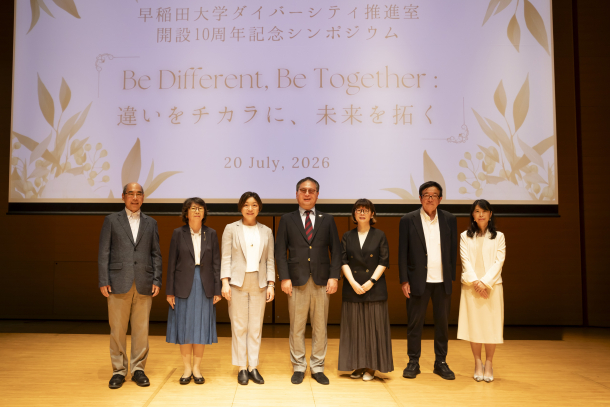
From left: Takeshi Akiba, Professor in the Faculty of International Research and Education and Director of the Student Diversity Center; Hatsue Shinohara, Executive Vice President responsible for diversity promotion; Kyoko Ishida, Director of the Office for Promotion of Equality and Diversity and Professor in the Faculty of Law; Junichi Kawai; Rina Komiya; Tetsuya Yaguchi, Professor in the Faculty of Education and Integrated Arts and Sciences and the first Director of the Office for Promotion of Equality and Diversity; and Chiharu Tokoro, Professor in the Faculty of Science and Engineering and former Director of the Office for Promotion of Equality and Diversity.