
From the Dean
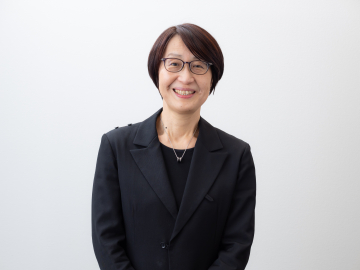
Dean, Graduate School of Social Sciences, Saori Kamano
The Graduate School of Social Sciences at Waseda University is a place where people with diverse academic, professional, and cultural backgrounds come together to study contemporary society from multiple perspectives.
Since its establishment, our School has placed great importance on the “interplay between theory and practice.” We welcome students who enter directly after completing their undergraduate studies, as well as those who bring with them a wide range of professional and life experiences. Students from different backgrounds learn together in lectures and seminars, gaining new perspectives from faculty members and also from one another.
In recent years, our student body has become increasingly diverse, particularly with the growing number of students from other parts of Asia. As a result, our School now has one of the highest proportions of international students among Waseda University’s graduate schools. We see this diversity not simply as a characteristic of our educational environment, but as an important source of learning and new knowledge. Studying alongside people with different professional, academic, and cultural backgrounds encourages us to approach contemporary social issues from multiple perspectives and to question assumptions that we might otherwise take for granted. We greatly value this environment, where students and faculty learn from one another through engagement with the diverse perspectives each person brings.
Our School also actively promotes international exchange. At the master’s level, we offer a double degree program with Tsinghua University in China, providing students with the opportunity to study at both universities and earn degrees from each. Faculty members and graduate students also participate in a wide range of international academic exchanges, creating opportunities to develop their research through dialogue across national and institutional boundaries.
The social issues we face today are increasingly complex, and few can be fully understood from the perspective of a single academic discipline. For this reason, we encourage our students to develop expertise in their own fields while also engaging with concepts, theories, and methods from other disciplines. Through this process, they can refine their research questions, broaden their perspectives, and develop new ways of understanding contemporary society.
The faculty of the Graduate School of Social Sciences reflects this interdisciplinary approach. Our faculty members are grounded in fields such as political science, law, economics, commerce, sociology, history, philosophy, linguistics, and data science, while many pursue research and teaching that cross conventional disciplinary boundaries. Students encounter this interdisciplinary environment through research supervision, coursework, and seminars. In both the master’s and doctoral programs, students receive guidance not only from their primary supervisors but also from faculty members in related fields, allowing them to consider their research from a variety of perspectives.
In our master’s program, students must complete coursework as part of their degree, but they also have considerable freedom in choosing their courses. Students can deepen their knowledge in their areas of specialization while also exploring concepts and methods from other fields. We hope that this flexibility enables each student to shape an interdisciplinary approach suited to their own research questions and intellectual interests.
The Graduate School of Social Sciences established its master’s program in 1994 and its doctoral program in 1996. Since then, we have continued to develop our educational and research programs in response to societal changes. Today, the School is organized into two majors and five research fields: Contemporary Japanese Studies, International Cooperation Studies, and Global Civil Society Studies in the Major of Global Studies; and Sustainable Development Studies and Public and Social Policy Studies in the Major of Policy Science.
Across these research fields, our students and faculty address a broad range of contemporary issues, including the environment, peacebuilding, social inequality, international cooperation, development, global business and organizations, labor, and regional communities. After completing their studies, our graduates apply the knowledge, perspectives, and research skills they have developed here in a wide variety of settings, including universities and research institutions, government agencies, international organizations, civil society organizations, and corporations.
Looking ahead, we will continue to foster the Graduate School of Social Sciences as a community in which recent university graduates, students with a wide range of professional and life experiences, and students from diverse international backgrounds can learn together, inspire one another, and contribute to the creation of new knowledge. I hope each student who joins our School will find opportunities not only to deepen their own research, but also to encounter new ideas, perspectives, and people that will expand how they see society and the world.