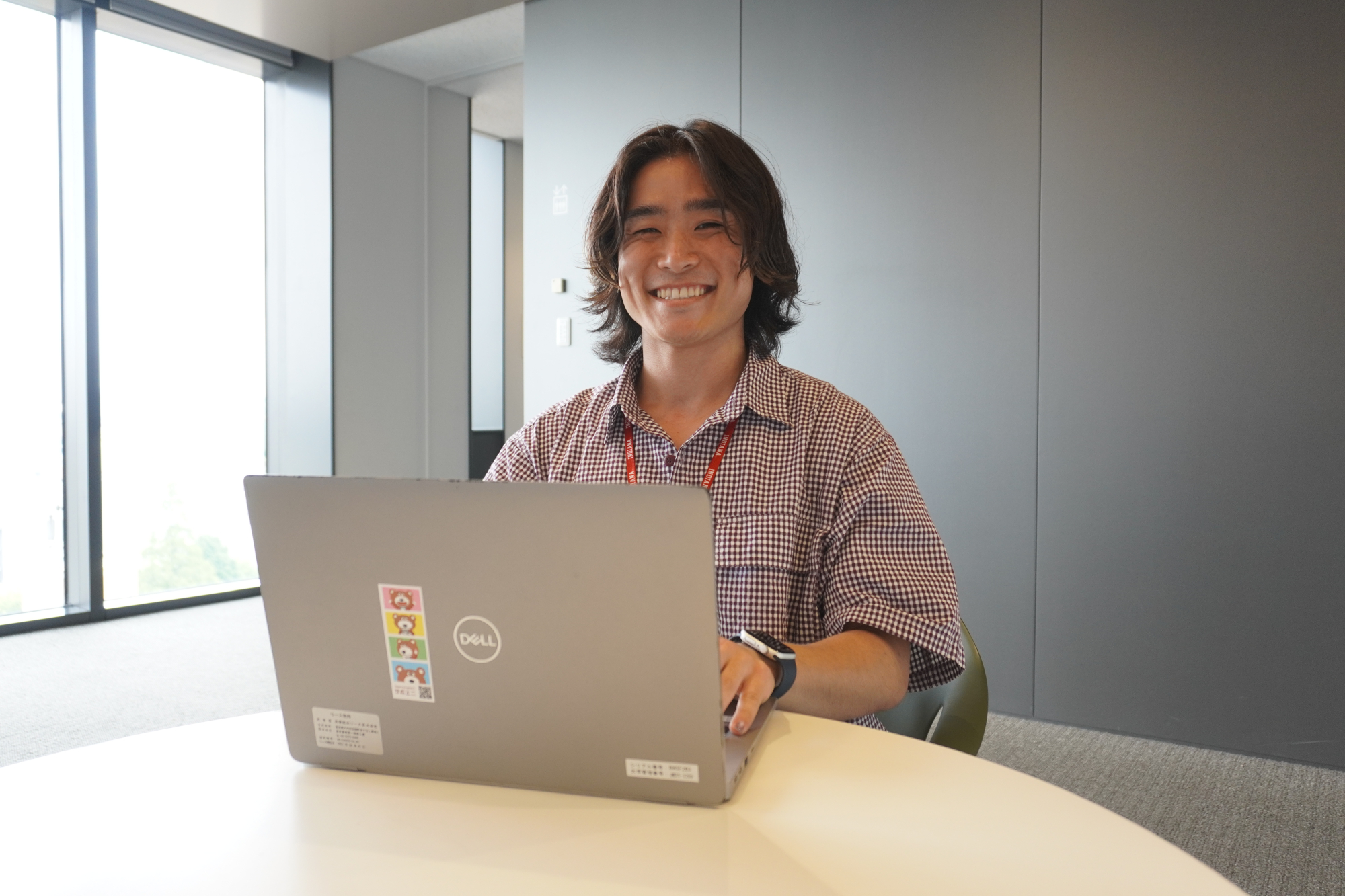
An Interview with Admin Staff Raimu Mabuchi: Supporting Student’s Independence From Waseda to the World
Tue, Sep 15, 2026-
Tags
Every year, thousands of students arrive at Waseda while thousands leave for study abroad. As its efforts for internationalization continue to grow, the University offers many study programs in English and supports both inbound and outbound students. But behind these international programs and student support systems are administrative staff that work relentlessly, unbeknownst to students.
Raimu Mabuchi, a Waseda alum who continues to work at the University as an administrative staff member, has been working to support students both from the School of Political Science and Economics (SPSE) and now those who want to study abroad. His experience as a teaching assistant for a sport journalism seminar back in his university days inspired him to work in higher education, and collaboration has become a key part of how he views administrative work at Waseda.
After two months of training at Indiana University in the USA, a transformative study abroad experience for him, Mabuchi-san returned to Waseda with the determination to establish the Academic Advisor program at SPSE. Now working for the Center for International Education (CIE), his experience and story embody the value of a global Waseda that the University is striving for. This shows that Waseda’s internationalization depends not only on students and faculty, but also on administrative staff who design and sustain these opportunities
The following interview has been edited and condensed.
In the interview, I will refer to Raimu Mabuchi as “Mabuchi-san”, as I did in our interview.
Student Life at Waseda:
Hi Mabuchi-san, could you briefly introduce yourself?
Hi, my name is Raimu Mabuchi, a current staff member at the Center for International Education and previously I worked as a member of the School of Political Science and Economics Office. I started working as an administrative staff after I graduated from Waseda’s School of Education. Currently, I am working as a student exchange program coordinator to help students with the process of studying abroad from and to Waseda.
Why did you choose Waseda University?
I actually chose Waseda because I found out about Twinkle, a circle (student club) that focuses on K-pop dance, when I was a high school student. And I am currently the “kaichou 会長” (mentor) for the circle.
Additionally, I was interested in human studies, a field that was famous at Waseda, a school known for its rigour. I tried hard to enter Waseda.
Was there anything that inspired you to work in higher education?
During my sophomore year, I worked as a teaching assistant for a Global Education Center class: Sport Journalism Seminar. This class was different from traditional Japanese classes in-terms of lecture style and content. One of the professors was a member of the Japanese Olympic Committee (JOC) and the other professor was an editor for Haruki Murakami. During the course of this class, I had to book an appointment with an athlete to interview them. With the professor’s connections, I had the opportunity to meet Olympic athletes, sports journalists, and student-athletes. Finally, I independently arranged an interview with a baseball glove craftsman, learned about the process of making baseball gloves, and wrote an article based on the interview.
This class focused more on practical experiences such as writing an article, conducting an interview and completing a reflection which left an impression on me. Inspired by the process of preparation and paperwork for the opportunities to collaborate with staff, my mind shifted towards the administrative side. I realized that the administration is a player to organize big opportunities for collaboration.
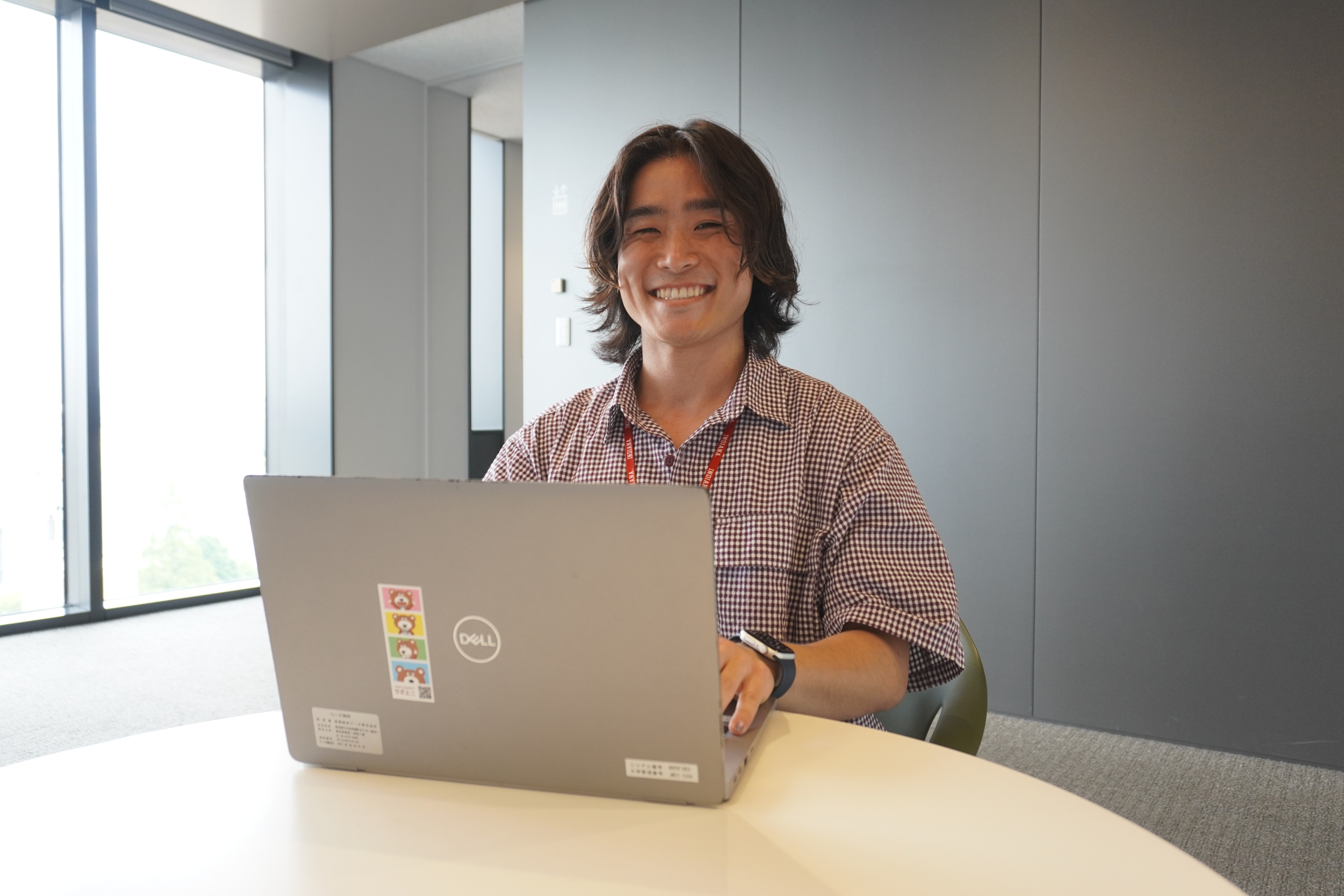
Mabuchi-san during the interview
Experience at Indiana University:
How does Waseda support you to develop your skills and understanding as an administrative staff member to better support students?
As a university administrative staff member, Waseda provides kenshu 研修 (training programs) for staff. I applied with a specific intention in mind: to go to the country that birthed academic advising. I wanted to study more about academic advising. Indiana University (IU) and Waseda University have had a relationship lasting 100 years since the first exchange program. As someone who had never been to study abroad, I wanted to understand the difficulties that international students go through to be able to provide the most holistic student support. Hence, I asked the International Office for my training program to be at IU for two months.
During my time at IU, I joined their Advising & Major Exploration Service team and Academic Services for Indiana University Athletics. The problem I saw and tried to solve at IU was helping first-year students to become independent, specifically the transition from high school to university. Academic advising, more than providing options, is for students to learn about how to find a pathway, think about their career and major. The biggest takeaway for students is to know how to develop that by themselves.
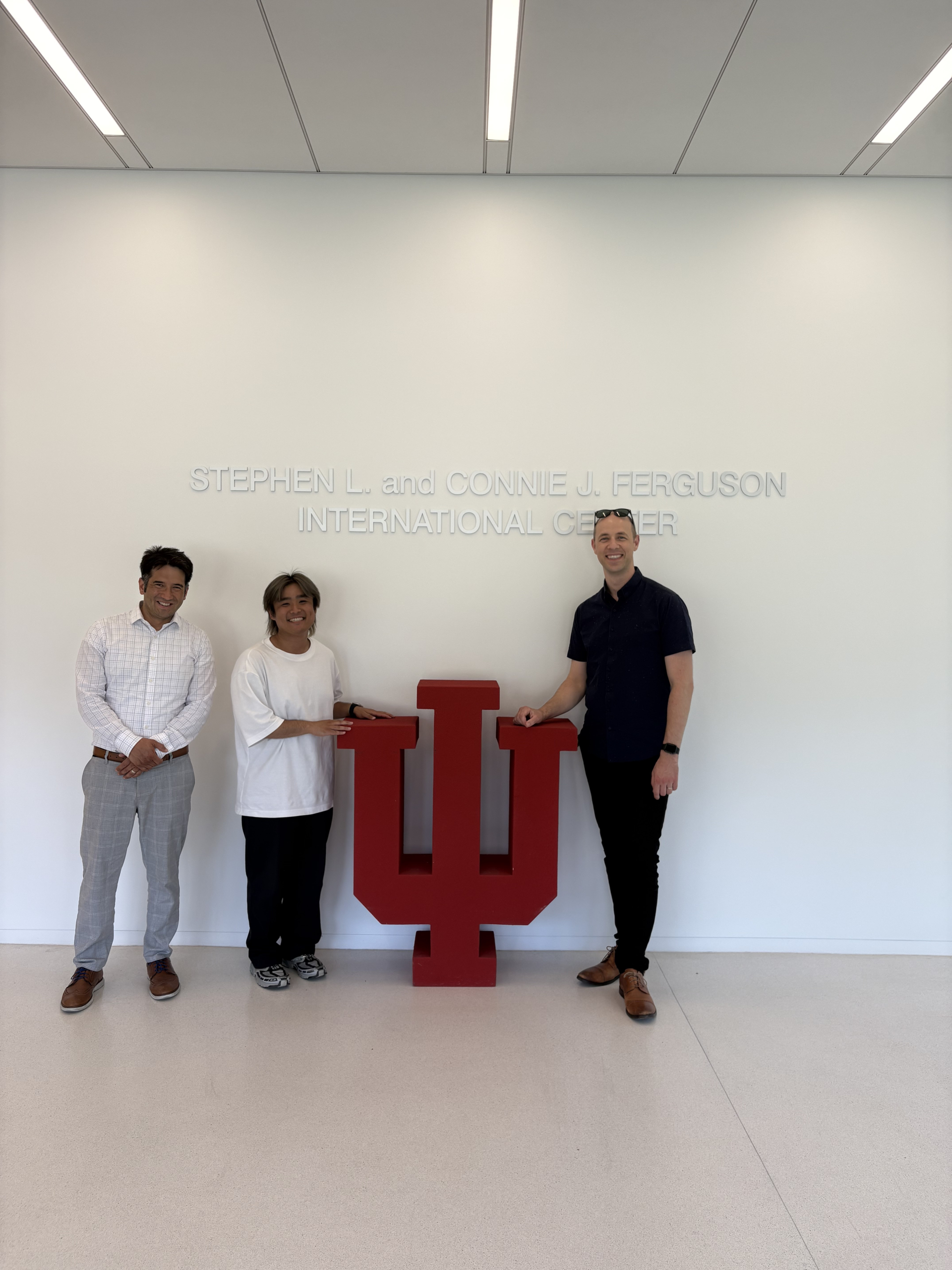
Mabuchi-san and his mentors from the Office for International Service.
How did the experiences shape your viewpoint on how Waseda can continue to grow student support?
One of the most memorable times was when I got to attend the Institute for Curriculum and Campus Internationalization (ICCI) workshop with many school deans and administrative managers in charge of international fields from around the world. I was just a university staff member but I got to learn about frameworks to encourage student mobility, campus globalization and exchange thoughts. It was so exciting for me. The experience opened me up to the possibility of working in an international context within higher education.
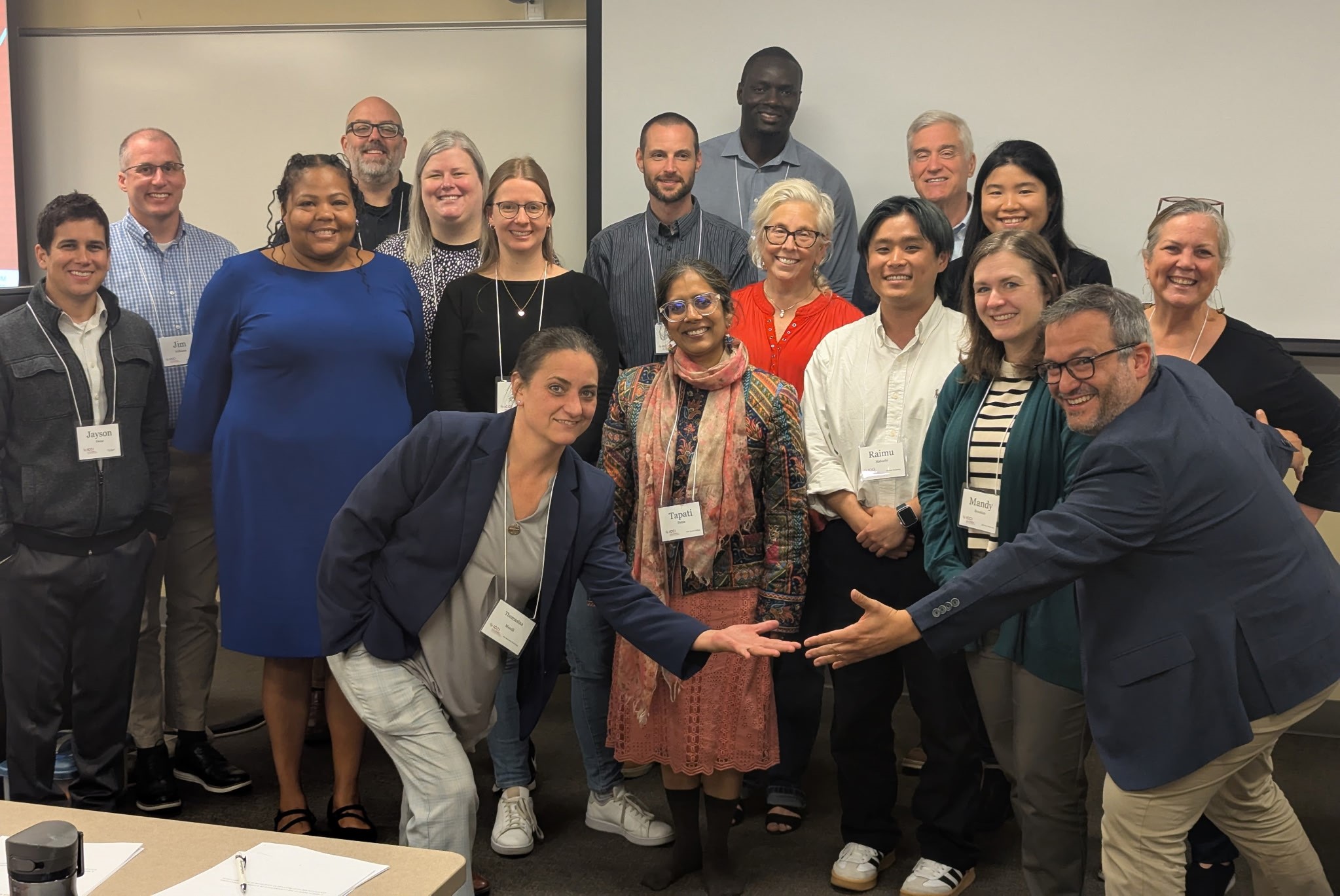
Mabuchi-san at ICCI, with team members from all over the world.
Additionally, my experience moving abroad also showed me how international students at Waseda also face multiple challenging situations such as submitting paperwork at town offices or dealing with cultural differences. While I was able to understand these challenging situations for both ingoing and outgoing students from Waseda, I also recognized the invaluable experiences that studying abroad provides. Returning to Waseda, I am determined to adapt the ideas that I learnt to Waseda University. This starts with my establishment of the Academic Advising Service for the SPSE Office.
SPSE Office & Academic Advising:
Given your time at IU, how has that motivated you to run the Academic Advising Service? What did you feel excited about with the service?
I first started academic advising by myself, but the office is trying to do it holistically.
My main work at the office before I moved was the start of the Academic Advising Service given by the office for EDP (English degree program) students. At first, the students were only interested in the free lunch that we offered. But as the session went on, they turned their interest to the group session content. Through these group sessions, we want to encourage students to know how and where to find the resources as they continue to study independently. The exact timing that students’ habits change during the group session excited and motivated me to continue.
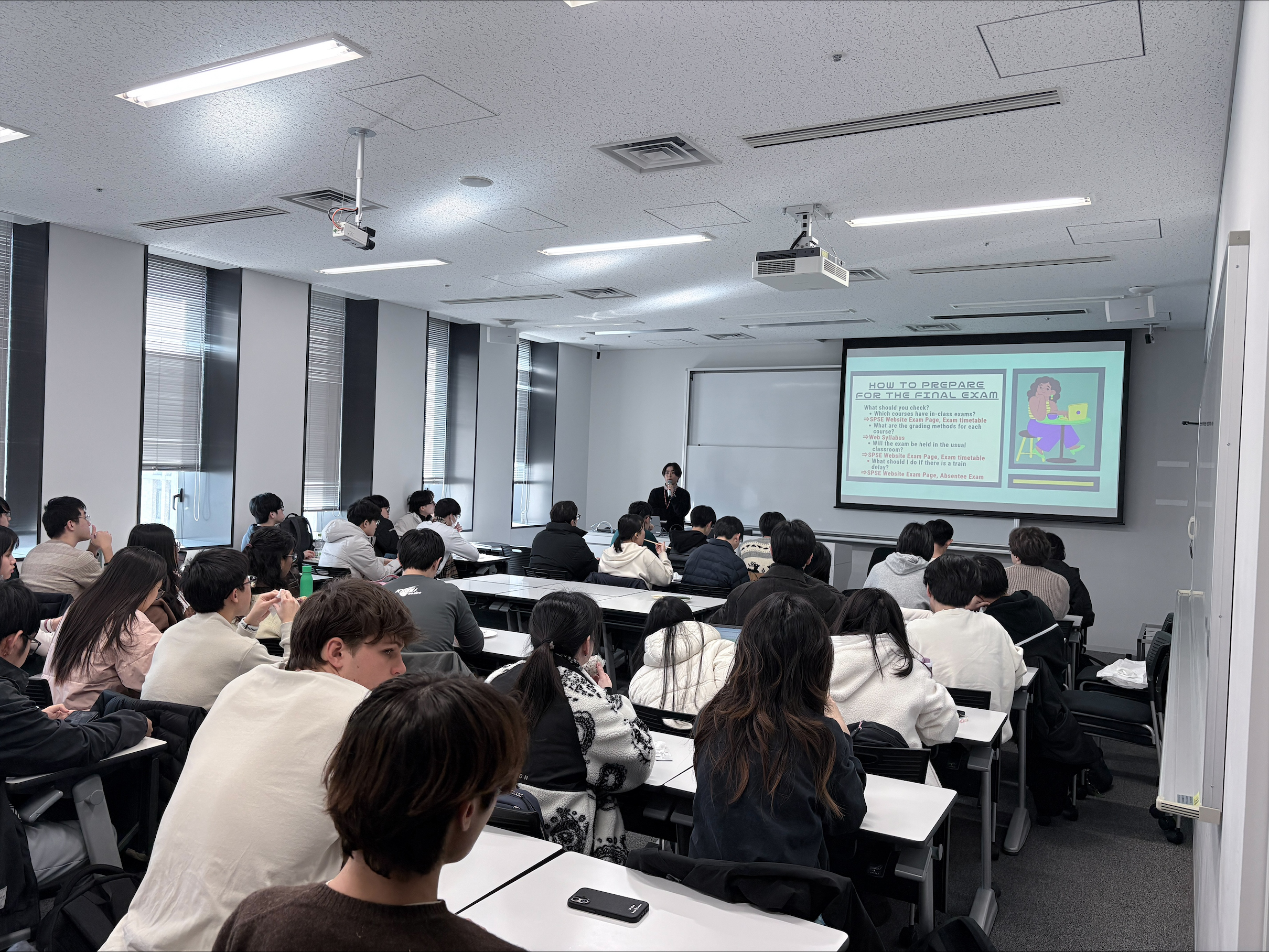
Mabuchi-san hosting an Academic Advising session for SPSE students.
Through these group sessions, the office was able to gradually become more open to holding conversations and rewarding student support through which more staff were able to think creatively. Before, it was hard for staff who never had academic advising to offer the service to students in need. By the time I moved to the CIE, I was glad that the SPSE office had an increasingly positive attitude towards student support.
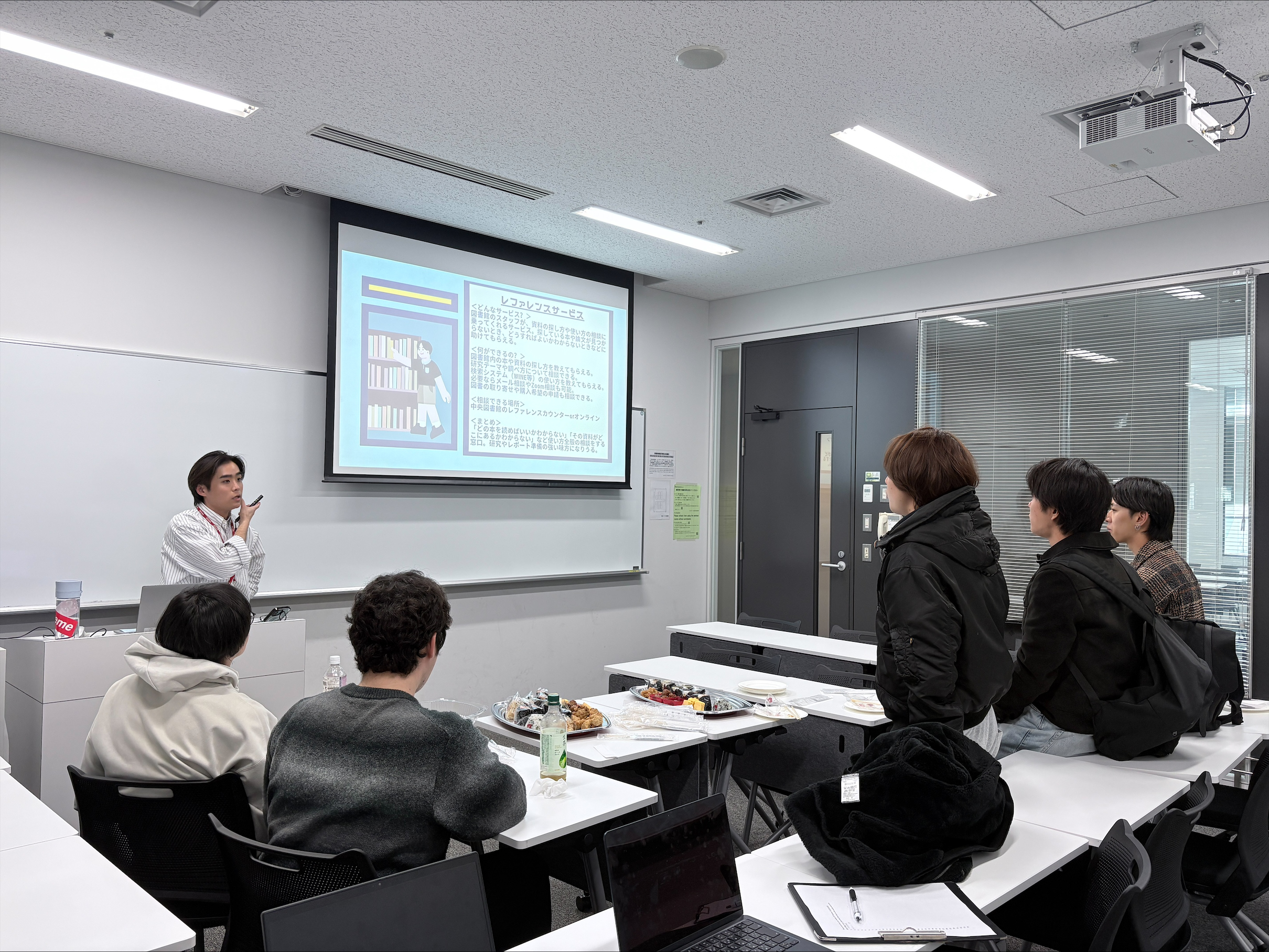
Mabuchi-san hosting Academic Advising in Japanese.
Center for International Education & Waseda’s Growing Collaborations:
What is your current role at the CIE and how does it reflect Waseda’s growing international collaboration?
The experience I had at IU showed me how important it is for students to have the support they need for studying abroad. From having the idea to wanting to study abroad, finding the information, surviving the screening to preparation, arriving and studying in a new country. Through this process, students go through and build their independence, which connects to my academic advising work.
Waseda’s goal is to have 100% of its students experience studying abroad at least once before graduation by 2032. I translated it into my own purpose: to give opportunities to every studentwho wishes to study abroad, especially for those who wanted to but couldn’t. In addition, I believe it is also important to create opportunities for students who have not yet developed an interest in studying abroad to discover its value.
I thought my experience in academic advising could be useful in the context of study abroad. At CIE, I also have the chance to accept inbound students, and it is all connected because they share the same struggles coming to Japan. Students do not need to have everything figured out before considering study abroad. Just as in academic advising, what matters most is offering the kind of support that enables students to take the first step, learn what opportunities are available, and gradually find their own path.
I also realized the importance of intercultural experiences. Working with CIE staff, I hope to work on more collaboration with ICC (the Intercultural Communication Center) or other school programs to encourage student mobility. I believe that is how my vision connects to the university goals and value of internationalization, through working at CIE.
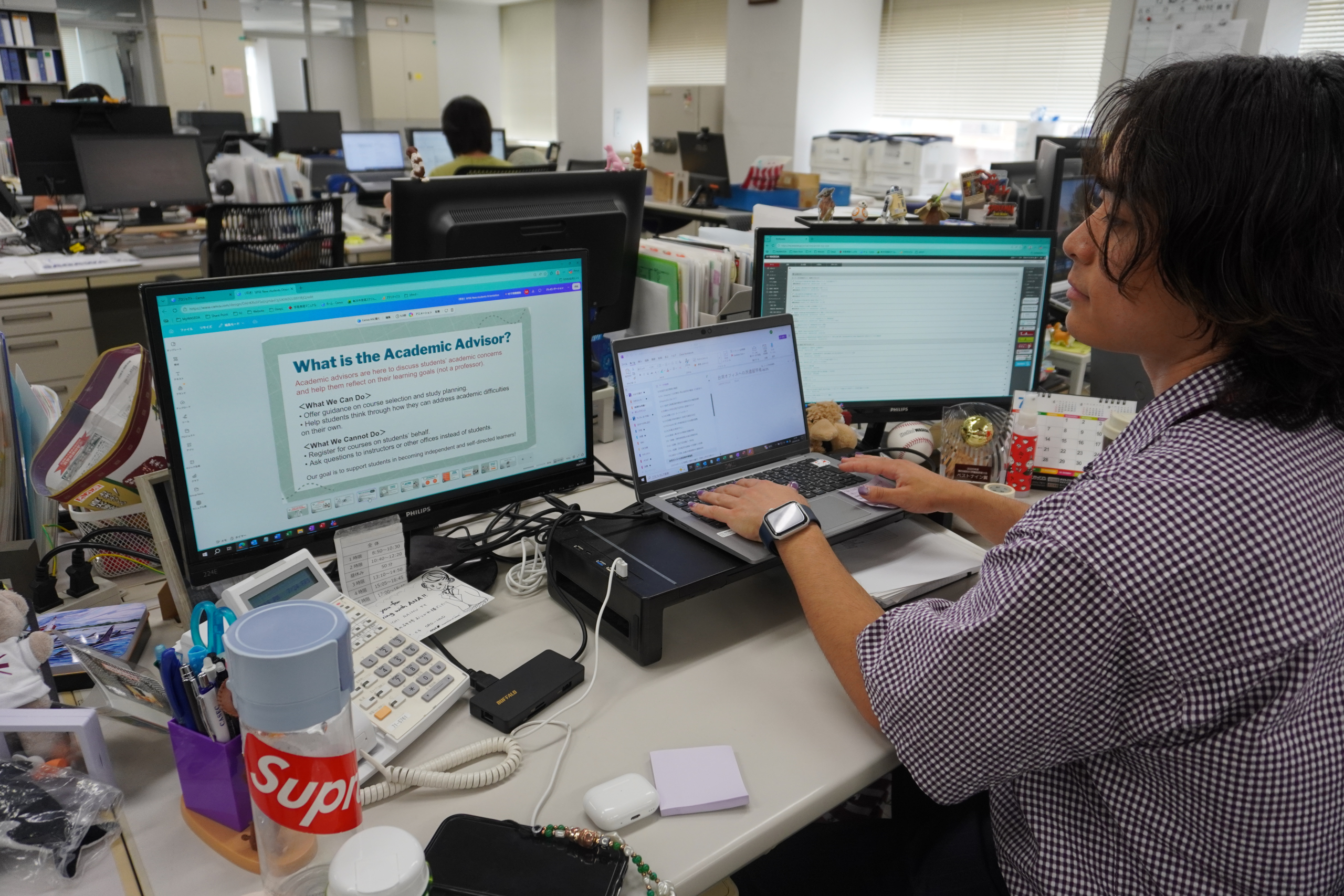
Mabuchi-san working at the CIE office.
His Vision For the Future of Student Support and Internationalization at Waseda
Do you have any future vision for student support and internationalization at Waseda?
From the collaboration perspective, I hope to accomplish student mobility as a whole. We aim to understand the needs of students and reflect that into the programs that Waseda offers. For instance, my mission is to promote and help students understand the value and join many programs, like leadership programs, that the University hosts and offers.
Furthermore, I hope that Academic Advising can be expanded university-wide. For now, there has been a project team university-wide working in each school office, discussing how to develop student support and improve the efficiency. I believe that in the future, the quality of communication from offices to students can increase through the work that will be done on the project starting this fall. While Waseda is still in the current preparation process, I believe that the SPSE academic advising service is still germinating but will bloom soon.
My thoughts as a current international student in SPSE:
I met Mabuchi-san through the Academic Advising service and was fortunate to be able to talk with Mabuchi-san about his experiences at Waseda and received guidance from him. Through the interview, I got to appreciate more of the work that happens behind the scenes. Administrative staff at Waseda play a crucial role in ensuring that many programs, especially for international students and for students to study abroad, can happen. These opportunities not only provide students with valuable experiences but also help them to cultivate the independence to get through four years of university. With that, I am excited for more collaboration and international opportunities that Waseda can provide to its students.
About the author: Bao Khue Le
Hi! My name is Bao Khue Le, a second-year undergraduate student majoring in economics at Waseda’s School of Political Science and Economics. Besides being a Student Contributor, I am a debater in the Waseda Association of Debaters, a member of the Waseda Economic and Finance Forum and TEDxWasedaU. In Tokyo, I love to roam around the streets to find good food and search for good hōjicha!