Waseda University Student Survey Report Vol.1
Thu, Feb 12, 2026-
Tags
The Center for Higher Education Studies at Waseda University conducts surveys of students and alumni.This Student Survey Report presents selected findings from the surveys of students.
We would like to express our sincere gratitude to all students who participated in these surveys.
Survey Overview
“Student Survey” & “Graduation Year Survey” (Survey Period: March–April 2025)
Target Population: 45,245, Respondents: 15,379 (Response Rate: 34.0%)
“First-Year Student Survey” (Survey Period: April–May 2024)
Target Population: 12,697, Respondents: 5,207 (Response Rate: 41.0%)
I. Learning and Growth at Waseda University
Steady Growth of Knowledge in Students’ Majors
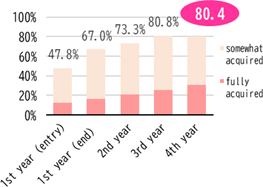
Fig.1 Specialized Knowledge (Undergraduate)
What kinds of knowledge and skills do students acquire during their university years, and to what extent?
Although relatively few students report having “fully acquired” or “somewhat acquired” specialized knowledge at the time of enrollment, by the end of their first year, 67.0% feel they have acquired such knowledge. By their fourth year, this figure exceeds 80% (Fig. 1).
Knowledge Continues to Grow in Grad School
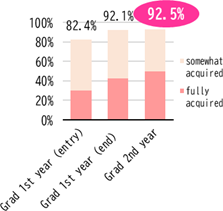
Fig.2 Specialized Knowledge (Graduate)
A considerable number of Waseda students continue on to graduate school. Do they deepen their expertise there? Our analysis shows that by the end of the second year of master’s program, more than 92% of students feel they have acquired specialized knowledge (Fig. 2).
Students Have Become Better at Expressing Their Thoughts and Thinking Logically
In addition to expertise, various other abilities improve over time.
For example, the percentage of students who responded positively to “Express my thoughts in a way that is easy to understand” increased from 69.4% in the first year to 83.0% in the fourth year. For “Think logically,” the figure rose from 81.7% in the first year to 89.9% in the fourth year.
II. Various Experiences
Students Who Studied Abroad Acquired Greater Language Proficiency. No Difference in Logical Thinking Based on Study Abroad Experience
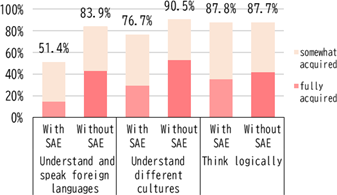
Fig.3 Study Abroad Experience and Learning Outcomes
*SAE: Study Abroad Experience
Waseda University aims to ensure that every undergraduate student without prior overseas experience studies abroad at least once before graduation.
We compared the knowledge and skills acquired by students with and without study abroad experience (Fig. 3).
As expected, students with study abroad experience appear to have gained greater language proficiency. They also show higher levels of cross-cultural understanding.
However, logical thinking skills do not appear to be related to study abroad experience.
Over 70% of Students Use Generative AI for Studying Related to Their Classes
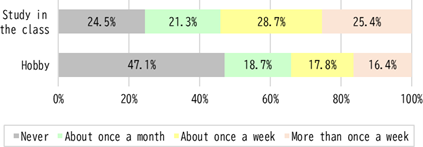
Fig.4 Use of Generative AI
The use of generative AI has become commonplace in students’ daily lives.
Regarding the use of generative AI for “study in the class,” around 75% of students use it about once a month. One in four students uses generative AI more than once a week (Fig. 4).
It is essential to consider how generative AI should—and should not— be used in classes and research. Reviewing current practices and sharing policies among students and faculty will be increasingly important.
For more detailed survey results, please refer to:“Report of the AY2024 Waseda University Student Survey & Graduation Survey”
What is the Center for Highter Education Studies?
The Center for Highter Education Studies (CHES) supports and promotes activities to enhance the quality of education, research, and university management at Waseda University.
Within CHES, the Center for Higher Education and Institutional Research (CHEIR) collects and analyzes data related to education at Waseda University through surveys of current students and alumni. The findings are shared not only within the university but also widely with society.
We look forward to hearing about your learning experiences and perspectives through our various surveys.