Waseda WeeklyWaseda Weekly

News

News

A passion for entertainment! A writer for a popular radio show who achieved his dream through action

"I don't want to lose to anyone my age in terms of entertainment value."

Junpei Kawate, 5th year student, School of Humanities and Social Sciences

At Waseda Shogekijo Drama-kan Theater Kawate often performed during his time in the comedy student club called "Tokyo dengen."

Despite still being a student, Junpei Kawate has become a writer for the popular radio program "All Night Nippon" (Nippon Broadcasting System), and is expected by those around him to be a member of the next generation of scriptwriters (*1). Kawate began his career by learning the basics of stage planning at an entertainment production company that organized comedy live shows, then worked his way up to become a researcher (*2) searching for material for television programs and finally became a scriptwriter for television and radio. We spoke to Kawate about the source of his motivation, his thoughts on comedy, and his future prospects.

*1 A job that involves planning and structuring the entire program for television, radio, events, etc. It involves a wide range of tasks, including program planning, research, script writing, recording supervision, and editing support.
*2 A job that involves professionally collecting and researching information necessary for planning and producing a program. This involves supporting the program behind the scenes by finding material for the program, listing interview locations, negotiating appearances, and verifying information and facts.

-What kind of activities are you currently involved in?

As a scriptwriter, I focus on radio work but am also involved in television programs, and I also help run the YouTube channel of a friend who I've been close with since university and who is still a comedian. I also run a group called "Gorokumei" that I started with friends from a comedy student club called "Tokyo dengen" and we hold live comedy shows with professional comedians once a month. It wasn't until the end of my third year of university that I was able to work as a full-fledged scriptwriter, and when my name appeared at the beginning of the credits on a TV Asahi program, I thought, "Maybe I can now call myself a writer."

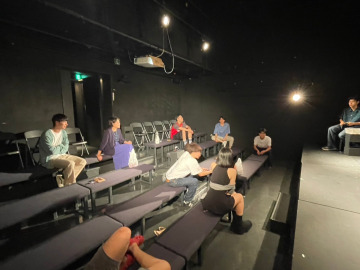
Left: A meeting for a comedy live show. Kawate (far right) directs the stage.
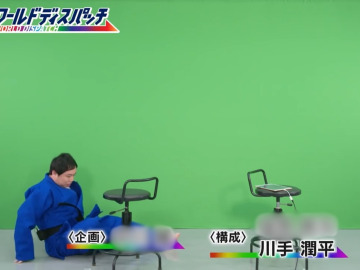
Photo on the right: The first time his name was listed at the beginning of the end credits of a TV Asahi program

-What made you decide to focus on radio?

When I was a second-year university student, I first worked as a sub-scriptwriter for a radio program on Nippon Broadcasting System, and through that connection I met a famous scriptwriter, which led to me being involved with "All Night Nippon."

What I find appealing about radio is the "closeness to the personalities." In the case of television, scriptwriters generally do not show up at the recording site, but in radio, it is standard to discuss directly with the personality, develop plans, and be present at the actual recording. I particularly love the moments when, based on this communication, I can bring out the personality's unique charm and laughter.

--What made you want to become a scriptwriter?

I grew up in a single-parent household and was very close to my grandmother, but because my grandmother loved entertainment, we would often listen to radio and watch variety shows together from a young age. I learned about the job of scriptwriter on the radio. Another reason was that a famous writer for Bananaman and Tokyo03 programs, Mr. Okura, is from the same hometown as me, and I had admired him since I was in middle school. At my middle school cultural festival, I wrote material and performed comedy routines, but I had no acting skills and it wasn't well-received at all. That's when I started to think, "Scriptwriters can express funny things without having to be in the spotlight themselves, so that's cool."

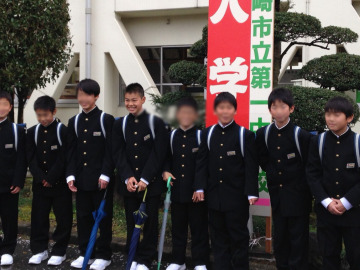
Kawate (fourth from the left) as a junior high school student, when he first began dreaming of becoming a scriptwriter.

After I entered high school, there was an idol TV show that aired late at night on Sundays that my classmates were excited about every week. When I tried watching it, I thought, "I can definitely make something more entertaining than this." My driving force is basically jealousy and envy (laughs). "I don't want to lose to anyone my age in terms of entertainment value." This competitive nature pushed me to aim to become a scriptwriter.

--Please tell us how you came to enroll in School of Humanities and Social Sciences at Waseda University.

My high school was a preparatory school, and there was an atmosphere around me that everyone was aiming to go on to a national university. However, with the encouragement of my mentor who wholeheartedly supported my dream of becoming a scriptwriter, I decided to take the entrance exam for the School of Humanities and Social Sciences at Waseda University, which has a theater and film course.

My studies at Waseda have been really helpful, and I have had a great time talking with older people I work with through the topics I learned about in class, such as film directors, their styles, and the historical and cultural backgrounds they represented. There are many recommended classes, such as "Film Theory," "Western Theatre," and "Subculture Theory"!

How did you pave your way to becoming a scriptwriter?

To begin with, I had no idea how to become a scriptwriter... After entering university, I fumbled around and found a job posting for an "apprentice writer," and jumped at the chance, starting a part-time job at a comedy live production company. Due to the COVID-19 pandemic, there were almost no face-to-face classes, so I spent 14 hours a day at the theater (laughs). I spent my days learning sound and lighting techniques backstage while watching hundreds of comedy shows. Looking back, I learned the basics of stage planning there.

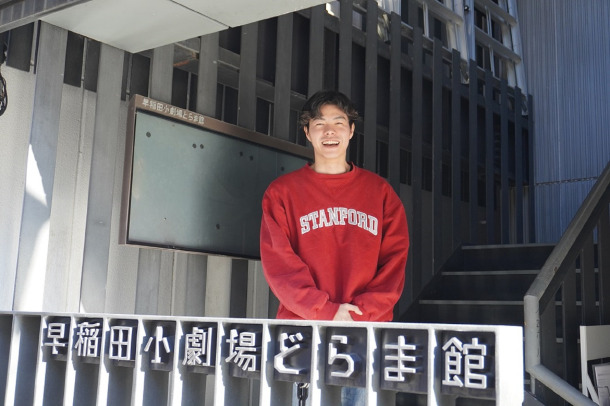
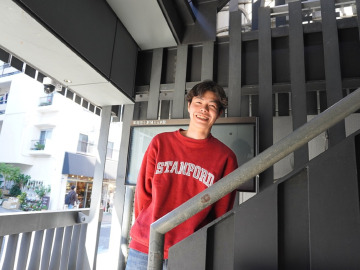
In front of the Drama-kan Theater. He doesn't usually have many opportunities to have his picture taken, so he looked a little nervous as he posed for the photo.

While working that part-time job, I also started working part-time as a researcher for a television program in the fall of my first year of university. I knew that a famous person who is currently active as a broadcast writer had previously worked as an AD at a television station, so I thought it might be a new opportunity for me, and so I interviewed for a part-time job as an AD. The interviewer at the time was interested in me, and introduced me to a job as a researcher instead of an AD. Working as a researcher was really tough, requiring physical strength and time, but I gradually began to achieve results, and in the summer of my second year of university, I quit my job at a comedy live production company and other part-time jobs to focus solely on being a researcher.

After that, my skills as a researcher were recognized, and by continuing to convey my passion for scriptwriting, I gradually built-up connections in the industry, was invited to more and more planning meetings, and seized the opportunity to work as a scriptwriter. I was really lucky.

--Please tell us about your memories of student life and your future goals.

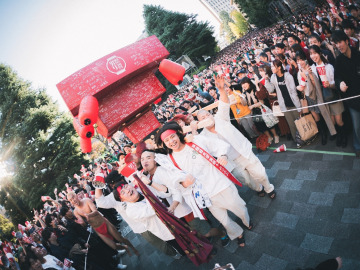
The most memorable experience was directing the "Otoko Matsuri" (Men's Festival) at WASEDASAI from summer to autumn 2024. I was asked by a friend from high school to do it, but it was a busy time as I was also working as a scriptwriter and attending university classes.

However, what I kept in mind at the time was my grandmother's teaching that "If you find anything fun, you can keep doing it." At the site, I always approached things with a smile, with the mindset of "I'm going to find the fun!" and never said things like "It's hard" or "I'm sleepy." For someone like me who had not experienced a typical university life up until then, "Otoko Matsuri" was an opportunity for me to expand my circle of friends at university, so I have a lot of attachment to it.

Photo on the left: A look at the "Otoko Matsuri" project, which Kawate was in charge of directing, at WASEDASAI 2024
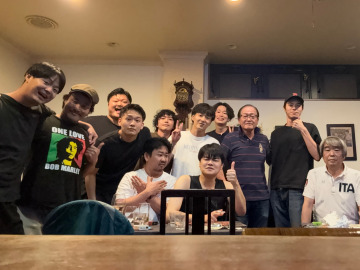
Photo on the right: A photo taken at a favorite coffee shop with friends who help with comedy shows and YouTube production. Kawate is on the far right in the back row.

My goal for the future is to become a scriptwriter who can work while still focusing on radio. I've loved comedy sketches since I was a child, and I continue to write them now. In the future, I would like to focus on scriptwriting so that I can write stories for dramas and movies.

And another personal goal is to meet my father (laughs). I don't know where he is now because I had a complicated family background, so I'm really looking for him! I want to be active as a scriptwriter in the future, and I hope that one day people will notice my name.

918th

Interview, text and photography: Waseda Weekly Reporter (SJC student staff)
Nanami Yoneda, 3rd year, School of Social Sciences

【Profile】

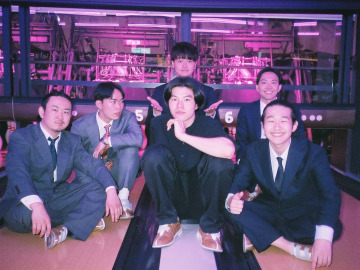
With the Gorokumei group members. Kawate is in the front center.

He is originally from Gunma Prefecture and graduated from Gunma Prefectural Takasaki High School. He makes it a daily habit to take photos of the "strange things" he feels every day in order to create new material. His special skill is card magic, which he learned from a cake shop near his parents' house, and he says he is at a professional level. His favorite Waseda meals are the bean sprout soba noodles at "Merci" and the tsukemen noodles at "Takagiya."

Monthly Comedy Live Mikanbako: February 11th (Wednesday, national holiday) https://tiget.net/events/459117
Gorokumei Instagram: @gorokumei

Waseda Weekly is the official web magazine for Waseda Student Affairs Division. It is updated every weekday during the school term! It introduces active Waseda students and graduates, student club, Waseda meal information, and more.

Page Top
WASEDA University

早稲田大学オフィシャルサイト(https://www.waseda.jp/inst/weekly/)は、以下のWebブラウザでご覧いただくことを推奨いたします。

推奨環境以外でのご利用や、推奨環境であっても設定によっては、ご利用できない場合や正しく表示されない場合がございます。より快適にご利用いただくため、お使いのブラウザを最新版に更新してご覧ください。

このままご覧いただく方は、「このまま進む」ボタンをクリックし、次ページに進んでください。

Continue

対応ブラウザについて

close