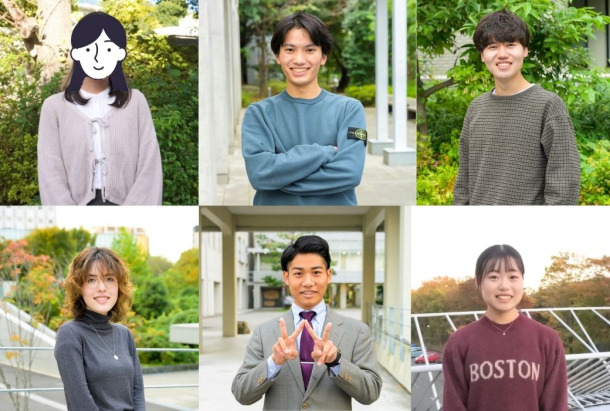
Many people start living alone or in a dormitory when they go to university or get a job. While it's exciting, it can also cause anxiety, as people wonder, "Can I really do it?" This time, we held a roundtable discussion with three Waseda students who are actually living alone and three who are living in a dormitory! We asked them about things you should know before moving in alone or in a dormitory, such as what you should prepare beforehand, how to choose a property, and little tips for a better life.
INDEX
▼Choosing an apartment for living alone: What preparations do you need to make?
▼What is dorm life like? How is it different from living alone?
▼Information on finding a room and student dormitories
Choosing an apartment for living alone: What preparations do you need to make?
We asked three Waseda University students who live alone about points of concern, from finding a property to what it’s like to actually live alone.
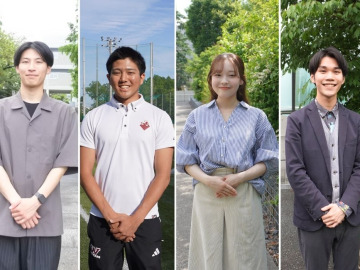
Daito Nishijima, fourth-year student, School of Commerce
Tomoya Yamasaki, third-year student, School of Political Science and Economics
Haruno Kawahara, third-year student, School of Humanities and Social Sciences
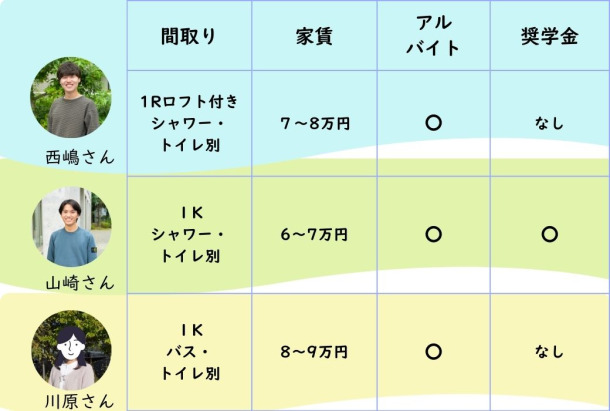
From top to bottom: Nishijima from Kyoto Prefecture, Yamasaki from Fukuoka Prefecture, and Kawahara from Toyama Prefecture.
Is it okay to choose a room without a bathtub? Tips for choosing a room
--What were you worried about before you started living alone?
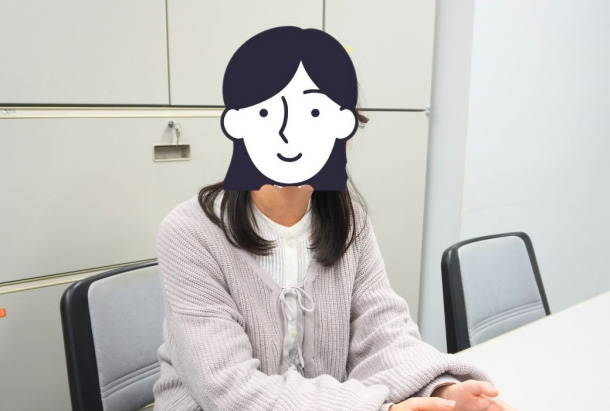
"I should have asked beforehand about the detergents my parents use at home," says Kawahara.
Kawahara: I guess it was all the housework. I left cooking, laundry, and cleaning entirely to my family.
Nishijima: I would be living without my parents, so I was worried about whether I would be able to wake up in the morning.
Yamasaki: What I was worried about was not my lifestyle but my friendships. Up until high school, you have classes, but in university, people change for each class, so I was worried about whether I would be able to fit in.
Kawahara: Yes, I certainly felt lonely at first. I didn't have any relatives in Tokyo and I wasn't familiar with the area.
--What is the layout of the room you currently live in and what criteria did you use to choose it?
Kawahara: The layout is a one-room apartment, and the most important thing for me was security. After consulting with my parents, we looked for an apartment with an auto-lock, reinforced concrete construction, and on the second floor or higher. However, due to the rent, it is a little far from the university.
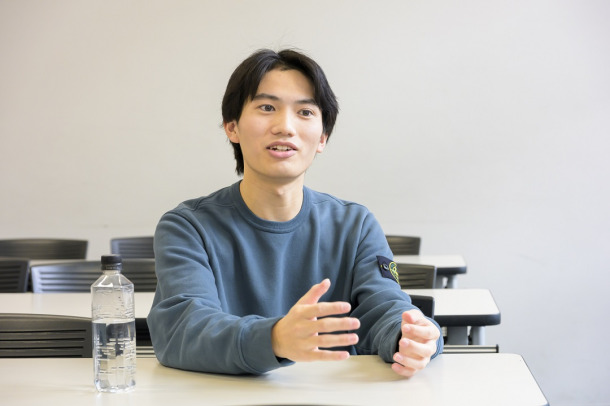
"The good thing about a one-room apartment is that the air conditioning works immediately," says Yamasaki.
Yamasaki: I also live in a one-room apartment. I chose it because I wanted to keep the rent low while also finding a good balance between the location and the commute time.
Nishijima: I live in a studio apartment with a loft. I wanted a separate bathroom and toilet, but I ended up settling for an older building.
Yamasaki: In terms of compromise, the room I chose doesn't have a bathtub, just a shower room. That means the rent is about 10,000 to 20,000 yen cheaper.
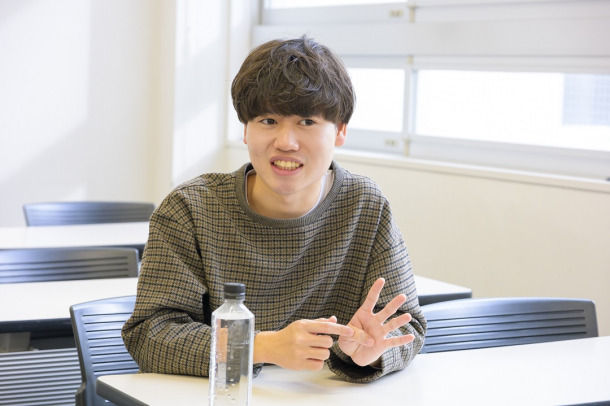
Nishijima says, "Older buildings tend to have cheaper rents, but I especially recommend renovated properties."
Nishijima: Same here! Actually, my room only has a shower. If I want to take a bath, I can just go to the nearby public bath.
Yamasaki: I also go to public baths. As I go there more and more, people start to recognize me and I get to interact with the locals, which is fun.
Kawahara: I chose a unit bath with a bathtub and sink. I don't like having the toilet and bath in the same room, so I avoided it.
Living alone is free and fun, but it can be tough if you get sick!
--Now that you've lived here, are there any aspects that make you think, "Maybe it was a mistake" or "It was different from what you expected"?
Nishijima: The fact that it uses propane gas was a bit of a downside. I've heard that it's quick to recover after a disaster, but the monthly gas bill is higher than city gas.
Yamasaki: This isn't so much about the room as it is about the place I live in (Tokyo), but I was surprised that the trash was put out early in the morning! Back home it was at night.
Kawahara: When I was looking for an apartment, I wish I had looked more closely at the town and the nearest station. A map alone can't tell you the actual roughness of the roads or how bright or dark it is. Also, unpacking and assembling furniture took a surprisingly long time, so I wish I had left more time in my moving schedule.
--What were the good and difficult things about actually living alone?
Kawahara: Being alone made me realize how much I wanted to connect with people and how important my family and friends were to me.
Yamasaki: The best thing about living here is being able to live at your own pace. At home, I had to adjust to my family's schedule, but now I can decide for myself. But that means I have to be more self-disciplined.
Nishijima: By leaving my hometown, I was able to deepen my relationships with my high school friends. They came to stay with me when I came to Tokyo, and now that I live alone, I can invite them over more easily.
Kawahara: But it's tough when you get sick. It was really tough when I got the coronavirus and the flu. I had to prepare my own meals while I was sick.
Yamasaki / Nishijima: We agree!
Yamasaki: At times like that, it's reassuring to have friends you can rely on. It's reassuring to have relationships where you can help each other out on a regular basis.
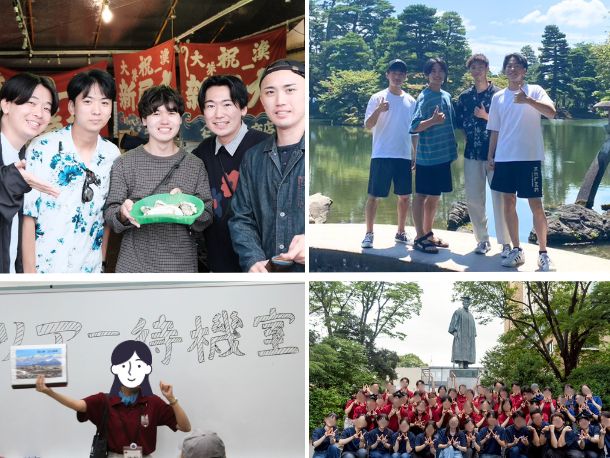
(Top left) Nishijima went to Nakaminato in Ibaraki Prefecture with student club members to eat oysters. (Top right) Yamasaki went to Ishikawa Prefecture with his university friends. (Bottom) Kawahara works as a campus tour guide with many of her friends at university.
--Please give us some advice for Waseda students who are about to live alone.
Kawahara: Even on days when you don't have any plans, it's good to get outside and get into a regular routine. Also, having your parents send you local specialties can be something to look forward to every day.
Yamasaki: Having a bicycle is convenient because it allows you to move around more freely. Also, you don't need a vacuum cleaner. You can clean it well enough with a sticky cleaner or a broom.
Nishijima: It's a good idea to buy daily necessities in bulk during sales on the internet. The trick with furniture and home appliances is not to try to buy everything at once, but to buy only what you really need little by little as you go about your daily life. Used or outdated home appliances are fine.
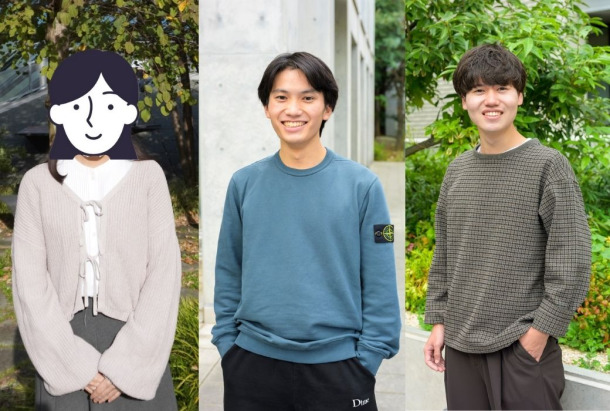
From left: Kawahara, Yamasaki, and Nishijima
What is dorm life like? How is it different from living alone?
Waseda University has a number of affiliated dormitories, including Waseda International Student House WISH, which is run directly by the university, and Waseda International Dormitory WID, which is exclusively for the university, where students from both Japan and abroad live. This time, we spoke to three people living in WISH and WID.
Nobuko Kato Sophie, third-year student, School of Education
Motoharu Kurasumia, first-year student, School of Humanities and Social Sciences
Sara Masaki, second-year student, School of Sport Sciences
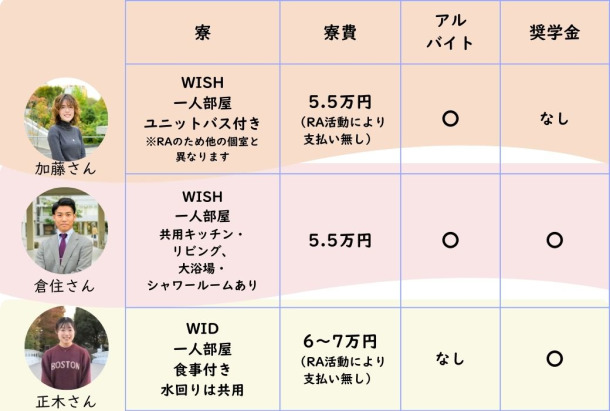
From top to bottom: Kato from Yamagata Prefecture, Kurasumi from Yamaguchi Prefecture, and Masaki from Okayama Prefecture.
*Student leaders and Resident Assistants (RAs) who support the daily lives of dormitory residents live for free use in the dormitory, but are responsible for their own meals and other expenses. In addition, dormitory fees for WID vary depending on the dormitory location and whether meals are provided or not.
Communication with fellow dorm residents is fun! Dorm life is also safe and secure
-What were you worried about before you started living in the dormitory?
Kurasumi: It was about money. I was using scholarships to cover living expenses, so I was worried about whether I would be able to make ends meet within that range.
Kato: It was my first time living in Tokyo away from my parents, so even though I was in a dormitory, I was a bit nervous. Up until now, I'd been able to rely on my family immediately if something happened, but now I can't do that. At first, I was homesick...
Masaki: I couldn't really imagine what dormitory life would be like, and I was worried about how I would communicate with other residents and what kind of distance I should maintain between us.
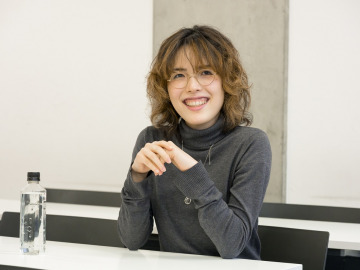
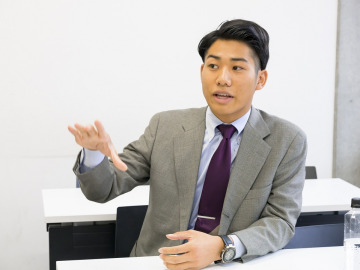
Photo on the left: "It's a good idea to learn the general rules of life beforehand, not just within the dormitory, but also about cooking, sorting garbage, how to ride the train, etc." says Kato.
Photo on the right: Kurasumi came to Tokyo with the determination to "keep living expenses within a set range."
--Kurasumi and Kato live at WISH, and Masaki lives at WID. What were the important points you considered when choosing your dorm?
Kato: I was attracted to WISH because the rent was relatively cheap, and there are international students. I'm from a rural area, so the opportunity to interact with people from around the world was appealing.
Kurasumi: WISH is conveniently located in Nakano, and has a wide range of facilities, including a fitness room, a large public bath, and a soundproofed music room. The SI program, where you can hear from successful working professionals, is also appealing! In August, I also participated in a three-night, four-day Mt. Fuji training course as part of my practical training.
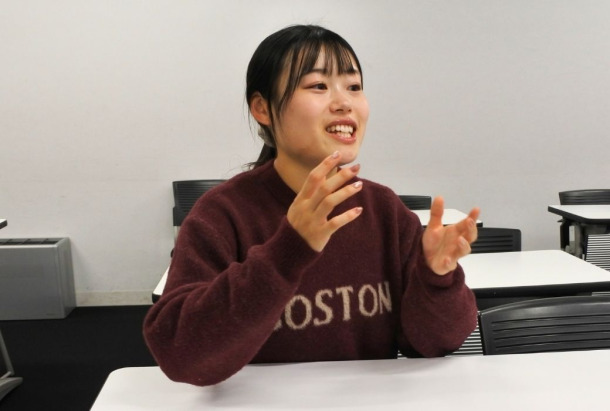
Masaki says that time management is more difficult than she expected. "My friends in the dorm, as well as the dorm manager and dorm mother, are really helpful."
Masaki: I chose WID because it's close to Tokorozawa Campus. I'm also involved in club activities, so it was helpful that I could choose a dormitory with breakfast and dinner included. When I spoke with the dorm mother during my tour, I felt like I could live here with peace of mind.
--What are the good points of dorm life, and what do you wish was a little more like this?
Kurasumi: It's more fun than I expected! When I go to the kitchen, there's always someone there, and conversations naturally begin. There's a security guard stationed at the entrance, and you enter with a card key, so security is also good. The only problem is when you forget your card and leave the room (laughs).
Kato: It's fun to talk to a variety of people. I've never been good at socializing, but I feel like that's changed a little since I moved into the dorm. However, there are parts of the dorm where you live together, so it can be difficult to have to adjust your lifestyle and values.
Masaki: Speaking of which, at WID, everyone has their own room, so privacy is well-maintained. There are shared spaces, but basically everyone is focused on their own lives. On top of that, when we meet in the dining hall or elsewhere, we can have lively conversations, and the sense of distance between us is comfortable.
Kato: On the other hand, you have to be careful because it's easy to lose your rhythm of life. Because there's so much freedom, if you want to slack off, you can slack off as much as you want.
Kurasumi: When I was in high school, I found it annoying when my parents interfered with my life, but now I realize how grateful I am for them.
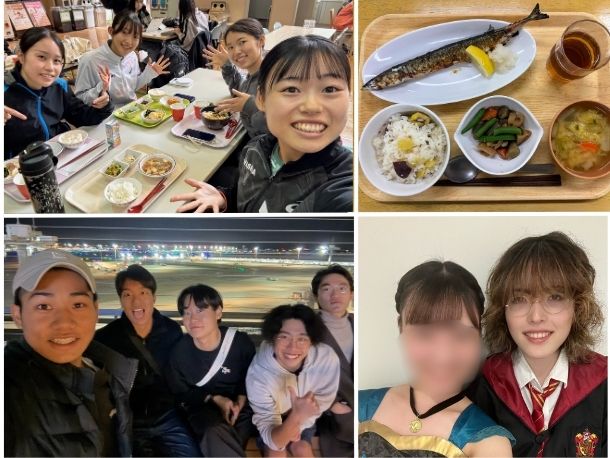
(Top left) Masaki eating at the cafeteria on Tokorozawa Campus. (Top right) An example of a meal at WISH. "The key is to have a substantial meal." (Bottom left) Kurasumi went on a drive to Haneda Airport with a friend from WISH. (Bottom right) Kato at WISH's Halloween event.
Student life goes by so quickly... I recommend keeping a household budget or diary!
--So, please give us some advice for Waseda students who are about to start living in a dormitory or on their own.
Kato: I really recommend keeping a household account book, especially since cashless payments tend to make you lose track of how much money you're spending.
Masaki: I open the curtains before going to bed at night so that the morning sun will wake me up naturally. Of course, I'm mindful of privacy, but it makes it easier to get up in the morning. I also keep a diary, and when I write down my troubled feelings, I feel refreshed and more positive.
Kurasumi: I make sure to eat breakfast every day. If I don't have energy in the morning, I won't be able to get through the day. Also, like Masaki, university life goes by so quickly, so if I keep a diary, it's fun to look back on it later.
Kato: It's important to make your room a space where you can relax. I love antiques, so I collect antique items to decorate my room.
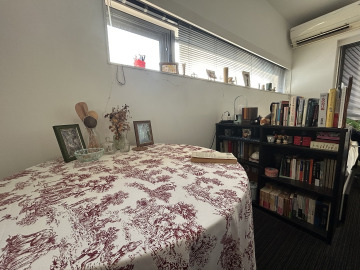
Left: Kato's room at WISH (RA). She likes the bookshelf behind her bed and the table where she can have tea with friends. She says she feels good being surrounded by things she likes.
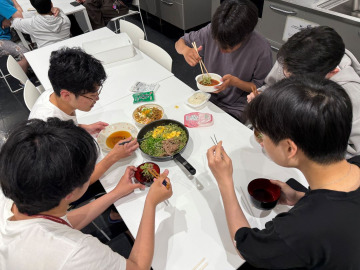
Photo on the right: Kurasumi treated his friends on the same floor to "Kawara Soba," a local dish from his hometown, Yamaguchi Prefecture. They enjoy a variety of dishes in the shared kitchen.
Masaki: That's right. As the saying goes, "Every place is a home," even if you feel anxious at first, you'll be able to manage most things, and before you know it, you'll have adapted well. I think that nature and the environment will also change.
Kurasumi: I really think so. Living alone is surprisingly easy. Make the most of your current life, don't worry too much, and enjoy your new life!

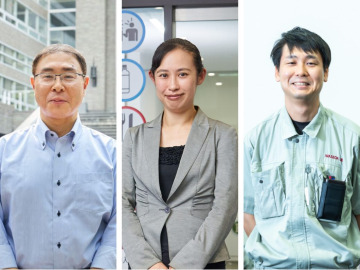
From left: Kato, Kurasumi, and Masaki
Information on finding a room and student dormitories
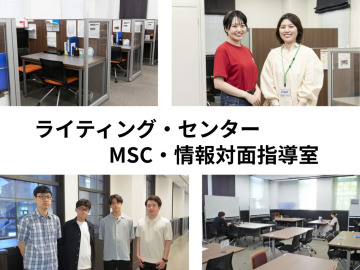
Waseda University's group companies help Waseda students find housing. They also provide information on student dormitories, so please consider them.
Co-hosted by Waseda University Property Management Co., Ltd., Student Housing Center, Waseda University Co-op, and Housing Search Center
Website: https://www.waseda-sumai.jp/index.html
Website: https://www.waseda.jp/inst/rlc/student_dormitory/
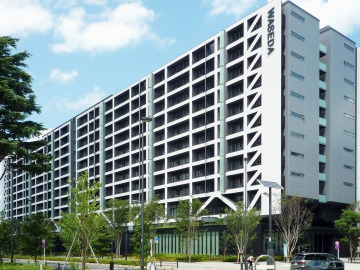
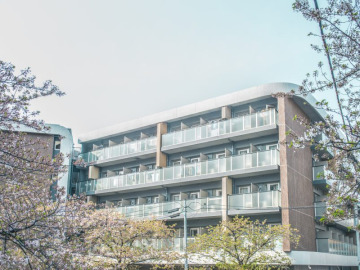
WISH Waseda International Student House (WISH) (left), WID Waseda (right)
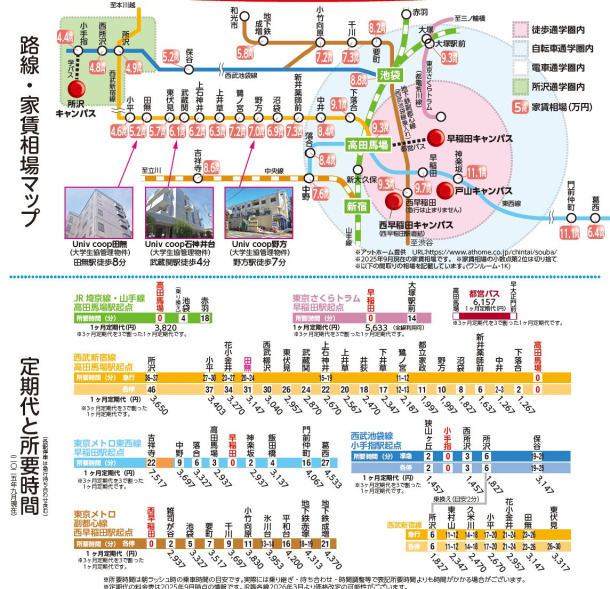
List of average rent prices and train commuter fares/travel times around Waseda University (Image provided by: Waseda University Co-op Housing Search Center website) *Click on the image to open the website
Interview and text: Yuki Yamadai
Photography: Akihiro Okamoto
[Next Focus Preview] "Hakone Ekiden Special" to be released on Monday, December 15th


![[Save version] Map of the four main campuses](https://www.waseda.jp/inst/weekly/assets/uploads/2026/06/110d605cfac40346aad1d2df464a6586-940x705-1-1-610x457.jpg)