Copresence, Multibody Collaboration, Embodiment, Trust Formation, Collaboration in Virtual Environments, Castells (Human Towers), Collectivity
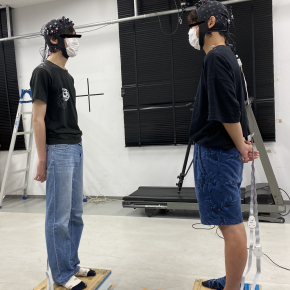
This research institute aims to elucidate the generative principles of “copresence,” emerging within practices in which multiple bodies engage interdependently with one another. Copresence is understood not merely as simultaneous existence, but as a dynamic process through which trust, responsibility, risk-sharing, and normative consciousness are intricately intertwined and collectively constituted. Traditionally, social cohesion and trust have primarily been examined within the humanities and social sciences as phenomena embedded in social institutions and normative systems. However, contemporary society has witnessed a significant weakening of interpersonal ties, as evidenced by the decline and disappearance of neighborhood-based organisations, alongside increasing individualisation accelerated by technological development. Consequently, the very foundations of human connectedness are undergoing profound reconfiguration. At the same time, although the mechanisms underlying social cohesion have been extensively theorised in the humanities and social sciences, they have rarely been investigated through empirical and quantitative approaches involving bodily responses, physiological indicators, and other measurable data. Furthermore, while cognitive neuroscience and psychology have suggested that bodily synchronization and physical contact significantly influence cooperation and trust, it remains insufficiently understood how such factors operate integratively within actual collaborative practices in society.
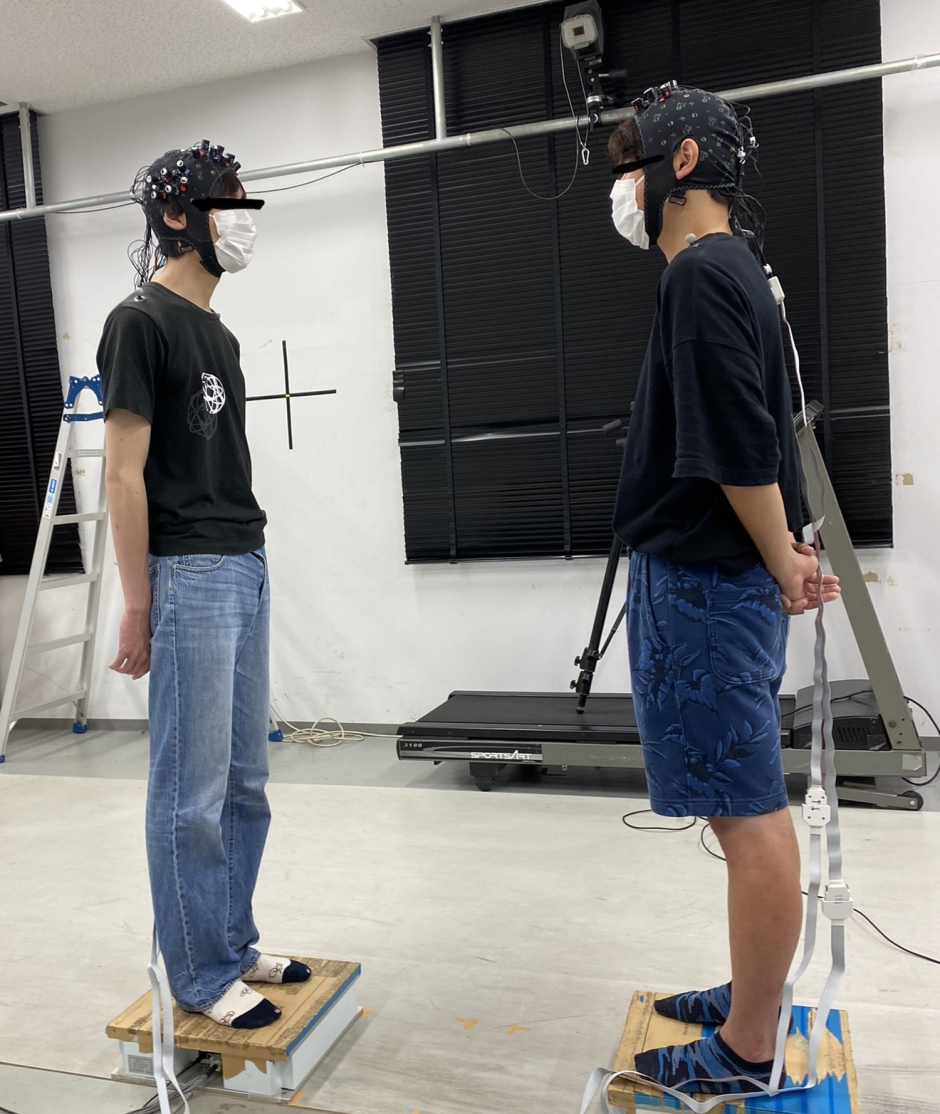
To bridge these theoretical and methodological divides, this project integrates anthropological participant observation with measurement and experimental procedures derived from cognitive neuroscience and experimental psychology, wellbeing assessment
from social medicine, risk-structure analysis from safety engineering, spatial analysis from architecture, and modeling of learning processes from educational technology. Through this interdisciplinary framework, the project seeks to clarify, from multiple perspectives, how autonomous and diverse individuals become mutually connected through bodily collaboration, psychological synchronisation, and shared social norms.
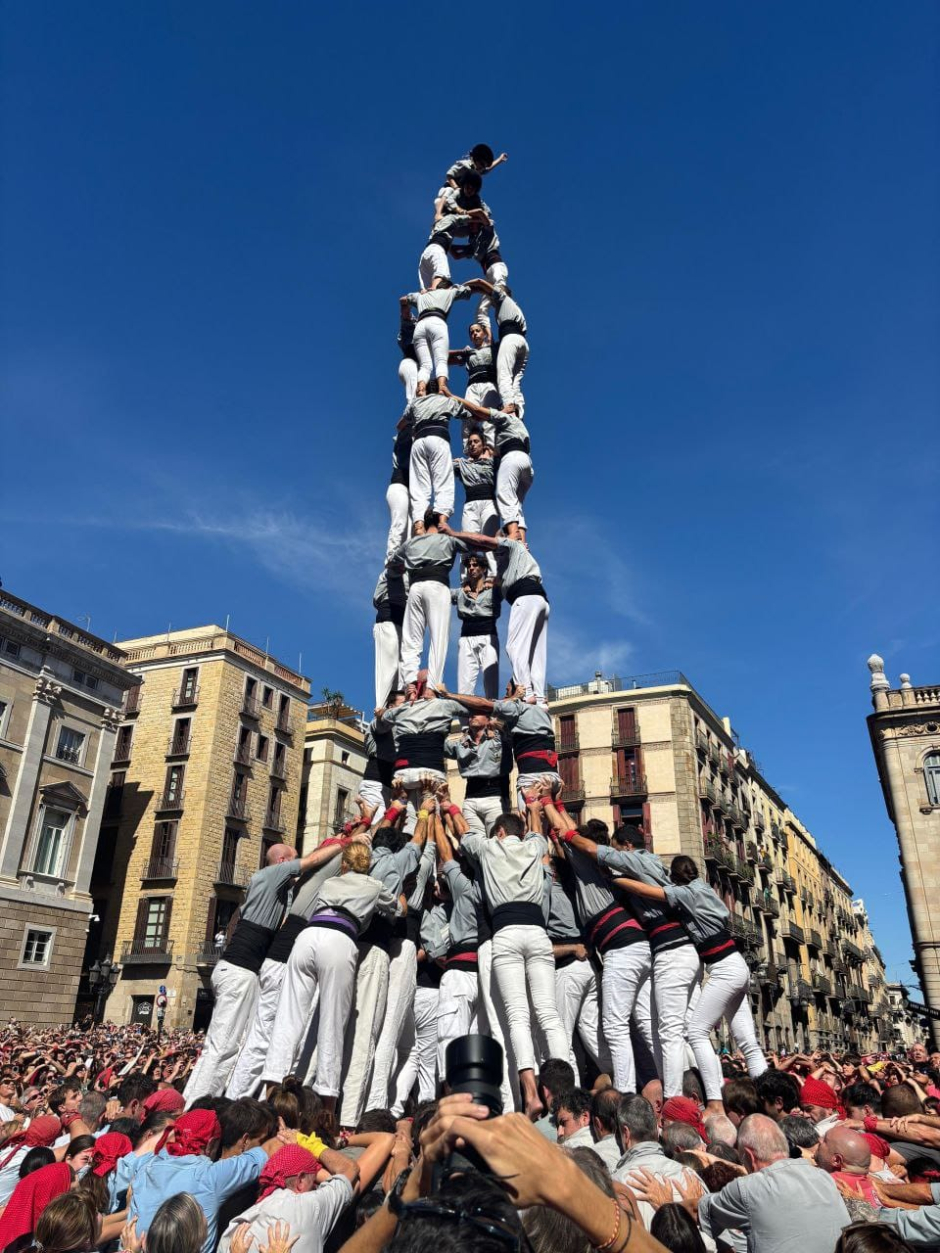
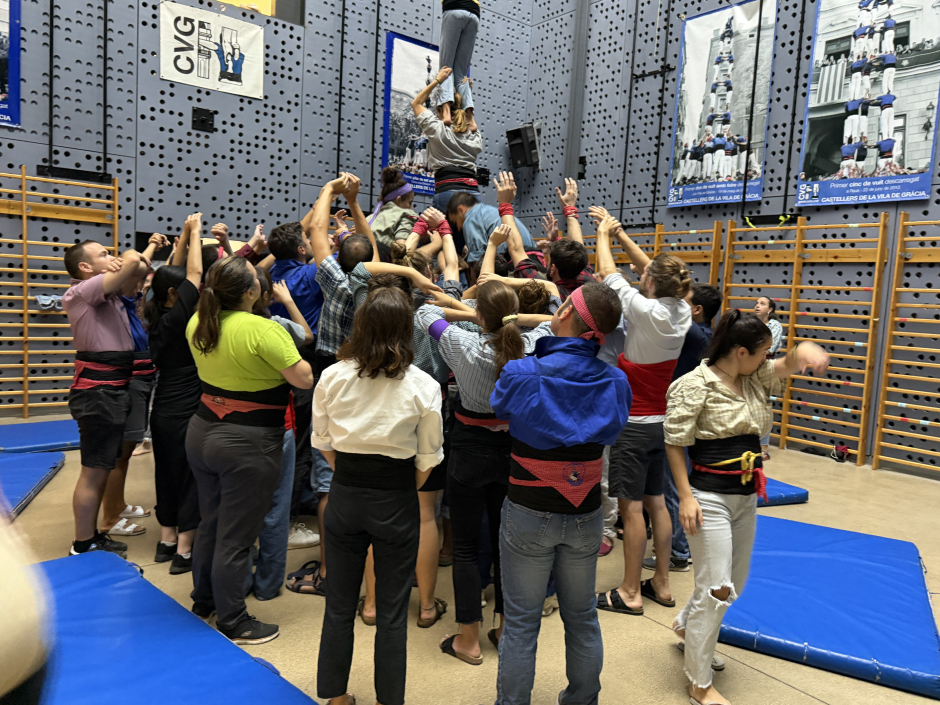
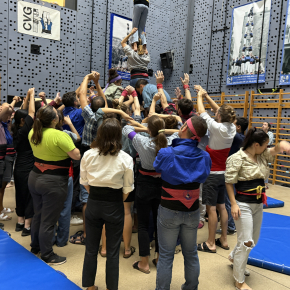
More concretely, the project takes as a central case study the highly organised multibody collaborative practice exemplified by the “Castells” (Human Towers) of Catalunya, recognised by UNESCO as an Intangible Cultural Heritage. Rather than treating Castells merely as a localised cultural phenomenon, the project approaches them as one model through which the principles of copresence formation under extreme human collaborative conditions can be examined. Building upon this case, the project further expands its inquiry to the relationship between collaborative practices and local communities, as well as comparisons with collaborative practices in virtual environments. In doing so, it investigates how the presence or absence of physical embodiment and differences in mediating conditions influence the quality of copresence in human collaboration.
Accordingly, the project aims to achieve the following objectives:
- Construction of an integrated theoretical model illustrating the interrelationships among the elements constituting copresence (e.g., bodily synchronisation, physical contact, gaze, spatial arrangement, and risk-sharing)
- Clarification of the processes through which trust and responsibility emerge through embodied experience
- Identification of the limitations and possibilities of collaboration in virtual environments
- Development of applied guidelines for safe and sustainable collaborative design in multigenerational and high-risk environments
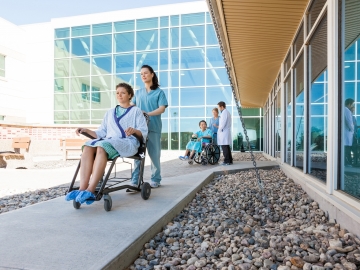
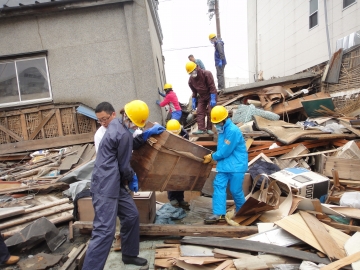
Through these objectives, the project seeks to reconceptualise conventional theories of community and collectivity and to provide both theoretical and practical foundations for new forms of human liaison in increasingly fluid contemporary societies. The anticipated outcomes are expected to contribute broadly to fields such as education, local communities, organisational management, and disaster response.