Three Generations, One Seminar: Inside the Kuroda Zemi at GSAPS
Mon, Nov 16, 2026-
Tags
Three Generations, One Seminar: Inside the Kuroda Zemi at GSAPS
What happens when educational ideas and practices, traditionally a domestic endeavour, traverse national boundaries? How does education develop through international cooperation and exchange? What is education for, and is there, or should there be, a universal, normative goal for education shared by nation-states with vastly different contexts and demographics?
In the Kuroda zemi (a small research seminar led by a professor) within the Graduate School of Asia-Pacific Studies (GSAPS), these are some of the questions we grapple with while embarking on our own research interests in international education, education policies, and education development.
Professor Kazuo Kuroda specialises in the fields of comparative and international education, education policy, education and international development, and international higher education. In my zemi, there are students researching topics ranging from inclusive education to intercultural competence to the internationalisation of higher education. As GSAPS features an interdisciplinary curriculum and research environment, we also utilise perspectives from disciplines such as sociology, anthropology, political science, and economics to approach our research topics within education.
Inside the Zemi
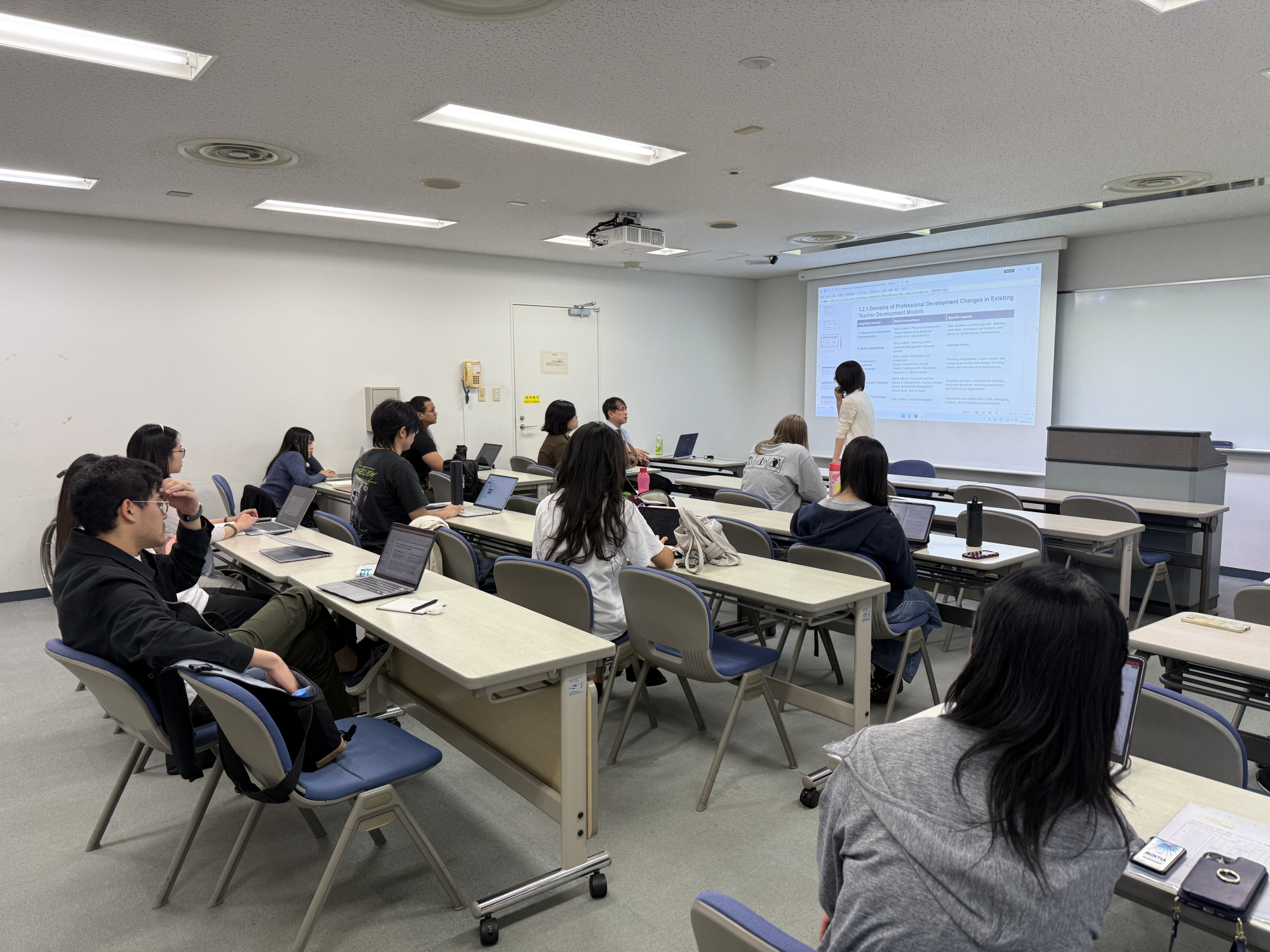
Another feature of the Kuroda zemi is the integrated seminar for MA and PhD students. When I first joined as an MA student, I really appreciated this arrangement, as we could not only listen to both MA- and PhD-level presentations but also enjoy lively discussions and Q&As with both our peers and seniors. Following the student discussions, Professor Kuroda starts asking questions and giving feedback on the presentations, making for a rich learning experience. Usually, there are one or two presentations per week, and the session starts with presentations in English. If there are students presenting in Japanese, those who cannot understand Japanese may leave, though they are also welcome to stay and polish their Japanese skills.
I asked Professor Kuroda about his principles for organising his zemi, and he said he wished to create an academic community culture within his zemi, instead of doing academic supervision that can be done one-on-one between the supervisor and their student. He also appreciates how the PhD students sometimes provide rich input for the MA students, and hopes the bonds among the Kuroda zemi members, even those who have graduated, continue over time.
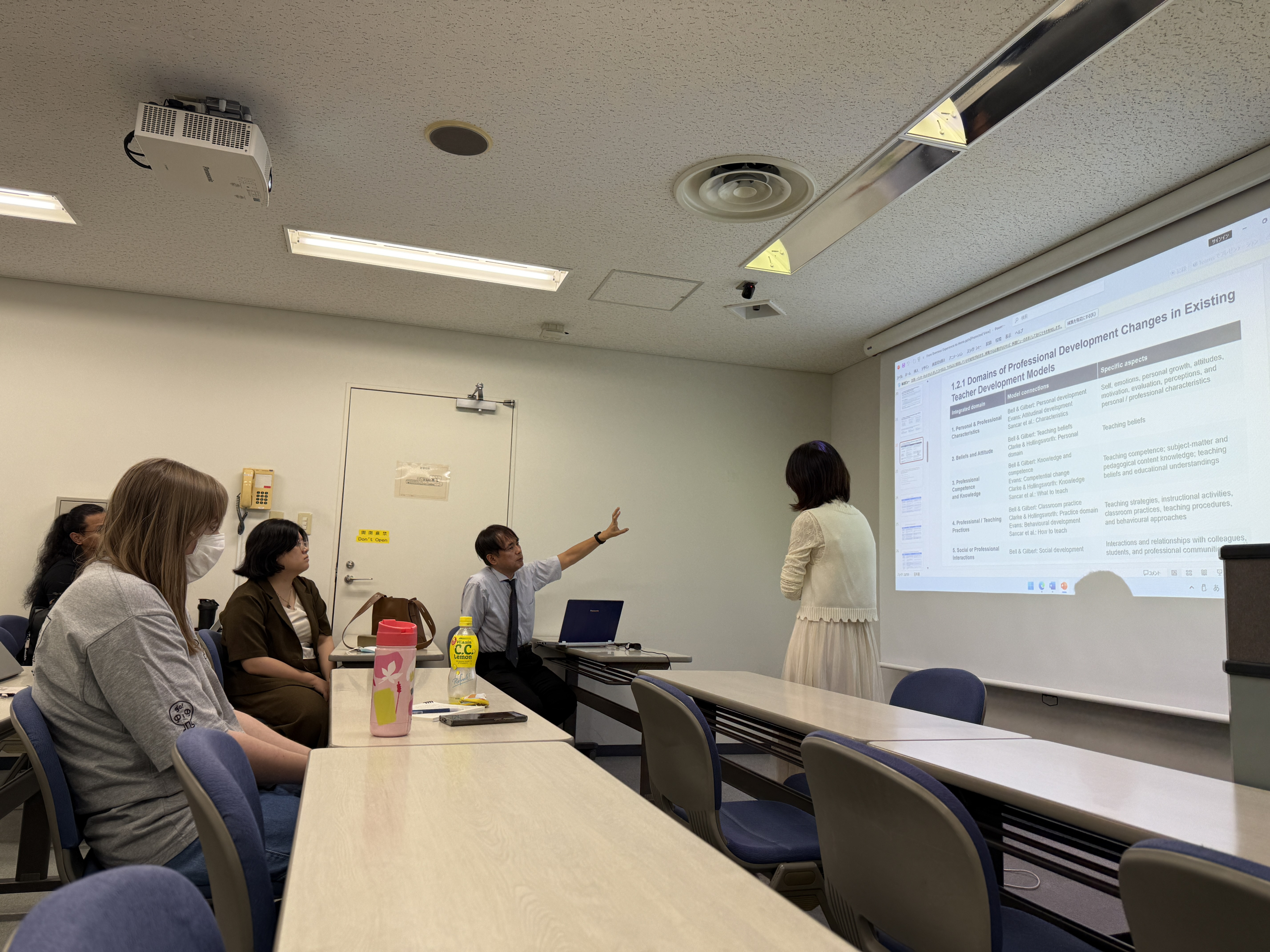
Professor Kuroda, sitting in the first row, giving feedback to a PhD candidate on her presentation
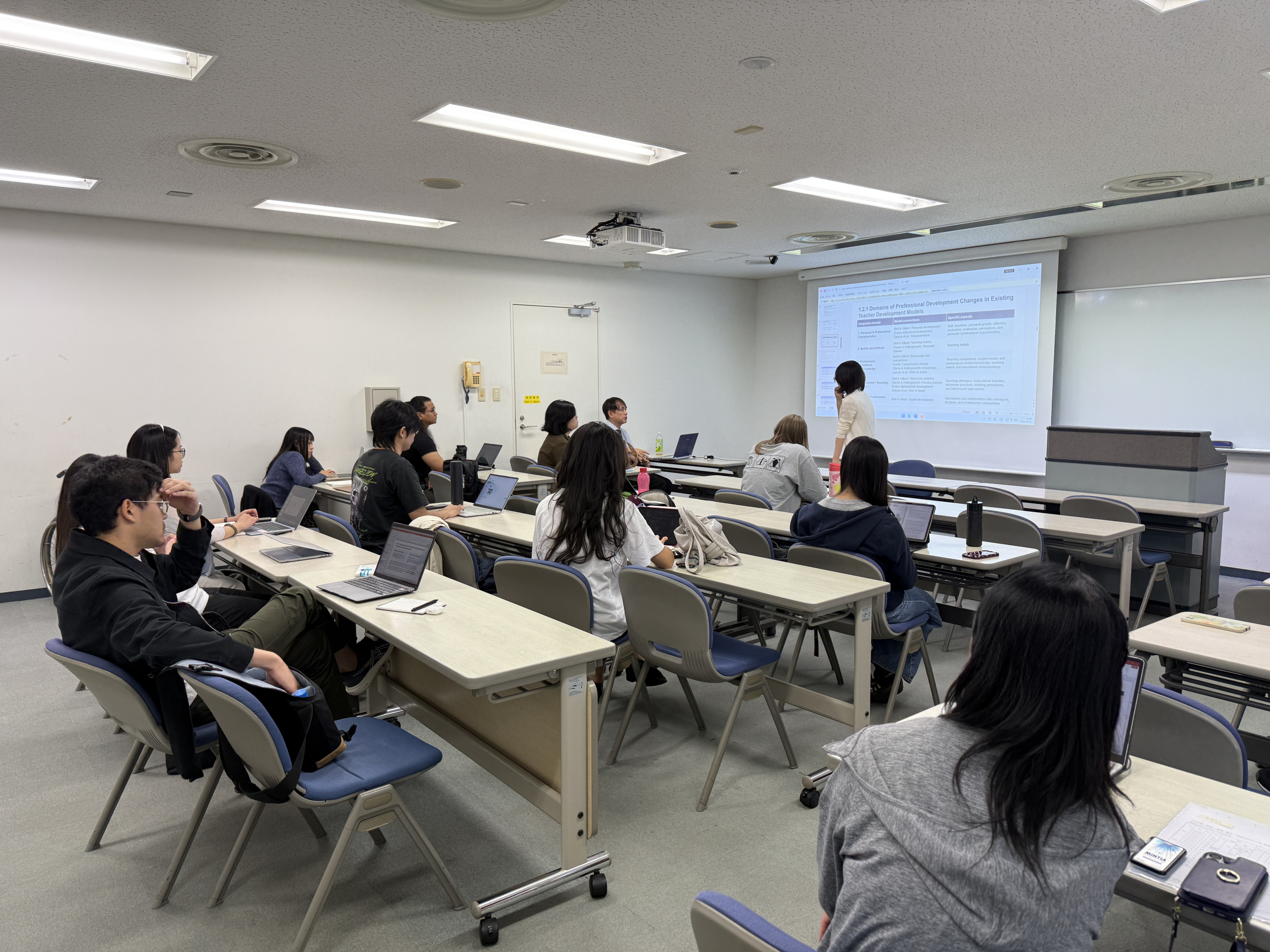
Students engaging in discussion with the presenter in the Kuroda zemi
Professor Kuroda has worked with the World Bank, UNESCO, the Japan International Cooperation Agency (JICA), and numerous other organisations. As a result, we get to learn how to consider our research topics from global, regional, national, and local vantage points in the field of comparative and international education, as well as international education development. Sometimes, he also invites guest speakers such as academics or practitioners to share their experiences with us, giving us insights into current pressing issues in comparative and international education as well as snapshots of what it is like to work as practitioners in international education development and cooperation.
From Waseda to the U.S.: CIES 2026
Beyond the four walls of the classroom, Kuroda zemi members also get to expand their horizons through extracurricular activities thanks to Professor Kuroda’s manifold academic undertakings both within Japan and internationally. One of the highlights this year, and probably a once-in-a-lifetime experience, was supporting Professor Kuroda with the organisation of the 70th Comparative and International Education Society (CIES) annual conference in San Francisco in March 2026, themed “Re-examining Education and Peace in a Divided World”. CIES is a U.S.-based academic society and one of the largest academic societies for comparative and international education, drawing more than two thousand participants to its annual conferences in recent years.
Since serving as President-Elect in 2025 and taking the helm as President in 2026, Professor Kuroda has been leading the society, and will deliver the Presidential Address at the 2027 conference in Madison, Wisconsin. GSAPS alumni, some of whom are now teaching and researching at universities or working in international development across the globe, and his current students gathered together to help in the organisation and running of the CIES 70th annual conference. Through this, we learned from our seniors’ organisational skills while also contributing our own strengths to support the conference. I was personally involved in two meaningful projects: the “Fold for Peace” booth and creating the CIES 70th anniversary celebration video shown at the reception.
Working with Naoko Kamioka, an artist-activist based in Washington, D.C., Naixin Li, my colleague and a PhD candidate in the Kuroda zemi, and I designed a peace activity that guided participants to reflect on peace and education through embodied action. With a panel showcasing information linking the Hiroshima atomic bombing, Sadako and the paper cranes, and subsequent peace education activities, the booth invited participants to experience the quiet, reflective act of folding paper cranes and consider how education can engage memory, foster connections, and inspire imaginations for more peaceful futures. In the end, participants came together to fold more than 2,000 paper cranes, which we then donated to the Hiroshima Peace Memorial Park.
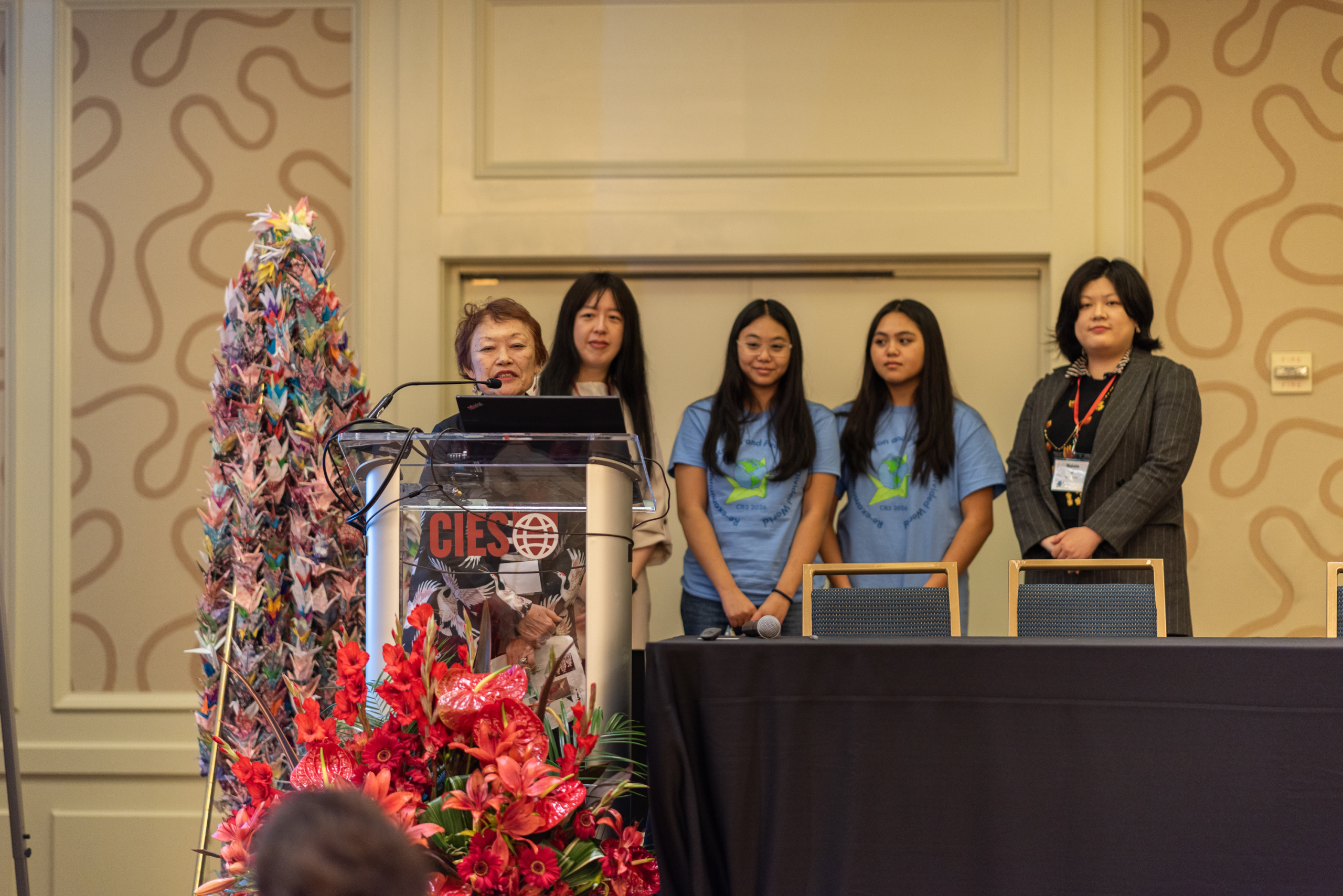
From left: Naoko Kamioka, me, Nadya Naori Ikeda, Sofya Sayuri Ikeda (two volunteers who are also the daughters of one of the Kuroda zemi senpai), and Naixin presenting the paper crane tower from the Fold for Peace activity booth at the 70th CIES closing ceremony (photo taken by Dr. Viet Du Nguyen, a PhD graduate of the Kuroda zemi)
Another PhD candidate from the Kuroda zemi, Pham Thi Lan Huong, and I also had the chance to interview the society’s recent past presidents as part of the CIES 70th anniversary celebration video. Through this, we talked to renowned veterans in the comparative and international education field, who reflected on their journeys in the discipline and also within the society. Their generous and insightful reflections were by themselves remarkable pieces of scholarship and valuable lessons on how the field and the society have evolved. My colleague Huong reflected, “I feel so lucky that the first time I joined CIES, I had the chance to learn about it through all the people that created and maintain this community. All the presidents are so inspiring.”
One outstanding experience for both of us was interviewing Professor N’Dri Thérèse Assié-Lumumba, who was one of Professor Kuroda’s PhD advisors at Cornell University. At the conference, we also met our “academic grandmother” in person, and the conference culminated with us celebrating Professor Kuroda’s 60th birthday together with his colleagues and friends from Japan, Kuroda zemi alumni, and the current Kuroda zemi members. When asked about her experience, Naixin said, “Although I have been part of the CIES community for several years, organizing the 2026 conference alongside Kuroda zemi members taught me that scholarship is not only presented but also built through collaboration, and working closely with colleagues from around the world showed me new ways to share research beyond the conference room.”
Conferences, Connections, and Academic Communities
Apart from CIES, Kuroda zemi members also regularly participate in the Japan Comparative Education Society (JCES), the Comparative Education Society of Hong Kong (CESHK), the Japan Society for International Development (JASID), and the student-led International Education Development Forum (IEDF) conference. Professor Kuroda has a special connection to IEDF: around 20 years ago, as a young academic, he co-founded it with colleagues from Kobe and Nagoya universities. Their aim was to build not just a student-led conference but an academic community where students with shared interests could meet beyond their own universities. Preparing for and travelling to these conferences together have become regular bonding sessions for the zemi members, and it is always comforting to see familiar faces of our senpai and Professor Kuroda’s acquaintances, and to know that we can find our academic homes while pursuing our research passions.
Some of our most memorable zemi moments happen not at conferences but in Professor Kuroda’s home. Once a semester, he invites current members, and often alumni as well, for a zemi party. There, our conversations drift from research to life in Tokyo, job hunting, and our home countries, and new members quickly get to know seniors they may only have seen across the seminar room. These evenings remind us that the zemi is not only a place to sharpen our research, but a community that looks after one another.
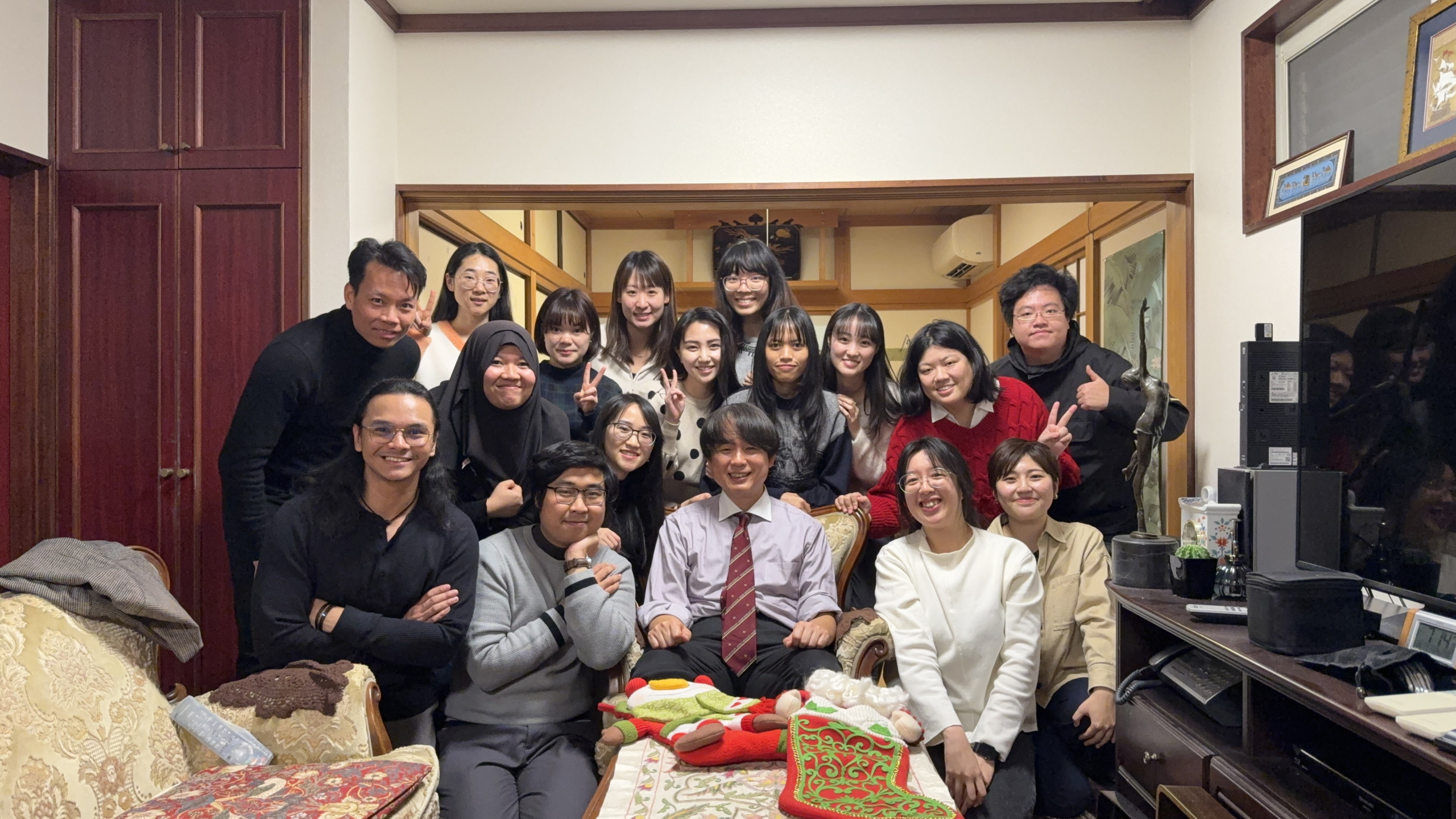
MA and PhD students at a zemi party at Professor Kuroda’s home
Continuity of the Kuroda Zemi
Looking back, what stands out most is not any single conference or presentation, but the generations of people behind them. Thanks to Professor Kuroda’s experience and his many years of work across academia and international development, we have had the chance to meet and learn from leading scholars in comparative and international education, both in Japan and around the world, through conferences, seminars, and research groups. Yet the support has also flowed in the other direction. When Professor Kuroda took on the CIES presidency, his former students, now professors, researchers, and practitioners in their own right, returned to work alongside us, and we learned as much from their example as from the conference itself.
Meeting our “academic grandmother” in San Francisco made us realise that we are part of a longer lineage of mentors and students. As current members, we now try to pass on that same culture to our juniors: giving feedback on their presentations, helping them prepare for their first conference, connecting them to like-minded researchers and senpai. Recently, we welcomed new MA students to our zemi, and when I asked one of our new members about her first impression, Wakaba Terashima said, “I feel that the Kuroda zemi is an open and inclusive space where people from diverse backgrounds can freely share their perspectives and engage in meaningful discussions.” Another new MA student, Leah Hackaday, also reflected, “Everyone seems really close and supportive of each other, and not only Kuroda sensei but also other students encourage each other to improve and take on new opportunities like conferences. I’m excited to learn from everyone!” Whoever joins the Kuroda zemi next will, we hope, find what we found: not just an advisor, but three generations of the Kuroda zemi family ready to support them.
About the Author: Huijia Teh
Hi everyone! I’m originally from Penang, Malaysia, and am currently a PhD candidate at the Graduate School of Asia-Pacific Studies where I also completed my MA degree. My research explores why and how the SDGs become institutionalised and transformed as a norm in higher education, with Malaysian universities as my case study. I also enjoy exploring restaurants, cafes, shrines and temples, and playing the violin and piano in my free time.