RAs Unite: Rethinking the Future of Dormitories
Mon, Feb 2, 2026-
Tags
Waseda International Student House, called WISH, is a large 11‑story dormitory in Nakano for first‑year and second‑year students of Waseda University. This dormitory was established in 2014 as a new base aiming to develop global leaders. Around 800 students from all over Japan and the world join this community to spend their first two years of university life.
I am a Resident Assistant (RA) at WISH. We have a total of around 35 members and together we help run this dorm effectively collaborating with dormitory staff and University staff. Our activities include dorm-wide move-in support, an entrance ceremony at the Masaru Ibuka Auditorium – International Conference Center, where we introduce the RAs, dorm rules, and upcoming events, along with a welcome party at WISH, a night-walk event in Tokyo, a beach event, a Halloween party, a Christmas party, as well as floor events, monthly floor meetings, and daily mental support for the floor we are in charge of.
There are other Waseda dormitories with similar RA systems too, such as the Waseda International Dormitory (WID) series located throughout Tokyo, including near Waseda’s four main campuses. As an RA myself, I wanted to broaden my perspective by meeting RAs from other dormitories and universities and learning how they approach dormitory life. Hoping to gain new ideas and be inspired by different cultures and systems, I decided to participate in the “Dormitory Festival”, where RAs and university staff from across Japan gathered to exchange ideas.
On December 13th and 14th, 2025, the ‘Dormitory Festival’ for RAs in Japan was held at Keio University’s Shonan Fujisawa Campus (SFC) including an overnight stay. This festival was held by Keio University as a dormitory studies program that aimed to organize and share knowledge that can enrich a lifestyle of “learning while living and living while learning.” Our main theme was ‘To Think about How International Dormitories Should Be in the Future.’ Approximately 40 multinational RAs and 10 professors, university housing administrators, and dormitory staff from Keio, International Christian University (ICU), Chuo University, Asia Pacific University (APU), and Waseda University participated. It was a great opportunity for me to learn and be inspired as a WISH RA from Waseda University.
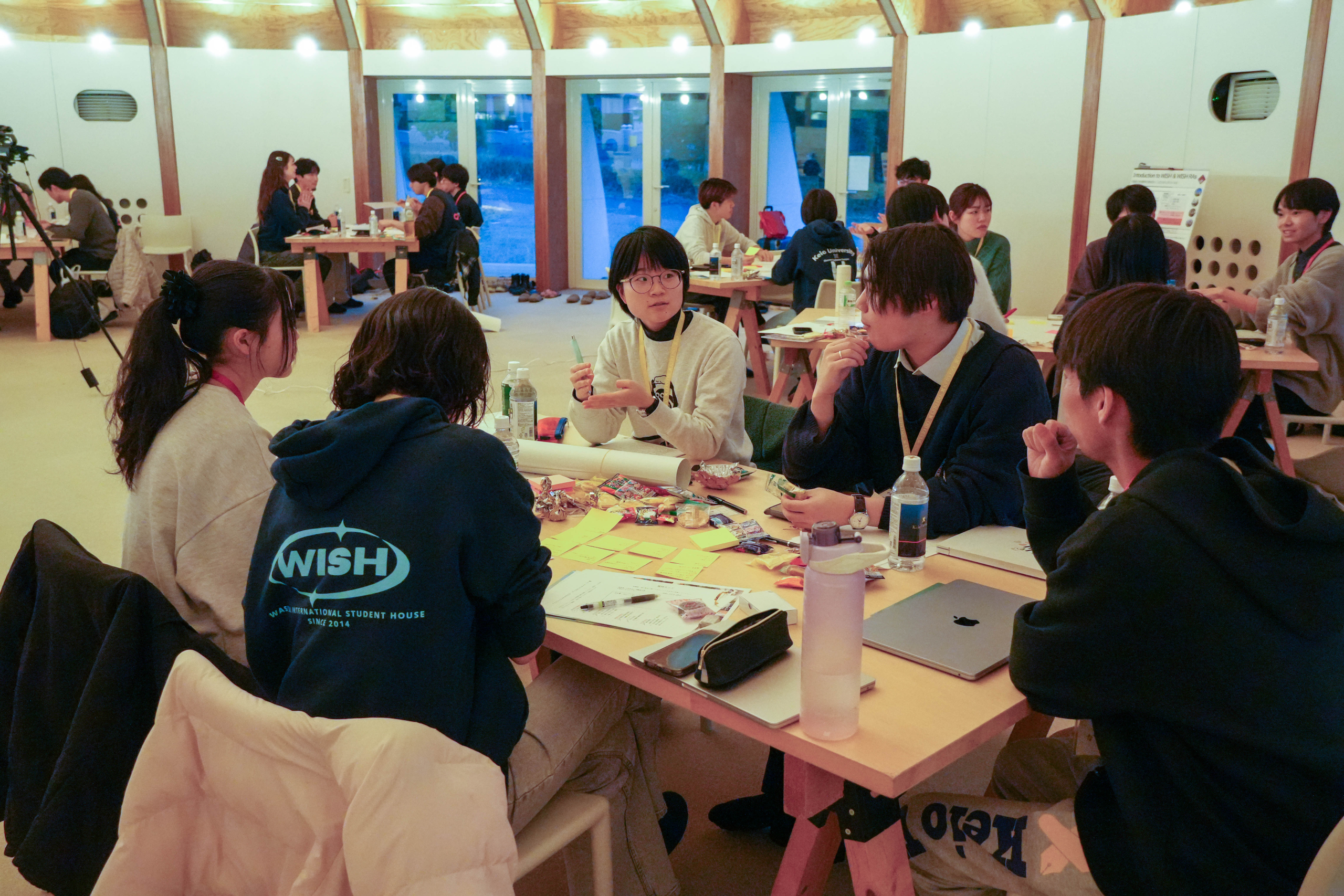
Day one began with an introduction session in the afternoon. We sat at tables in one of the eight designated groups. In my group, two students from APU, one from SFC, and one from Chuo University joined. I was a little nervous in the beginning because there were many students I had never met, but it seemed everyone had strong communication skills, so within five minutes all the teams were able to converse freely. We shared general information about our dorm and RA systems with the whole group, university by university. It was astonishing to me how different the size and living environments are across universities. Some dorms have more than 1300 residents and some have around 30 residents.
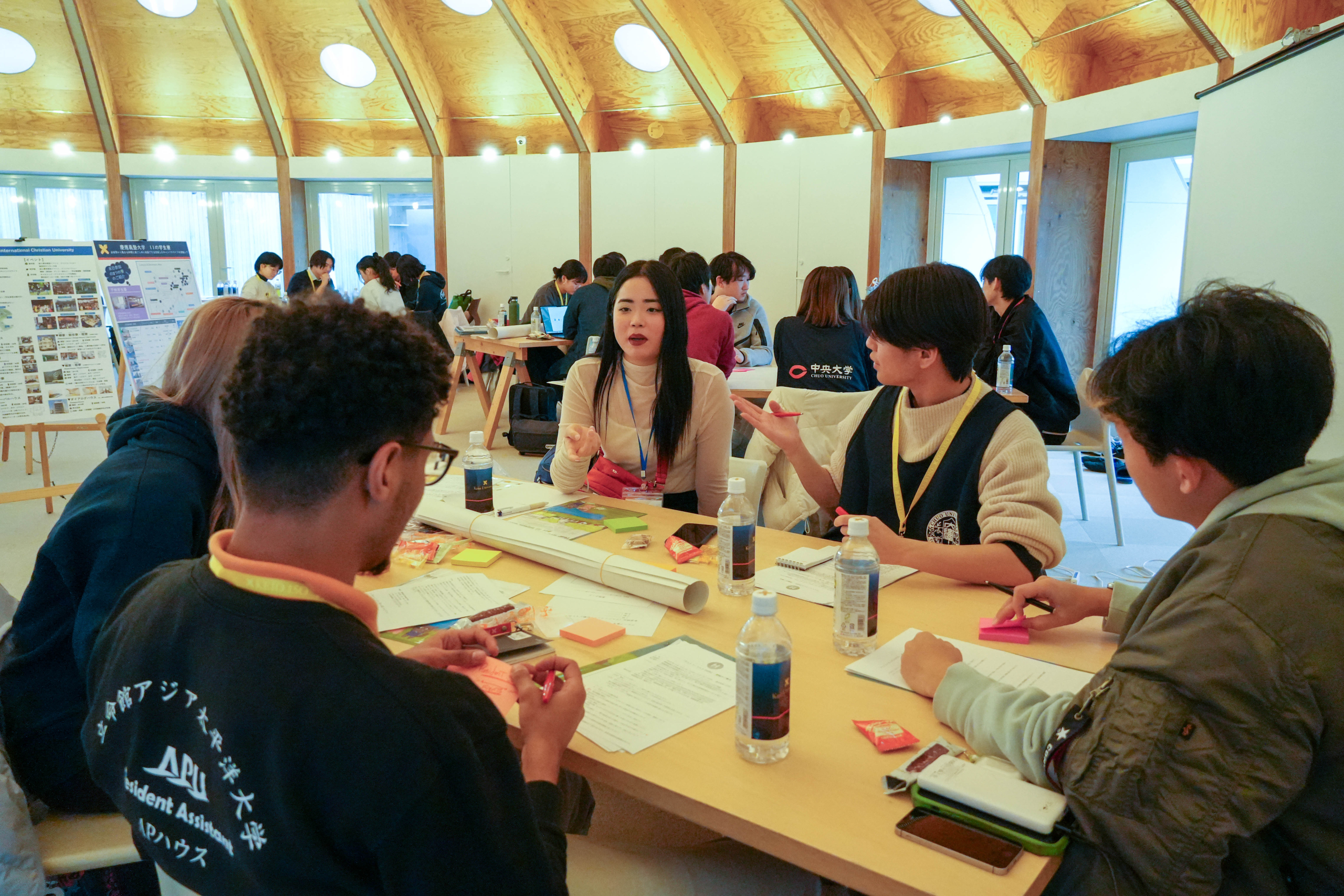
Later, we had group discussion time. The eight subtopics under the main theme included proper use of shared spaces, addressing issues within dormitories, resident’s engagement, multicultural co-living among residents, the ideal dormitory management structure, RA development, external collaboration, and the future of international dormitories. My group decided to talk about the future of international dormitories. Once the discussion started, we were so focused on explaining our own dorm and sharing our knowledge that we almost lost track of time. We realized all universities organize similar events, such as welcome parties, Halloween, and Christmas. Therefore, we shared ideas on how to encourage engagement from dormitory residents in those events and how each university creatively approaches them.
Through the discussion, we noticed what makes our own dorm special too. WISH is unique because it has a RA system with more than 10 years of history and a well-organized departmental structure. As I am in the accounting department and managing event budgets, it was informative to learn about the budget systems of other universities. What surprised me most during discussion was the expression of APU’s ‘If there are any rules that need to be reviewed, they should be discussed and improved as soon as possible.’ which reminded me of the flexibility that needs to be prevalent in managing dormitories.
During the group work session, RAs from H village, a dormitory in SFC, invited everyone to look around their dormitory in turn. This dorm was quite new since it was built three years ago. There are four houses named Paprika, Rosemary, Basil, and Turmeric, and each offers a different housing arrangement including female-only, male-only, or gender mixed options. Each house is assigned a house leader. The house leader works with the unit leaders, who represent each unit. Although, the managing system of H village may change and unit leaders could be abolished, hearing about that gave me new insight into my own dorm. Talking about the facilities, the large dining hall, open to all students, was an appealing feature because WISH only has a kitchen on each floor.
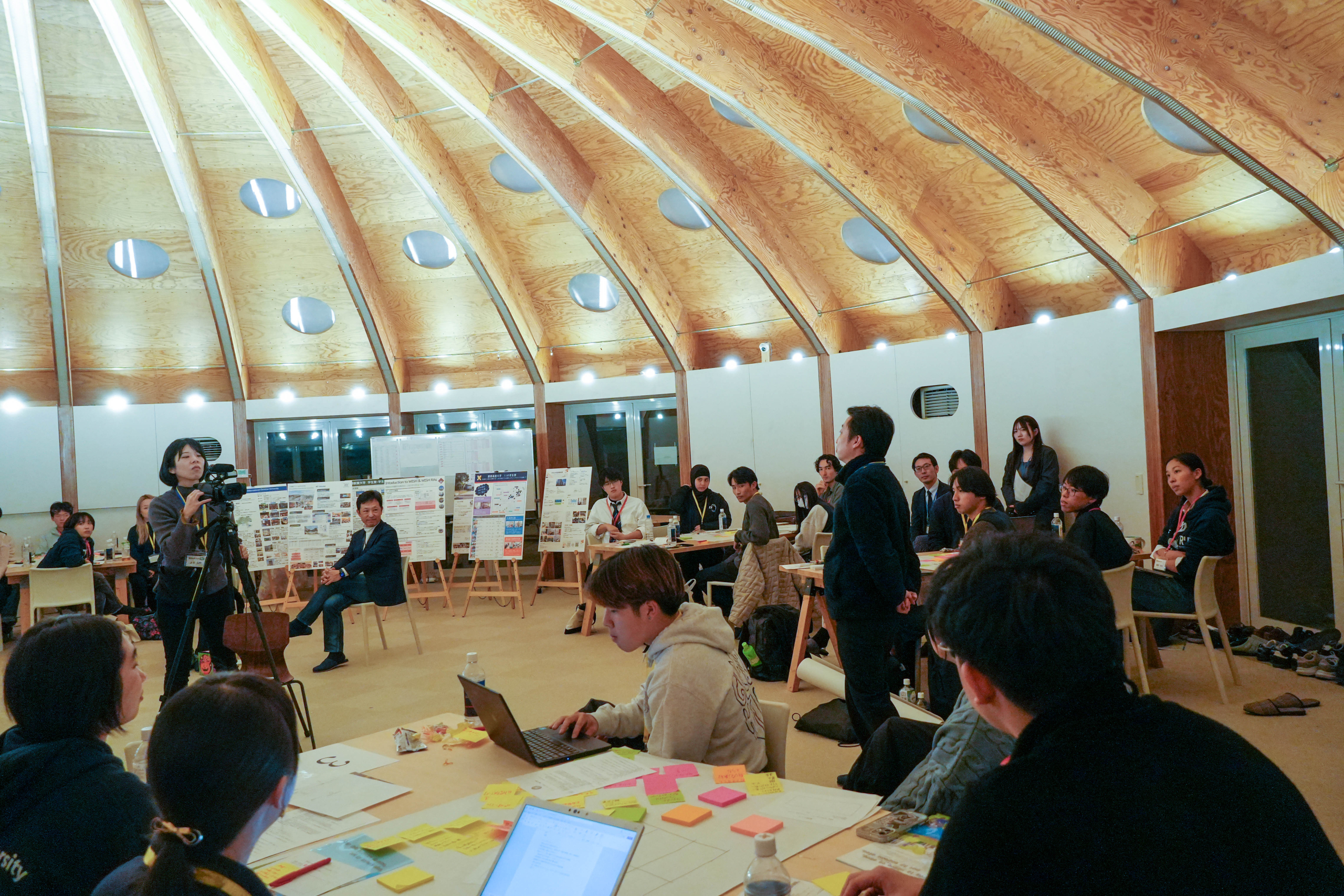
After that, a talk session by Professor Fumitoshi Kato and Professor Keisuke Uehara from Keio University was held. Each RA wrote a question or comment on a piece of paper and threw them into a mystery box. The two professors discussed our comments with everyone in the room. An interesting question arose. What kinds of RAs do you seek? Professor Kato decided to ask for answers from those who support RAs daily, the university staff. A majority replied “those who consult us honestly.” What is needed is a willingness to openly talk about and report issues. I especially liked a comment that, since each RA has their own vision, there are many different ways to solve a problem. There are no official ‘right’ answers, so they want to search for solutions flexibly each time together with the RAs. Hearing staff opinions changed my mind about whether or not sharing information about issues is important because we need to collaborate to maintain dormitory life successfully.
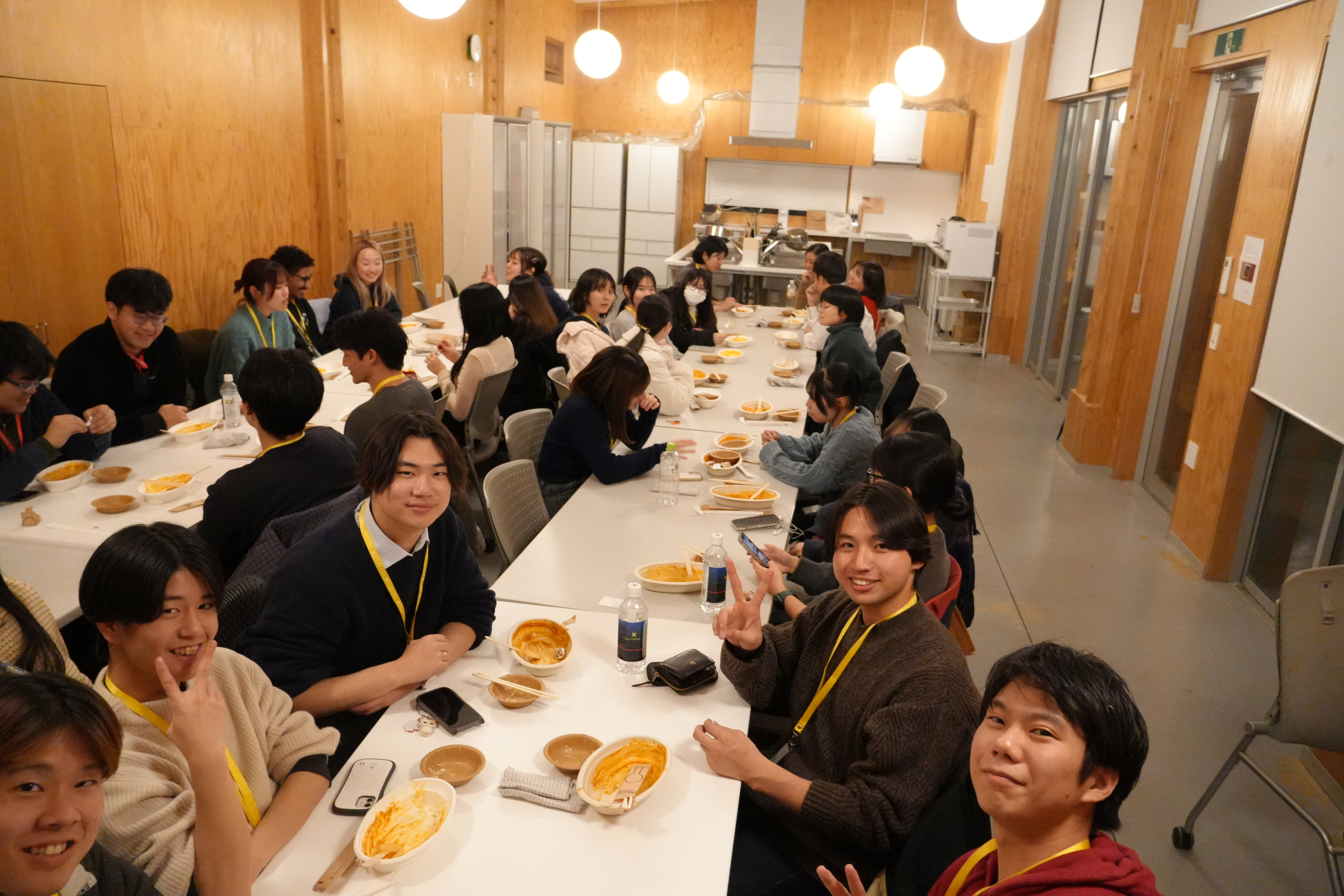
We had a dinner together and enjoyed the evening by talking and playing cards. We interacted with more people and talked not only about the dormitory but also school life. The SFC organizer even arranged the sleeping areas by mixing students from different universities, and I really enjoyed being able to keep making new friends throughout the event.
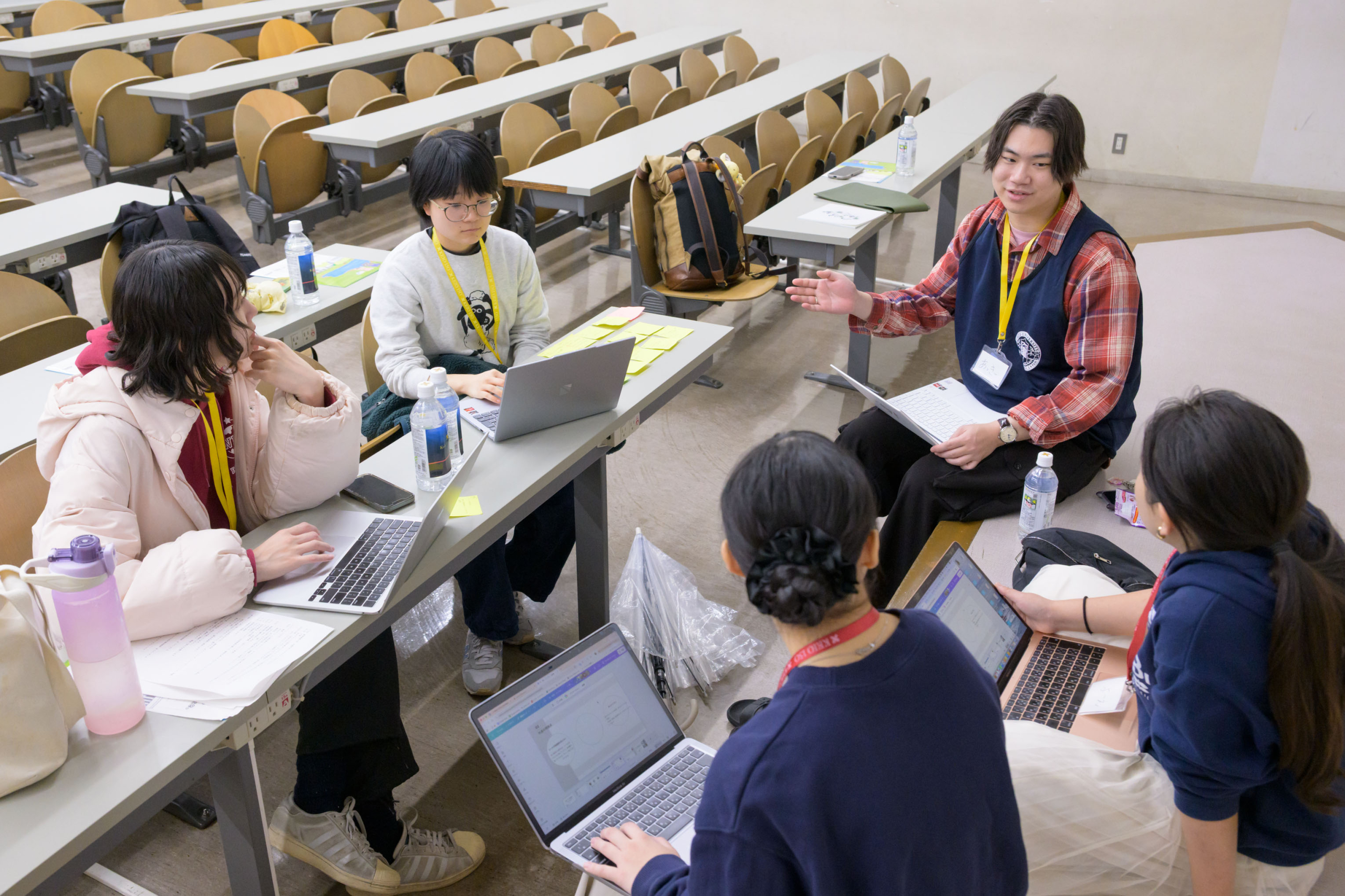
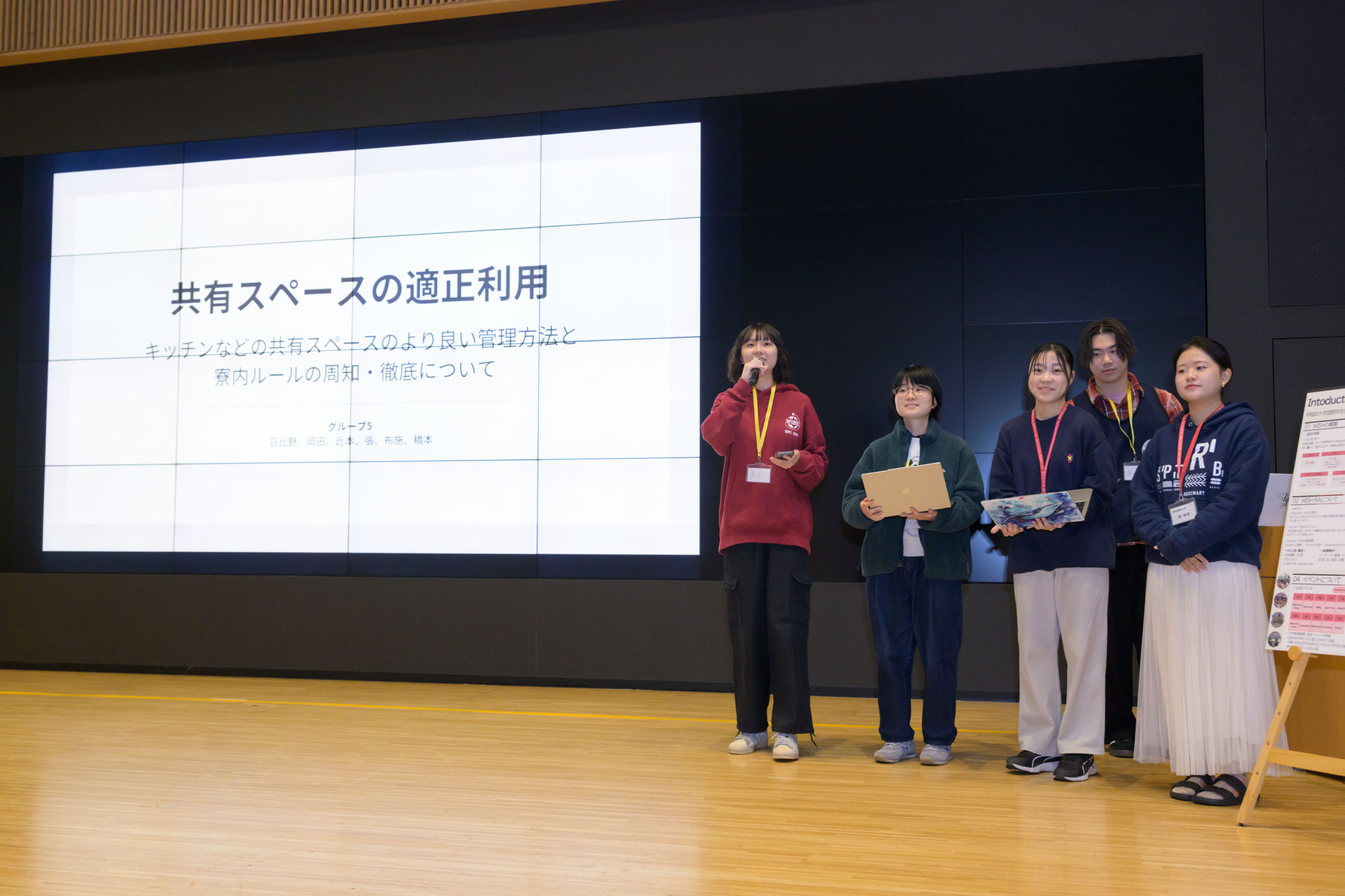
Day two began with the preparation time for the presentation. Our team made presentation slides based on our collections of sticky notes we used the prior day. We presented the idea that the dorm should be a place residents would love to stay, with suggestions to include a piano for those who love music, a gym for those who like to train their bodies, libraries for those who want to read books, and to emphasize the importance of maintaining daily contact with RAs. We found that increasing residents’ happiness are important factors in creating a good dormitory and that is possible with the efforts of RAs. RAs should be recognized as the backbone of dormitories. Two professors from Keio University graded the presentations and two teams got awards. Listening to each presentation, I was surprised that everyone made a fantastic presentation in less than a day. This showed their passion towards their dormitories, and I got a lot of motivation to continue working as an RA.
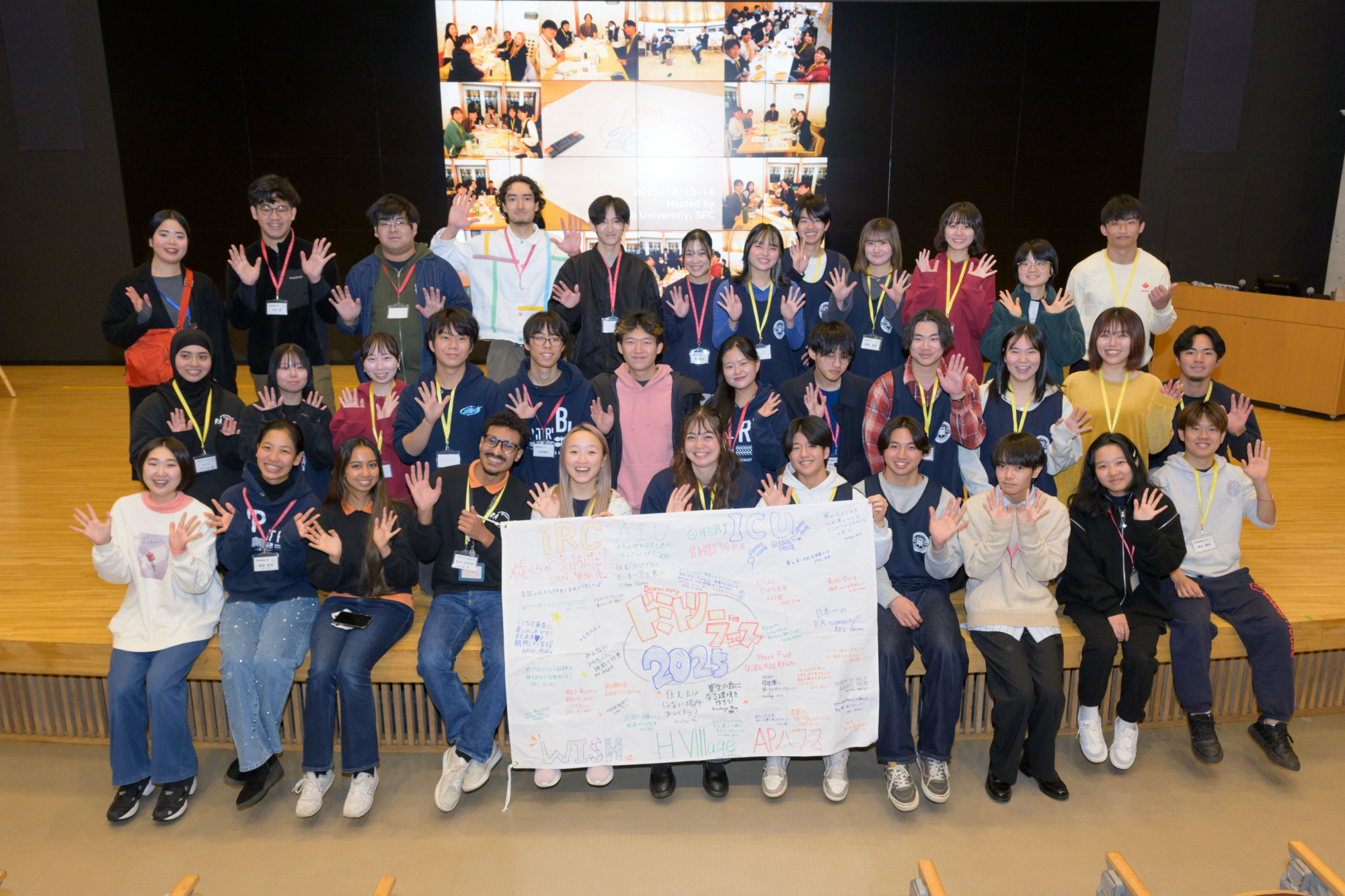
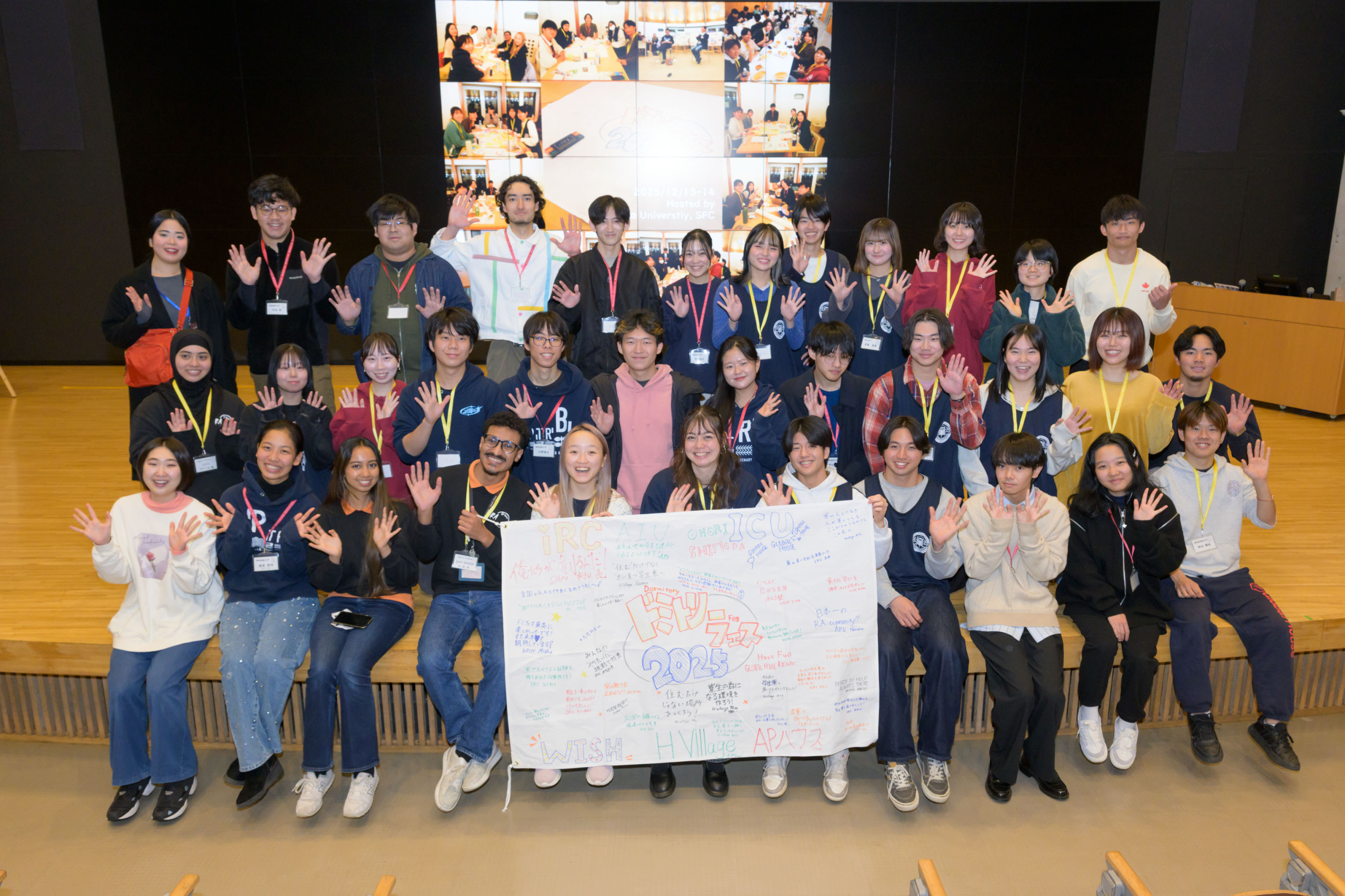
As we took a group photo at the end, I was struck again by the significance of the two days that had now ended. It seems that this was the first time that RAs from different institutions came together for an overnight stay to discuss issues. I strongly hope such exchanges continue and that even better international dormitories will be the result.
*All photos are provided by Keio University.
This article was written by the following Student Contributor:
Chitose Shindoh
School of Culture, Media and Society; Global Studies in Japanese Cultures Program