The W-SPRING/W-SPRING-AI PhD Forum Showcases Creative Research and a Vibrant Community at Waseda University
Tue, Sep 29, 2026-
Tags
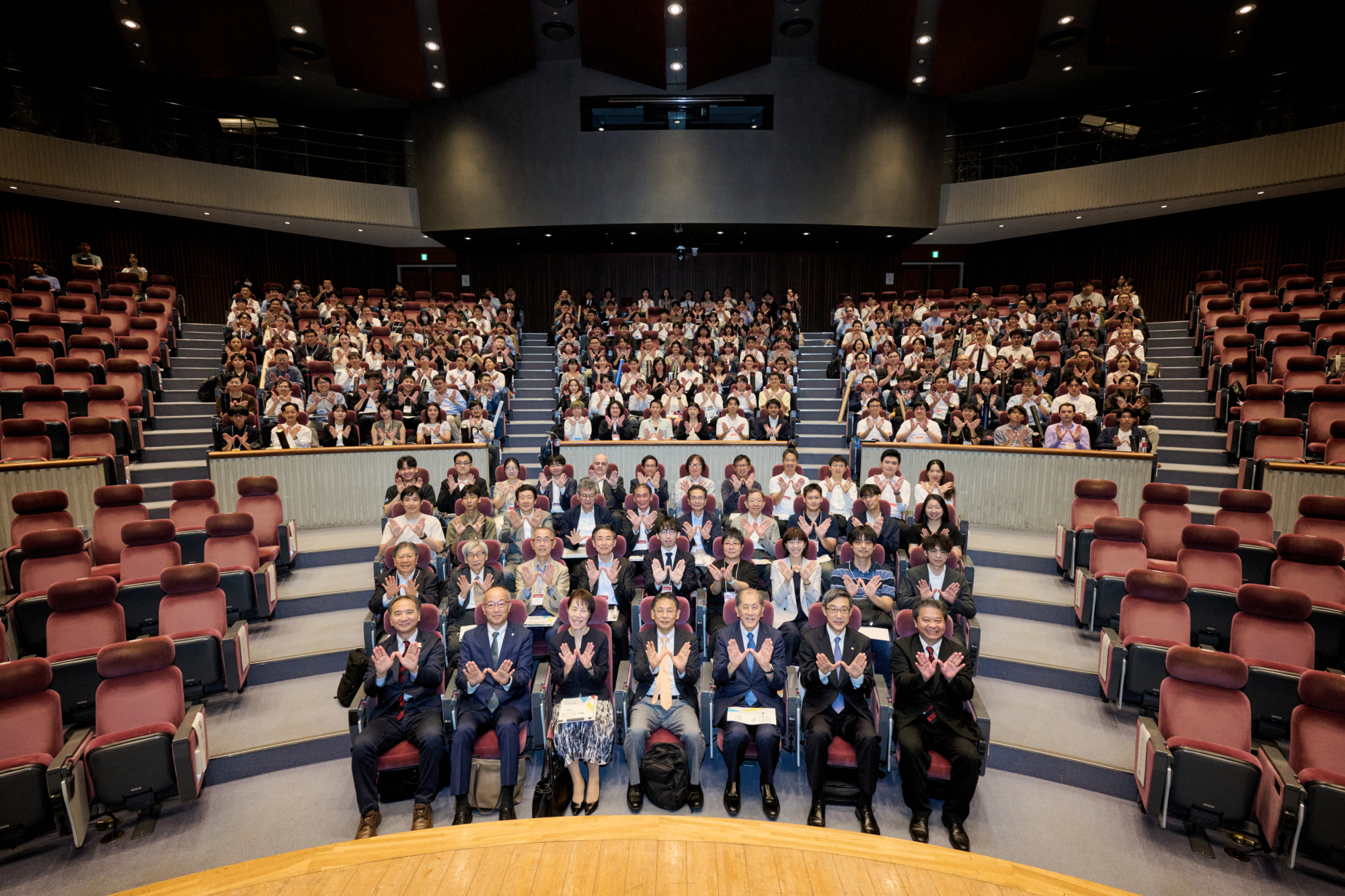
On September 8, 2026, around 230 doctoral students at Waseda University joined faculty members, researchers, and practitioners from other research institutes and companies at the Waseda University International Conference Center for the W-SPRING/W-SPRING-AI PhD Forum.
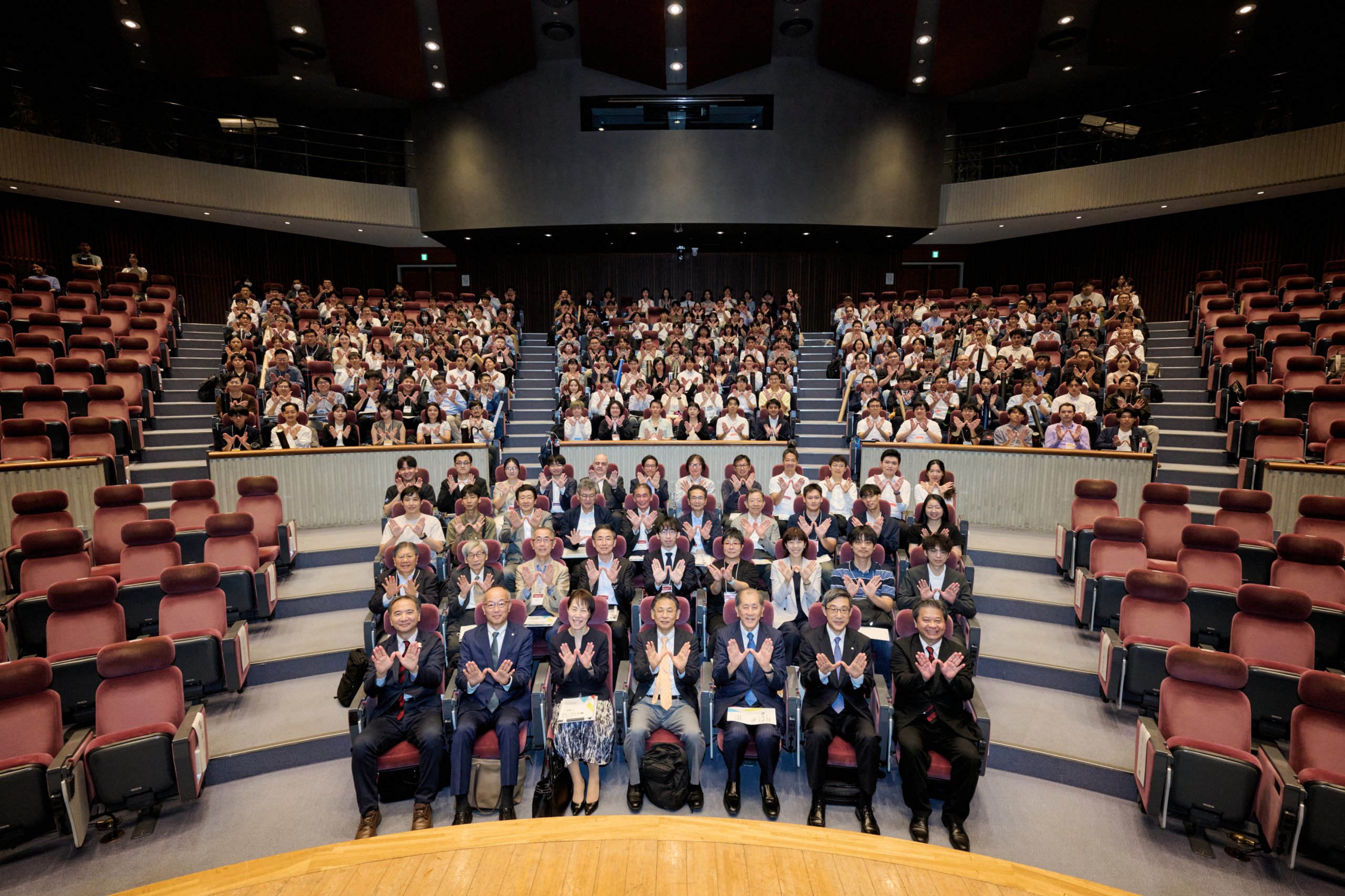
W-SPRING is part of the Support for Pioneering Research Initiated by the Next Generation Program (SPRING), launched by the Japan Science and Technology Agency (JST) under the Ministry of Education, Culture, Sports, Science and Technology (MEXT), and is designed to provide doctoral students with research and financial support. The PhD Forum offers students a platform to present their research, engage with researchers from different disciplines, and receive valuable feedback. It is also an occasion to witness creative research conducted at Waseda University and its vibrant student community.
The Opening of the W-SPRING/W-SPRING-AI PhD Forum
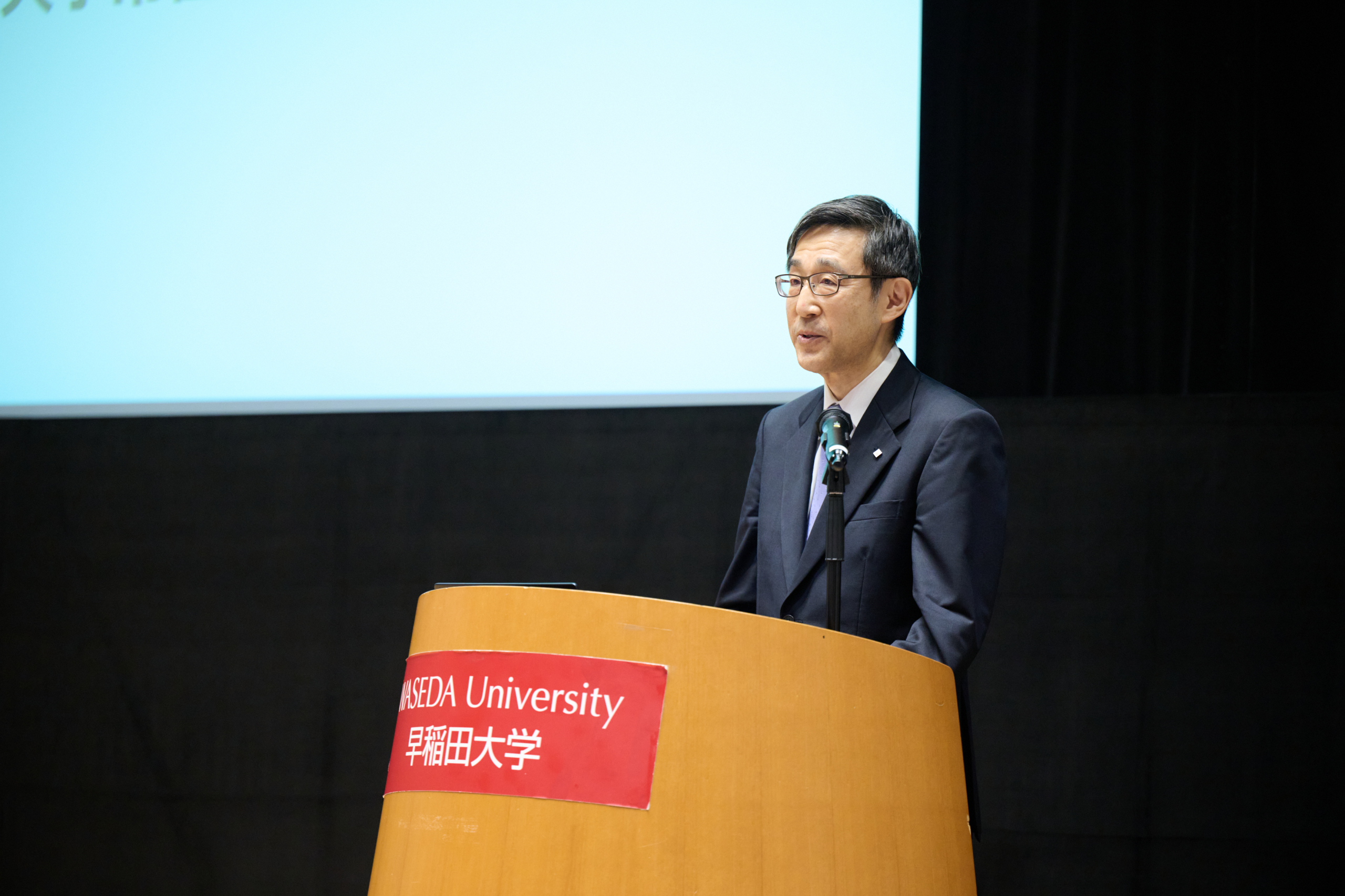
Professor Takayuki Homma, Vice Provost and Executive Vice President of Waseda University at the time of the event (Current: President of Waseda University)
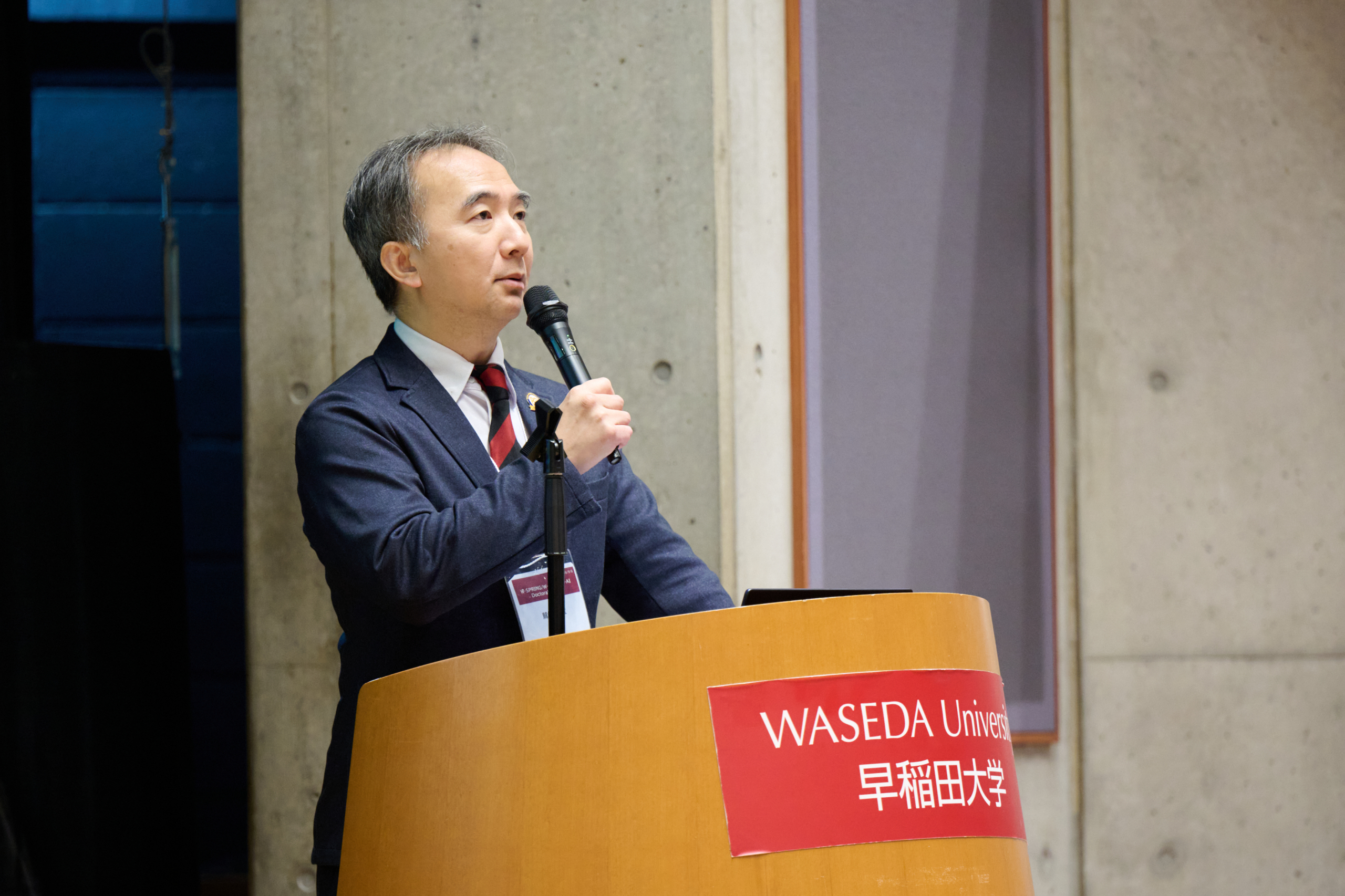
Professor Hironori Washizaki of the School of Fundamental Science and Engineering
The PhD Forum began in the morning with opening remarks from Professor Takayuki Homma, Vice Provost and Executive Vice President of Waseda University at the time of the event (current: President of Waseda University). It was followed by greetings from Takashi Kiyoura, Director-General of MEXT’s Science and Technology Policy Bureau, and an introduction to the Forum by Professor Hironori Washizaki of the School of Fundamental Science and Engineering.
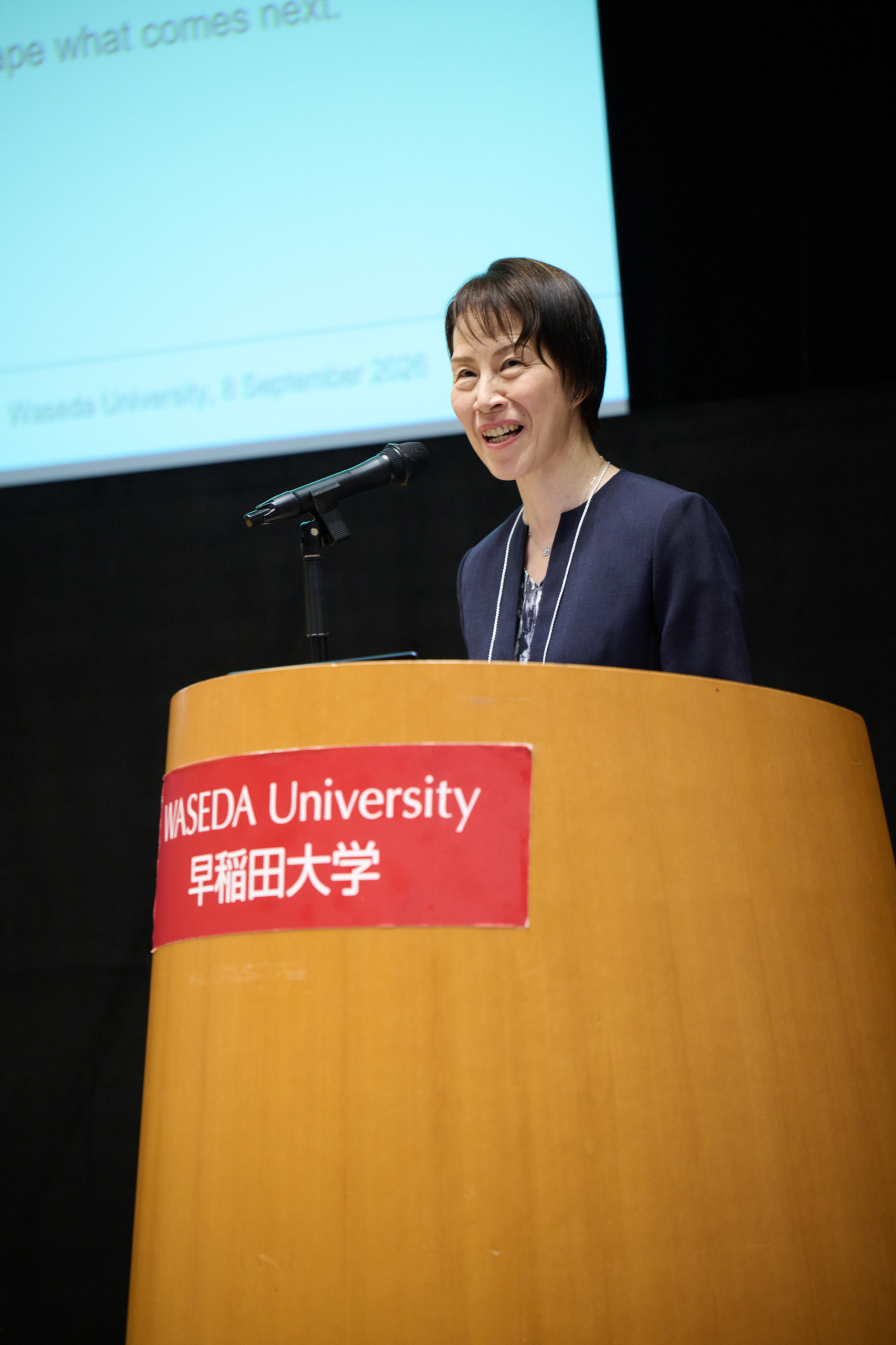
Junko Iida, Strategic Advisor at Shimadzu Corporation and a specially appointed professor at Kyoto University
Following these introductory sessions, Junko Iida, a strategic advisor from Shimadzu Corporation and a specially appointed professor at Kyoto University, delivered a keynote speech titled Beyond the PhD: Creating Value for Society in the Age of AI. Rather than delivering a conventional lecture on why pursuing a PhD matters today, Professor Iida began by sharing her personal story and explaining how she decided to pursue doctoral study and her research interests. She then emphasized that the purpose of pursuing a PhD is to create value for society and encouraged students to stay curious in an increasingly complex world.
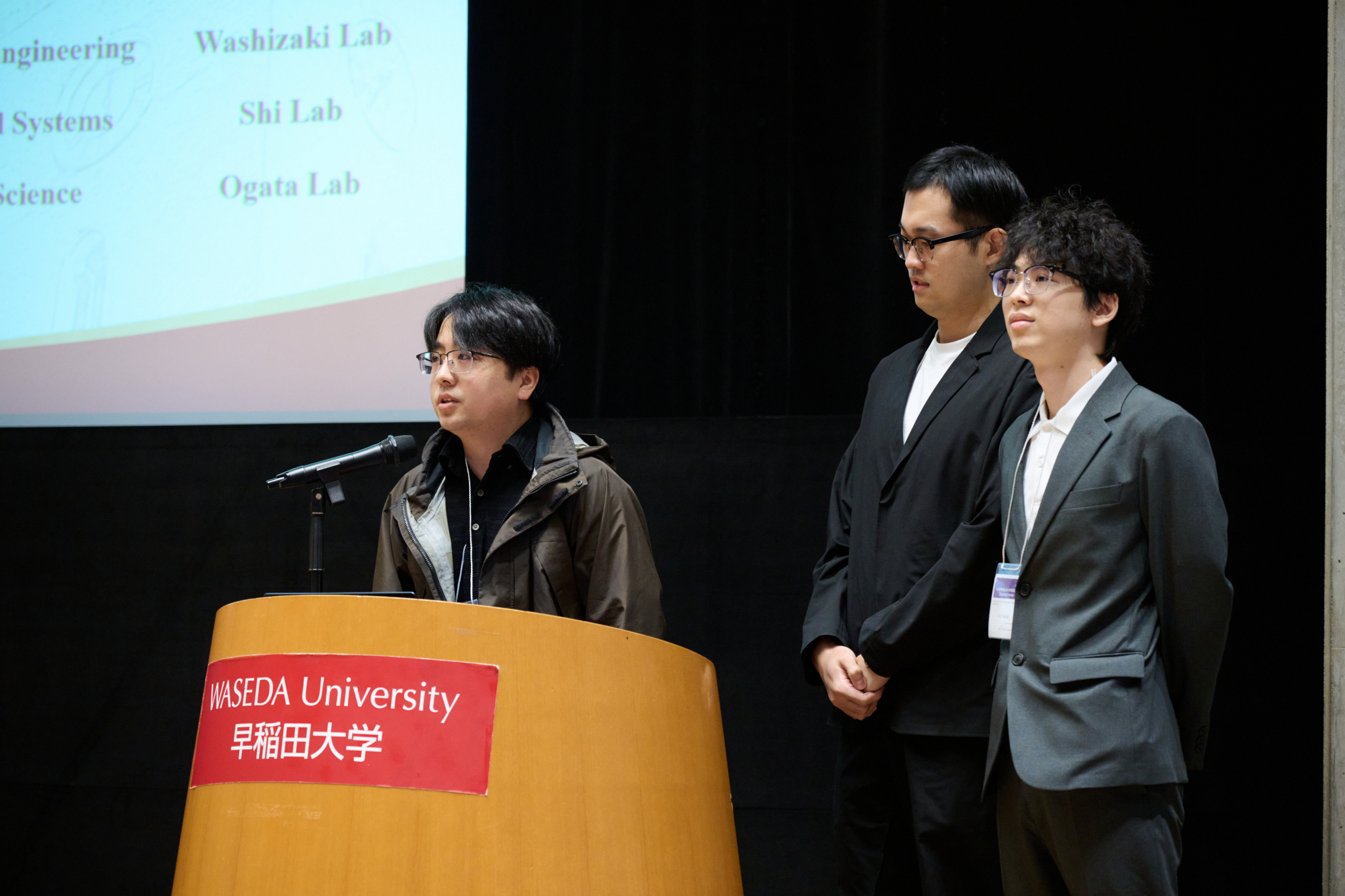
W-SPRING Student Presentations
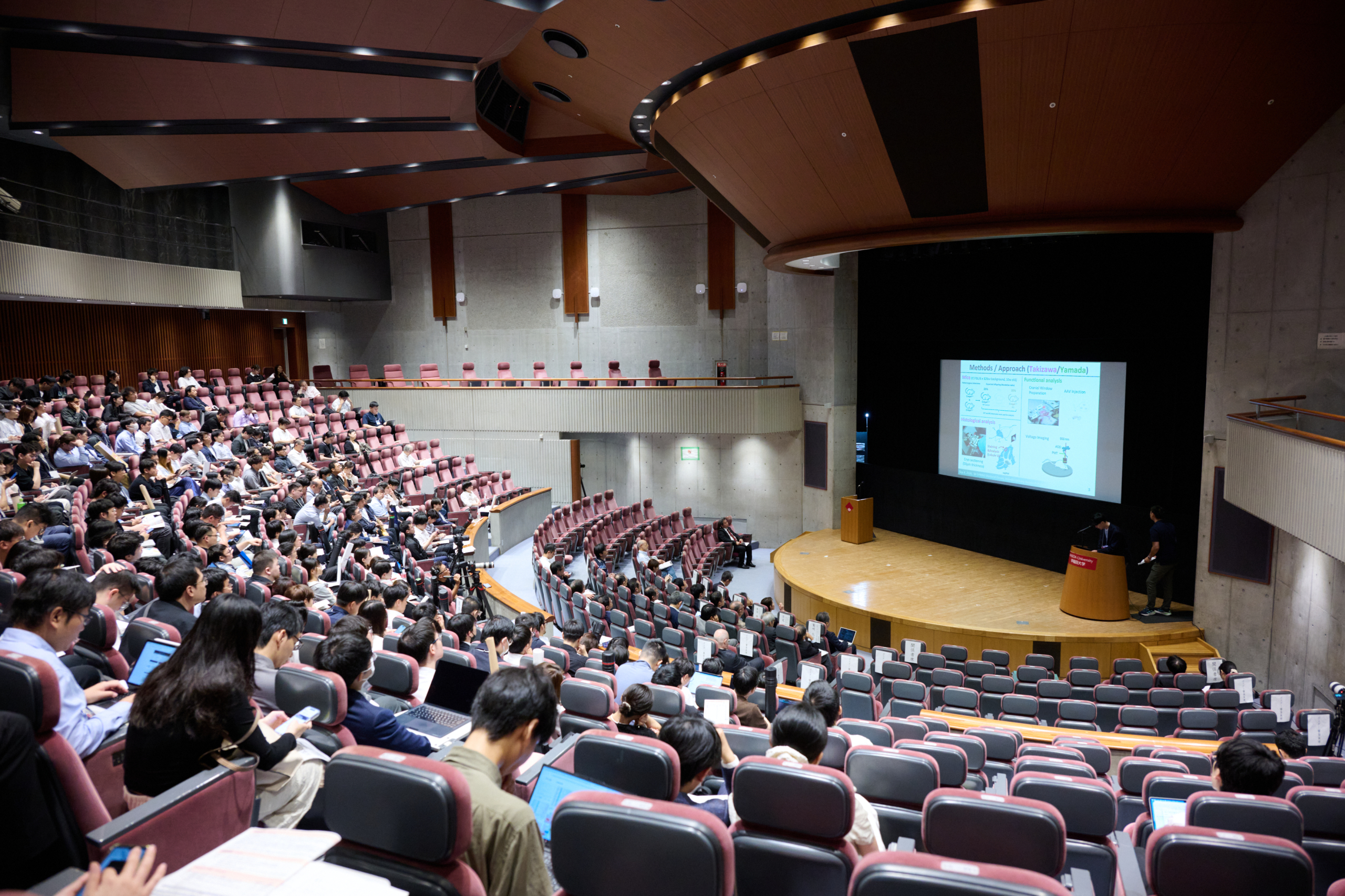
W-SPRING Student Presentations
Indeed, the desire to create value for society and the power of curiosity shone through when three groups of doctoral students presented their interdisciplinary research projects, which ranged from decoding the relationship between attention and actions to understanding human body motions. What impressed me most was not only how their research questions arose from their daily observations about some tricky questions in their separate research fields, but also how they turned their questions into actions. They did not let their curious ideas slip through their fingers. Instead, they nurtured them by striking up conversations with colleagues and seeking collaboration. Empowered further by the W-SPRING program, an idea then morphed into a research plan that, if successful, could ultimately help address real-world problems.
The Poster Sessions: Exchanging Ideas and Building Networks
Following the interdisciplinary research presentations, the PhD Forum moved into the poster sessions. Students presented their own original research to attendees, with faculty members of Waseda University and external researchers and practitioners offering feedback and evaluation. For anyone hoping to catch a glimpse of the creativity and the remarkable diversity of the research conducted across Waseda University, this is one of the occasions to attend.
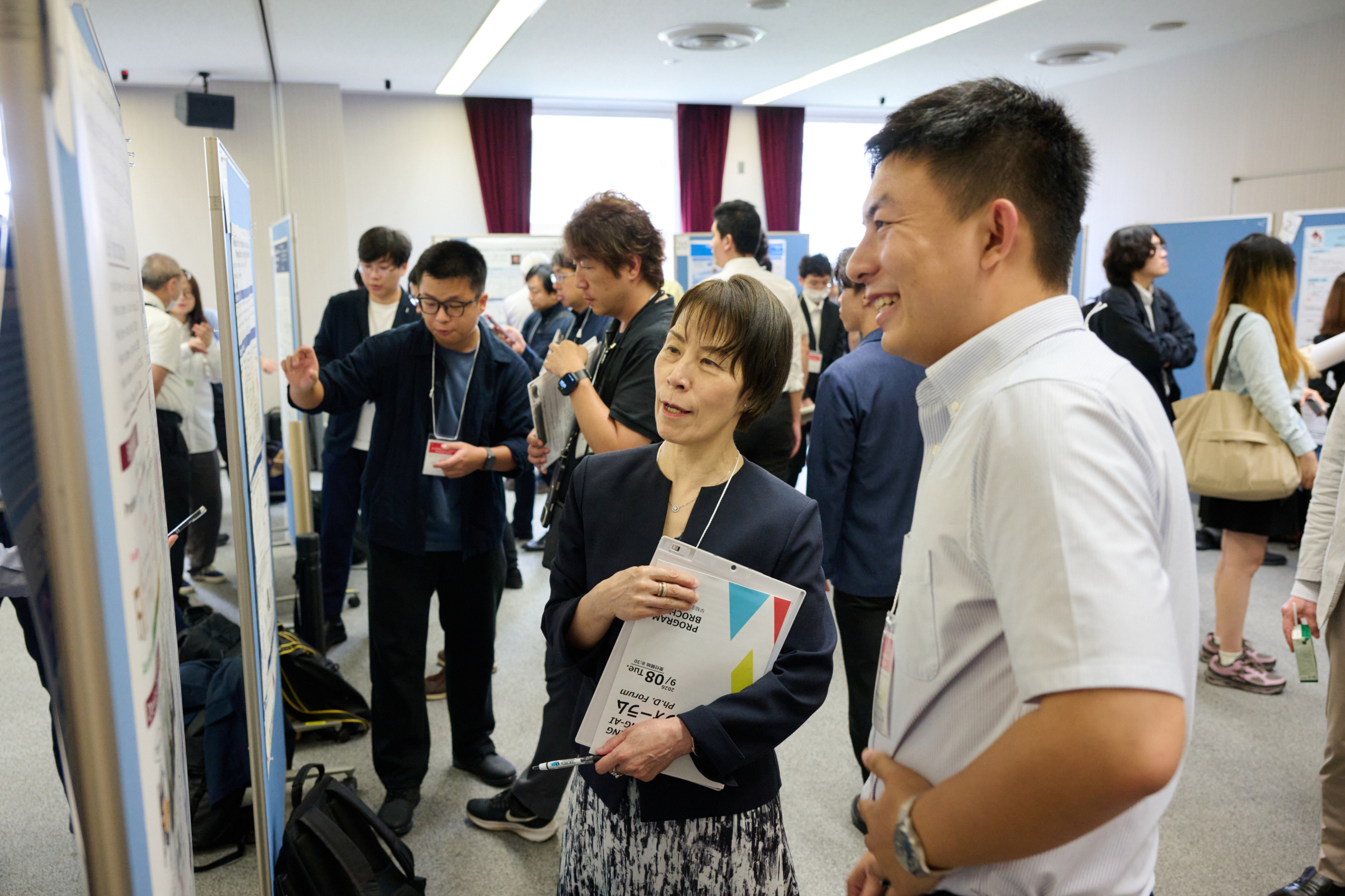
Scenes from the poster sessions
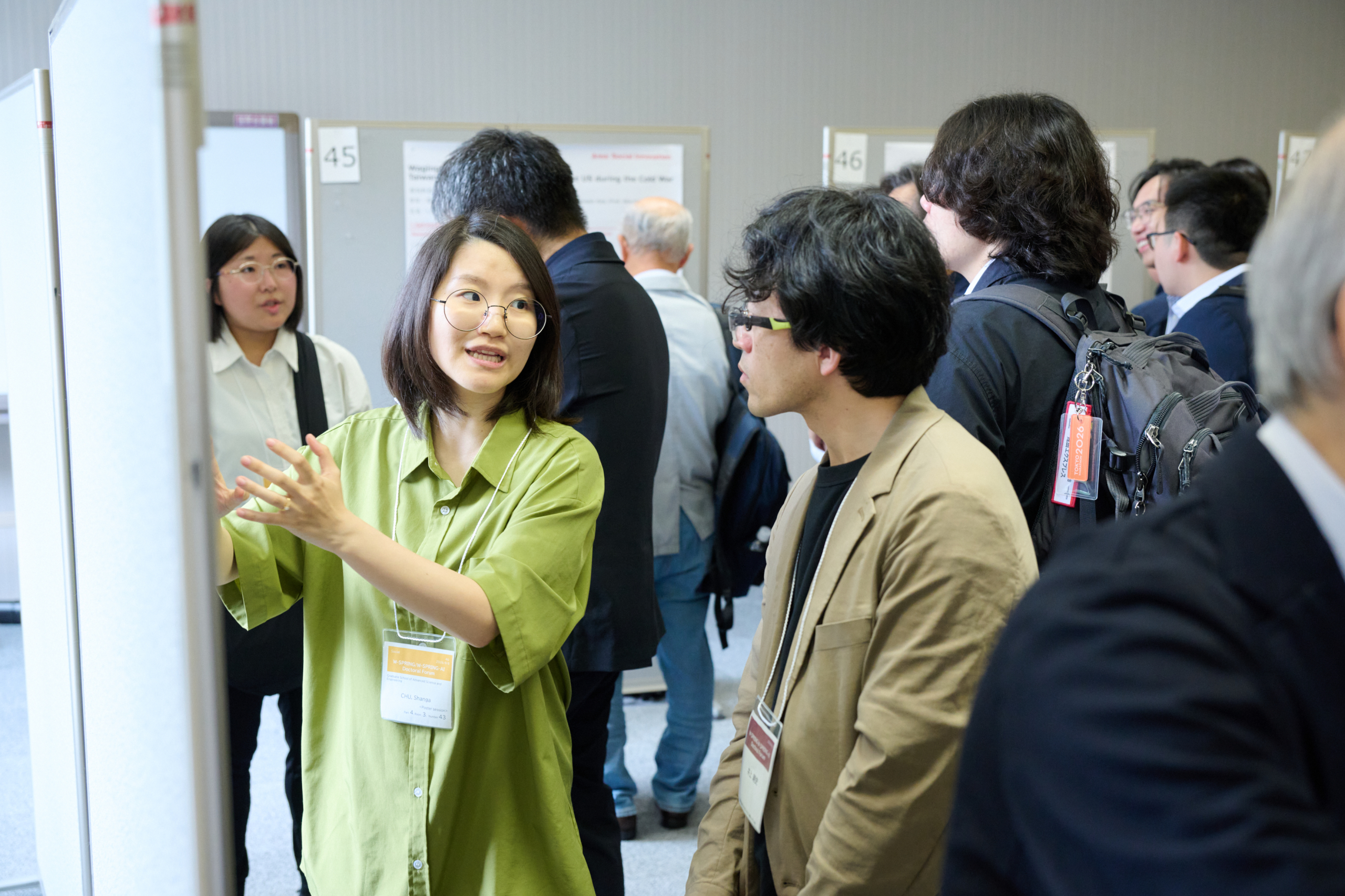
Scenes from the poster sessions
Although this was my second time participating in the PhD Forum as a student supported by the W-SPRING program, I still found the experience eye-opening. Upon walking into the conference rooms, I struggled to decide which poster to explore first because the range of research topics shared here was strikingly kaleidoscopic. In the same room, for example, you could stumble into a student researching language learning alongside others working on tsunami evacuation and the functions of robots. Elsewhere, you could also listen to students explaining the concept of government in international law and international politics, alongside some working on metacognition. In other words, whatever your background, you could always encounter one project that would pique your interest.
The diversity of this PhD Forum thus created a precious platform for students working on widely different topics to share their research findings, learn from each other, enhance their communication skills, and build personal and professional networks. As Chien-Ning Ma (Ariel), a Taiwanese student from the Graduate School of Creative Science and Engineering, told me, the PhD Forum has helped her ‘learn research from different research fields, understand methods in different disciplines, and communicate with students from different countries.’ A first-year Japanese doctoral student also expressed a similar view: ‘The PhD Forum is very helpful as it provides a valuable opportunity to think about how we can effectively communicate our research to people who are not familiar with our fields.’ I agree with their views based on my own experience with the poster sessions. Presentation, at heart, is an art of communication. It means that when explaining scholarly works to people outside our research fields, we need to put ourselves in the audience’s shoes to avoid being pedantic. In doing so, we hone our ability to articulate complex ideas, and only by doing so can we bridge the distance between the academic and the public.
Additionally, this PhD Forum showcased one of the W-SPRING program’s core strengths: its promotion of industry-academia collaboration to solve real-world issues. The research conducted by Chien-Ning Ma serves as a compelling example. After working in the printing and packaging industry for more than ten years in different countries, Ma decided to pursue a doctoral degree by focusing on supply chain optimization. Her goal, she explained, is to ‘bridge academic research and industrial practice by developing approaches that can support real-world supply chain decision-making.’ Indeed, her first-hand exposure to how companies manage different market requirements and coordinate supply across countries has endowed her with a distinctive ability to quickly assess the feasibility of research projects and identify their potential applications in relevant industries. Examples like this abound among students supported by the W-SPRING program.
Concluding the Forum: Feedback from Students about the Forum and Program
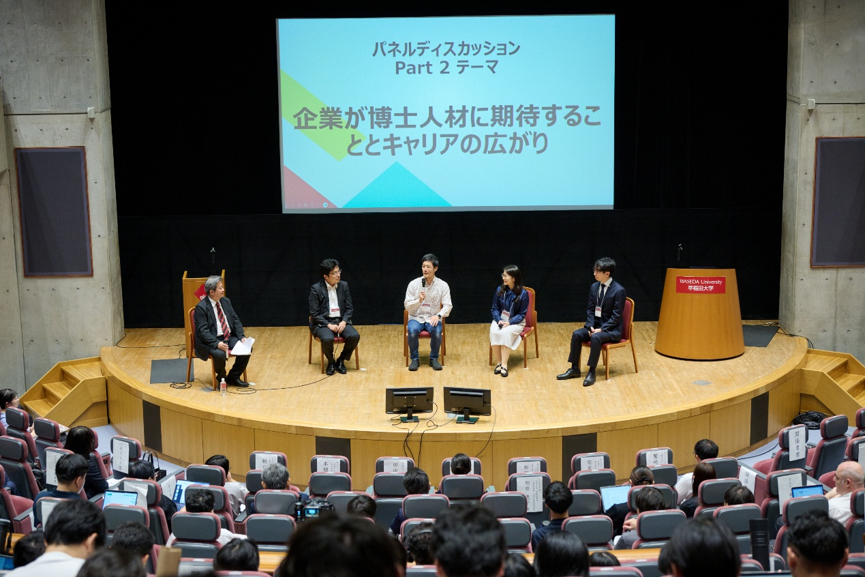
Panel Discussion Part 2
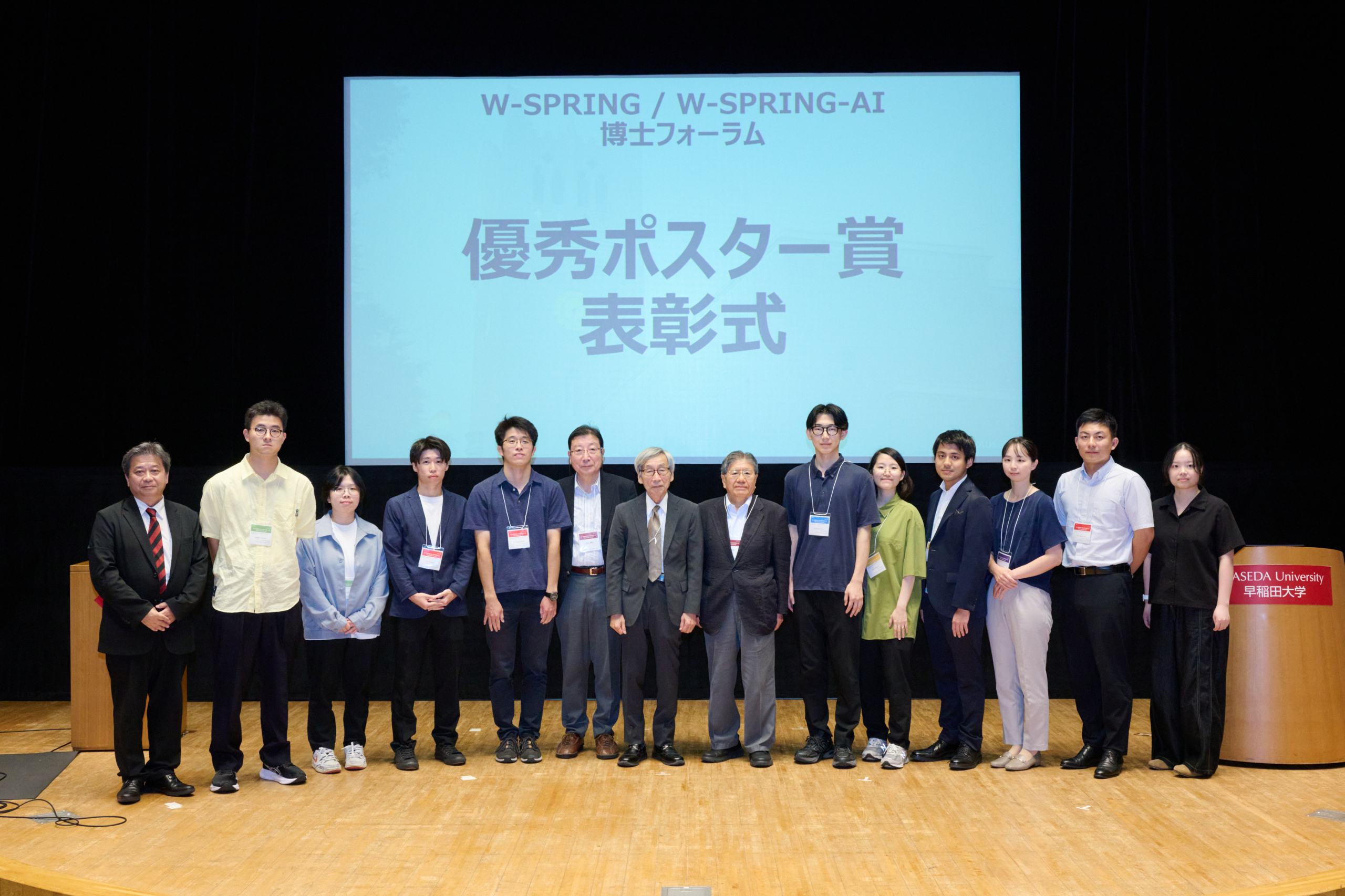
Outstanding Poster Awards
The PhD Forum concluded with two panel discussions and the announcement of the Outstanding Poster Awards. Throughout the poster presentations, exchanges between students, and feedback from faculty members and practitioners, this event showcased the creativity of research conducted by students at Waseda University and a shared sense of responsibility among students to contribute to society through their research. The financial support, research assistance, and academic activities provided by the W-SPRING program are the key factors in making these possible, and many students expressed appreciation for the program’s support.
As the first-year Japanese doctoral student told me, ‘W-SPRING has greatly supported my research by providing not only financial assistance but also valuable opportunities to present and further develop my work, such as through the PhD Forum.’ Chun Hwee Lee, a Singaporean doctoral student from the Graduate School of Creative Science and Engineering, similarly emphasized the importance of financial support: ‘Financial support is always helpful, especially in the case of not needing to think about living expenses in general.’ For Ma, however, the W-SPRING program means more than just financial help. As she explained, ‘For me, however, the value of W-SPRING extends beyond financial support. Through W-SPRING activities, I have opportunities to interact with doctoral students and researchers from different disciplines. These exchanges expose me to different perspectives and ways of approaching research problems.’
Indeed, I share their views and gratitude. Support from W-SPRING has greatly alleviated our financial burden and allowed us to focus on our research, whose results can potentially help resolve social problems. Meanwhile, the PhD Forum has also created opportunities for us to exchange ideas and build connections. These networking opportunities truly matter because intellectual inspiration can arise not only from solitary learning and reflection but also from casual conversations with friends, colleagues, and strangers, where eureka moments may spring up unexpectedly. In this sense, the PhD Forum has been successful.
About the Author: Emery Yuhang Lai
Hi, everyone! I am a PhD candidate at the Graduate School of Asia-Pacific Studies. My research explores the ideational foundation of foreign policy and the impacts of transnational propaganda. My broader research interests also include identity, international political sociology, and narratives in international relations theories.
- Links