The Nihon Hidankyo Nobel Peace Prize Commemorative Lecture: An International Student’s Perspective
Wed, Dec 3, 2025-
Tags
On November 6th, 2025, Waseda University President Aiji Tanaka welcomed two alumni, Satoshi Tanaka and Jiro Hamasumi, to share their experiences as atomic bomb survivors at the Nihon Hidankyo Nobel Peace Prize Commemorative Lecture as part of the University’s 150th Anniversary Project. The Japan Confederation of A-and H-Bomb Sufferers Organizations (Nihon Hidankyo) was awarded the Nobel Peace Prize in 2024.
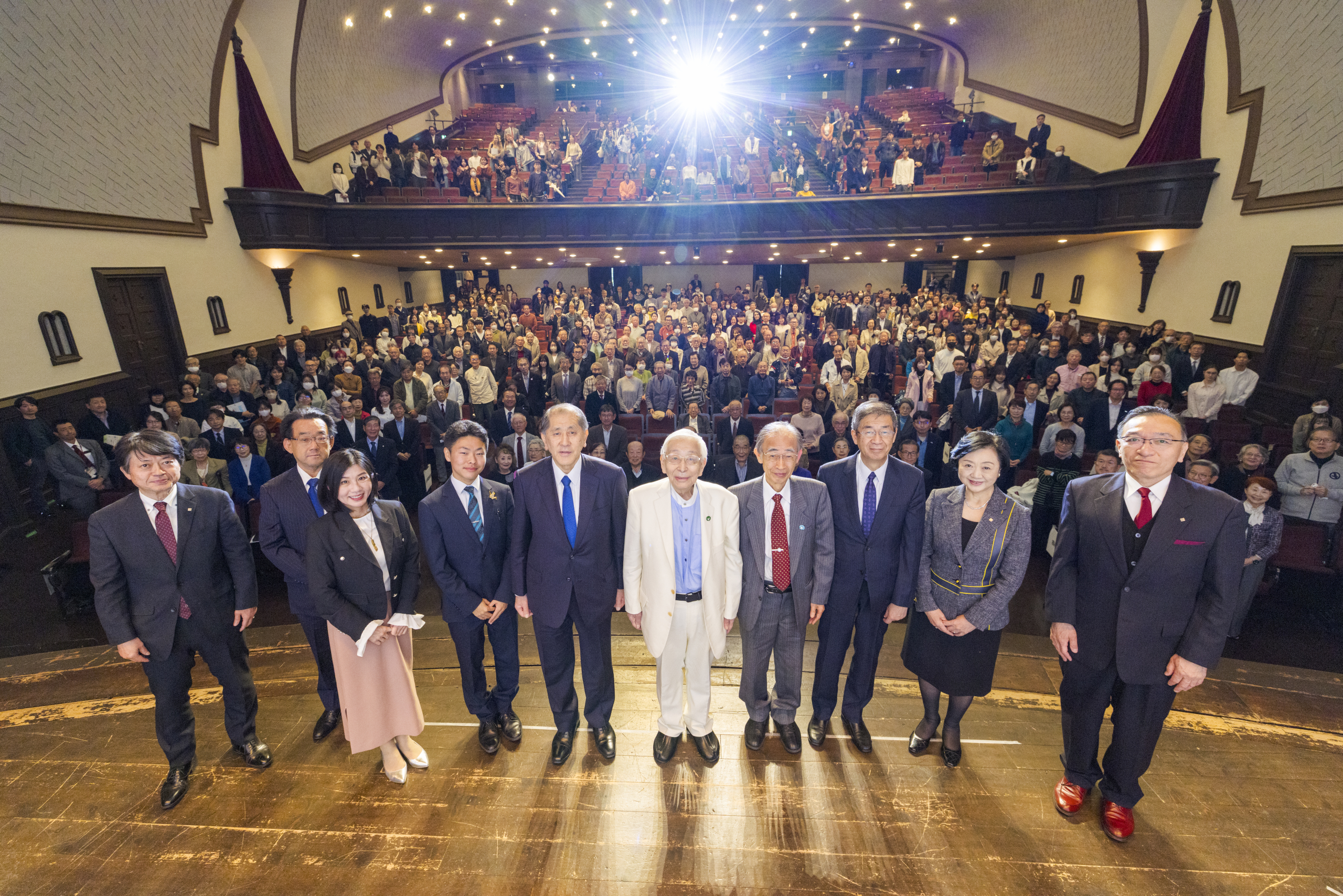
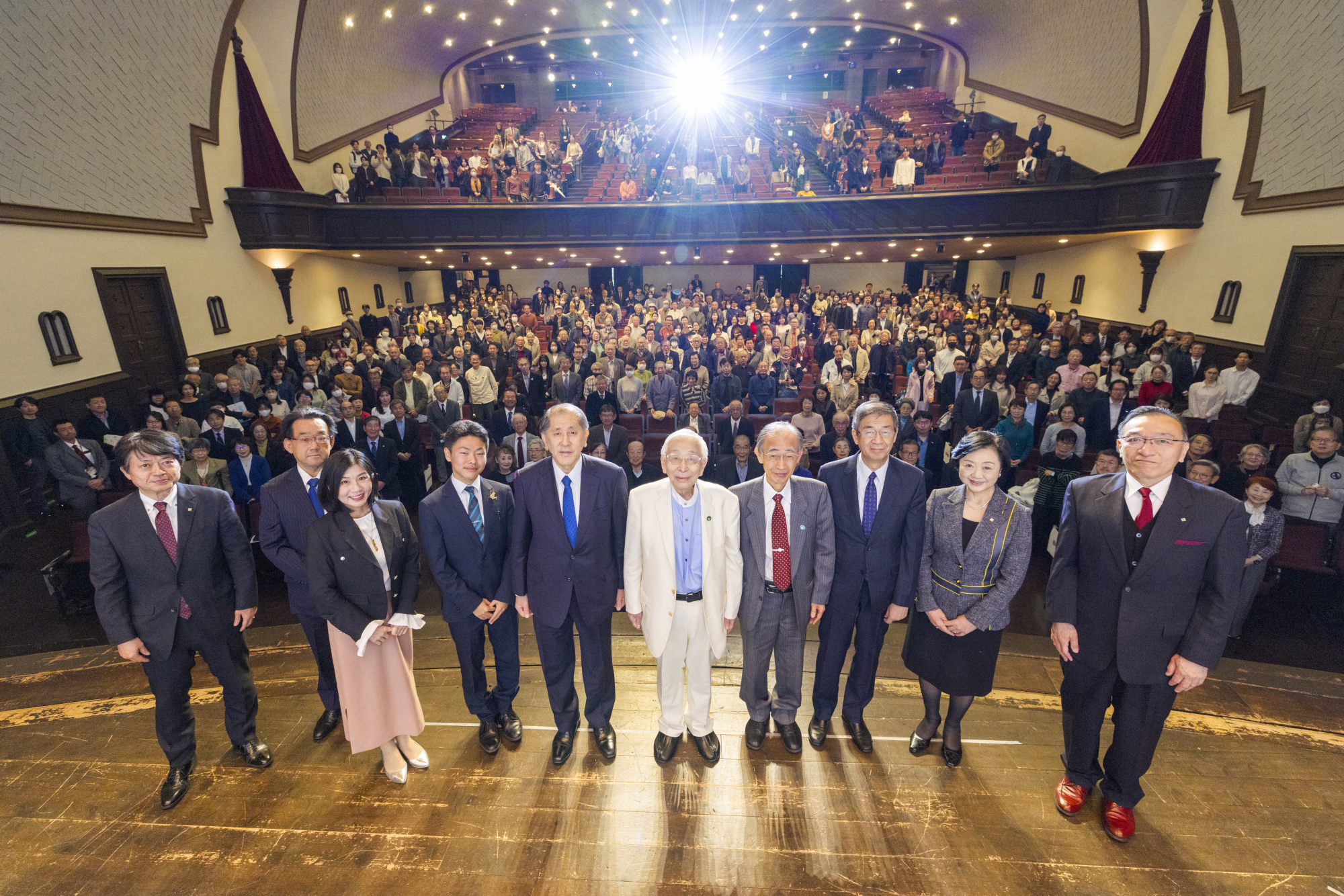
A commemorative photo taken inside the Okuma Auditorium
As an international student here at Waseda, the event offered meaningful insight into Japan’s commitment to a nuclear-free world through the lens of survivors. This event raised my awareness of world peace and the current international tensions surrounding nuclear weapons.
About Nihon Hidankyo:
Eighty years after atomic bombs were dropped on Hiroshima and Nagasaki, the motivation to pursue and preserve peace remains alive among the Hibakusha —a term used to describe the survivors. The late Heiichi Fujii, also a Waseda alumnus, played a central role in the founding of Nihon Hidankyo in 1956. It is an organisation comprised of Hibakusha that has advocated for the abolishment of nuclear weapons both within Japan and throughout the world. The 2024 Nobel Peace Prize marks a recognition of their relentless effort.
About the Event:
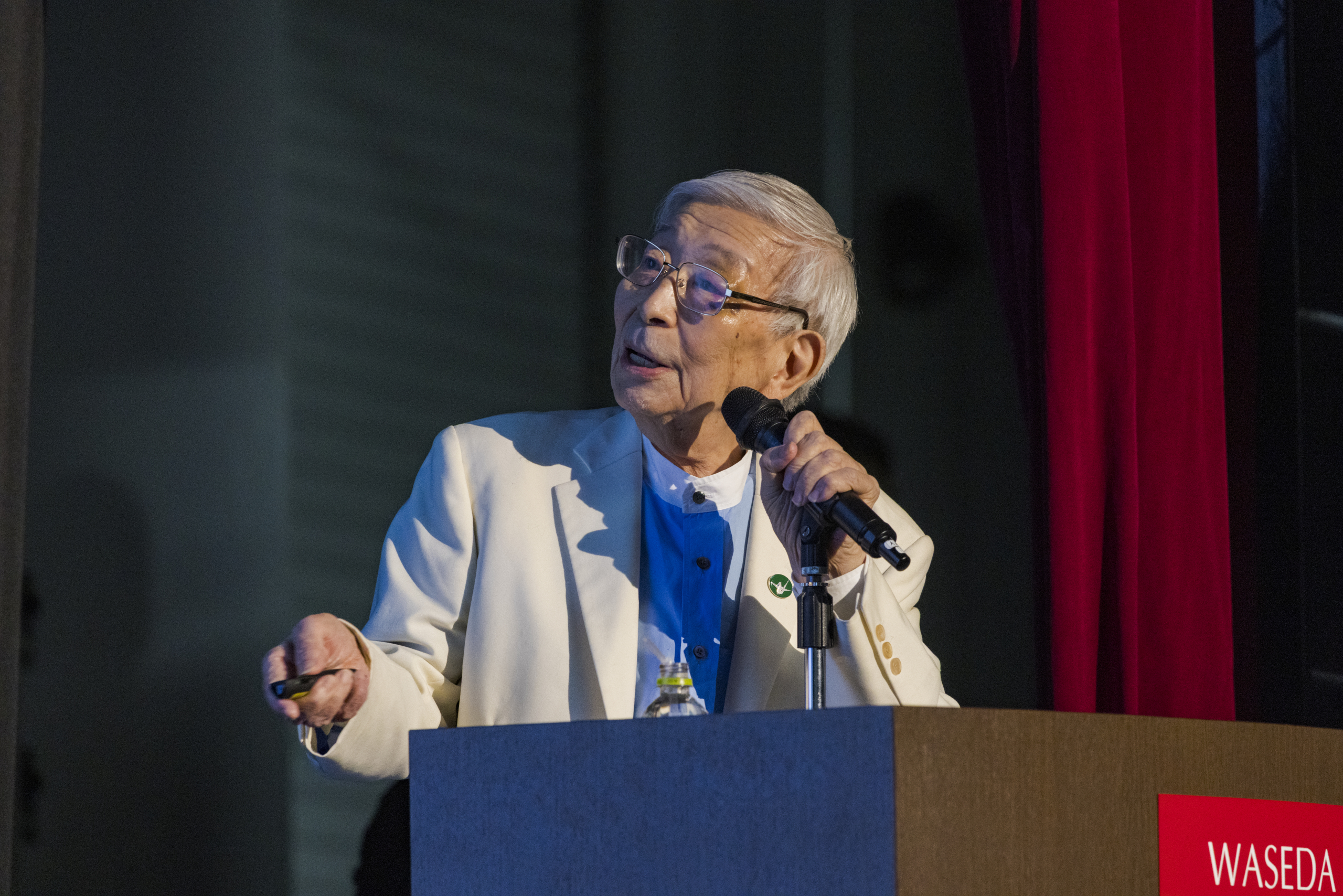
Satoshi Tanaka giving his speech
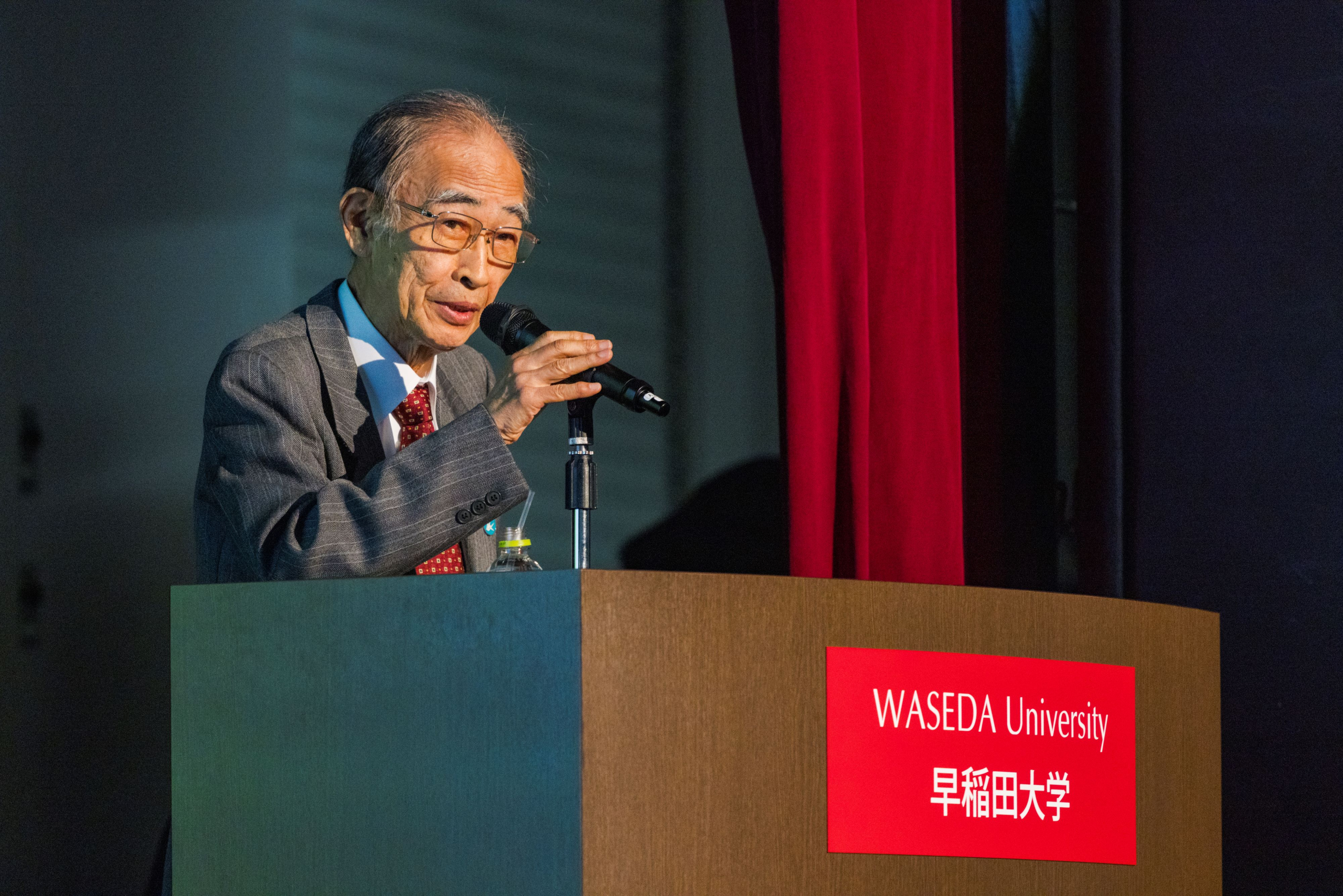
Jiro Hamasumi delivering his lecture
To commemorate the Nobel Peace Prize, Waseda hosted this event which was comprised of two sections: speeches and a panel discussion. Firstly, Tanaka, an Executive Board Member of Nihon Hidankyo, and Hamasumi, the Secretary General, each gave a lecture-style speech using presentation slides and photographs. The speeches from both speakers were filled with powerful, emotional messages on the extant of nuclear weapons. Through their personal stories, the stark realities of war and suffering were vividly painted, reminding the audience of its disastrous impact. This shed light on the current global situation, where conflict has not ended, and the possession of nuclear weapons persists in certain countries. It is time for the younger generations to recognise the ongoing issue and take action as potential future leaders.
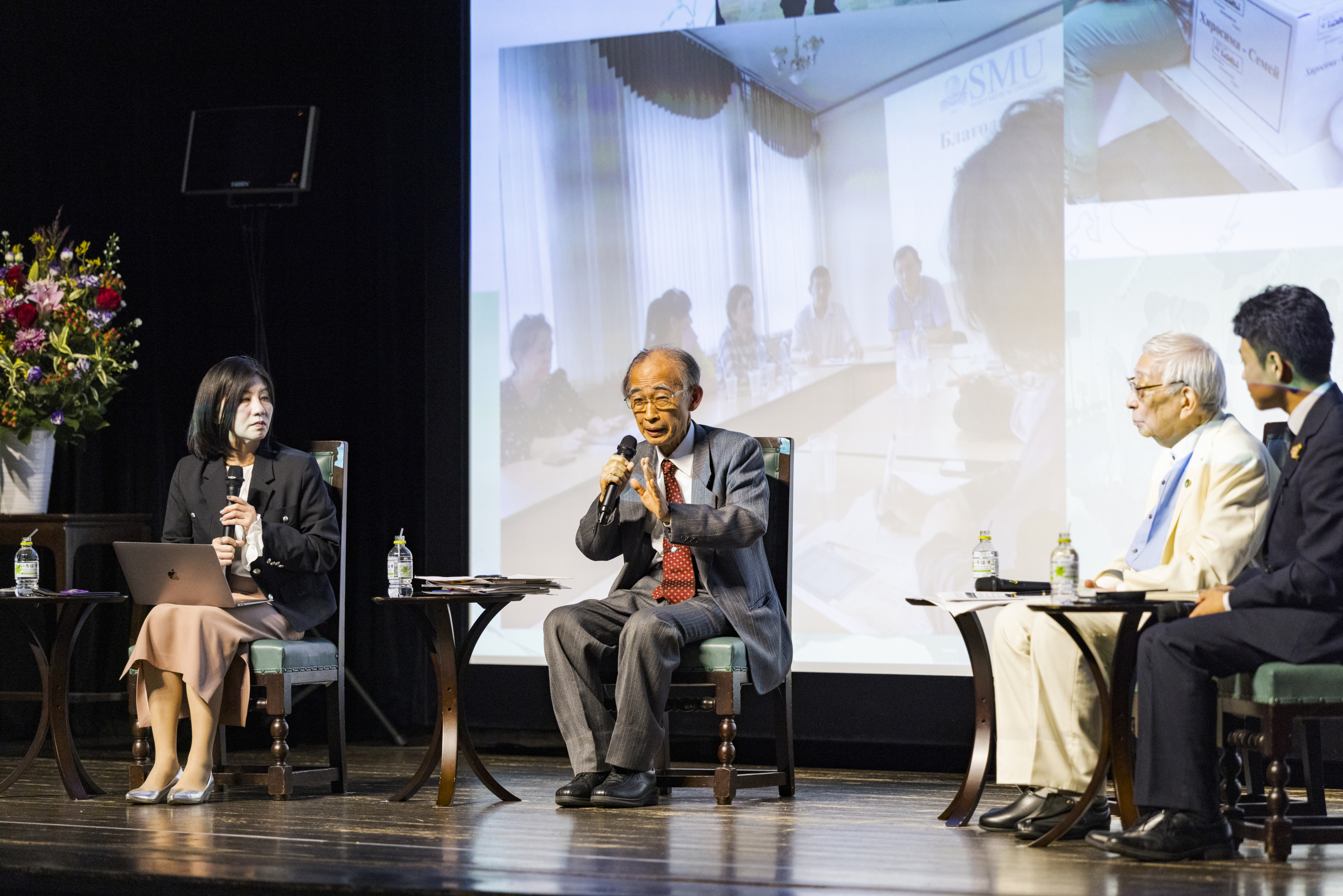
The panel discussion. From the left: moderator Erika Toh (Deputy Manager, Strategic Digital Revenue Section, The Asahi Shimbun Company; Doctoral Student, Graduate School of Social Sciences), Jiro Hamasumi, Satoshi Tanaka, and Keita Takagaki
After their speeches, both Tanaka and Hamasumi joined the panel discussion alongside a recent Waseda graduate, Keita Takagaki, who is a former youth representative of the International Committee of the Red Cross (ICRC). The discussion included the topics of peace, nuclear weapons abolition, and hopes for the next generation. The discussion’s focus was on Hidankyo’s next steps and methods to support Hibakusha, not just in Japan, but also victims of nuclear testing around the world.
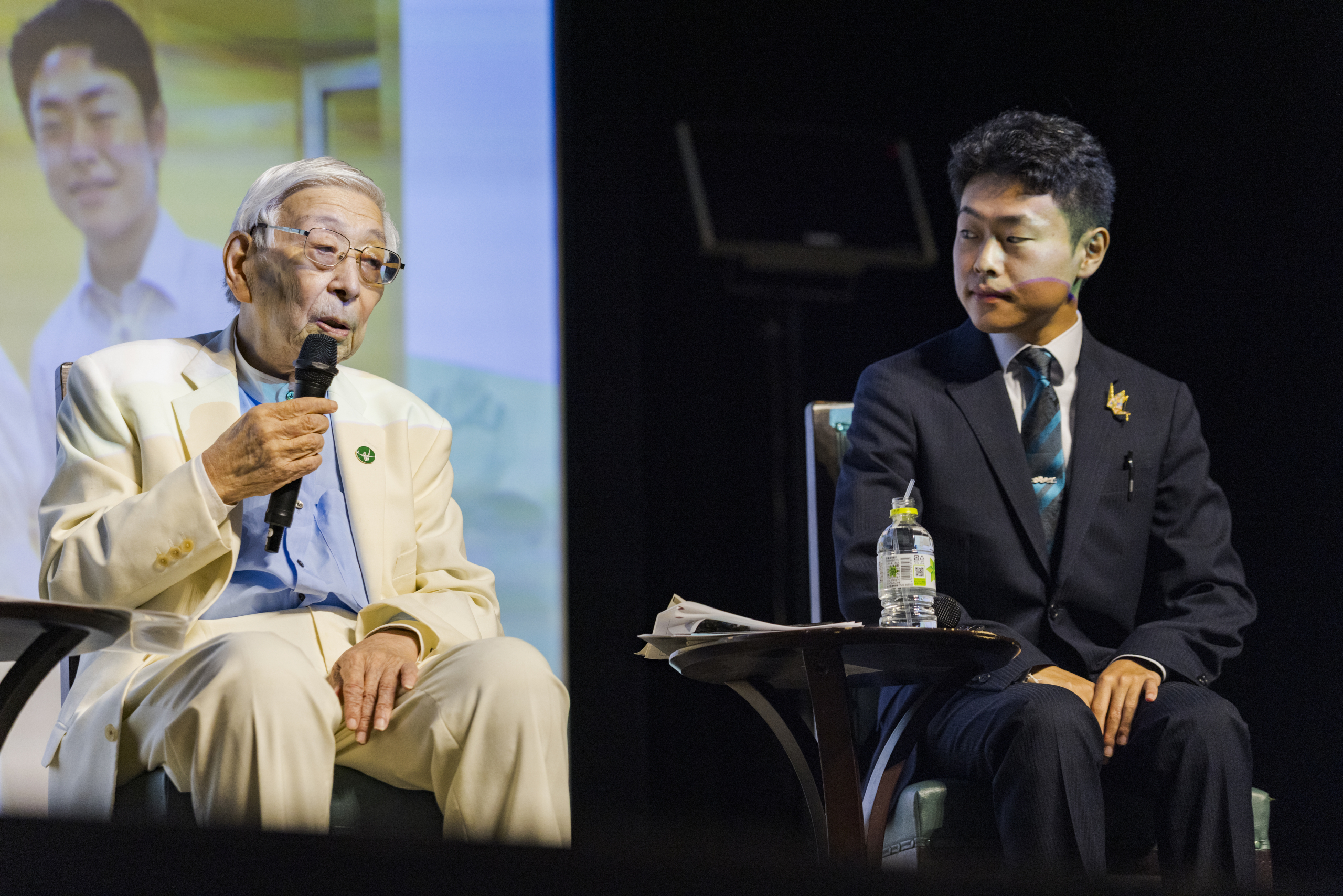
Satoshi Tanaka and Keita Takagaki during the panel discussion
Listening to the discussion, I saw the strong connection between past and present Waseda students: I saw how Takagaki, as a recent Waseda graduate and part of the younger generation, passionately expressed his interests and discussed ways to tackle the issue with Tanaka and Hamasumi, as Waseda alumni who are part of the Hidankyo. This accentuates the strong ties amongst Waseda alumni, and inspires students, including myself, to reflect on forging connections with the older generations and learning from them.
From My Perspective as an International Student :
It was such an honour to hear the Hibakusha’s story about how they have tragically experienced the nuclear atomic bomb first-hand. I was moved by their messages to pursue peace and learned more about Japanese history, which was eye-opening. I recognised their commitment to promote peace in areas with conflict and preserve peace in other areas where peace exists and is seemingly taken for granted.
This event prompted me to look inward at the social issues in my own country —Thailand— as a student at the School of Political Science and Economics. Rarely have we expected younger generations to express interest in the issues of the older generations. To me, Takagaki is an example of people in their youth whose activities motivated young people like me to reflect on our ability to spread messages of peace, as well as raise awareness on underlying threats of social issues, especially impending threats of nuclear weapons, to other young people.
It also encourages me to take initiative. Not only on tackling social issues, but also on anything I have a passion for. By seeing how Takagaki has pushed his interest further, taking all the available opportunities along the way, it allows me to reflect on the potentials I have to turn what I like into reality as a university student.
Overall, the event has had an impact on me as a student at Waseda University. From hearing the stories to crafting an article for the event, I have learned more about the atomic bombings, have paid more attention to the persistent issues regarding nuclear weapons, and have reflected on what the younger generation can do to address the issue moving forward.
This article was written by the following Student Contributor:
Napat (Nua) Worapishet
School of Political Science and Economics