

KADOYA Hisashi, Assistant Professor
How I Came to This Research Topic
I chose this research topic for two main reasons. The first was my encounter with political science based on rational choice theory. I was not originally very interested in politics, and political science was not the field I intended to study when I entered university. In fact, I felt somewhat uncomfortable with the kind of arguments often seen in the media, where politicians’ behavior is criticized mainly from a normative standpoint. For this reason, I did not have a very positive impression of political science. However, after entering the School of Political Science and Economics at Waseda University as an economics major, I encountered a rational choice approach that analyzes political phenomena by treating politicians as actors who seek to maximize their own benefits. This way of thinking was closely related to the economic reasoning that had already interested me, and I found it fascinating to view politics as an object of systematic analysis. This experience led me to become interested in political science itself.
The second reason was my encounter with research on elections under authoritarian regimes. Elections are generally understood as a means of competition that replaces violence. Under authoritarian regimes, however, elections can instead become a trigger for violence. These elections are very different from the ones we are familiar with in Japan, and this changed the way I viewed the institution of elections, a topic in which I had previously had little interest. Through this experience, I became interested in the structure and consequences of electoral competition outside so-called advanced democracies, and I came to see this as a subject I wanted to study.
My Research and What It Shows
The structure and consequences of electoral competition can be examined from several perspectives. In my current research, I focus in particular on “pre-electoral opposition coalitions.” A pre-electoral opposition coalition refers to a cooperative arrangement among multiple opposition parties before an election. Such coalitions can change the nature of uncertain electoral competition and help opposition parties achieve electoral gains. In some cases, they can even lead to major political change. In the Philippines, Kenya, and The Gambia, for example, long-lasting authoritarian regimes collapsed in connection with opposition coalitions.
Previous studies have emphasized the large impact of these opposition coalitions. In many cases, however, they have treated coalitions in a simple binary way, distinguishing only between the presence and absence of a coalition. They have also tended to focus mainly on “full coalitions,” in which all major opposition parties come together. In reality, however, opposition coalitions take many different forms, and there are also many “partial coalitions,” in which only some major opposition parties cooperate. I believe that clarifying how much influence these partial coalitions has important policy implications for opposition party strategies in individual countries and for the international community. This is because partial coalitions are more realistic and easier to form than full coalitions, which require all opposition parties to unite.
Based on this research question, I constructed an original dataset that flexibly captures opposition coalitions, covering 619 national elections held in sub-Saharan Africa between 1990 and 2025. Figure 1 shows the distribution of these coalitions. The figure indicates that, overall, opposition parties do not form pre-electoral coalitions very often. However, when coalitions are formed, partial coalitions are more common than full coalitions.
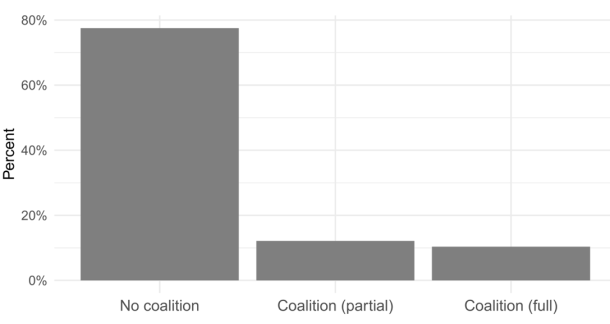
Figure 1. Formation of Opposition Coalitions
Note: This figure classifies national elections held in sub-Saharan African countries between 1990 and 2025 into three categories: no coalition, partial coalition (Coalition [partial]), and full coalition (Coalition [full]). It shows the share of each category.
I then examined the political consequences of these opposition coalitions. Here, I focus on the extent to which citizens perceive elections as “free and fair.” The legitimacy of elections is a key element of democracy, and citizens’ evaluations of elections therefore matter greatly. This study is based on the idea that the more an election appears to be a meaningful contest, the more likely citizens are to evaluate it as fair. From this perspective, I expected that opposition coalitions might affect perceptions of electoral fairness by increasing electoral competitiveness.
Using individual-level data from Afrobarometer, I conducted an analysis while controlling for country characteristics, differences across time periods, and previous electoral conditions. As shown in Figure 2, the analysis found that only full coalitions had a clear positive effect on citizens’ perceptions of electoral fairness. By contrast, partial coalitions did not show a clear relationship with such perceptions. In other words, it appears to matter not simply whether some opposition parties cooperate, but whether major opposition forces come together broadly enough for citizens to see the election as a meaningful contest. This pattern was also found among independents who did not strongly support any particular party.
At first glance, this result may seem to simply confirm once again the importance of full coalitions. However, I believe the contribution of this study lies in clearly distinguishing between full and partial coalitions and empirically examining the difference between them.
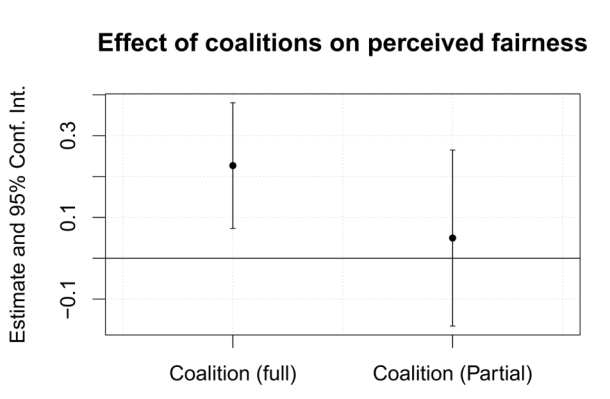
Figure 2. Marginal Effects by Type of Opposition Coalition
Note: This figure shows the average marginal effects of full coalitions (Coalition [full]) and partial coalitions (Coalition [partial]) compared with elections without opposition coalitions. The dots indicate estimated effects, and the vertical lines indicate 95% confidence intervals. Because the confidence interval does not overlap with zero, only the marginal effect of full coalitions is statistically significant in the positive direction.
Future Research Plans
The results of this study suggest the importance of full coalitions, but real-world opposition coalitions are not so simple. Even among partial coalitions, there is substantial variation in how many major opposition parties they include. Some coalitions include only a small number of opposition parties, while others cover most of the opposition vote. Moreover, opposition coalitions vary not only in size but also in their forms of cooperation, strategies, and other features. Taking this diversity into account, I plan to continue examining how opposition coalitions affect perceptions of electoral fairness and other political outcomes.
In recent years, many large-scale datasets have become available for comparative research on elections. However, their variables are often relatively coarse, which can limit more detailed analysis. By constructing and making publicly available datasets with more detailed information, such as the opposition coalition data I am currently building, I hope to contribute to the research infrastructure of comparative politics. Ultimately, through this research, I hope to help clarify the conditions under which elections can function as peaceful and legitimate means of resolving political conflict.