Public Health Nurse Health Care Room Health Support Center: Saito
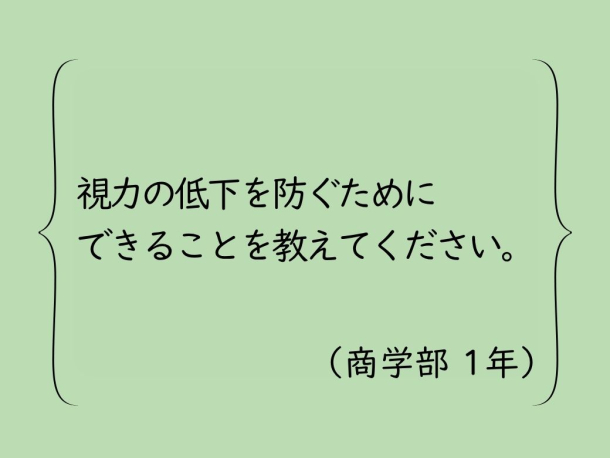
In recent years, with increased use of smartphones and computers, more and more students are feeling that their eyesight has deteriorated or that their eyes tire easily. Poor eyesight can not only reduce learning efficiency but also cause headaches and stiff shoulders. This article will introduce lifestyle habits and ophthalmic treatments to maintain and improve eyesight.
What is nearsightedness?
Myopia is a condition in which light focuses in front of the retina due to an increase in the length of the eyeball (axial length) or an increase in the refractive power of the cornea and lens. Once myopia has progressed due to an increase in axial length, it is not easy to reverse it naturally. However, it is possible to slow its progression and improve vision.
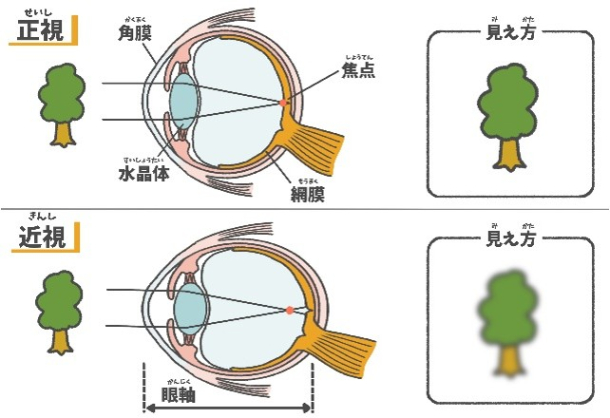
How can I avoid nearsightedness?
First and foremost, it's important to consciously create time to rest your eyes. If you use your smartphone or computer for extended periods, try incorporating the "20-20-20 rule." By looking at something about 6 meters (20 feet) away for 20 seconds every 20 minutes, you can expect to relieve tension in the eye's focusing muscles. Also, since blinking decreases when staring at a screen, consciously blink to prevent dry eyes.
Furthermore, increasing the amount of time spent outdoors can also help prevent myopia. Studies have shown that the longer you spend in natural light, the lower your risk of developing myopia. Physical activity such as walking or playing sports will benefit not only your eyes but your overall health as well.
To maintain eye health, pay attention to your diet. Vitamins A, lutein, vitamin C, and omega-3 fatty acids are important nutrients for maintaining eye health. Consume a balanced diet of green and yellow vegetables, fruits, and oily fish, and ensure you get enough sleep.
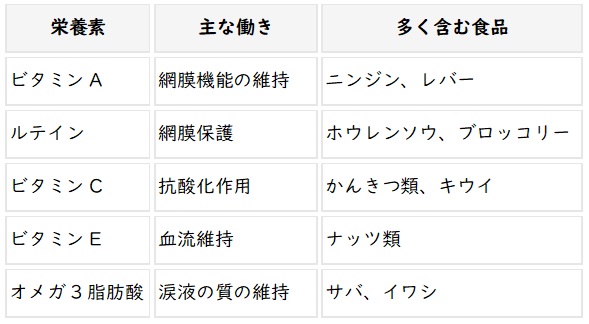
If you experience a decline in your vision, we recommend consulting an ophthalmologist. The main treatment options are as follows:
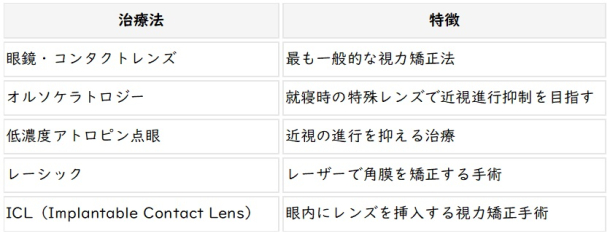
While LASIK and ICL can reduce the need for glasses or contact lenses, they also carry risks such as dry eyes and infections. Therefore, please consider these options only after receiving a thorough explanation from your doctor.
Furthermore, nearsightedness is not the only cause of poor vision. Underlying conditions such as glaucoma (*1) or retinal diseases (*2) may also be present. If you experience a sudden decrease in vision, abnormalities in your field of vision, or eye pain, you should see an ophthalmologist as soon as possible.
*1 A condition in which the optic nerve is damaged and the field of vision gradually narrows.
*2 A condition in which abnormalities occur in the retina, the light-sensing tissue at the back of the eyeball, causing decreased vision and visual field abnormalities.
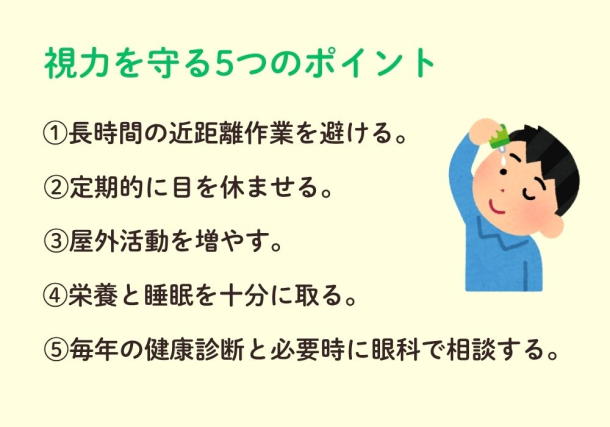
Combining daily self-care with appropriate eye examinations and treatments as needed is the first step in protecting your future vision and eye health. To ensure a comfortable university life, let's take another look at how we use our eyes.
You can get your eyesight tested on campus!
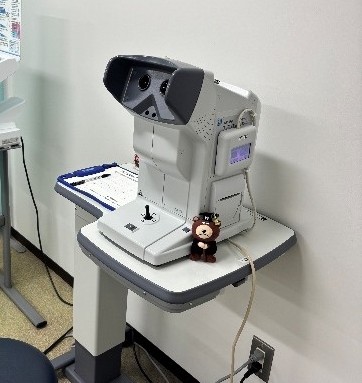
Free vision tests are available at Health Care Room, Nishi-Waseda Branch, and Tokorozawa Branch of the Waseda University Health Support Center at any time. If you have any concerns about your eyesight, please feel free to use this service. Please check Health Support Center website for opening hours.
[References]
“Suppression of Myopia Progression” Japanese Ophthalmological Society
"What is Myopia?"- Japan Myopia Society
"Report of the Committee for the Establishment of Dietary Reference Intakes for Japanese (2025 Edition)," Ministry of Health, Labour and Welfare
"Efficacy of outdoor interventions for myopia in children and adolescents: a systematic review and meta-analysis of randomized controlled trials (2024 systematic review and meta-analysis of outdoor activity interventions)" Mei Z, Zhang Y, Jiang W, et al.
"The effects of breaks on digital eye strain, dry eye, and binocular vision: Testing the 20-20-20 rule. Contact Lens and Anterior Eye." (García-Lázaro S, Talens-Estarelles C, Cerviño A, et al. Response to the Letter to the Editor)
"Is There Any Association Between Nutrition and Myopia? A Systematic Review." Chamarty S, et al.