Public Health Nurse Katsura, Nishi-Waseda Branch of Health Support Center
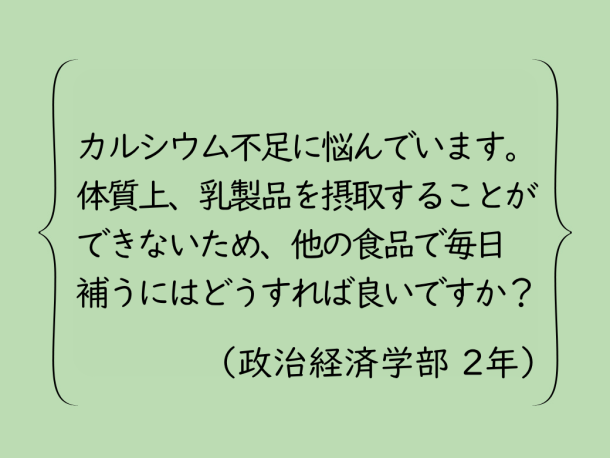
Calcium can be obtained from foods other than dairy products. First, we will explain what calcium is and then introduce how to incorporate it into your daily life effectively.
The role of calcium
Calcium is the most abundant mineral in the body. An adult body contains approximately 1 kg of calcium, which primarily forms bones and teeth. The remaining calcium in the body exists as calcium ions in the blood, muscles, and nerves, where it promotes blood clotting to prevent bleeding, and is also involved in muscle contraction and nerve excitability.
What happens if you have a calcium deficiency?
You may notice the following minor changes in your body.
- My eyelids are twitching.
- I get leg cramps even though I don't exercise.
- Makes you forgetful
- I get annoyed


Furthermore, calcium deficiency has been linked to an increased risk of osteoporosis in the future and may lead to other health problems such as high blood pressure and arteriosclerosis.
How can I get enough calcium?
The recommended daily intake of calcium for Japanese people is 750-800 mg for adult men and 600-650 mg for adult women. Besides milk and dairy products (cheese and yogurt), calcium can also be obtained from small fish (whitebait and sardines), legumes and soy products (tofu and natto), and green and yellow vegetables (komatsuna and bok choy). However, calcium is not easily absorbed by the body. To improve absorption, it is important to continuously consume foods rich in vitamin D, vitamin K, and magnesium in combination with calcium.
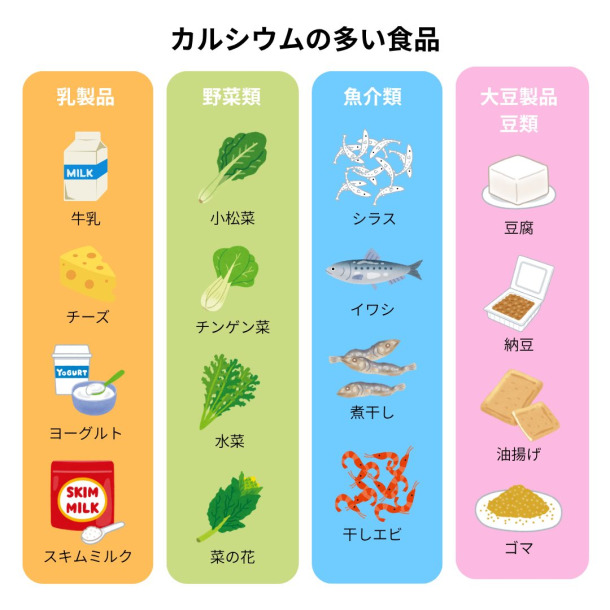
Vitamin D is abundant in oily fish such as sardines and mushrooms, while vitamin K is plentiful in leafy vegetables such as spinach and cabbage, as well as natto and hijiki seaweed. In addition to diet, vitamin D is also produced in the body through moderate exposure to ultraviolet light, so walks around campus and outdoor activities are recommended. Magnesium is a mineral necessary for the activation of vitamin D and is abundant in green and yellow vegetables, legumes, seaweed, and nuts. Consuming it together with calcium-rich foods can enhance its role in bone formation.
On the other hand, phosphorus, which promotes calcium excretion when consumed in excess, is found in large quantities as a food additive in instant foods and soft drinks, and alcohol also hinders calcium absorption in the intestines. Be careful not to overeat or overdrink these.
April is a time when many people start living alone due to entering school or advancing to the next grade. Try adding a little ingenuity to your daily meals in a way that's easy to manage, and enjoy a healthy and fulfilling student life.
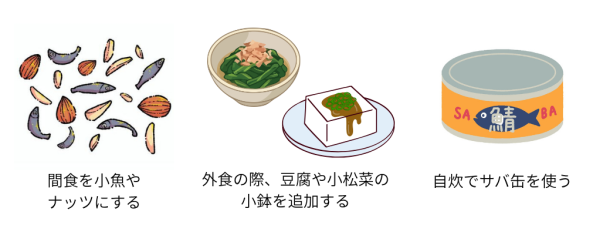
For a dish using canned mackerel, which is rich in calcium, I recommend "Easy Minced Mackerel from Canned Mackerel." Other options include sprinkling sesame seeds on rice, spreading sesame paste on bread, or, if you can consume dairy products, topping curry rice with cheese.
[References]
Ministry of Health, Labour and Welfare, "Dietary Reference Intakes for Japanese (2025 Edition)"
Ministry of Agriculture, Forestry and Fisheries: "Calcium is an important nutrient"
Ministry of Health, Labour and Welfare "Healthy Japan 21 Action Support System"
Omron Healthcare: "Prevent high blood pressure and arteriosclerosis by resolving calcium deficiency."

![[Save version] Map of the four main campuses](https://www.waseda.jp/inst/weekly/assets/uploads/2026/06/110d605cfac40346aad1d2df464a6586-940x705-1-1-610x457.jpg)