Shimizu, Nurse, Waseda Health Support Center Branch
What is smartphone neck?
This condition occurs when excessive strain is placed on the neck muscles and cervical vertebrae (the bones of the neck) due to the neck being tilted forward. The cervical vertebrae are naturally gently curved, but when the neck is tilted forward, they become straight, so this condition is also known as straight neck. Neither smartphone neck nor straight neck is an official medical term, but in recent years, the number of cases where smartphone use is the main cause has increased, and these terms have become widely known.
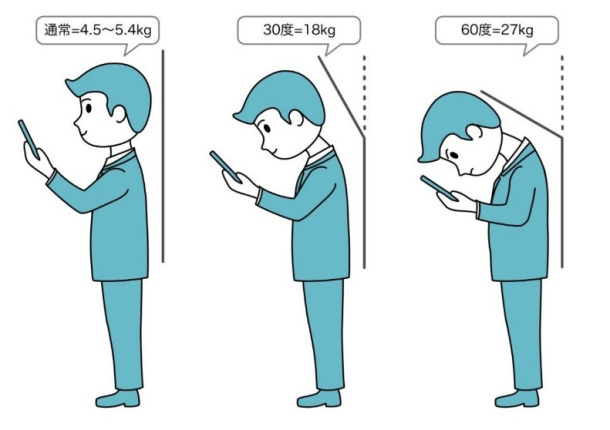
The main cause of smartphone neck is a lifestyle that involves maintaining a forward-tilted neck posture for long periods of time. When we look at our smartphones, we unconsciously look down. An adult's head weighs about 5 kg, but the greater the angle of the neck bend, the greater the strain on the cervical vertebrae. It is said that a 30-degree angle puts a strain of about 18 kg, and a 60-degree angle puts a strain of about 27 kg.
This type of hunched posture also puts strain on the trapezius muscles, which extend across the neck, shoulders, and back, causing neck pain and stiff shoulders. Sometimes, this can be accompanied by neurological symptoms such as headaches, dizziness, and nausea. These symptoms can lead to physical and mental discomfort, affecting your studies and work.
Smartphone neck self-check
Is your posture okay? Check it out.
1. Stand with your back and hips against the wall.
2. Make sure that the back of your head, shoulder blades, buttocks, and heels are naturally touching the wall.
This is the ideal posture if it is natural. If you cannot touch the back of your head to the wall without straining, or if you cannot touch it at all, your neck is tilted forward, which may be a sign of smartphone neck.
Preventing smartphone neck
When using a smartphone or computer, be sure to keep the following in mind and maintain good posture every day.
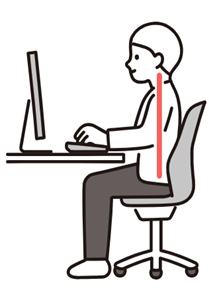
- Position your smartphone and computer at eye level (using a keyboard stand for laptops can help improve your posture).
- Hold your smartphone with both hands.
- Take a break and move your body once every hour.
Effective stretches for smartphone neck
Below are two stretches that will improve smartphone neck by moving your shoulder blades and loosening your trapezius muscles. When performing these stretches, keep breathing and be aware of the movement of your shoulder blades.
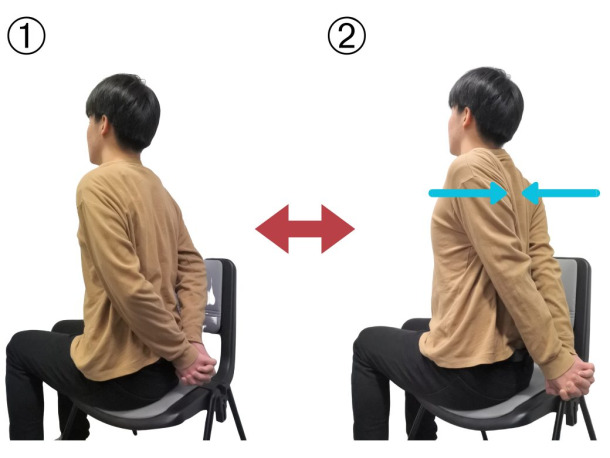
Chest and shoulder stretch
① Sit in a backless chair and clasp your hands behind your back.
② Straighten your spine, slightly push out your chest, and pull your shoulders in tightly. Hold this position for 5 seconds.
➂ Relax naturally.
➃ Repeat steps ➀ to ➂ three times.
Rowing stretch
① Sit in a chair, place your palms up, bend your elbows, and stick out your chest.
➁ Point your thumbs down, twist your arms inwards, stretch them out in front of you, arch your back, and bow your head.
➂ Pull your elbows in and return to position ➀.
➃ Repeat steps ➀ to ➂ 10 times.
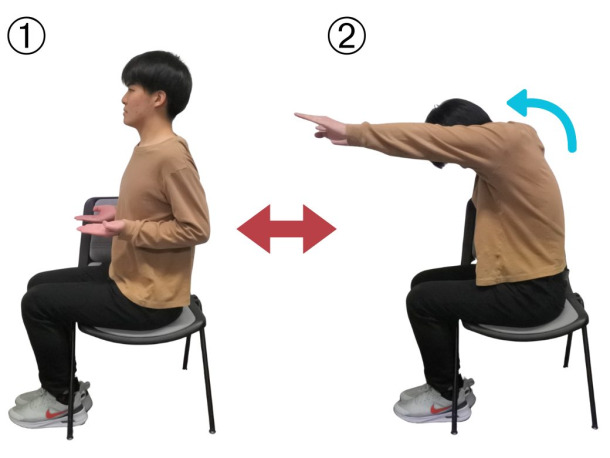
In addition to this, simple exercises such as rotating your shoulders widely and tilting your neck back and forth and side to side are also effective for loosening up your muscles.
Reviewing your daily posture and taking frequent breaks can help prevent and improve smartphone neck. If you experience symptoms that interfere with your daily life or numbness in your hands or fingers, consult an orthopedic surgeon as soon as possible.
[References]
Japan Health Exercise Research Institute
Moving: Musculoskeletal support media by medical professionals
Filming cooperation: Waseda Weekly Reporter (SJC student staff)
Suhon Kanai, 2nd year School of Law



![[Save version] Map of the four main campuses](https://www.waseda.jp/inst/weekly/assets/uploads/2026/06/110d605cfac40346aad1d2df464a6586-940x705-1-1-610x457.jpg)