Bao Khue Le
School of Political Science and Economics
ICC has many events that allow you to delve deep into Japanese culture, and I was lucky to be chosen for the Mizuhiki Workshop. I was initially drawn to this event because I own a mizuhiki keychain, made by my Japanese friend, to fundraise for the Noto earthquake years ago. Intrigued by how the strings do not untie and stay in their form, I joined the workshop to be able to try and make it myself.
However, not only did I get to make it myself, but I also learned about the history, culture, and art of Mizuhiki. Mizuhiki is not like wrapping an item, but etiquette with intention in every knot: connections between people and good luck. We were then introduced to the decorative strings used for the crafts. It is usually 90cm with thread and glitter wrapped around a paper core. Dated back to the Asuka Period, mizuhiki were initially used for offerings to the imperial court but then became a part of Japan’s culture.
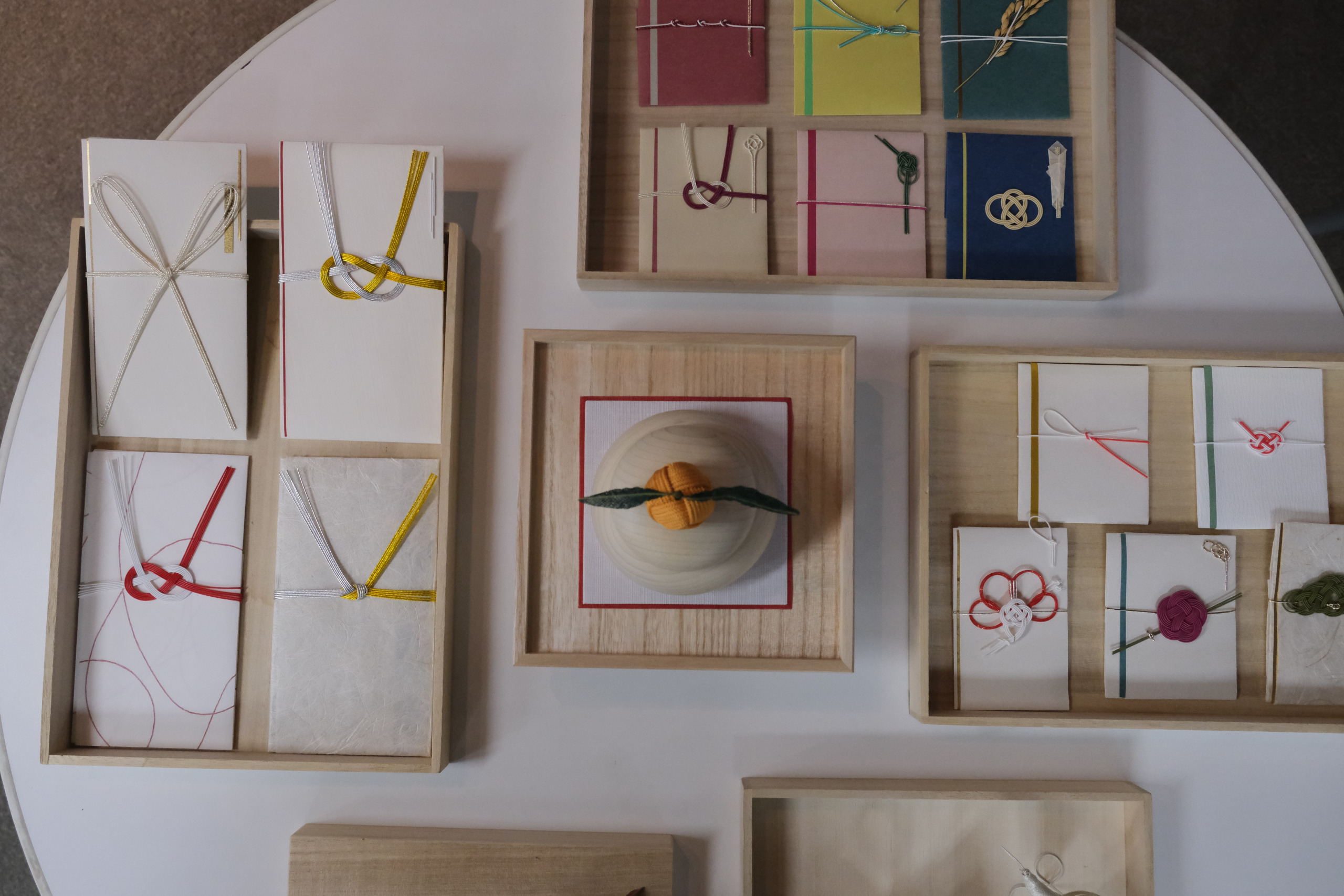
Photo by ICC
The workshop’s focus was on celebrating New Year as we were getting closer to the end of 2025. The colors that the master brought are common to celebrate New Year. Our focus was to make a self-standing Plum Knot for celebratory chopsticks! The master talked about the relationship between humans and “kami”,the deities, in mundane things like chopsticks, food, and offerings. We were then introduced to how Japanese celebrate New Year: through festivals and events like Tori no Ichi, Niiname-sai, The Setagaya Boro-ichi, Hagoita-Fair,… I was thrilled to know about these events as I plan to explore Japan during the winter break!
After the master explained how preparation for New Year is held in Awaji Island, where she is from, the participants got to talk about how their own culture celebrates New Year. Our table had Chinese and Vietnamese participants, so we shared about getting ang pao or lixi, lucky money, cleaning our houses, preparing food offerings, and dos and don’ts during Lunar New Year, our most important holiday of the year.
Now it was time to do something! We made chopstick sleeves based on Origata, a traditional Japanese method of folding paper for gift wrapping, and tied with mizuhiki. The paper had gold printing on it “ことぶき.” Then it was time for mizuhiki itself. We must soften it. We were first guided through how to make an Awabi knot, which was doable. However, the Plum Knot was a struggle for me, as it was far more complicated than I thought. Afterwards, I was glad that the master came to help me. In the end, we all have a result of pair of chopsticks wrapped following Origata traditions and tied with our handmade Mizuhiki! Through this workshop, I learned how Japanese culture expresses appreciation for others through careful processes and simplicity, and how even simple forms can be deeply meaningful.
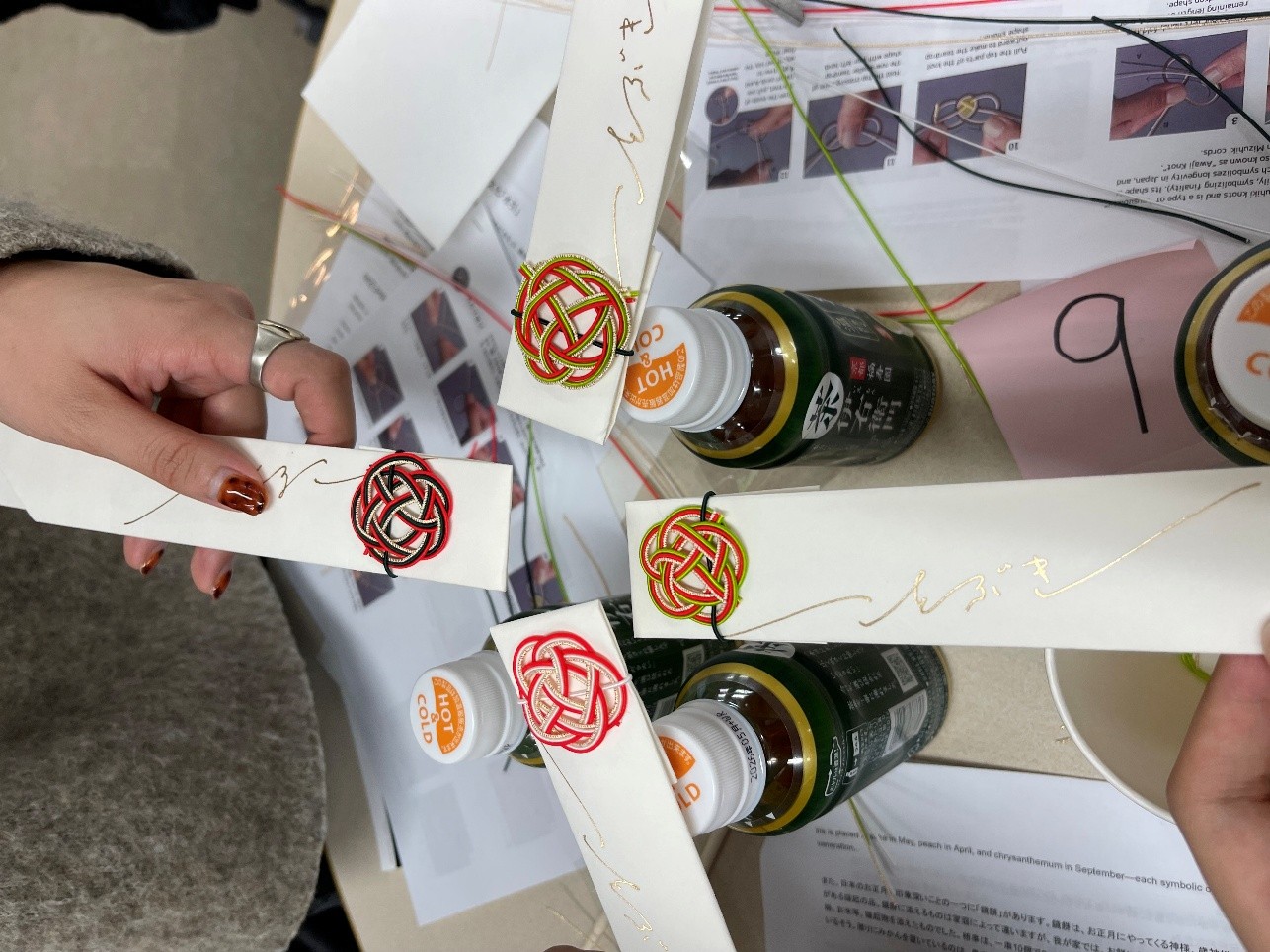
Photo by author
With its diverse international population, Waseda is a place where different cultures naturally come together. The university offers many opportunities for students to connect across cultures, develop professionally, and grow academically. Specifically, ICC events not only allow you to make friends from diverse backgrounds, but the center also has various events for you to learn about Japanese culture and crafts. And it is mostly free! You just need to sign up. My advice is for students to use all the wonderful resources that Waseda has, especially ICC’s various events on different topics or activities. Not only can you understand more about Japan but also get firsthand experience with the crafts!