- News
- Open Lecture:Embodied Memory and the Art of Healing Việt Lê Performance Lê-cture
Open Lecture:Embodied Memory and the Art of Healing Việt Lê Performance Lê-cture
Dates
Add to calendar0929
TUE 2026- Place
- 早稲田キャンパス国際文学館2階ラボ / Labo, 2F, The Waseda International House of Literature (The Haruki Murakami Library) 2F,Waseda Campus
- Time
- 15:00-16:40
- Posted
- Fri, 04 Sep 2026
タイトル/Title:
Embodied Memory and the Art of Healing
Việt Lê Performance Lê-cture
講師/Lecturer:
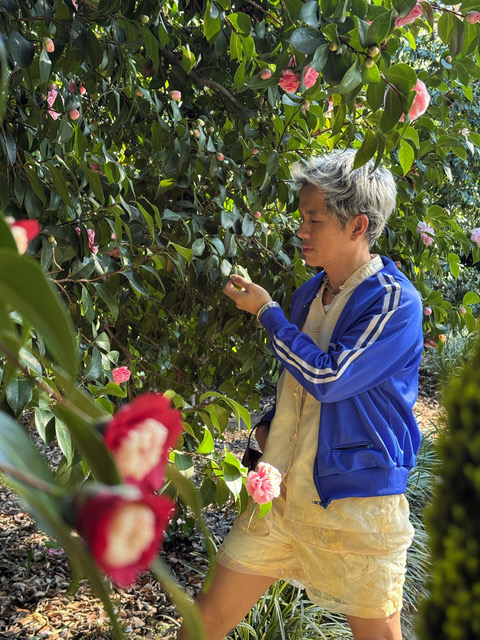
Việt Lê
元カリフォルニア・カレッジ・オブ・ジ・アーツ准教授
現・メディア・インストレーション・アーティスト
Dr. Việt Lê is a Vietnamese American artist, writer, and curator currently based in Hà Nội. His writings have appeared in positions, American Quarterly, and other publications. He has also edited (Re)Collecting Việt Nam; Myriad Modernities: Southeast Asian Visual Cultures; and Việt Nam and US (BOL Journal), and other volumes. His most recent monograph, Return Engagements, was published by Duke University Press in 2021, and the art book White Gaze (with Latipa) was published by Sming Sming Books in 2019.
日時/Day and Time:
2026年9月29日火曜日
Tuesday, 29th September 2026,
15:00-16:40
場所/Venue:
早稲田キャンパス 国際文学館2階ラボ
Labo, 2F, The Waseda International House of Literature (The Haruki Murakami Library) , Waseda Campus
言語/Language:
英語(通訳なし)
Presented in English (No translation)
入場/Admission:
入場無料。事前予約不要。どなたでもお入りいただけます。
Free and open to everyone. No reservation required.
要旨/Abstract:
More than fifty years had passed since the fall of Sài Gòn and the end of the Việt Nam War. Yet has the war truly become a thing of the past? As those who lived through the war grow older and subsequent generations inherit their memories, experiences of war and displacement are increasingly being remembered not only through testimony and literature, but also through a wide range of artistic forms—film, photography, music, and embodied performance.
Vietnamese American artist Việt Lê has long explored memories of war, refugee displacement, and diaspora through installation art incorporating film and photography, as well as through performance. In his recent work, Lê has become particularly interested in the relationship between the body and spirituality. By transmuting haunting towards joyful healing—experiences that cannot easily be put into words—through bodily movement, voice, and ritual performances drawing on Vietnamese indigenous religious and spiritual practices—his work explores how the past can be experienced anew and reconfigured through the body in the present.