The World Seen Through Miss Saigon: The Vietnam War and the Formation of Vietnamese American Literature
Exhibition Overview
50 years after the end of the Vietnam War, military conflicts and violent confrontations continue to shape many regions of the world, including Ukraine and the Middle East. In this global context, the displacement of people and the outflow of refugees have become one of the most urgent issues facing contemporary society. This exhibition revisits these pressing concerns from a historical perspective by focusing on the Vietnam War and the refugee culture and literature that emerged in its aftermath.
The Vietnam War began in the post–World War II period, rooted in independence movements seeking liberation from French colonial rule. The country was divided into North and South Vietnam and became the site of prolonged conflict involving foreign intervention. The war ended in 1975 with the fall of Saigon, the capital of South Vietnam. As a result, large numbers of people were forced to leave their homeland and disperse across the world as so-called “boat people.” In the United States, particularly in California, refugee communities known as “Little Saigon” were formed, giving rise to new forms of cultural and literary expression.
This exhibition takes the musical Miss Saigon (1989) as a key point of entry into this history. Widely known as a spectacular stage production, Miss Saigon also portrays the final days of wartime Saigon, the division between North and South Vietnam, American involvement in the war, and the existence of a child born through the violence of war. By examining the historical narratives embedded in the musical alongside works of Vietnamese refugee literature produced in the United States, the exhibition explores how war reshapes individual lives and generates new cultural expressions. Through literature and performance, visitors are invited to reconsider the enduring relationship between war, displacement, and cultural memory.
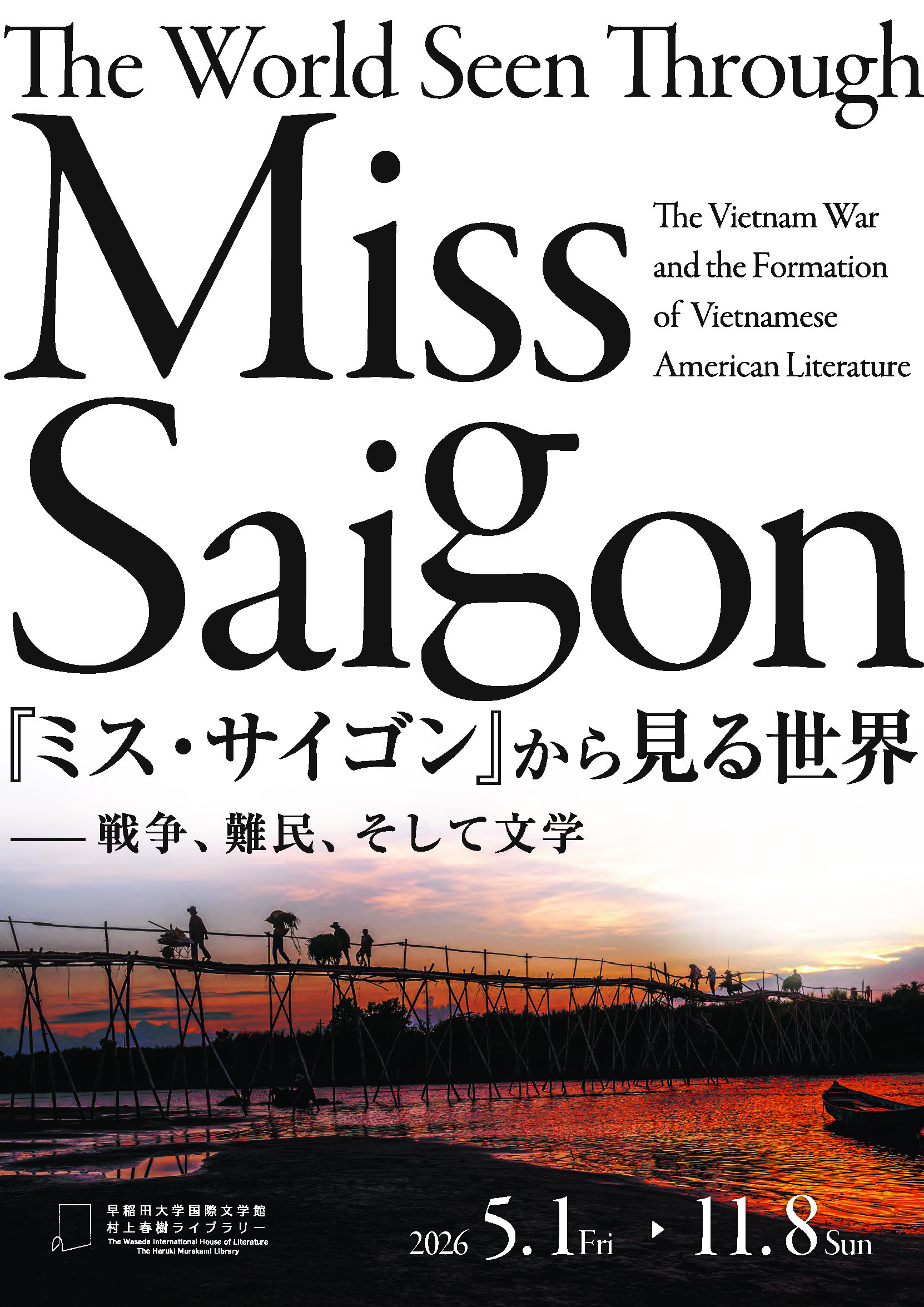
(Click the image to enlarge.Download the flyer
here)
- May 1,2026 – Nov 8,2026
- Opening hours: 10:00-17:00
- Closed: Wednesdays and during the summer break (August 3–19); additional closures may apply.
Open on May 6, 13, 20, September 23, and October 14, 21.
※Please see website for details - Organized by The Waseda International House of Literature
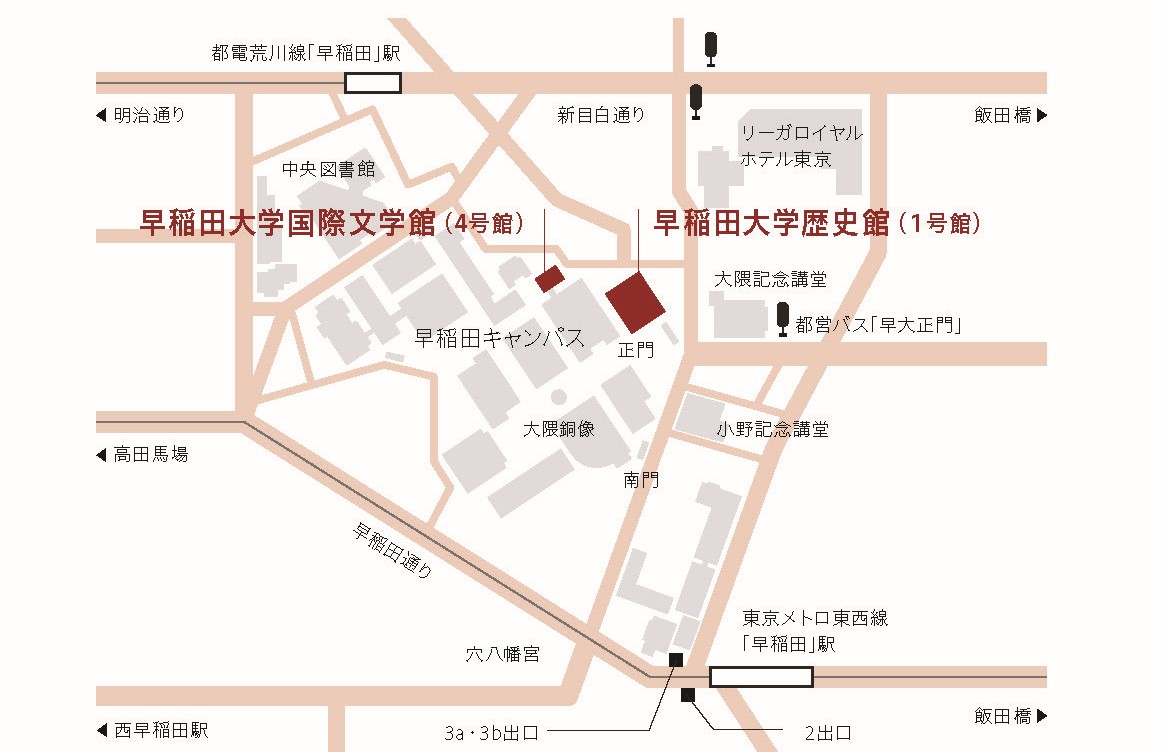
- Venue:
This exhibition is held across two venues.
Exhibition Room, Waseda International House of Literature (Building No. 4)
※Please see website for details
Temporary Exhibition Room, Waseda University History Museum (Building No. 1)
※Please see website for details
Exhibition Sections
- Ⅰ The History of the Vietnam War (Venue: Waseda University History Museum)
From the struggle for independence against France to the division of North and South Vietnam and the U.S. intervention, the Vietnam War reshaped the country’s history. After Saigon fell in 1975, many civilians fled their homeland, dispersing across the world as “boat people.” This section reflects on the hardships and memories shaped by war and displacement. - Ⅱ Miss Saigon — War, Love, and Refugee Memories (Venue: Waseda International House of Literature)
Set against the Vietnam War, the musical follows young lovers and their separation. Through its characters and staging, the musical highlights the lasting scars and memories left by the war. - Ⅲ The World of Refugee Literature (Venue: Waseda International House of Literature)
Refugee literature often emerges from war and the loss of homeland. Focusing on works about to the Vietnam War, this section introduces writers who explore past memories, experiences of displacement, and the search for a new future.
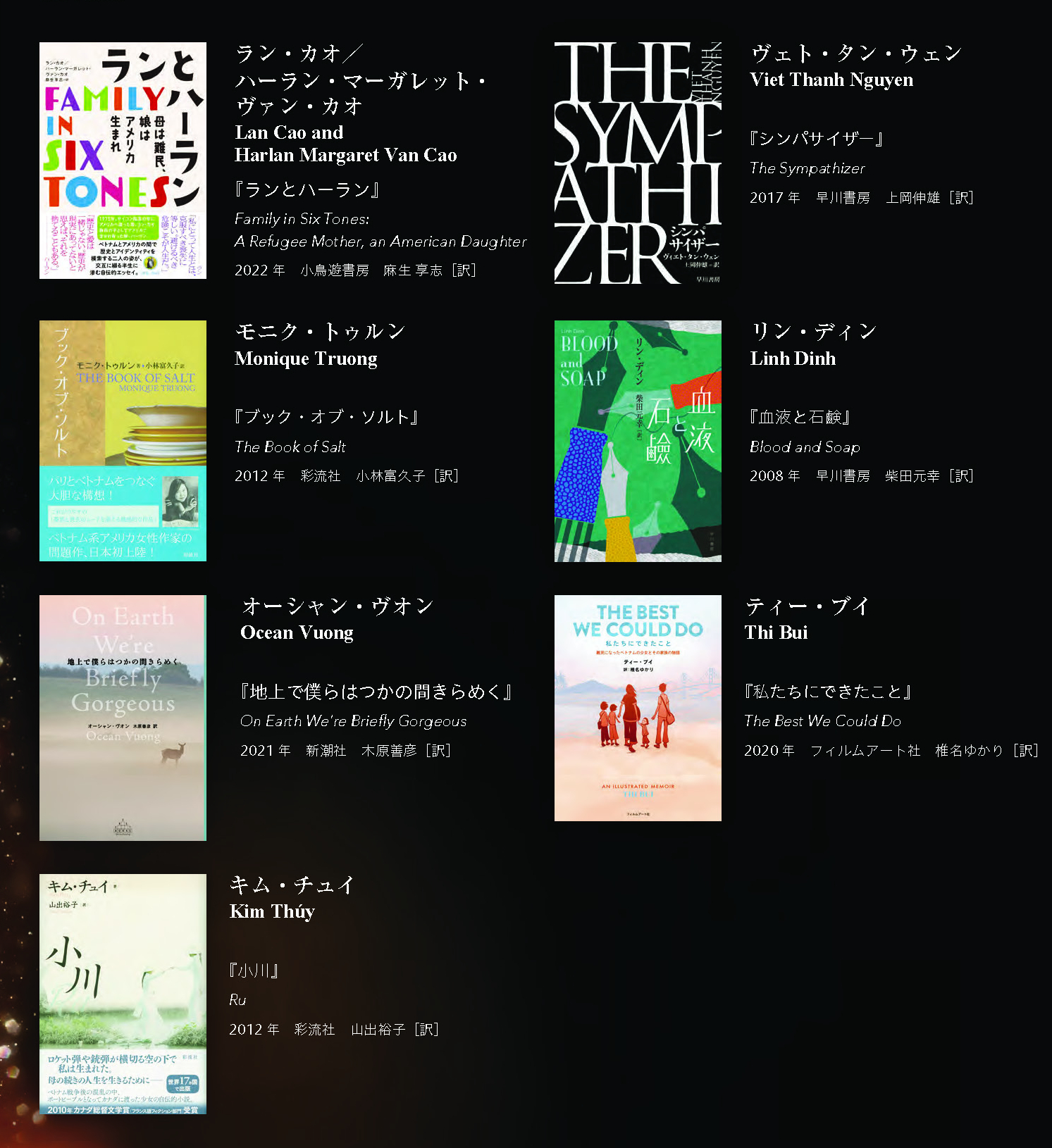
Featured Authors