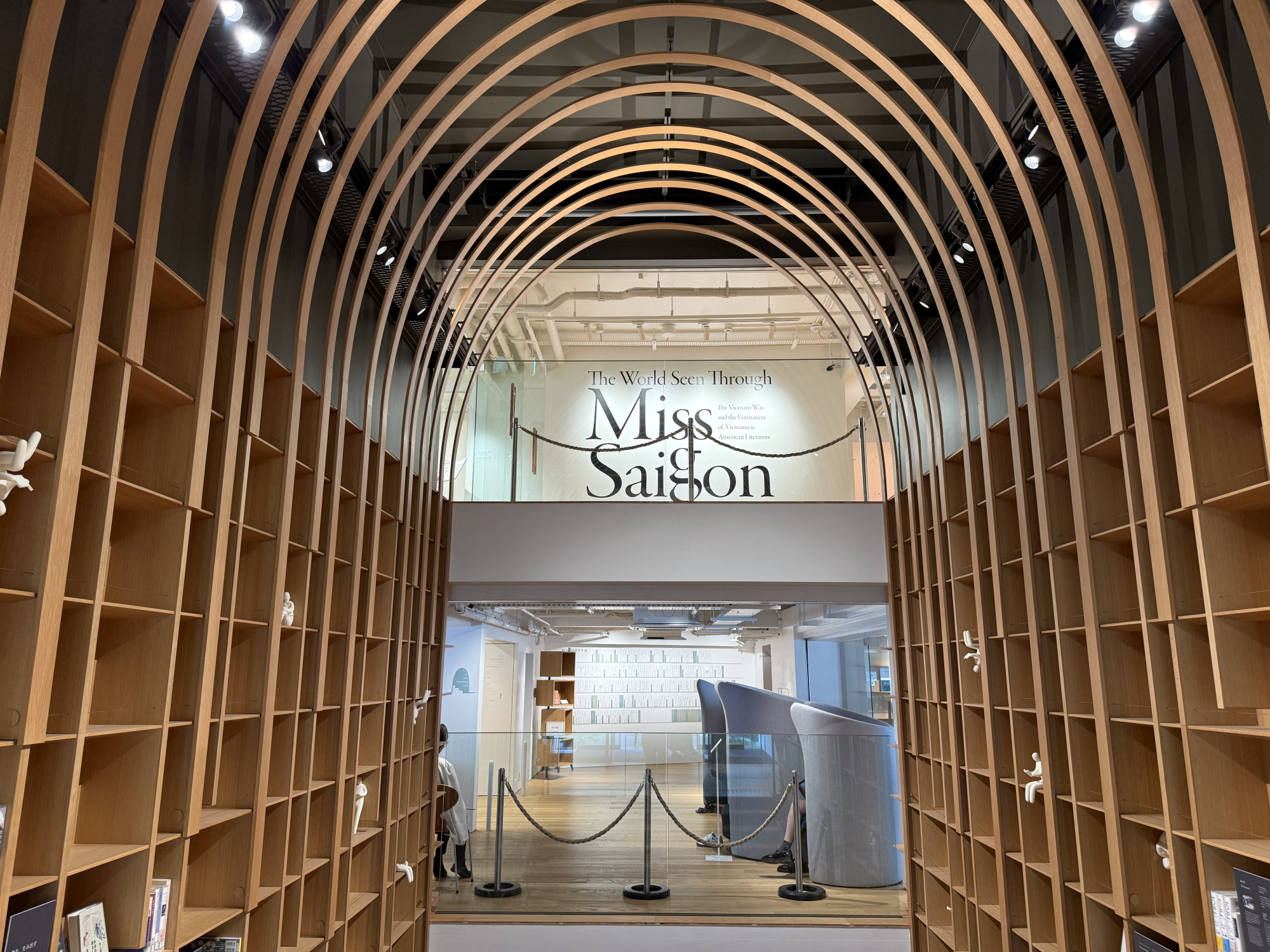
Exploring War, Refugees, and Cultural Memory: Reflections on “The World Seen Through Miss Saigon” Exhibition
Fri, Jun 26, 2026-
Tags
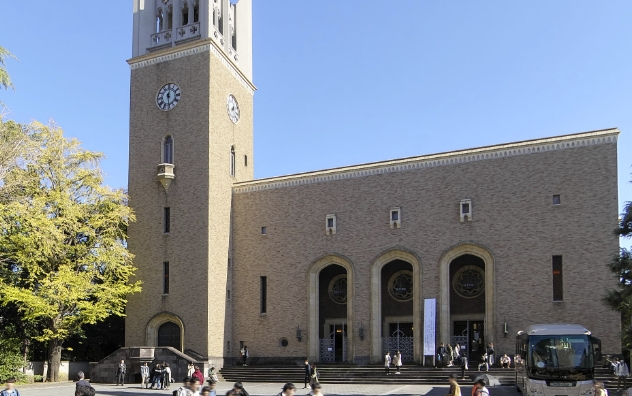
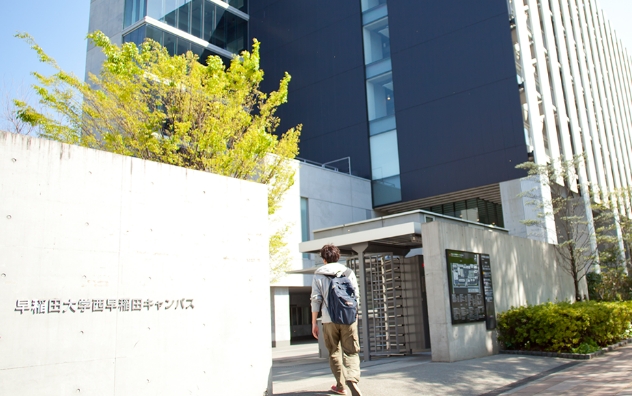
This June, I had the opportunity to visit the special exhibition The World Seen Through Miss Saigon: The Vietnam War and the Formation of Vietnamese American Literature, organized by the Waseda International House of Literature (The Haruki Murakami Library). Running from May 1 to November 8, 2026, the exhibition is being held across two venues on the Waseda Campus: the Exhibition Room of the Waseda International House of Literature and the Special Exhibition Room of the Waseda University History Museum. Through its unique two-venue format, the exhibition invites visitors to reconsider the lasting consequences of war through the perspectives of history, popular culture, and literature.
The exhibition marks the fiftieth anniversary of the end of the Vietnam War and addresses themes that remain highly relevant today. As conflicts and refugee crises continue to affect many parts of the world, including Ukraine and the Middle East, the exhibition encourages visitors to reflect on war, displacement, and migration through historical materials, popular culture, and literary works. Rather than treating the Vietnam War as a distant event, it highlights how its legacy continues to shape individual lives and communities across generations and national borders.
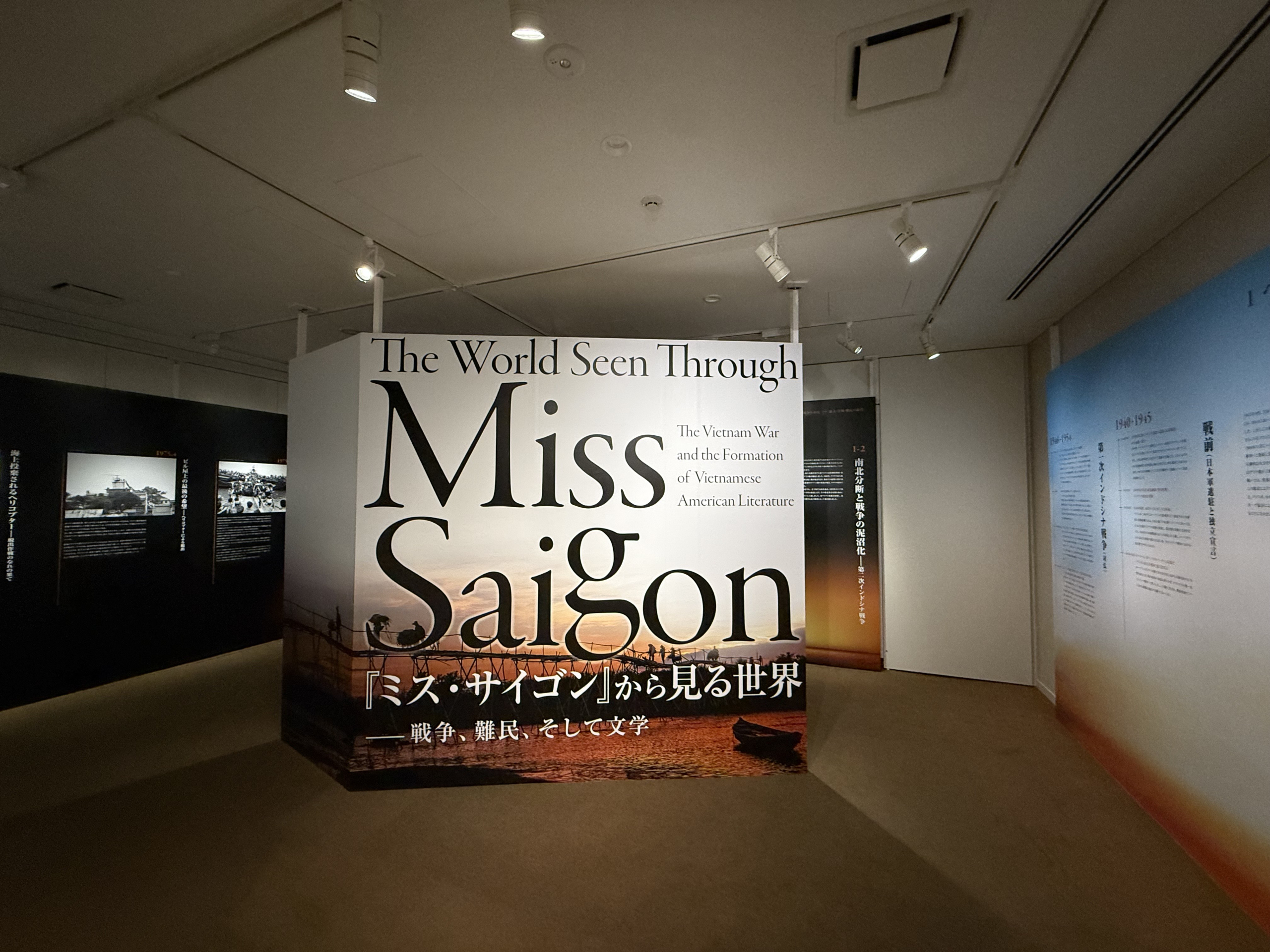
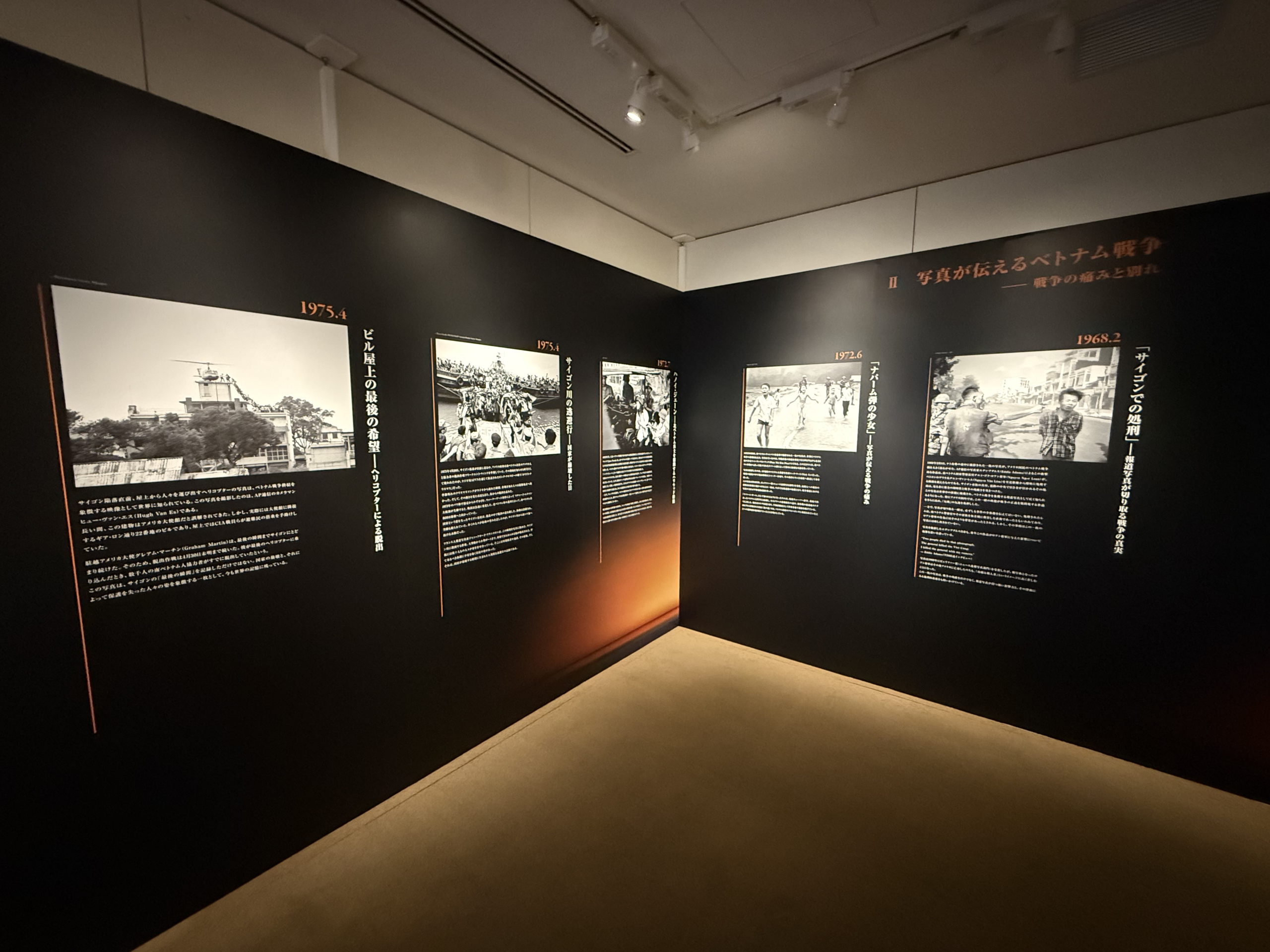
The exhibition is organized into three sections. The first section, located in the Waseda University History Museum, introduces the historical background of the Vietnam War. Through historical materials and explanatory panels, visitors learn about Vietnam’s struggle for independence from French colonial rule, the division of the country into North and South Vietnam, the involvement of foreign powers, and the eventual fall of Saigon in 1975. Particularly striking is the discussion of the “boat people,” many of whom were forced to flee their homeland and rebuild their lives elsewhere. Notably, their resettlement contributed to the formation of vibrant Vietnamese communities in countries such as the United States, particularly in California, where “Little Saigon” emerged as an important cultural center.
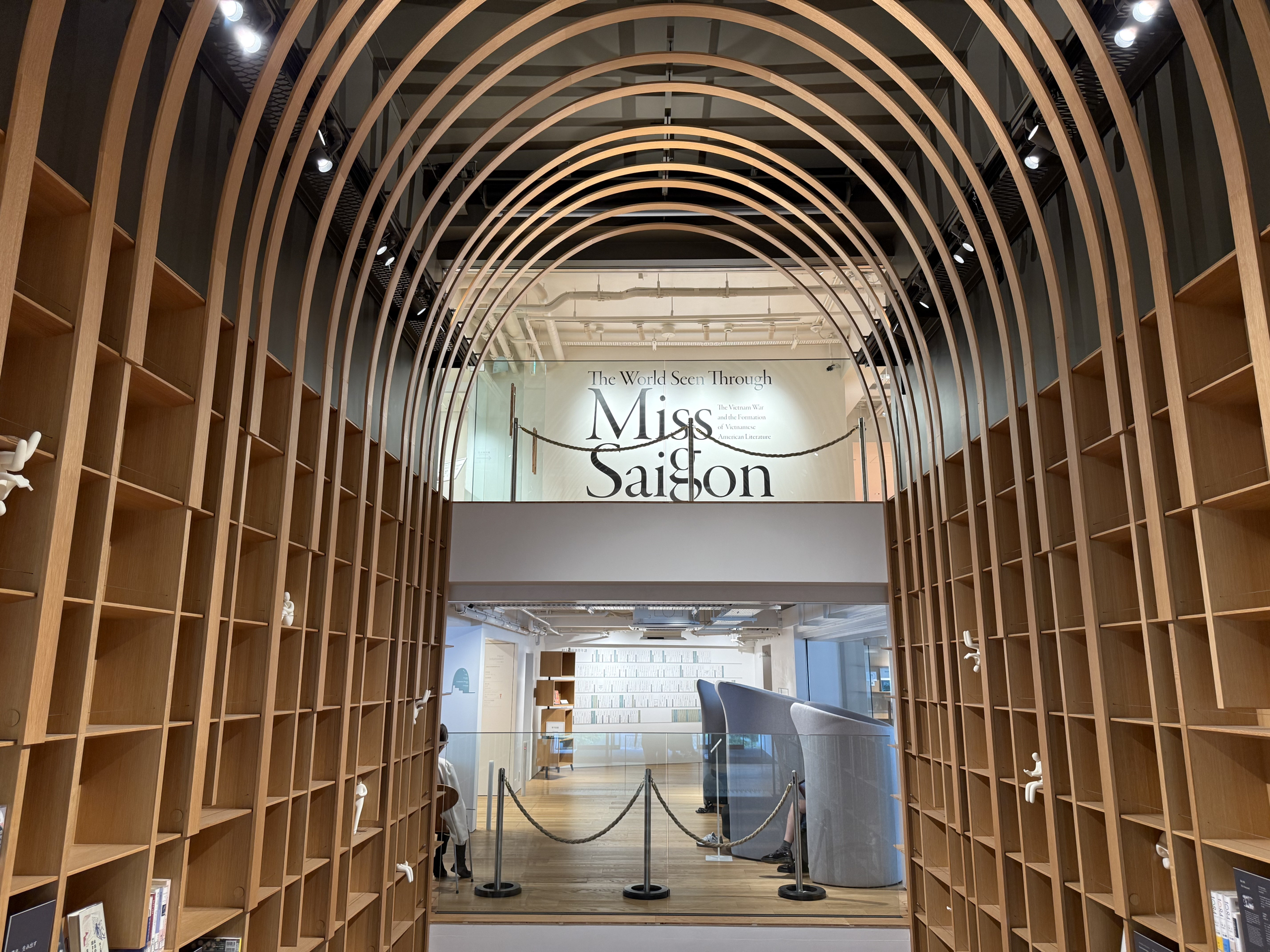
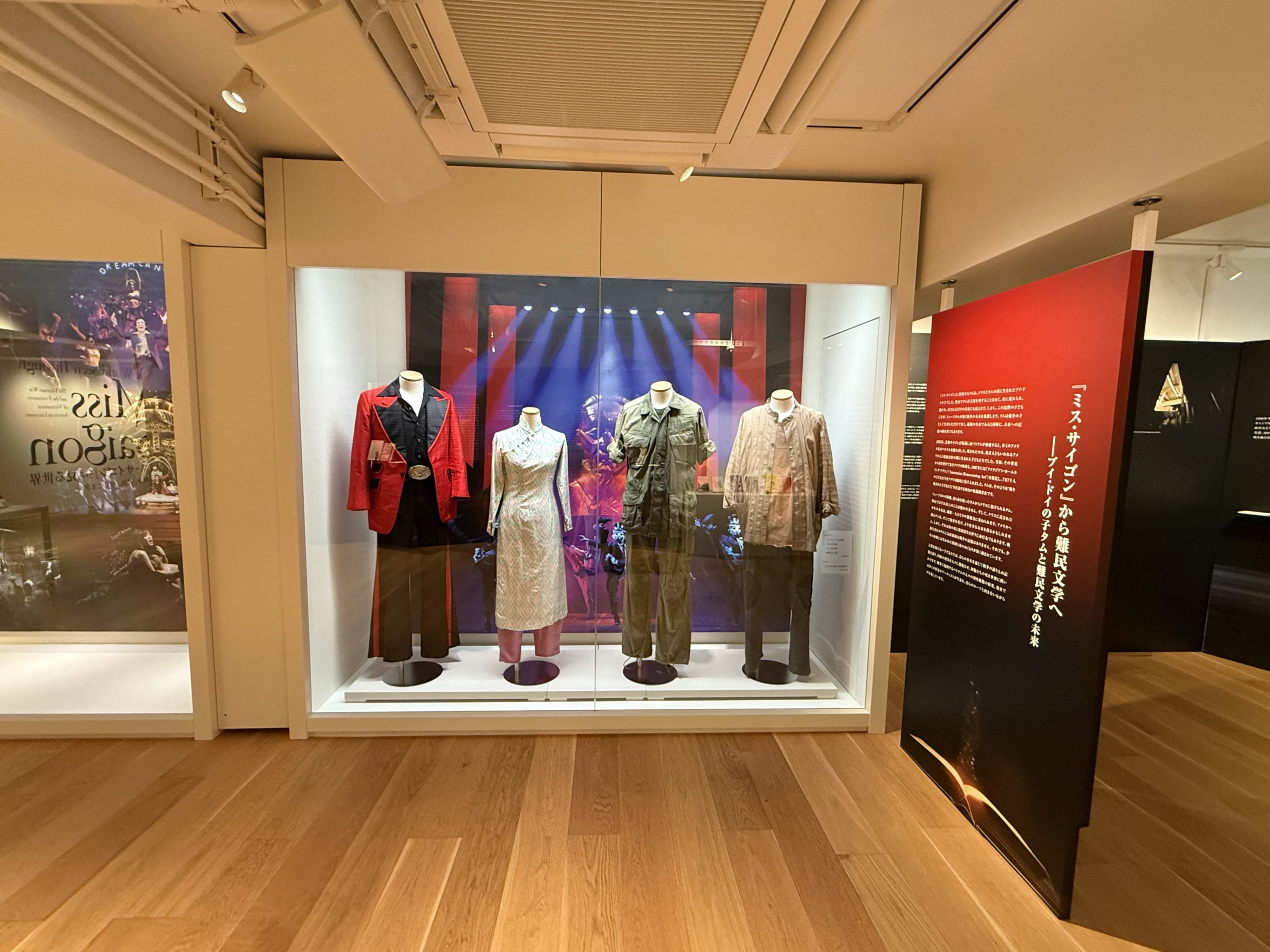
The second section, hosted at the Waseda International House of Literature, focuses on the famous musical Miss Saigon. The exhibition features a variety of materials related to the musical, including stage costumes, production posters, and video footage from performances. Visitors are invited to engage with the historical realities that underpin the musical’s narrative. Set during the final days of wartime Saigon, the musical portrays the division between North and South Vietnam, American involvement in the conflict, and the experiences of children born amid the violence of war. Through its portrayal of love, separation, war, and migration, Miss Saigon encourages visitors to reflect on how popular culture represents historical trauma and refugee experiences. The exhibition thus demonstrates that the musical is not merely a romantic story but also a reflection of the human consequences of conflict and displacement.
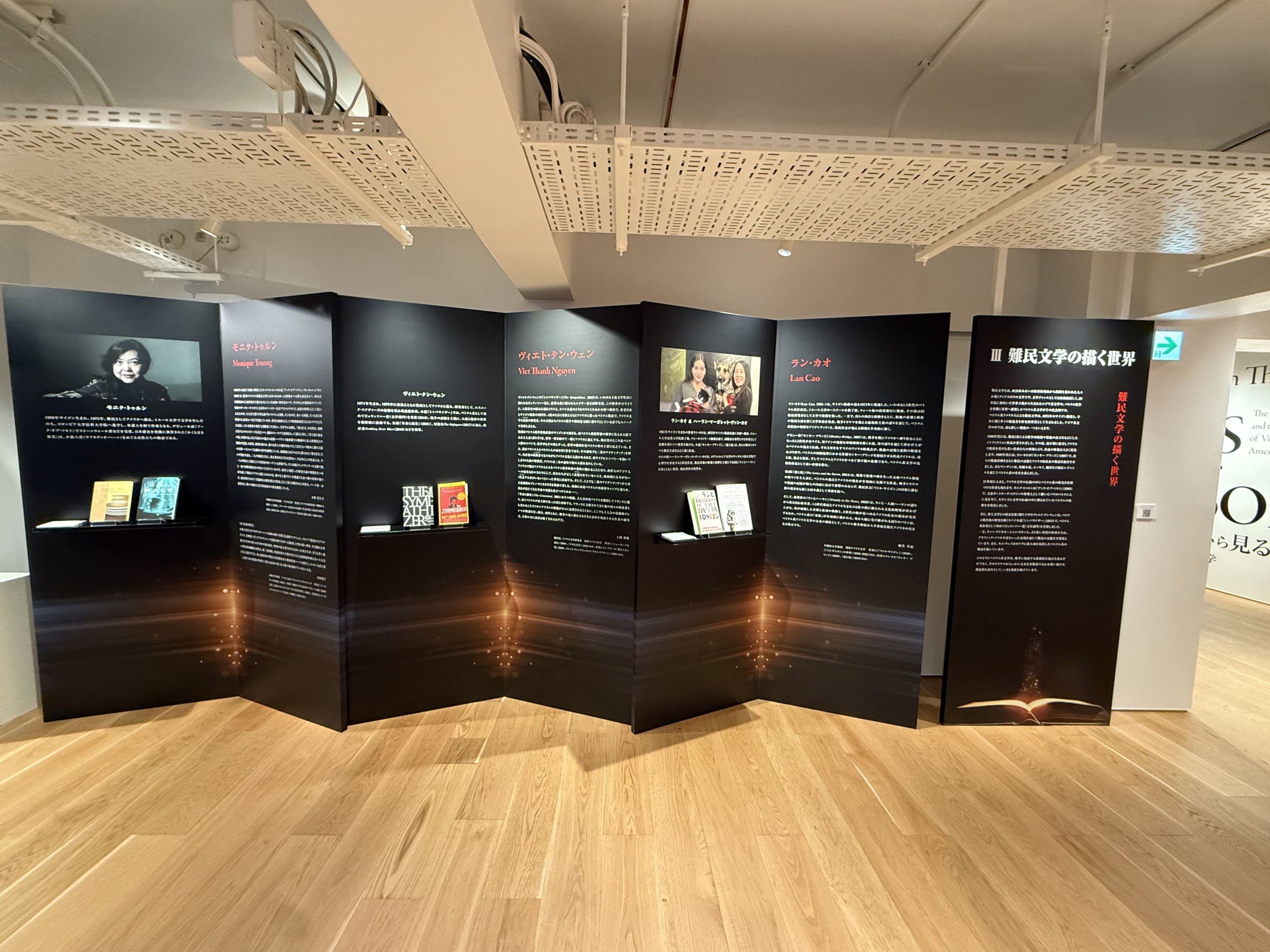
Extending the discussion beyond Miss Saigon, the third section explores Vietnamese refugee literature and illustrates how refugee communities have transformed experiences of war, displacement, and resettlement into new forms of artistic and intellectual expression. Featured works range from novels such as Viet Thanh Nguyen’s The Sympathizer, Monique Truong’s The Book of Salt, and Lan Cao’s Family in Six Tones to works drawing on personal and family histories, including Kim Thúy’s Ru, Thi Bui’s The Best We Could Do, and Ocean Vuong’s On Earth We’re Briefly Gorgeous. Together, this section offers visitors an introduction to a rich body of Vietnamese diasporic literature and inspires them to explore authors and stories they may not have previously encountered.
Personally, the third section was the most memorable part of the exhibition. What I found particularly compelling was that the authors do not offer a single, unified narrative of what it means to be Vietnamese, American, or a refugee. Instead, they offer different answers to common questions about home, memory, identity, and the possibility of starting anew, using diverse literary styles and narrative perspectives.
Among the works on display, I was especially drawn to Ocean Vuong’s On Earth We’re Briefly Gorgeous. Written as a letter from a young Vietnamese American, Little Dog, to his illiterate mother, the novel employs a non-linear, almost poem-like narrative structure to weave together the experiences of multiple generations. Taken together, works such as this demonstrate how literature can capture the complexity of lives shaped by war and migration while preserving experiences that might otherwise be forgotten.
As a visitor, I found the exhibition both intellectually stimulating and emotionally moving. What stood out to me was its ability to connect large historical events with personal stories through three sections across two venues. The exhibition reminds us that behind every historical event are individuals and families whose lives have been profoundly transformed. Overall, the combination of historical materials, visual displays, and literary works created a rich learning experience.
I would highly recommend this exhibition to Waseda students, researchers, and members of the wider public. Students interested in history, literature, migration studies, cultural studies, or international relations will find much to learn, while general visitors will appreciate the exhibition’s accessible presentation and contemporary relevance. At a time when questions of war, refugees, and cultural coexistence continue to shape our world, I believe that this exhibition offers a valuable opportunity to deepen our understanding of the past while reflecting on the challenges of the present.
About the Author: Peter Chai
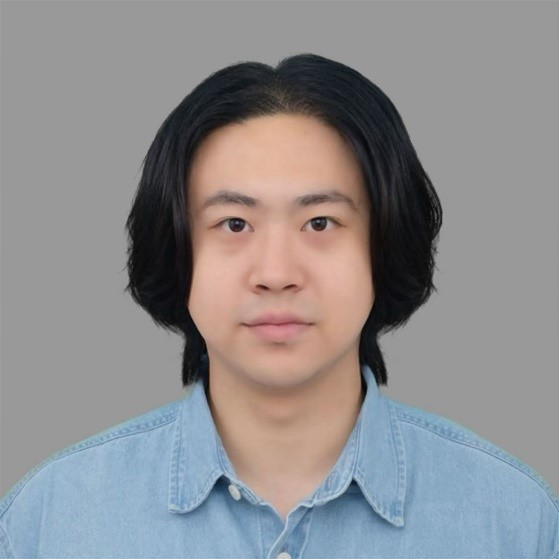
Hello everyone, I am Peter Chai, a Research Associate at the Faculty of Political Science and Economics and a Ph.D. Candidate at the Graduate School of Political Science. My research areas are political sociology, comparative politics, and public opinion, with a focus on East Asia. I am particularly interested in issues surrounding immigration and gender equality. Before entering my current doctoral program, I obtained both my B.A. in Economics and M.A. in Political Science from Waseda! Since joining the PR Office as a Student Contributor, I have written articles about research events and student life at Waseda, introducing readers to Waseda’s vibrant academic and cultural communities.