Waseda WeeklyWaseda Weekly

News

News

From volunteer experience at Waseda University to dedicating himself to solving the issue of statelessness: The path of Tatsuro Shiraishi

Addressing statelessness issues at the forefront of AI.

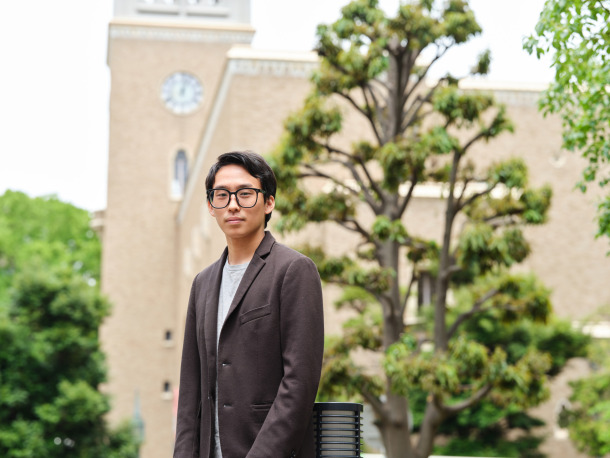
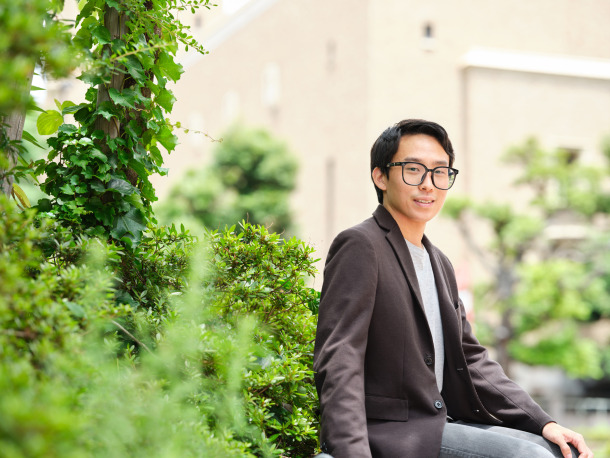
Tatsuro Shiraishi, Co-Representative of ANOSUPO AI

With the Okuma Memorial Auditorium on Waseda Campus in the background

Globally, there are approximately 4.3 million stateless people who do not have a nationality, a problem that has become an international issue. Tatsuro Shiraishi, a graduate of School of Human Sciences, founded ANOSUPO AI (hereinafter referred to as Anosapo) and is addressing this problem from a social business perspective. His efforts to solve the statelessness problem by creating jobs using AI have attracted attention from overseas media. At the root of his activities is a setback he experienced early in his time at Waseda University and the presence of a mentor who helped him overcome it.

A student life that began with setbacks; a new door discovered in Borneo

"I wanted to run in the Hakone Ekiden. That was my only reason for wanting to attend Waseda University."

Currently, Shiraishi is working tirelessly across borders to resolve the issue of statelessness. However, when he first entered university, his goal was to spend four years with the Waseda University track and field team and run in the Hakone Ekiden. Looking back on that time, Shiraishi says, "I was like a frog in a well."

"In high school, I was in an environment where the focus was on 'running for fun,' so Waseda's track and field club was on a completely different level. Watching my classmate Tomoki Ota (a 2020 graduate School of Sport Sciences who competed in the men's 10,000m final at the Paris Olympics) and the other seniors, I keenly felt the difference in level, realizing that we were in completely different worlds, and I chose to leave the club in July of my first year."

Shiraishi said that after moving out of the track and field club dormitory, he didn't feel like doing anything for a while. He couldn't fit in with his new department either, and spent his days idly with his high school friends.

"Summer vacation was over, and I was starting to feel anxious that I really needed to change something, when I happened to find out..." Waseda University The Hirayama Ikuo Volunteer Center (WAVOC) (WAVOC). That's where I encountered... Yukino Iwai "She was a professor (former Associate Professor The Hirayama Ikuo Volunteer Center (WAVOC), who retired in March 2026)."

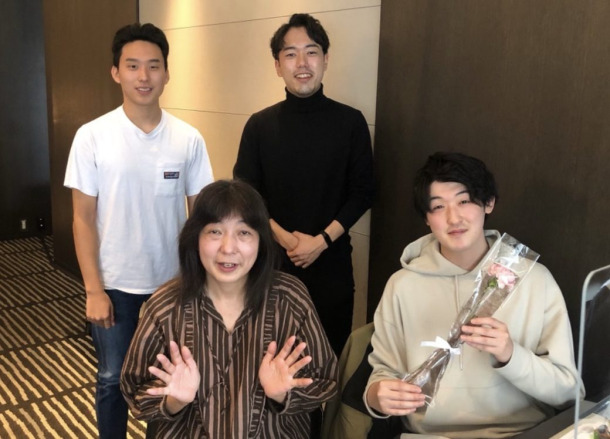
A photo taken with Professor Iwai after the launch of Anosapo. Professor Iwai is on the left in the front row, and Shiraishi is on the left in the back row.

Shiraishi participated in a disaster recovery study tour to Namie Town in Fukushima Prefecture, organized by WAVOC. This activity led to him having an in-depth conversation with Professor Iwai.

"Ms. Yukino sat with me and listened to me for over an hour. When I confided in her about my struggles and my desire to accomplish something, she suggested, 'Why don't you try participating in the activities of a student volunteer group called the Borneo Project?' Those words completely changed the direction of my life."

The Borneo Project is a WAVOC support student club that travels to Borneo Island in Malaysia to implement educational programs for stateless children who cannot obtain Malaysian citizenship there. This three-week trip opened a new chapter in Shiraishi's life.

"Children on Borneo Island cannot attend school because they have no nationality, and they have to live in hiding from the police. When I learned about this, I was shocked, or rather, filled with feelings close to anger. Initially, I had planned to visit Cambodia and other Southeast Asian countries during my three-week trip, but I canceled all of that and stayed on Borneo Island. Before returning home, I decided, 'I will take a leave of absence from school and come back here again.'"

Shiraishi took a year off from university and chose to dedicate himself to working as a teacher, interacting with children on Borneo Island. However, the urge to ask himself, "Is this really okay?" never subsided.

"Spending extended periods with the children and witnessing their growth gave me a sense of fulfillment that I couldn't have experienced through volunteer work alone. However, as long as they were 'stateless,' no matter how much their academic abilities improved, they couldn't find jobs, and their lives of running from the police remained unchanged. By the time I returned to university, I felt a different kind of helplessness."

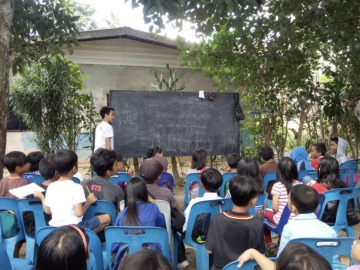
A scene from the Borneo Project, where stateless children are being taught.

What should be done to find a fundamental solution...? I consulted with Masahiro Kawachi (a 2018 graduate School of Human Sciences), whom I met through WAVOC's activities and with whom I later co-founded a business, about this problem, and it led me down a new path.

"Kawachi was three years my senior, and at the time, he had already joined Borderless Japan, a company that develops social businesses to solve social issues. As I consulted with Kawachi, I realized that 'there are limits to what you can do as a volunteer, but here you might be able to try,' so I decided to take the same path."

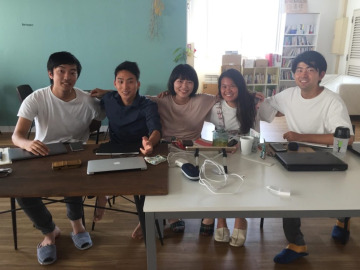
Photo on the left: A photo taken with Ms. Kawachi (left) during their time at school. In Kota Kinabalu, Malaysia.
Photo on the right: A photo taken with my colleagues during my first year at Borderless Japan. Shiraishi-san is second from the left.

To survive in the unpredictable age of AI

Shiraishi, who participated in Borderless Japan's business while still a student, co-founded Anosapo with Kawachi in 2021 at the age of 24 after graduating. They are working on the issue of statelessness through "annotation," which is essential for AI development.

"Annotation refers to the process of manually preparing the source data (training data) for AI to learn from. Even if children without nationality are able to return to their home countries, what kind of work will their parents do to make a living? After thinking about this deeply, I felt there was potential in creating employment through the creation of training data that can be started online even without formal education and allows for gradual skill development."

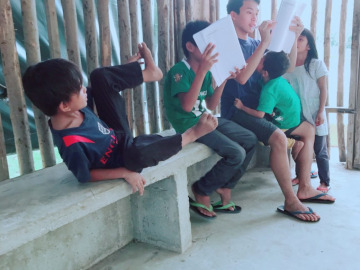
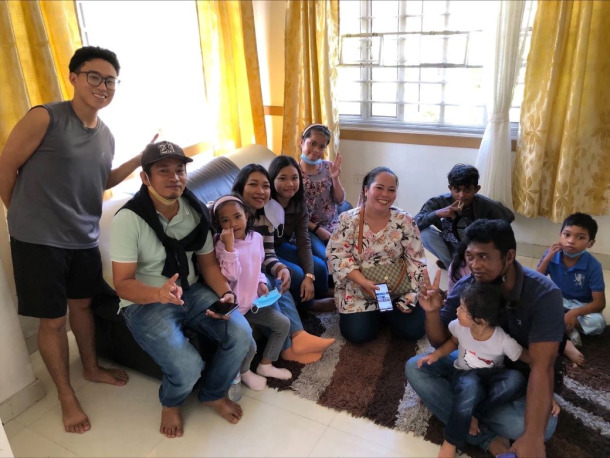
This photo was taken when stateless children returned to the Philippines and were able to obtain citizenship. They had apparently emigrated to Borneo in search of stable work due to the deteriorating security situation and economic stagnation caused by the civil war.

The period from 2022 to 2023 saw the release of numerous new AI-related services, including ChatGPT. However, Anosapo had already pioneered a groundbreaking approach to AI before then. This business garnered significant attention, including being selected as one of Forbes' "30 Under 30 Asia" in 2023.

"This wasn't an idea we came up with on our own; it was born from consultations with various people. We don't feel like we've done anything extraordinary; rather, there are still many issues that need to be resolved regarding the fundamental problem of statelessness. Nevertheless, the recognition from Forbes was encouraging and appreciated in terms of raising awareness of our activities."

In "30 UNDER 30 ASIA," it was selected in the Social Impact category.

Even though they've received recognition, AI is evolving at a rapid pace. Anosapo's efforts are also looking ahead to the next stage.

"Currently, we are commissioned by companies developing AI to perform annotation work, but there is a strong possibility that the process of 'creating training data' itself will eventually be replaced by AI. Therefore, we are working to make job creation through AI development support in fields where automation by AI will be required in the future, such as agriculture, another pillar of our business."

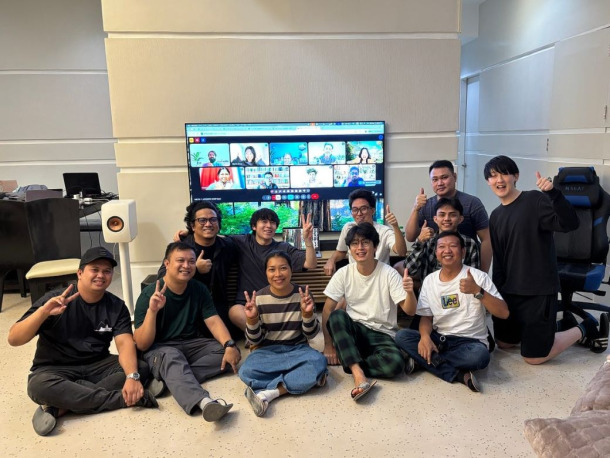
At an ANOSAPO meeting held in Davao, Philippines in 2025. Shiraishi-san is in the center of the back row.

Shiraishi, who is at the forefront of AI and tackling the issue of statelessness, has some advice for students from his perspective.

"Just as those who lived through the Industrial Revolution couldn't foresee the subsequent social changes, we don't know how society will evolve and change in the coming AI revolution. In such times, what's important is being able to judge things from various perspectives without being bound by conventional wisdom. If you ask ChatGPT, you'll get a 'nice-sounding answer,' but is that really the best for you? In order to judge that, I think it's necessary to firmly establish what's important in your own life."

To that end, Shiraishi spoke about the "leave of absence" he chose while he was a student, as follows:

"While you're a student, you should thoroughly pursue what you truly love. Therefore, you might consider going against the conventional path of graduating from university in four years and starting job hunting early. For me, the year I spent on Borneo during a leave of absence is still a valuable asset. Taking a moment to pause and reflect can have a profound impact on your life."

Life is a long-distance race. In order to reach a satisfying destination, it may be necessary to sometimes stop and re-examine what's right in front of you.

Interview and text: Naoto Oguma (2002 graduate of School of Letters, Arts and Sciences II)
Photo: Seiji Ishigaki

【Profile】

Born in Hamura City, Tokyo in 1997. While attending Waseda University, he spent approximately two years working as an educational volunteer in Kota Kinabalu, Borneo, Malaysia, helping stateless children. After graduating from School of Human Sciences in 2021, he worked at Borderless Japan before co-founding ANOSUPO AI at the age of 24. As a pioneer in social business addressing statelessness, he was selected for Forbes' "30 UNDER 30 ASIA" in the Social Impact category. He is currently based in Kota Kinabalu, Sabah, Malaysia, the place where he started his career.

Waseda Weekly is the official online magazine for Waseda University, offering insights into the university. It's updated daily on weekdays during the academic term, featuring profiles of active Waseda students and alumni, as well as information on student student club, Waseda cuisine, and more.

Page Top
WASEDA University

早稲田大学オフィシャルサイト(https://www.waseda.jp/inst/weekly/)は、以下のWebブラウザでご覧いただくことを推奨いたします。

推奨環境以外でのご利用や、推奨環境であっても設定によっては、ご利用できない場合や正しく表示されない場合がございます。より快適にご利用いただくため、お使いのブラウザを最新版に更新してご覧ください。

このままご覧いただく方は、「このまま進む」ボタンをクリックし、次ページに進んでください。

Continue

対応ブラウザについて

close