Belgium Day at Waseda: Exchanges Between the Ambassador and Students
Thu, Jul 16, 2026-
Tags
2026 marked 160 years of friendship between Belgium and Japan, a union that started long ago in 1886 and has grown and flourished to this day.
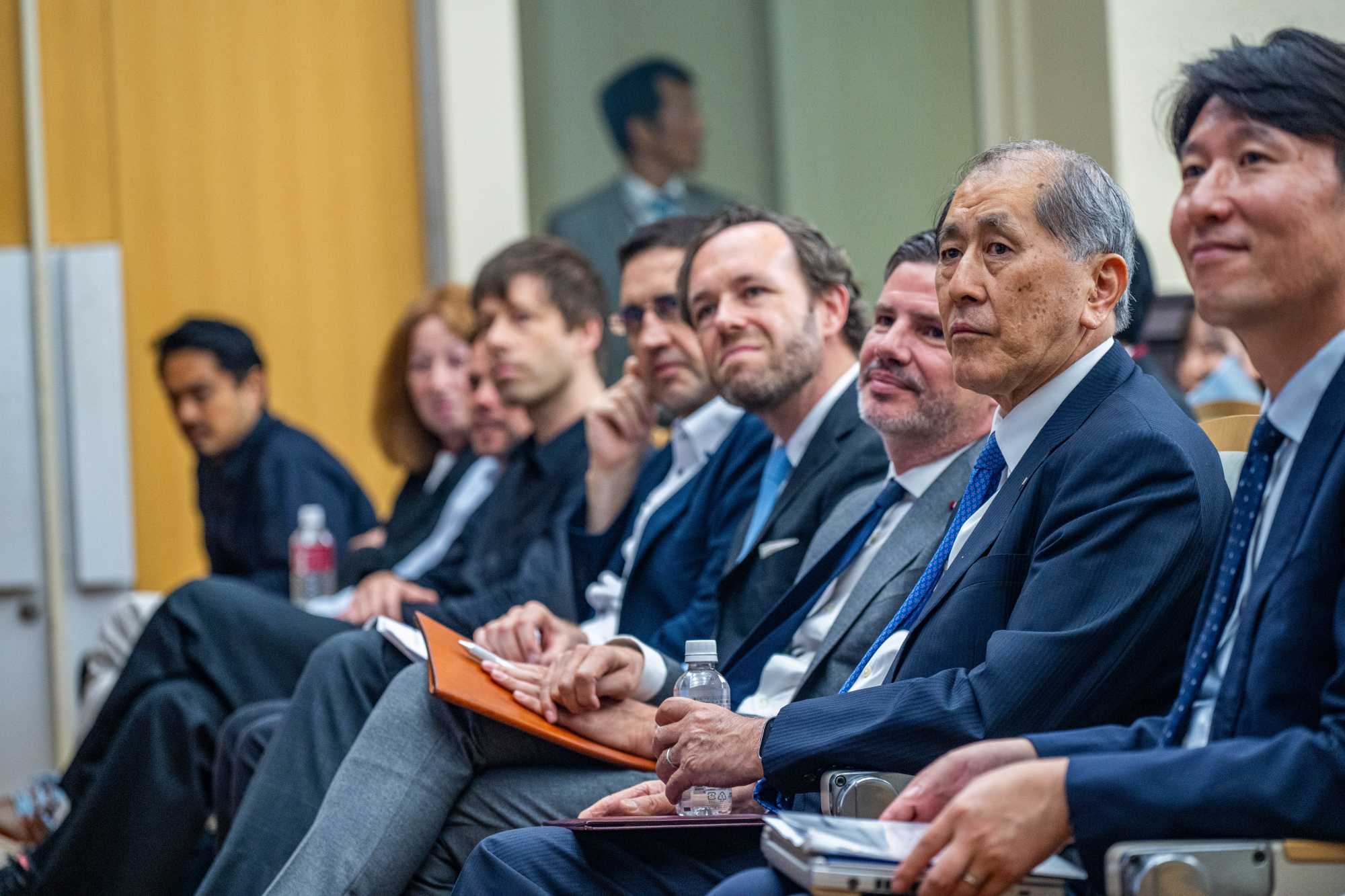
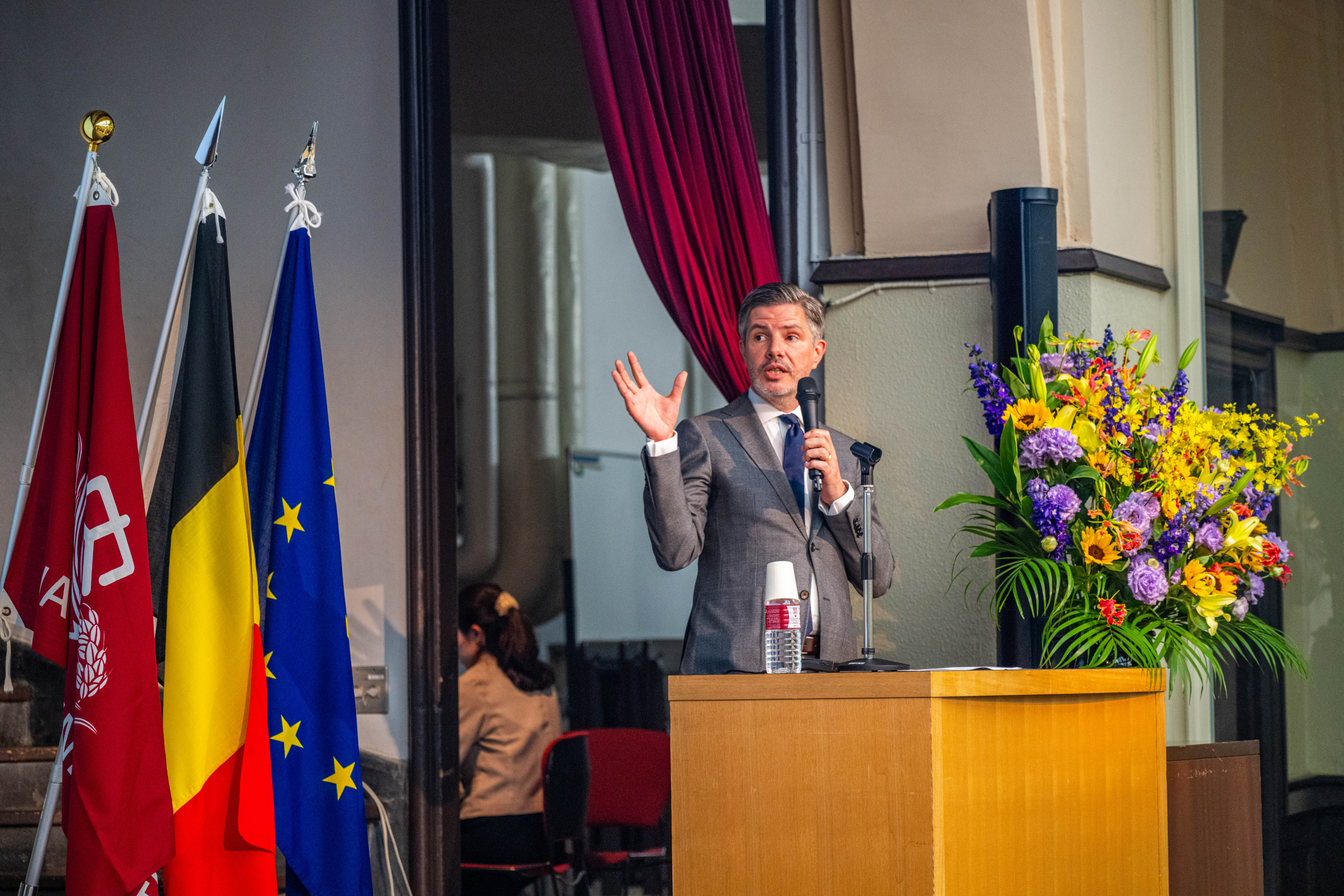
This cooperation extends beyond the economic agreements or trade but also includes exchanges of education and research, arts and culture and many more. A prime example of educational exchange between the two countries was Belgium Day, which Waseda was honored to host on June 4, 2026. His Excellency, Mr. Antoine Evrard, Ambassador of the Kingdom of Belgium to Japan, gave a lecture and interacted directly with Waseda students. This was a valuable opportunity for students to hear a unique perspective from the Ambassador.
About the Event:
The lecture included an overview of Belgium’s contemporary political structure and its key economic and environment challenges, as well as comparisons between Japan and Belgium’s economics goals. He used presentation slides to support his points and later, welcomed questions from the students.
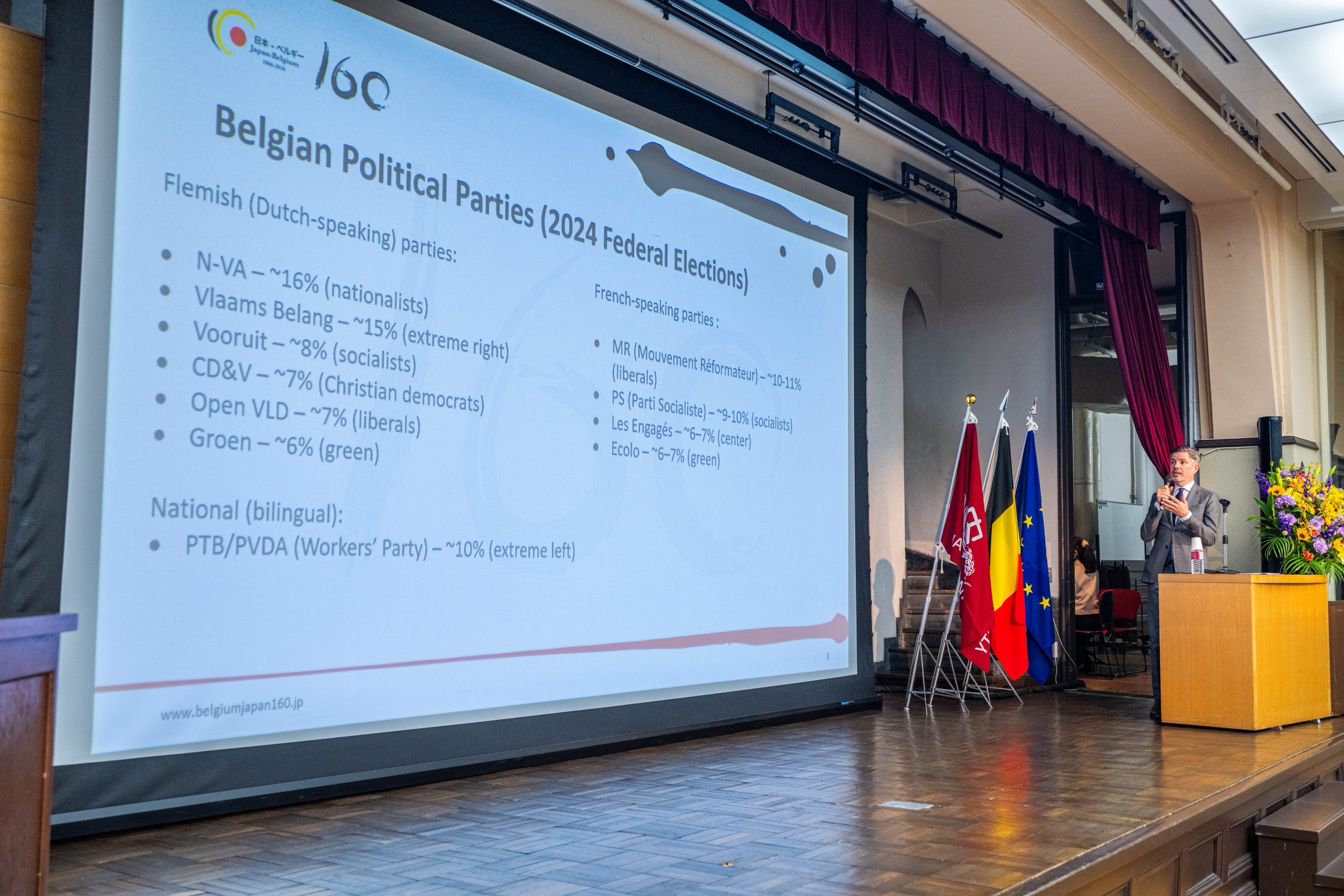
His Excellency, Mr. Antoine Evrard, Ambassador of the Kingdom of Belgium to Japan
Questions from students ranged widely, from the use of AI in the Belgian labor market, to potential reforms of the electoral system and some even centered around the concept of the Belgian identity itself.
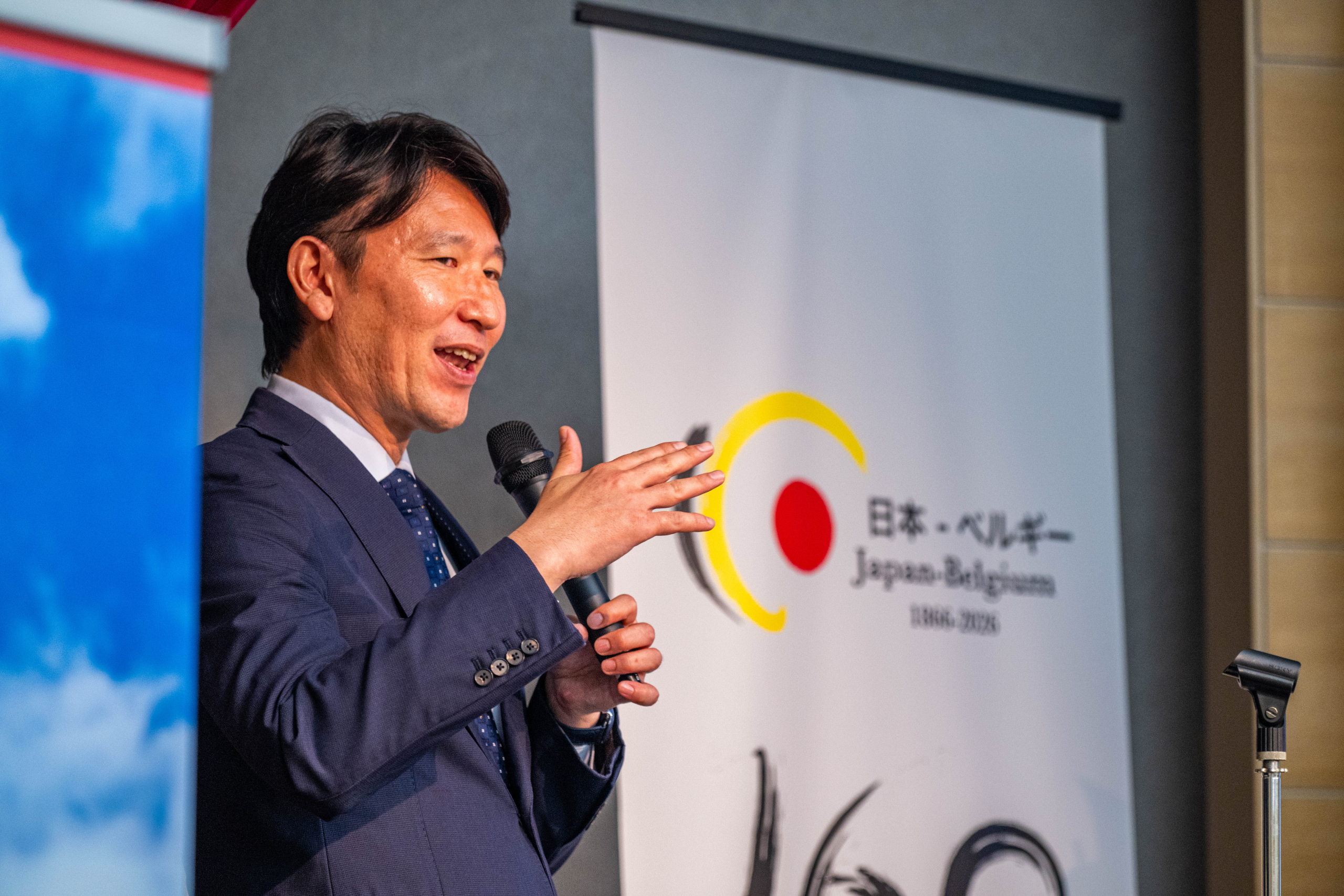
Professor Airo Hino
Then, Professor Airo Hino of the School of Political Science and Economics shared some key takeaways from the session.
Finally, the session ended with a brief presentation to inform students on potential study abroad opportunities. Mr. Eduard Van Kleunen, Deputy Head of Mission & Minister Counsellor shared insightful details about various programs and universities available to exchange students, as well as local culture and life in Belgium. I was personally interested in KU Leuven and found out that Waseda concluded an office exchange agreement with this renowned institution in 2024. This is just one of the many examples of academic exchange between Japan and Belgium.
Contemporary Political Structure:
One of the most interesting takeaways I had from this lecture was Belgium’s complex coalition process. As a country with a proportional voting system the government is comprised of several political parties. The government is then formed through a complex coalition process. This means that the formation of a government often takes months to ensure that each requirement of each party (and thus each voter), is accommodated and adjusted for. The most recent formation of the government took about eight months, which may seem extremely long to other countries, but was in fact shorter than expected as Mr. Everard informed us.
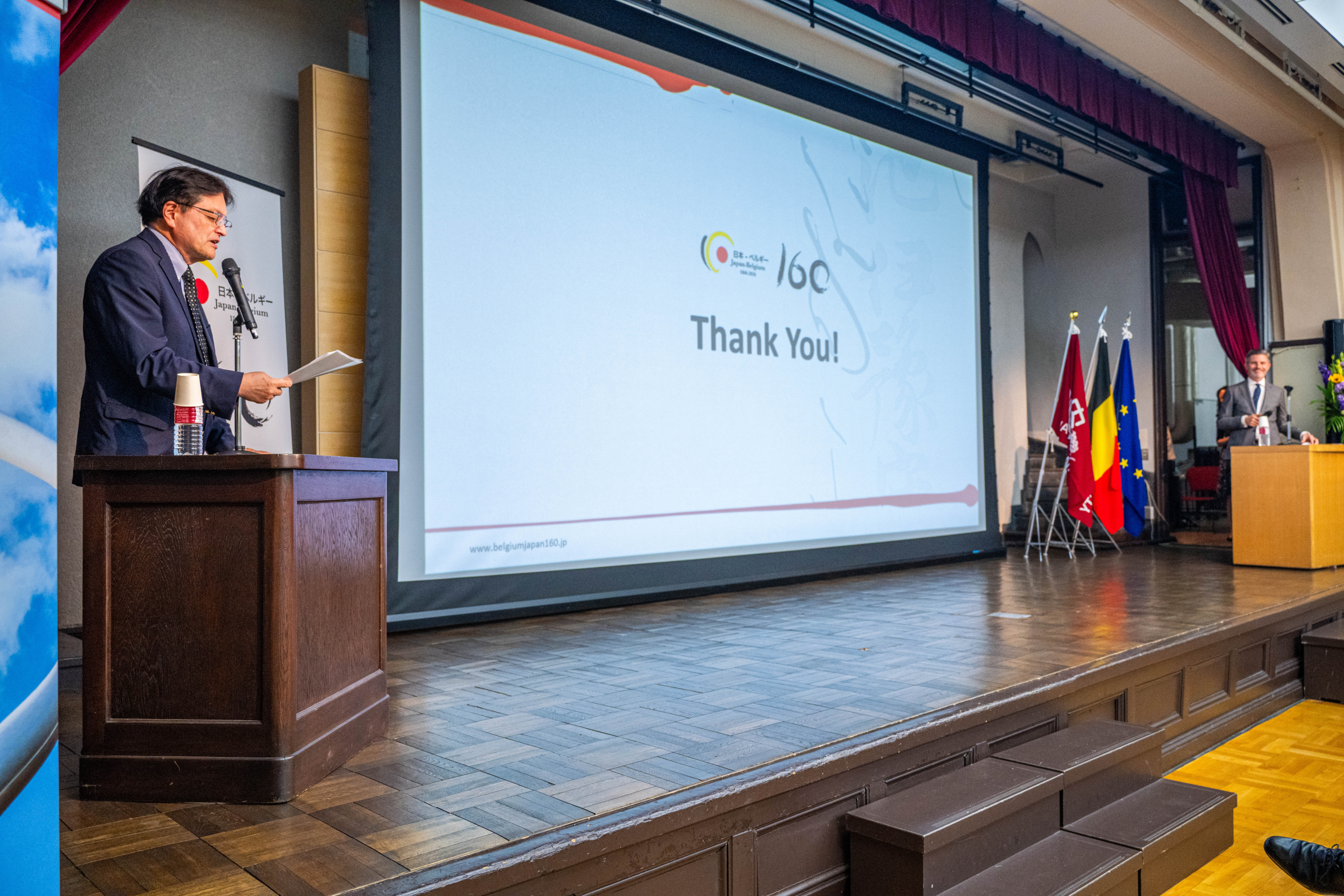
Professor Masahiko Genma
The main reason behind this long, drawn-out process is that this proportional system favors smaller parties over majoritarian ones. According to the Ambassador, the focus on inclusive politics is prioritized due to the large French and Dutch speaking communities. Both communities are highly autonomous and thus have well established municipalities which means that the desires of voters can vary greatly throughout the country. Thus, there is a high fragmentation of political parties which represent an even higher range of policies. In fact, Belgium stands out amongst its neighbors in the EU for this exact reason. This is the unique Belgian identity that the Ambassador shared with us: the dedication to better reflect the linguistically and regionally diverse communities within the country.
Comparisons between Japan and Belgium:
Mr. Everard’s presentation also included several points of comparison between Belgium and Japan with regards to economic challenges. Both countries have relatively high amounts of debt and public spending and thus aim to practice fiscal discipline. Additionally, both countries also struggle with lower labor market participation. While in Japan this is partly due to the shrinking birth rate, in Belgium one problem lies in lower incentive for older demographics to continue working due to early retirement pathways.
I find it interesting to note that Belgium is one of the few countries in the world to have both a constitutional monarchy and a parliamentary democracy. While Japan is also a constitutional monarchy, the role of the Emperor is more so as a figurehead while executive power is held by the Prime Minister and Cabinet. This differs greatly from Belgium where the King, through having a limited range of responsibilities, takes a proactive role in the formation of the government such as selecting the formateur (politician who heads the coalition process).
Belgium Day, and the many similar events that have been hosted throughout Japan, such as the Belgium pavilion at the Expo 2025 Osaka, widens the range of exchanges between the two countries, fostering the spirit of collaboration for many more years to come.
Today, Japan and Belgium have more to gain from their cooperation with each other especially through student research exchanges in this increasingly globalized world. As an international student at Waseda University, I look forward to exposing myself more to the rich culture of Belgium and delving into its deep history with Japan.

Belgium waffles given to attendees after the event
Written by Student Contributor BASAIAWMOIT Riiaki Iyer