![[Podcast Column] From Coffee Houses to Global Markets: The London Metal Exchange](https://www.waseda.jp/top/en/assets/uploads/2026/07/2026.6.29-copper-LME-screenshot-for-podcast-column-4.jpg)
[Podcast Column] From Coffee Houses to Global Markets: The London Metal Exchange
Wed, Jul 15, 2026-
Tags
In this podcast column, showcasing the fourth episode “The Politics of Market Design” of Season 2 of Waseda University’s English-language podcast “Rigorous Research, Real Impact,” Associate Professor Jack Seddon (Faculty of Political Science and Economics) explores the history and transformation of the London Metal Exchange.
Drawing on his research in international political economy, Assoc. Prof. Seddon discusses how the London Metal Exchange evolved from its 19th-century origins in open-outcry trading to today’s modern financial markets, highlighting how both market structure and the role of traders have changed over time.
All eight episodes of Season 2 of Waseda University’s English podcast “Rigorous Research, Real Impact” are currently streaming for free on Spotify, Amazon Music, Apple Podcasts, and YouTube.
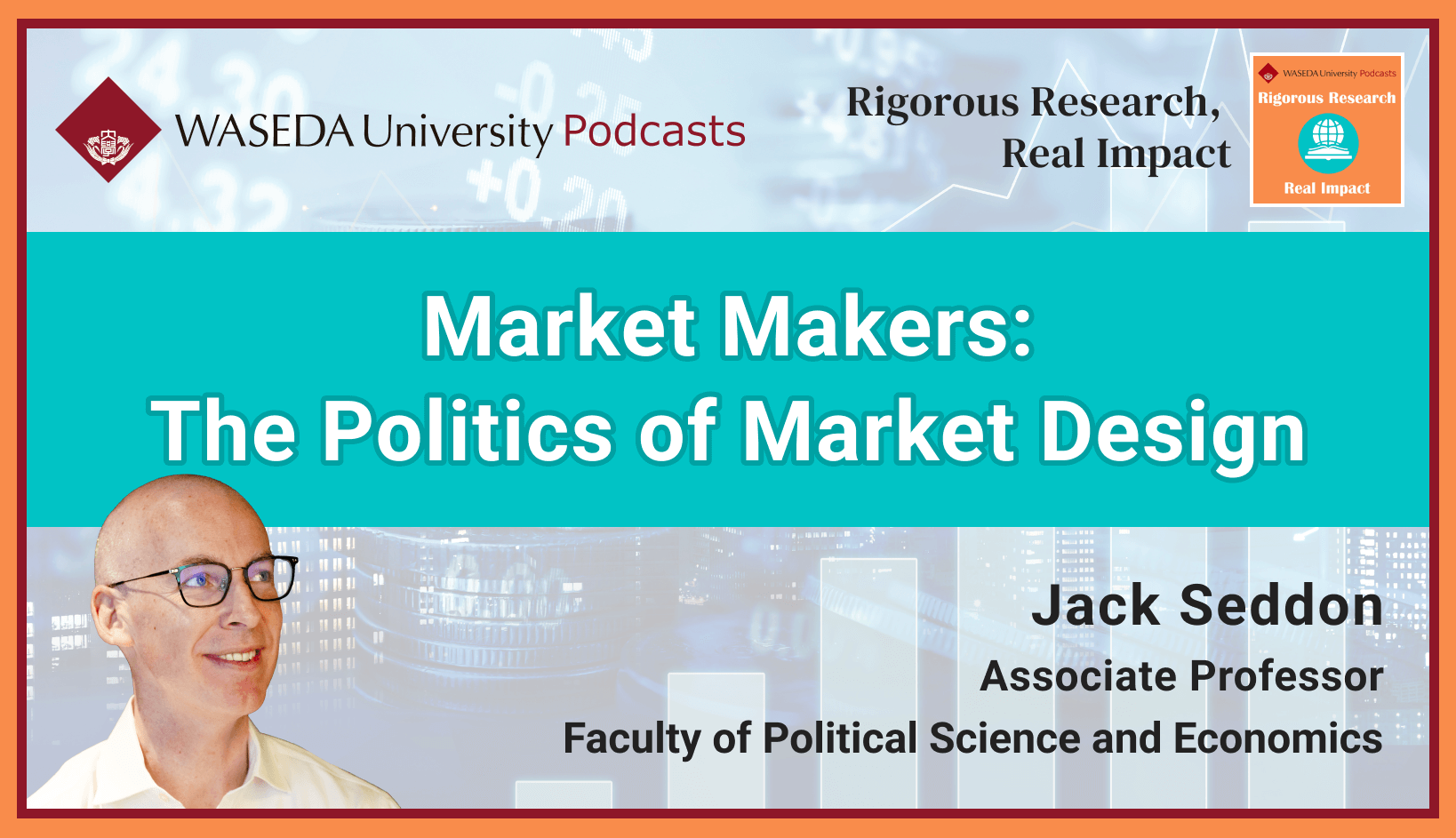
You can read the full transcript by clicking the above episode banner.
Question: Your research on the London Metal Exchange in your paper “Merchants Against the Bankers” highlights how structural change in markets is a political process. Could you briefly introduce the London Metal Exchange and its key takeaways, and also explain how the role of traders has evolved from the 1870s to today, from open-outcry trading on the exchange floor to modern screen-based financial markets?
Professor Seddon (1:50):
The London Metals Exchange is actually a really fascinating and quite unique institution. Its history goes all the way back into the 19th century, into the Victorian era. So, it was established in 1877, and it was established by metals merchants for metals merchants, which were basically traders in London that were tired of producer pricing and smelter prices and wanted to establish a kind of more transparent way of producing metals prices, specifically at that time for tin and copper contracts. And it really is a kind of quintessential London Victorian institution.
So, it was set up on a coffee shop floor in a very famous coffee house known as the Jerusalem Coffee House, where lots of traders gathered. And they actually used to draw a circle on the floor of that coffee shop and organize their trading around that circle. And that circular structure persists into the present day. It’s known as the ring dealing system of the London Metals Exchange. So that marketplace is specifically for what’s known as non-ferrous metals, which you can basically think about as industrial metals or non-precious metals, so not like gold and silver, but things like aluminum, copper, things that are really produced or utilized in industrial processes.
So, this became the kind of global center for the trade of these metals, and it also established the reference prices for these metals, which were used throughout the global trading system. So that’s a little bit of background about the LME, and my particular interest was to try to understand how that very historical market had evolved over the last 100 years to become what is a really quintessential city institution and also a very unique marketplace for the trading of a commodity.
…
Professor Seddon (4:13):
…the earliest traders that were there on the LME, you can really think of them as kind of pioneering or buccaneering type capitalists, taking big risks and helping to intermediate this market to bring these commodities across the world. And obviously, the organization of the LME represented the kind of formal organization of this exchange and became something of a model for the trading of other commodities in the US and other parts of the world.
All commodity markets were becoming more organized during this period of globalization. And then when we think about the context of the way in which trading was done in that period versus today, one striking difference is obviously the way in which technology has influenced trading and the way in which the market has become both an electronic marketplace and an open outcry voice-traded marketplace, which is something that makes the LME quite unique. It’s actually the only marketplace that remains an open outcry marketplace in London, and I believe also in Europe, and that might be true globally. So, it’s clung onto that trading practice and that trading process.
So, I think something that’s interesting about looking at the LME is that you can see the way in which the legacy of that history also persists into the present in the way that the organization of the traders is structured, the way in which the market’s structured. So, what it’s done is kind of layer on new technologies and new ways of trading and also new participant types.
So, something that I try to do in this article is talk about the way in which that trading has evolved from primarily being about metals merchants who are working in the service of the metals industry to becoming a more financialized marketplace. That is a marketplace where you also have banks, you also have hedge funds, and the way in which those new participants have arrived and then tried to work to change the structure of trading within the marketplace, which is why I say this is also a political story. And the reason that it’s a political story is that those different types of traders, although they are complementary, they serve different audiences and different purposes. They also struggle with each other and battle with each other to shape that market.
About the Guest:
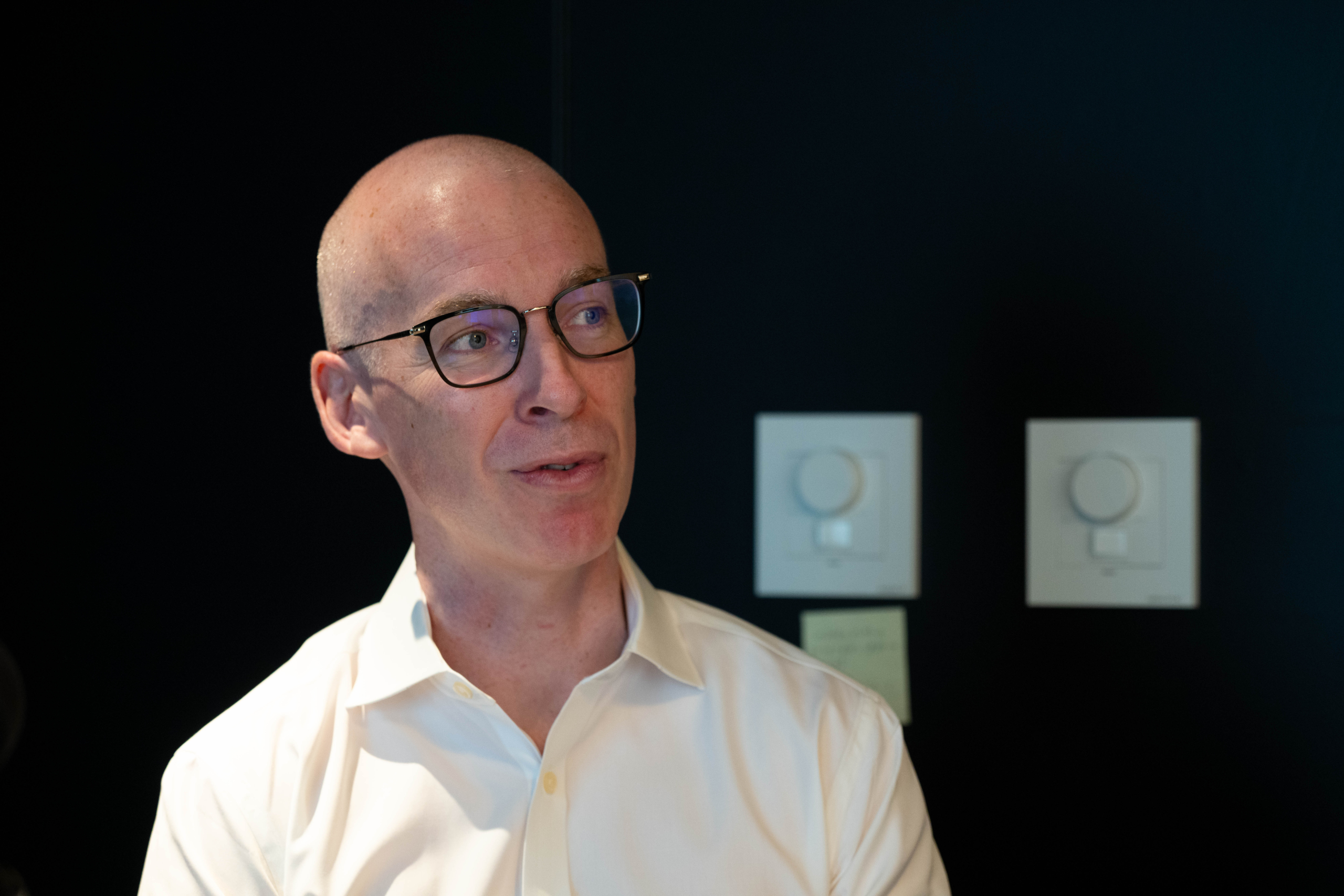
Associate Professor Jack Seddon
Associate Professor Jack Seddon joined Waseda in 2019, where he works at the intersection between international political economy and economic history, employing theories of institutionalism and mixed research methods. He received his Ph.D. from the University of Oxford and has held visiting positions at the University of Pennsylvania, the Graduate Institute in Geneva, the European University Institute, and Georgetown University. Prof. Seddon is part of the Sterling Area Revisited Project, funded by the United Kingdom Economic and Social Research Council (ESRC). He was also awarded a Lloyd’s of London UK-US Fulbright Scholarship in 2019-2020 to examine issues in global risk markets. Before beginning his graduate studies, he worked as a capital markets lawyer in London and Brussels.
In addition to his own research, he hopes to inspire students to think about – and engage with – the many global challenges that we now face. He seeks graduate students interested in the field of political science with a focus on global economic governance, international political economy, or transnational governance in other issue areas.