Waseda Open Innovation Forum 2025 Highlights Waseda’s Achievements in Research, Collaboration, and Entrepreneurship
Wed, Dec 24, 2025-
Tags
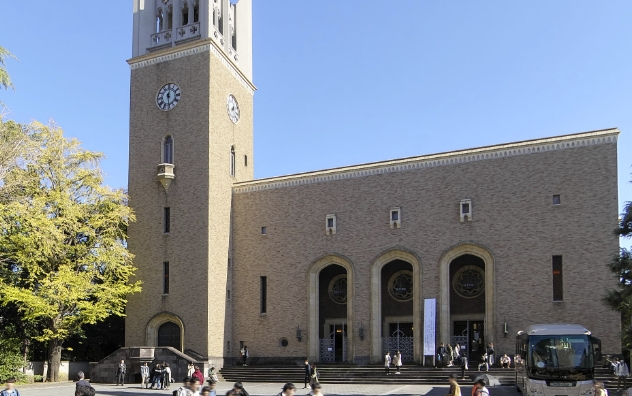
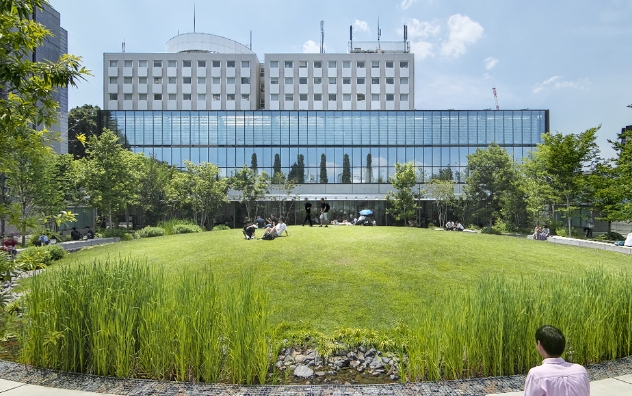
The Waseda Open Innovation Forum 2025 (WOI ’25) was held on 26 November at the Research Innovation Center and the Okuma Auditorium. The forum showcased Waseda University’s outcomes from interdisciplinary research and academia–industry collaboration. It also highlighted Waseda’s achievements in fostering talent and supporting young ventures. It provided a platform for researchers, business leaders, and practitioners from a wide range of fields and industries to gather and share the latest developments in academia, industry, and technology. The forum was organized in a hybrid format, and around 1,800 participants from universities, research institutes, companies and the general public joined this event.
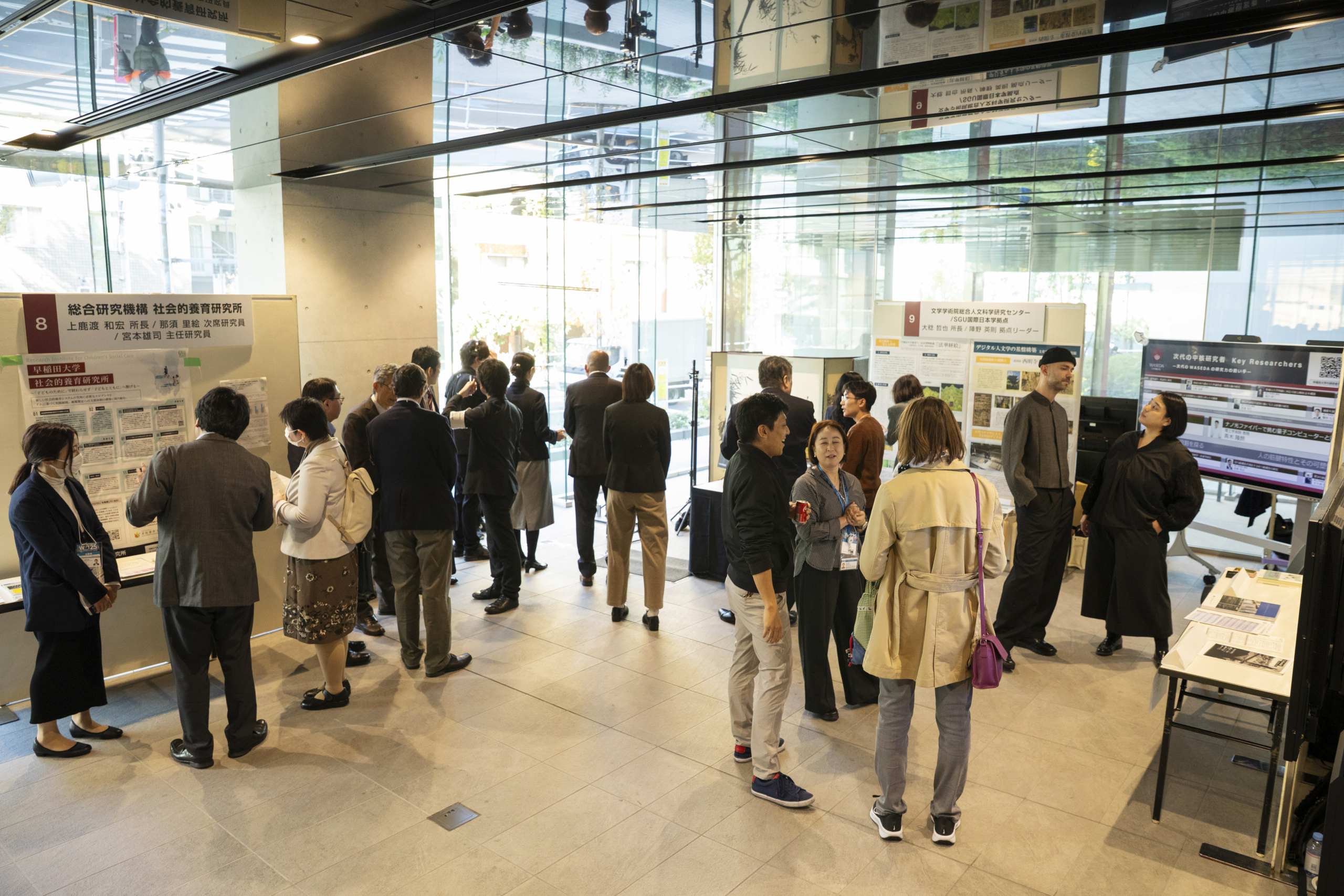
WOI ’25 attendees at the Research Innovation Center
The WOI ’25 featured four main sessions, in which professors from various schools at Waseda and company representatives from different industries were invited to the stage. They gave presentations and joined panel discussions to introduce different projects and discuss social innovation and technological development. The forum began with an opening speech by Professor Takayuki Homma, the Executive Vice President, and the Director of Global Research Center who introduced Waseda’s broad mission to contribute to humankind throughout the world via three global centers, the Global Research Center (GRC), the Global Education Center (GEC), and the Global Citizenship Center (GCC), encompassing three areas of focus: research, education, and contribution. The WOI ’25 is an event organized under the GRC.
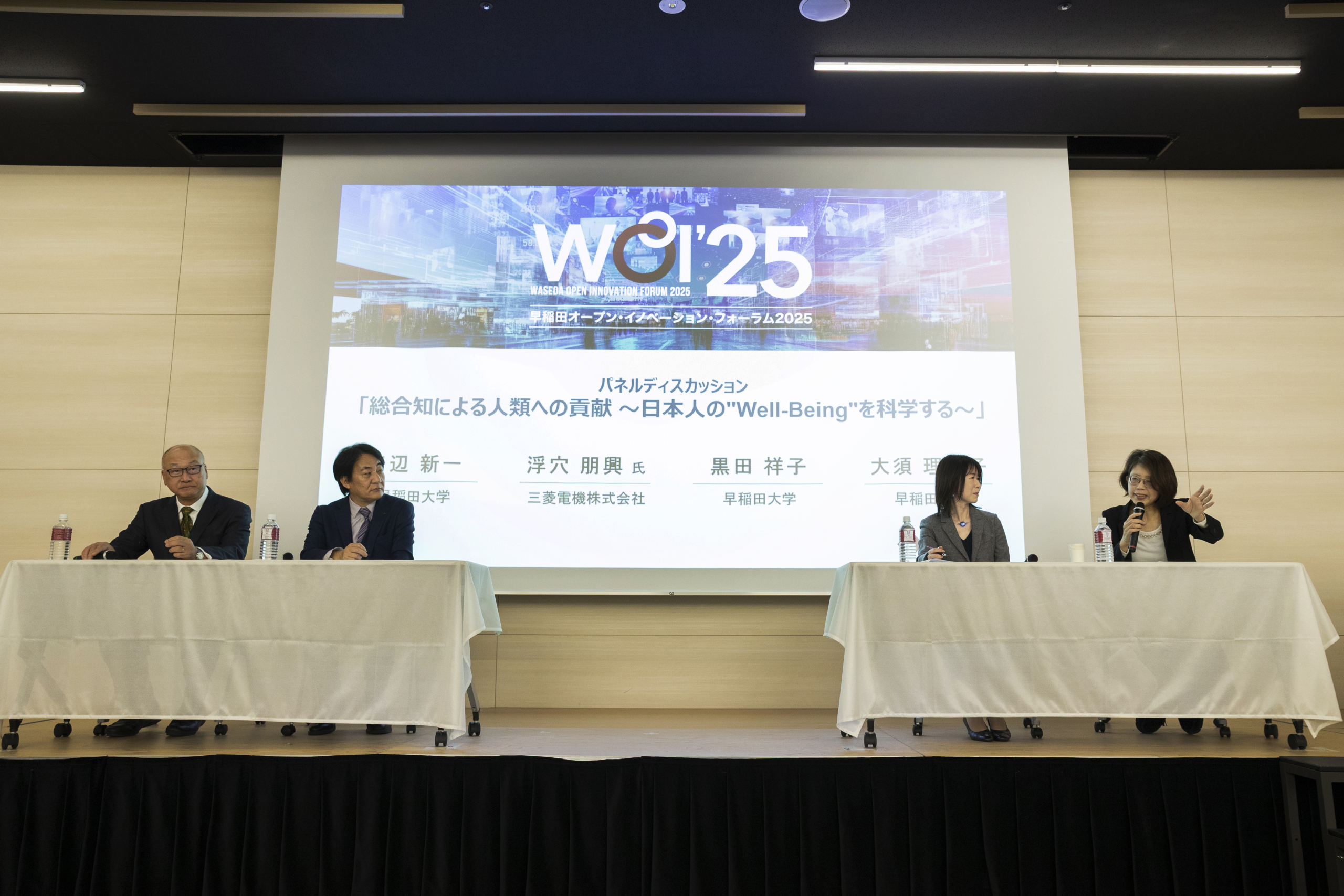
“Contributing to Humanity Through the Convergence of Knowledge: Exploring the Science of Japanese Well-Being” panel discussion
The first session featured presentations and a panel discussion with the theme “Contributing to Humanity Through the Convergence of Knowledge: Exploring the Science of Japanese Well-Being.” Sachiko Kuroda, professor at the Faculty of Education and Integrated Arts and Sciences , Professor Rieko Osu from the Faculty of Human Sciences, and Tomoaki Ukiana from the Information Technology R&D Center, Mitsubishi Electric Corporation were the guest speakers, and Shinichi Tanabe, professor at the Faculty of Science and Engineering , served as the facilitator. Ukiana shared the company’s ongoing projects aimed at achieving net-zero energy and supporting a carbon-neutral society. Prof. Kuroda and Prof. Osu shared findings from their research in labor economics and neuroscience, respectively, offering insights that can help us better understand the challenges related to people’s well-being.
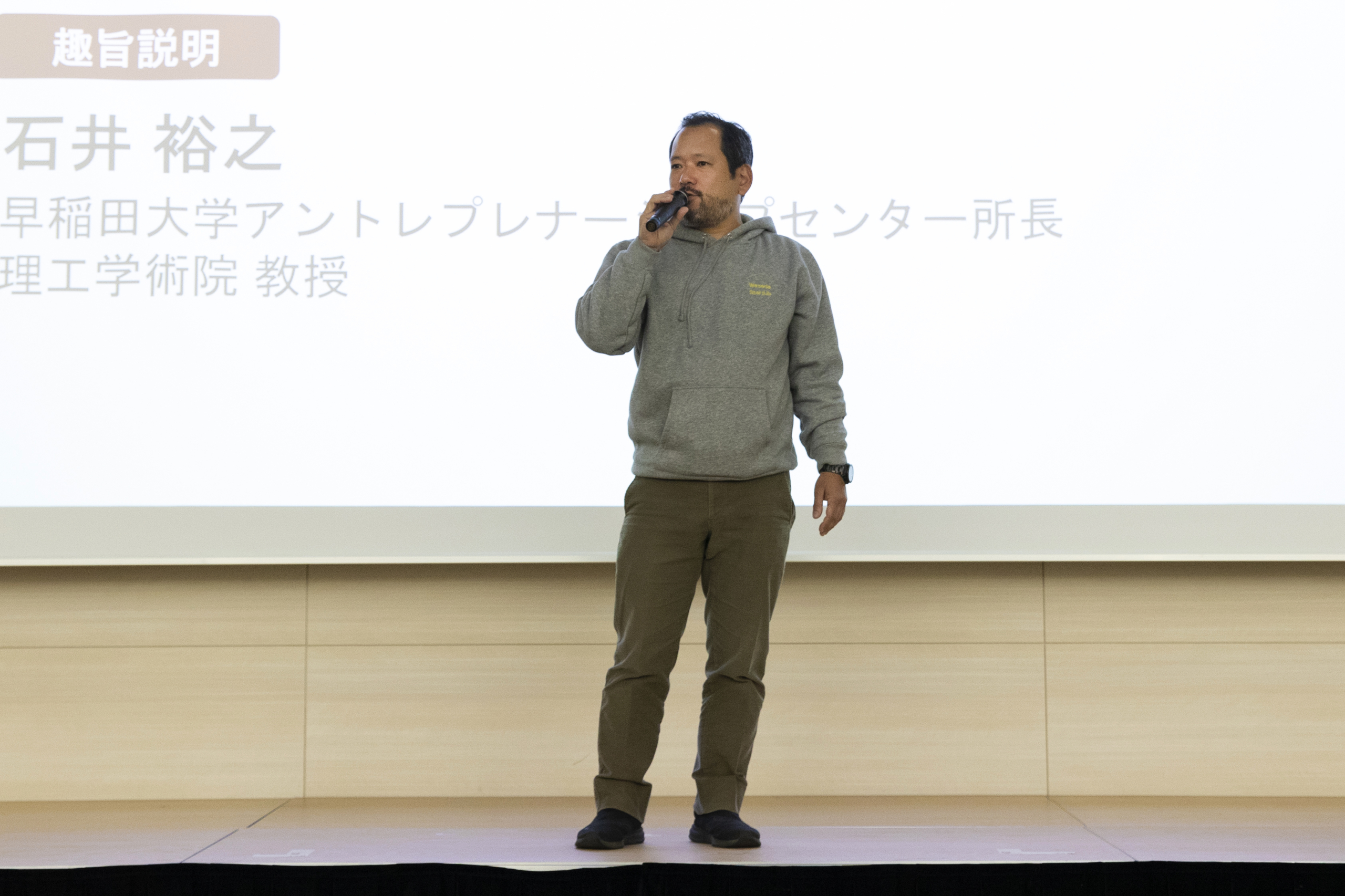
Hiroyuki Ishii, the Director of the Waseda Center for Entrepreneurship
The second session featured presentations by representatives of startups originating from Waseda, who introduced their business missions and activities, following a keynote address by Professor Hiroyuki Ishii from the Center for Entrepreneurship. These startups included student- and alumni-led ventures such as Kotoba Samurai, which provides AI-based operational services, and Urth, which aims to innovate Japan’s architecture industry. Researcher-led startups were also introduced, including VETA, which offers decision-support services based on the latest social science findings, and Pestalozzi Technology, which provides healthcare support using fitness data. After each presentation, Satoko Ohno, partner of WASEDA University Ventures, Inc. appeared on the podium as a commentator. Their presentations demonstrated how they identify and address social needs through their research interests, and how they apply data and AI to fill gaps across different markets.
The third session featured presentations under the theme “Toward Co-creating Innovation Through Comprehensive Industry–Academia Collaboration” organized by the Waseda Center for a Carbon Neutral Society. Yasuhiro Hayashi and Haruko Takeyama, professors at the Faculty of Science and Engineering, Satoru Shimokawa, professor at the Faculty of Political Science and Economics, Kenichi Fujino from the Kansai Electric Power Company, Incorporated, Haruhiko Miyagawa from Shimadzu Corporation, and Kitaro Mizuide from Nikken Sekkei Ltd. were invited to the stage. The speakers shared insights from their collaborative projects, discussed the technologies they have developed, and highlighted the educational innovations they have implemented.
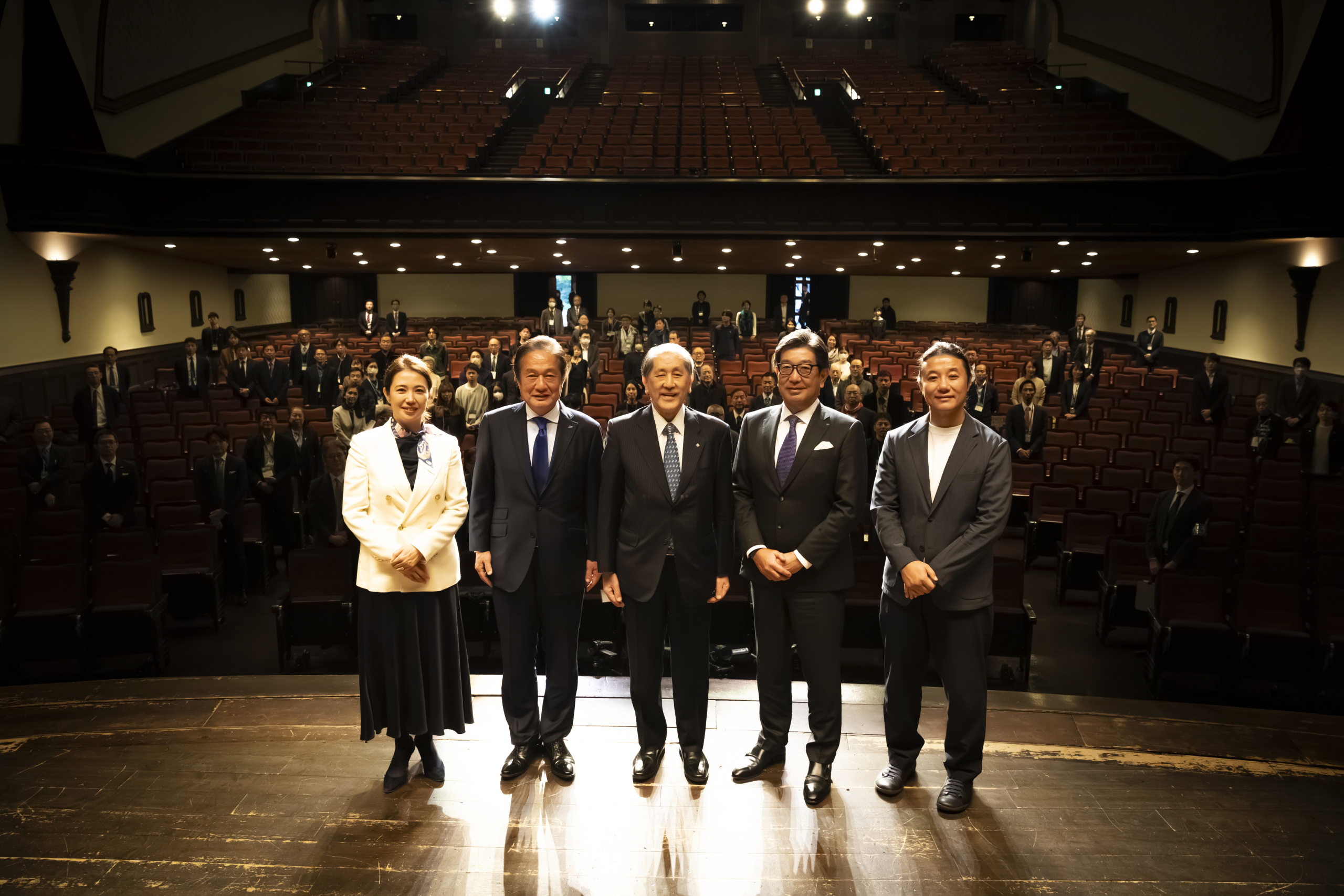
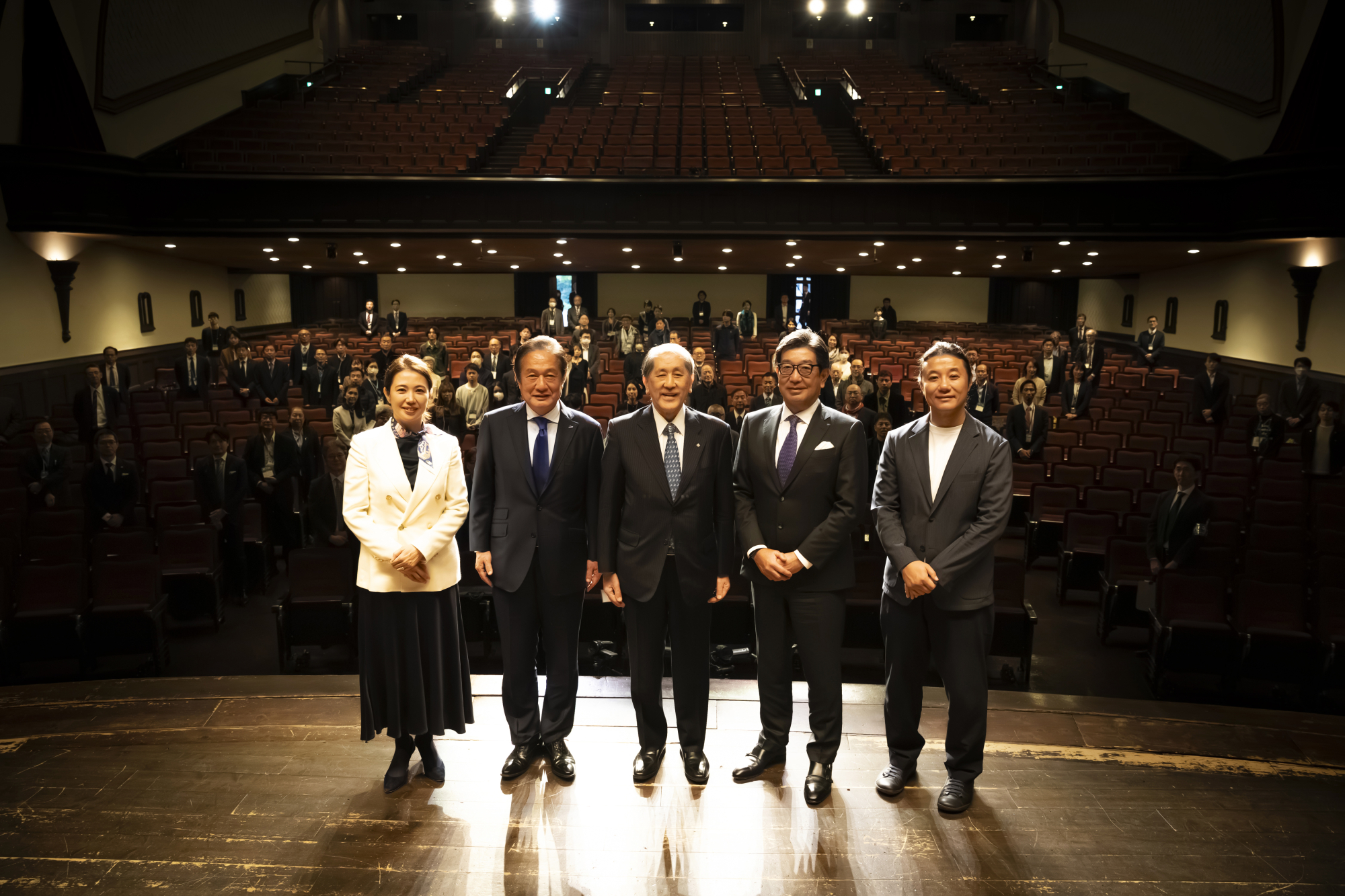
From left to right: Yoko Nakai, former CEO of Adobe KK; Shinichi Inoue, President and CEO of All Nippon Airways Co., Ltd.; Aiji Tanaka, President of Waseda University; Keita Ishii, President and COO of Itochu Corporation; Akie Iriyama, professor at the Graduate School of Business and Finance
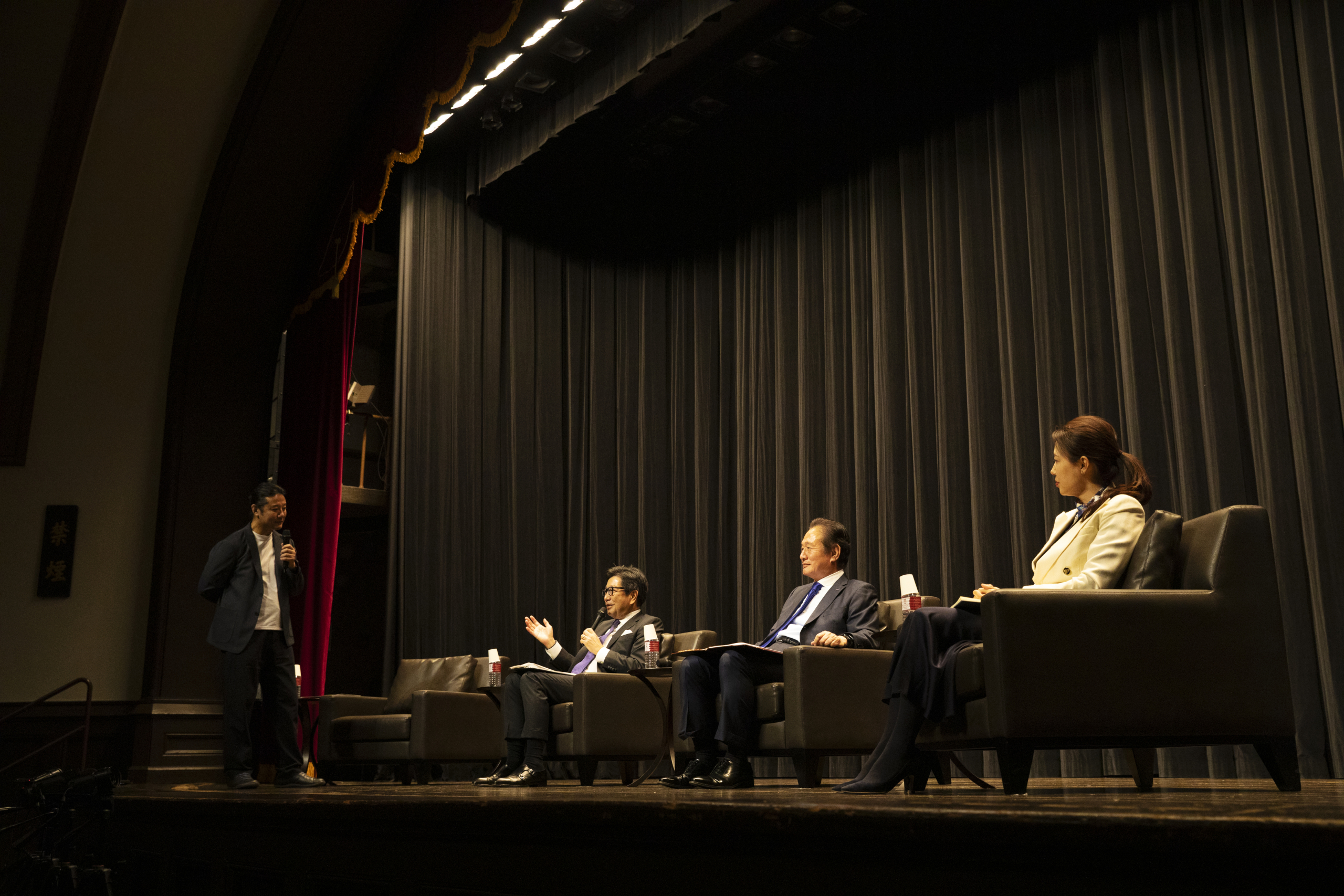
Waseda Leaders Forum
The fourth session was a roundtable talk titled “Waseda Leaders Forum,” where Keita Ishii, President and COO of Itochu Corporation, Shinichi Inoue, President and CEO of All Nippon Airways Co., Ltd., and Yoko Nakai, former CEO of Adobe KK, were the guest speakers, and Akie Iriyama, professor at the Graduate School of Business and Finance, served as the facilitator. Their discussion focused on various applications of AI in business practices, and they explored both current trends and future opportunities of AI.
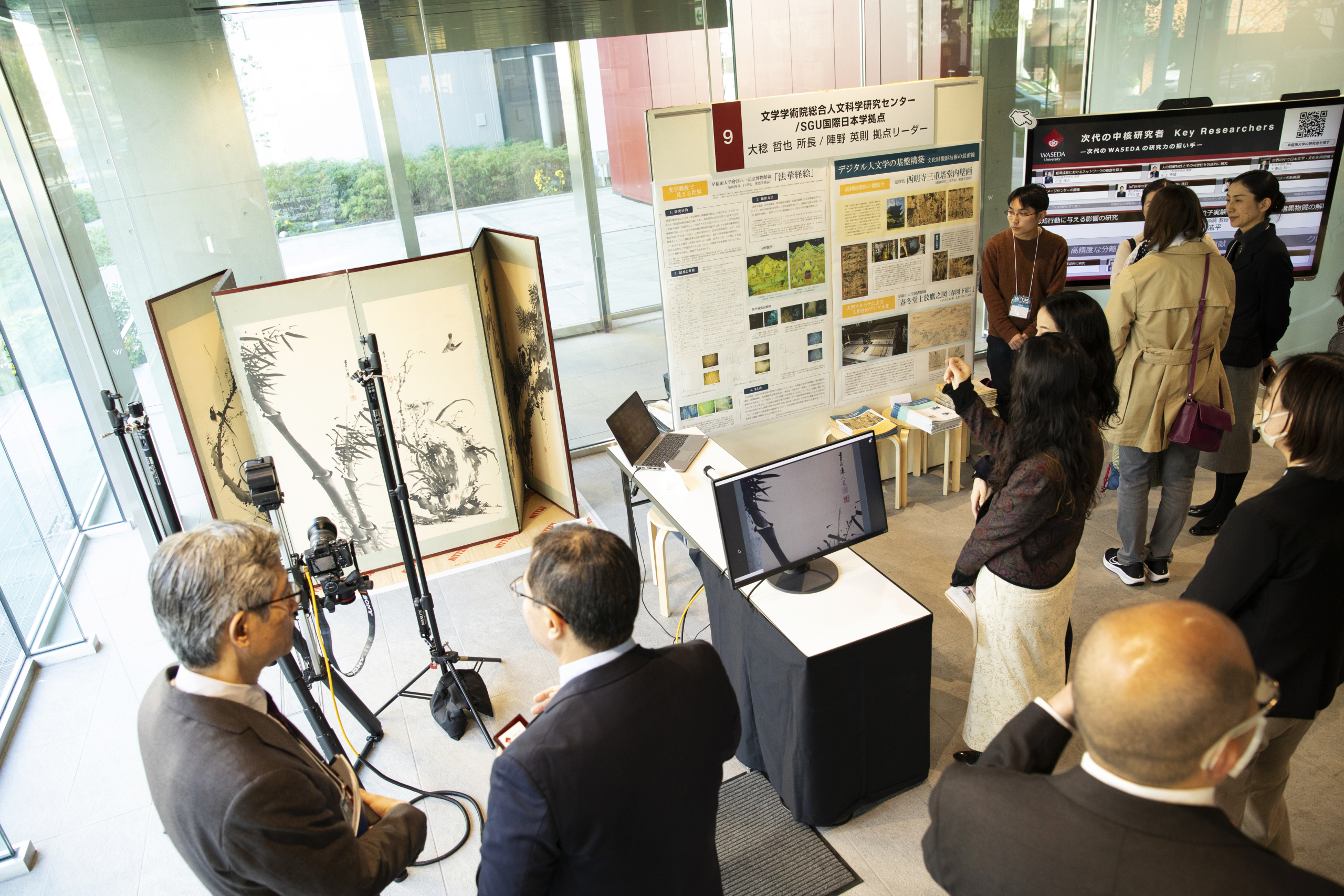
A scene from the poster session
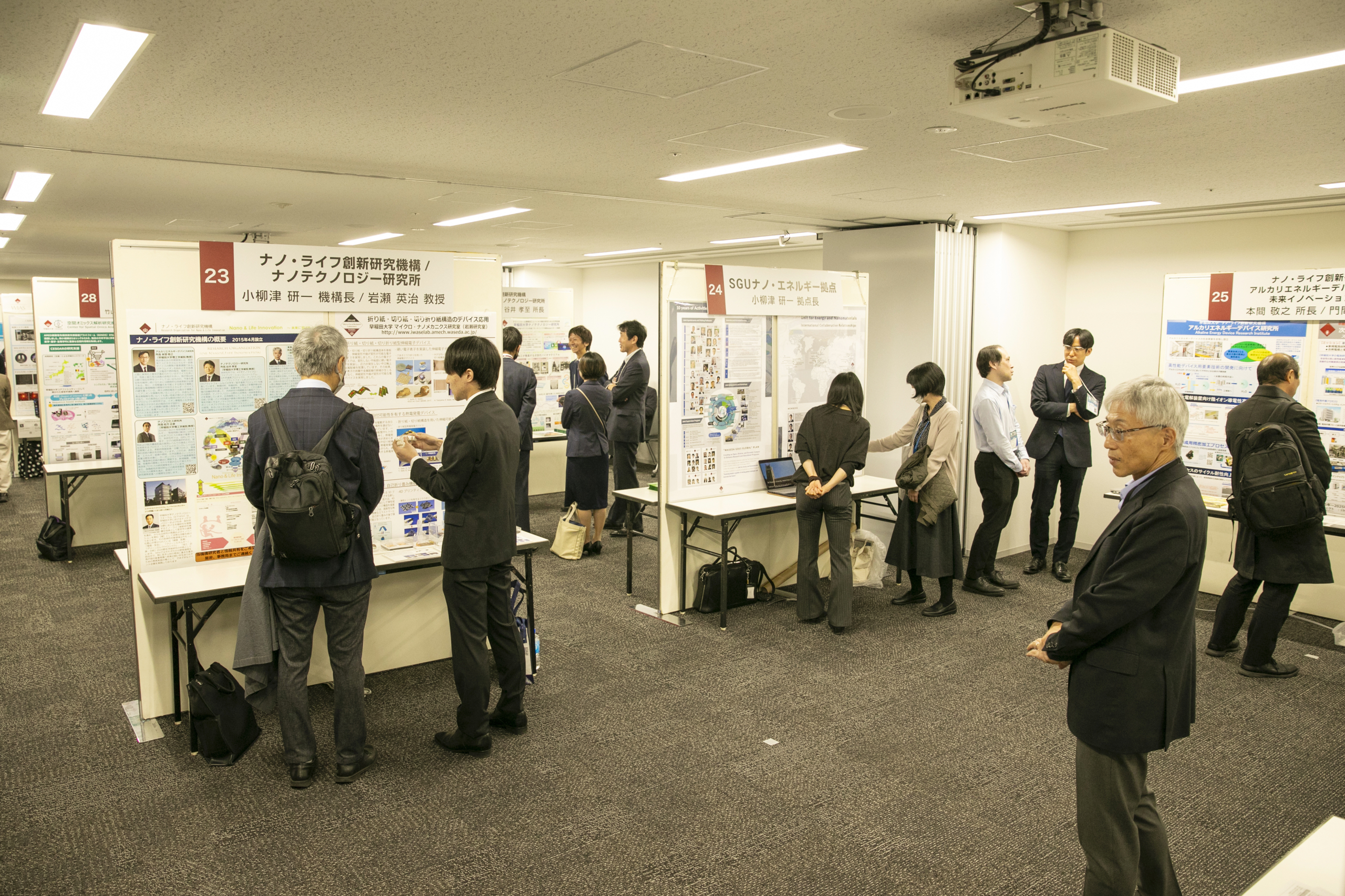
The lively poster session
Apart from the four main sessions, two networking sessions were organized in the Research Innovation Center during lunchtime and after the “Waseda Leaders Forum.” In the format of poster presentations, researchers from Waseda’s various organizations —such as the Kagami Memorial Research Institute for Materials Science and Technology, Green Computing Systems Research Organization, Research Organization for Nano & Life Innovation, Future Robotics Organization, Advanced Collaborative Research Organization for Smart Society, and the Waseda Institute for Sport Sciences — shared their research outcomes with participants.
Through a series of presentations, panel discussions, and networking sessions, the WOI ’25 offered an invaluable opportunity for researchers, professionals, and ventures to share their knowledge and experience, discuss social issues from interdisciplinary perspectives, and interact with one another. At the same time, the forum enabled both offline and online participants to learn about the developments in academia and industry that are shaping our society and the contributions of academia-industry collaboration and interdisciplinary research to technological progress, social innovation, and human well-being.
This article was written by the following Student Contributor:
Peter Chai (Kai Shibata)
Graduate School of Political Science