Myosin XI-1: A Key Molecular Target for Salt-Tolerant Crops
Mon, Dec 8, 2025-
Tags
Myosin XI-1: A Key Molecular Target for Salt-Tolerant Crops
Motor protein significantly regulates adaptation to salt stress through the intracellular Na⁺ homeostasis mechanism
Salt stress is a major factor that impairs plant growth and yield. In a breakthrough, researchers from Waseda University have revealed that Arabidopsis thaliana myosin XI-1—a member of the motor protein myosin XI—significantly regulates adaptation to salt stress via intracellular sodium ion (Na⁺) homeostasis. It can thus serve as a promising molecular target for the development of salt-tolerant crops, contributing to sustainable farming in saline-affected regions.
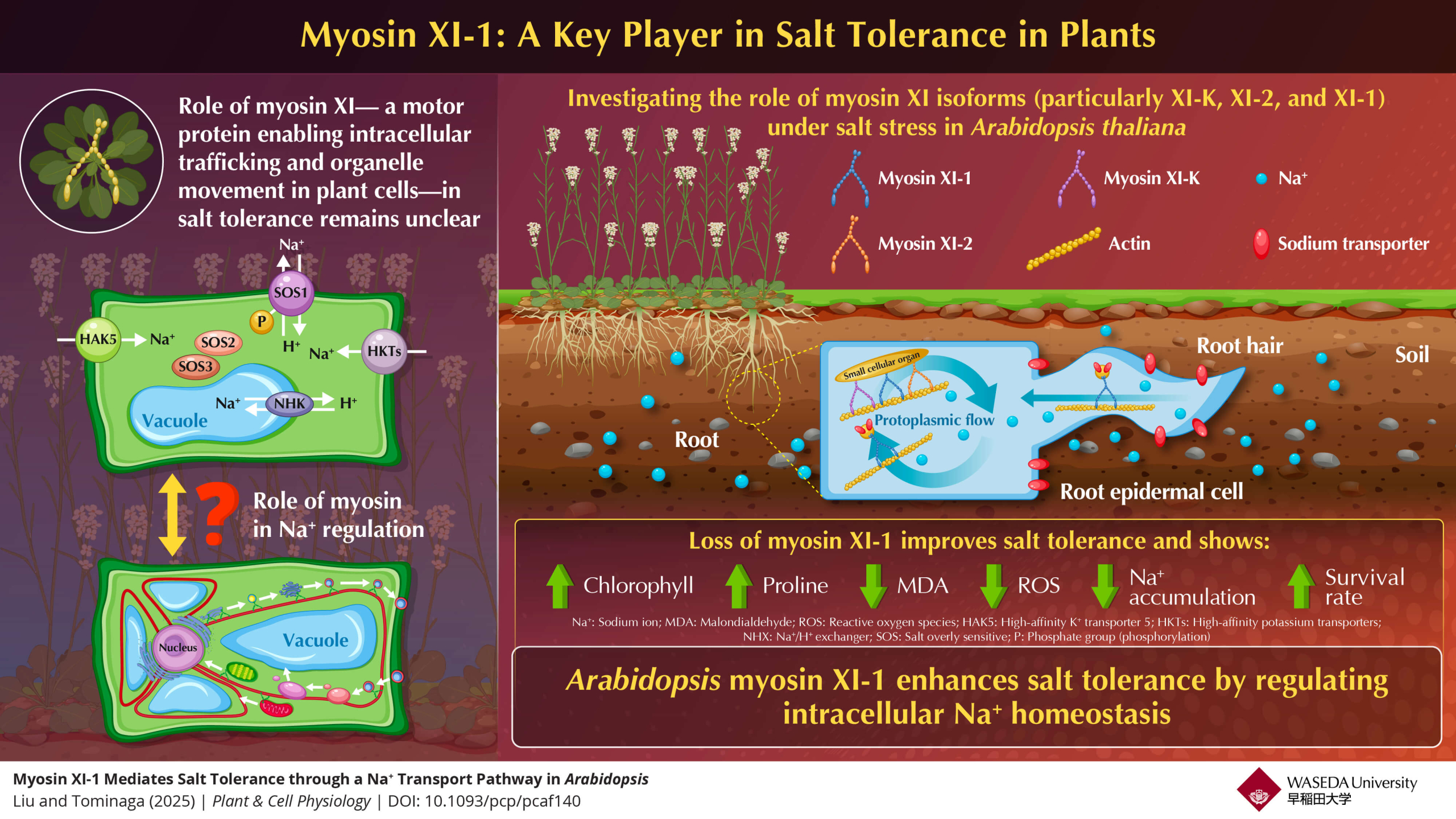
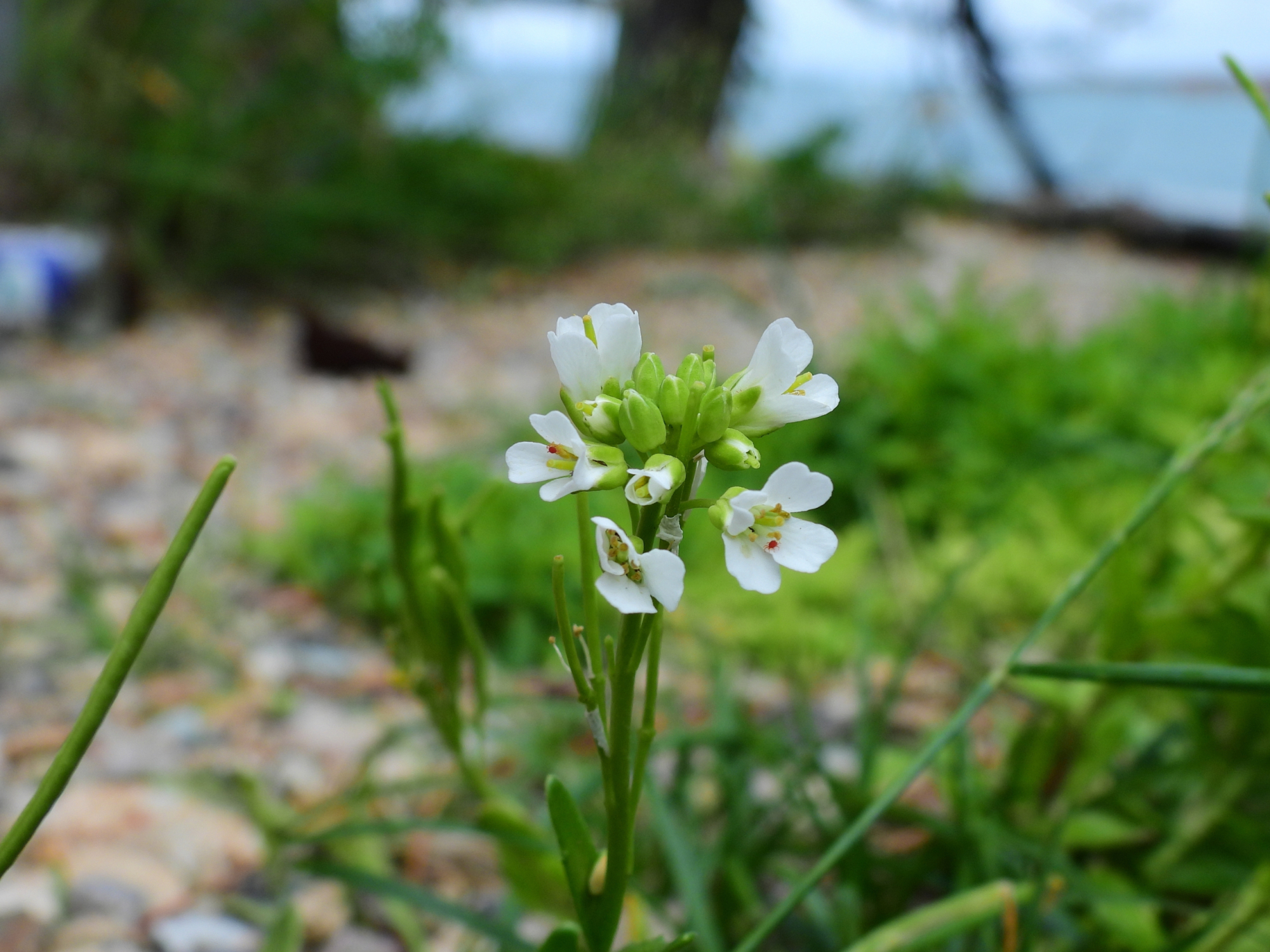
Image title: Function of Myosin XI-1 in Salt Tolerance
Image caption: The motor protein mediates salt tolerance via a Na⁺ transport pathway in Arabidopsis.
Image credit: Haiyang Liu from Waseda University, Japan
License type: Original content
Usage restrictions: Cannot be reused without permission.
Soil salinity is a key abiotic stress factor. Salt stress substantially impairs plant growth, development, and productivity, significantly reducing crop yields worldwide. It induces various kinds of stress in plant organs, including toxic ion accumulation, oxidative stress, and osmotic stress. Notably, high sodium ion (Na⁺) levels affect protein synthesis, photosynthetic efficiency, nutrient homeostasis, and enzyme activities, causing long-term damage to plants.
Therefore, it is crucial to investigate the molecular mechanisms underlying salt tolerance. Recently, scientists have implicated myosin XI, a motor protein that primarily facilitates intracellular trafficking and organelle movement in plant cells, in abiotic stress responses. However, its specific role in salt tolerance remains poorly understood.
Recently, researchers from Waseda University—PhD student Haiyang Liu from the Graduate School of Science and Engineering and Professor Motoki Tominaga from the Faculty of Education and Integrated Arts and Sciences, School of Education—have revealed that the expression of three members, AtXI-K, AtXI-2, and AtXI-1, known as the main drivers of cytoplasmic streaming, was altered under salt stress conditions. Among these, they discovered that only the loss-of-function mutant of AtXI-1 exhibited higher salt tolerance compared to the wild-type (WT). Their insightful findings were made available online and have been published in the journal Plant & Cell Physiology on October 27, 2025.
Liu discusses the motivation behind their present research by stating, “This research was driven by the goal of understanding how plants maintain cellular organization under extreme environmental stress. While motor proteins such as myosin XI have been hypothesized to regulate ion balance, this possibility has remained largely unexplored.”
The team found that the triple mutant (3ko), as well as the single atxi-1 mutant, exhibited improved salt tolerance. In contrast, the salt tolerance of atxi-k, atxi-2, and the double mutant (2ko) lines was not significantly different from that of the WT Arabidopsis plants. This observation points to a particular role of AtXI-1 in modulating salt tolerance.
Further investigations revealed that the atxi-1 plants accumulated lower amounts of Na⁺, while maintaining higher levels of chlorophyll and proline under salt stress conditions, in comparison to their WT counterparts. However, 3ko lines exhibited low seed germination under salt stress, indicating a stage-specific tolerance mechanism.
Considering all the above insights, the researchers propose that Arabidopsis myosin XI-1 substantially regulates adaptation to salt stress, likely via the intracellular Na⁺ homeostasis mechanism. These findings suggest functional diversification among myosin XI members and provide valuable insights into myosin XI-mediated stress responses, identifying potential targets for enhancing crop resilience to salinity.
“Our work offers a new strategy for improving crop salt tolerance by targeting myosin XI function. This could enable the development of salt-resilient cultivars suited for saline soils, contributing to sustainable agriculture under climate stress. This research addresses the global challenge of soil salinization, which threatens agricultural productivity and food security. By uncovering a novel role for myosin XI in regulating Na⁺ homeostasis, it offers a molecular target for developing salt-tolerant crops, contributing to sustainable farming in saline-affected regions,” concludes Liu, highlighting the potential real-life applications of their breakthrough study.
By revealing how myosin XI-1 contributes to salt tolerance, this research advances the molecular understanding of plant stress responses and offers a promising direction for developing resilient crops through targeted genetic and physiological studies.
Reference
Title of original paper: Myosin XI-1 Mediates Salt Tolerance Through a Na+ Transport Pathway in Arabidopsis
DOI:10.1093/pcp/pcaf140
Journal: Plant & Cell Physiology
Article Publication Date: 27 October 2025
Authors: Haiyang Liu1 and Motoki Tominaga2
Affiliation:
1Graduate School of Science and Engineering, Waseda University, Japan
2Faculty of Education and Integrated Arts and Sciences, Waseda University, Japan
About Haiyang Liu from Waseda University
Haiyang Liu, the first author of this study, is a PhD student at the Graduate School of Science and Engineering at Waseda University, Japan. His research interest lies in the study of myosin XI, a key player in plant drought defense, boron uptake, and salt tolerance. He has authored three papers on these topics with Motoki Tominaga, the corresponding author of this study, a professor at the Faculty of Education and Integrated Arts and Sciences at the School of Education at Waseda University.