<<前回記事:協定機関である独コンスタンツ大学高等研究所との研究者相互派遣プログラムを開始しました
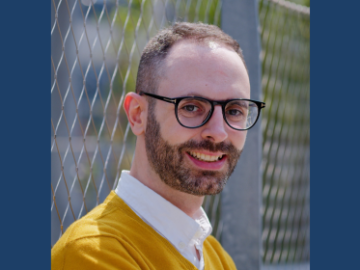
早稲田大学高等研究所は、本年度より当研究所の協定機関であるZukunftskolleg(ドイツ・コンスタンツ大学高等研究所。略称:ZUKO)と、研究交流を目的とした所属研究者の相互派遣を開始しました。当記事では、本プログラム第1号利用者として現在ZUKOに滞在中のロメスヴィンケル ヘンドリック 准教授より、現地での研究活動や日々の生活についてご紹介します。
独・コンスタンツ大学高等研究所 研究者相互派遣プログラムレポート 第2弾(ロメスヴィンケル ヘンドリック 准教授)
Talks and Presentations
I gave several presentations on my current work during the time in Konstanz. Already in the first week after I arrived, I presented a parsimonious decision theory of greenwashing at the nearby Karlsruhe Institute of Technology on invitation by Professor Clemens Puppe. I also presented this project in January in the Zukunftskolleg and in the Normative Economics and Economic Policy Online Seminar. From the feedback of the interdisciplinary audience at ZUKO and the economic theorists in the other seminars, I gained useful insights on how to improve the research paper.
At the Thurgauer Institute of Economics, an associated institute of the University of Konstanz, I presented our experimental design for modeling decision times and received valuable feedback on some last changes before running pilot studies of the experiment in the Lakelab. Some of the information displayed was simplified after the feedback and we are still working on developing econometric techniques that allow us to reduce the number of decisions (and thus, lab time) we need from our test subjects.
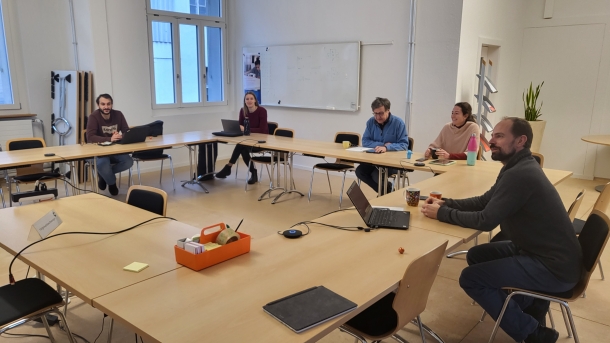
Research meeting at the Thurgauer Institute of Economics.
Research Meetings
I joined the weekly meetings of the chair of Urs Fischbacher. Here we discussed issues regarding the lab, upcoming experiments, and so on. A new experience for me was the “elevator talks”: every week, one participant gets randomly selected to give a 3-minute research presentation without preparation. This is a very good practice and I hope to implement this in my own research meetings in the future.
I also had meetings with the GameLab at the University of Konstanz who had interesting ideas for industry collaboration with software producers and for alternative methods of testing our research hypothesis on decision times.
At the Thurgauer Institute of Economics, I attended a one-day seminar on microeconomics and experimental economics.
Teaching
Throughout my visit, I was remotely teaching Game Theory I at Waseda University. That meant arriving in the office at 6 am every Tuesday – even on days where the university was shut down due to a snowstorm. I combined the (dreaded) Zoom lessons with more interactive formats with online scavenger hunts and students playing games in class. Still, after half a semester of online classes, I very much look forward to teaching in-person again next semester.
Programming
Together with my research assistant Ruohan Ma, we have been working on the programming code of the experiment. Thanks to modern tools like GitHub, collaborating on a programming project across continents is much easier than it used to be. We are programming the experiment in oTree using Python and JavaScript and use R for the evaluation of the results.
Pilot Studies
It was exciting when in the beginning of January finally the programming of the experiment was completed, and we started running pilot studies in the LakeLab of the University of Konstanz.
The experiment involves making decisions between products and we implemented these decisions by actually purchasing the products for the subjects. This is quite unusual, and I was worried that subjects might be dissatisfied with the compensation. But it turned out that test subjects were actually quite happy and even excited about the different form of compensation. We had technical issues in one session – 20 minutes before the session started the database of our web server locked up (as we later found out some maintenance was needed) and did not allow us to start the session. While this was frustrating, I had to remind myself that this is what pilot studies with few subjects are there for – to identify potential issues and avoid these when performing the experiment with more subjects.
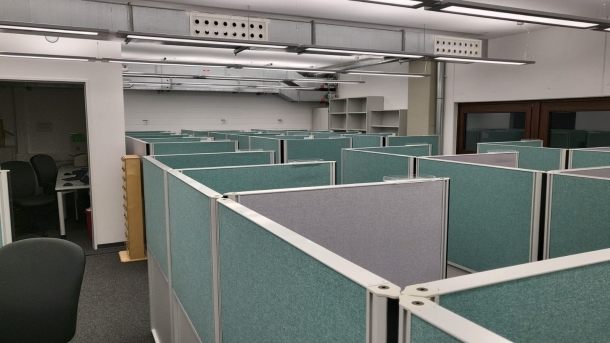
In this laboratory we conducted our pilots. Every subject has a separate workstation to complete the decisions and decision data is collected anonymously.
Daily Life
It snowed several times during our stay and the first time the snow was so heavy that public transit and the university were shut down for several days. Fallen trees were blocking roads and getting to university included a parkour run through a forest across fallen trees. Luckily, with the snow also comes the time for Christmas markets, cookies, and mulled wine. My family joined me on the research visit, and I was glad to share these traditions with them. Despite having less than 100,000 inhabitants, Konstanz has much to offer in terms of activities and sightseeing, and thus, my family was never bored.
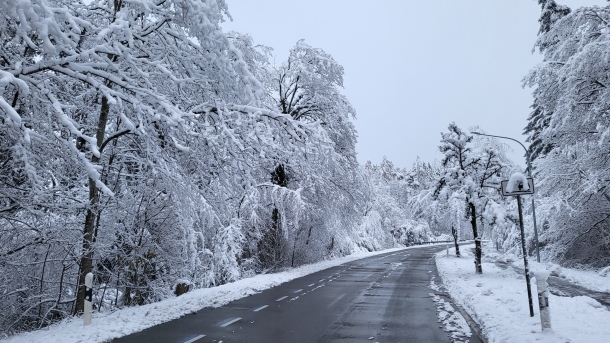
Snow storm created a beautiful scenery on the way up to university.
Future Plan
In the coming week I will set the final exam for the students at Waseda University. During the remainder of my visit, I still plan to conduct one further pilot study and visit my alma mater, University of St.Gallen, for a conference on environmental economics.
>>次回記事:独・コンスタンツ大学高等研究所 研究者相互派遣プログラムレポート 第3弾(ロメスヴィンケル ヘンドリック 准教授)