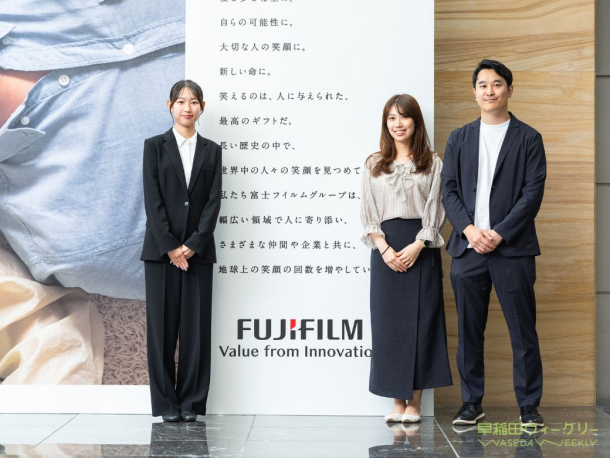
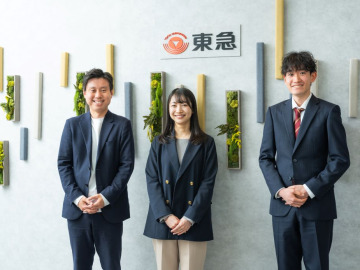
From left to right: student staff member Asaba, and employees Kidoguchi and Tanaka. At Fujifilm Holdings Corporation's Tokyo Midtown headquarters.
A wide range of business areas expands career possibilities
In job hunting, what kind of talent do employers look for, and what do they pay attention to in students? Also, what are the impressions of people who have actually joined the company? These are questions that many students are curious about. So, this time, Asaba, a student reporter for Waseda Weekly, interviewed the HR recruitment staff and young employees of Fujifilm Holdings Corporation (hereinafter referred to as Fujifilm) to ask them questions about job hunting.
Fujifilm has leveraged its long-cultivated photographic film technology to pioneer diverse businesses and has continued to grow by adapting to changing times. Asaba felt that Fujifilm is a company that creates opportunities for young people to take on challenges and is not afraid of change, and is active on a global scale.
Fujifilm Holdings Corporation
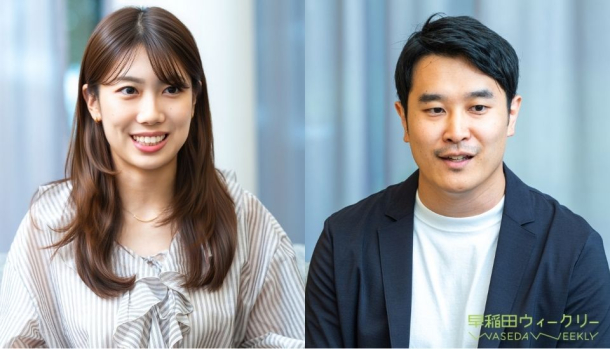
From left to right: Kidoguchi, Tanaka
Personnel Division, Administrative Recruitment Group
Mikiko Kidoguchi (graduated from School of Commerce in 2024)
Medical Systems Division, Endoscopy Systems Department
Jindai Tanaka (graduated from School of Social Sciences in 2021)
We are transforming our business through technology and human resources, and entrusting young employees with significant challenges.
Asaba: Could you tell us about the characteristics and strengths of working at Fujifilm, a company with a history of over 90 years?
Kidoguchi: First of all, I'd like to mention that there's an environment where young employees are entrusted with significant responsibilities. For example, a marketer in charge of overseas markets might interact directly with local subsidiaries, so there's a possibility to take on work with great responsibility, regardless of seniority.

Tanaka: I myself was put in charge of supply and demand operations at the factory after about 3-4 months of joining the company, and I was entrusted with moderating meetings with overseas factories. My superiors were present, but basically entrusted the proceedings to me, and only offered help when I was really in trouble. Even when I was entrusted with responsible work and faced things I didn't understand, my kind and compassionate senior colleagues responded with genuine care, so it's an environment where I can move forward with confidence.
Kidoguchi: The reason there are so many opportunities for challenges is because of the breadth of our business. Our business areas are diverse, including "healthcare," "electronics," "imaging," and "business innovation," and there are various job roles within each of them. We encourage employees to broaden their experience and grow through job rotations that go beyond fixed transfer schedules and transcend business and job roles.
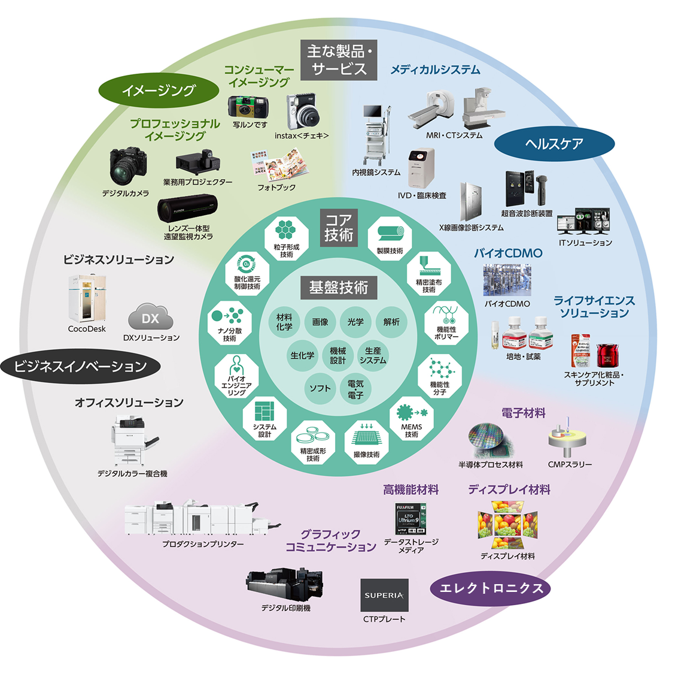
Fujifilm's four business areas (Click to enlarge)
Furthermore, Fujifilm's strength lies in leveraging the technologies cultivated in its photographic film business and expanding into various business fields. For example, it utilizes antioxidant technology to prevent photo fading in cosmetics within its consumer healthcare business. Even as the film market shrinks due to rapid digitalization, the company has continued to grow by applying these core technologies to transform its business and by having employees proactively identify challenges.

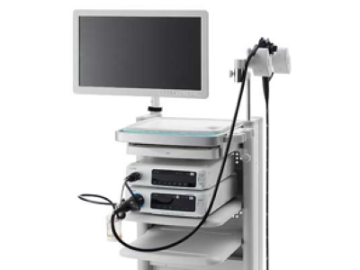
Photo on the left: "ASTALIFT," a cosmetics line created using film technology within the consumer healthcare business.
Photo on the right: Endoscope utilizing image analysis technology and expertise in the healthcare field, which the company has been involved in since 1936.
Another strength is our global presence. We have over 250 consolidated subsidiaries worldwide, and through our local subsidiaries and distributors, we are able to provide production, sales, and services that meet the diverse needs of each country.
Asaba: What kind of unique talent development initiatives does Fujifilm have that are constantly evolving and spreading globally?
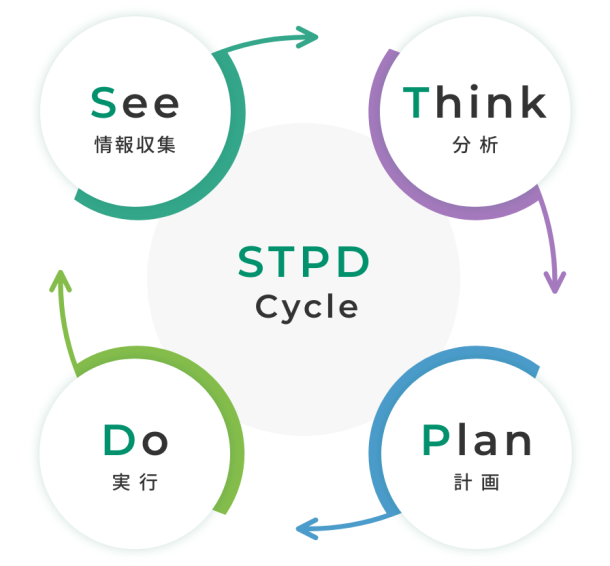
Kidoguchi: First, in order to acquire the foundation of the job, there is training in our unique management cycle, "STPD." Manufacturers cannot create new value unless they not only have technical capabilities, but also the ability to clarify "what the essential problem is" and give it shape using technology. That's where "STPD" comes in, and we ensure that new employees thoroughly acquire this way of thinking through new employee training, on-the-job training, and promotion exams.
We also have a growth support program called "+STORY." At Fujifilm, we believe that all work experiences become valuable assets, and we value the importance of reflecting on those experiences and using the insights gained to drive future challenges. To that end, we provide support through "+STORY Dialogue," where employees reflect on their experiences with their supervisors once a year, and the "+STORY Challenge System," an internal recruitment program that allows employees to take on new job roles.
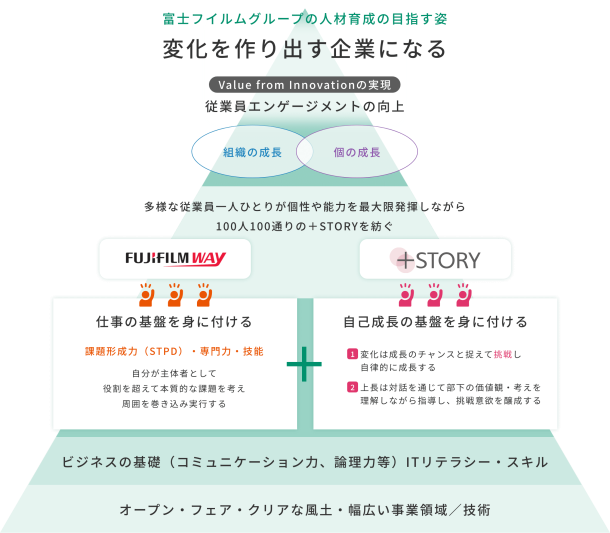
Fujifilm's approach to talent development. Learn more here.
I want to work with people who can identify problems and take action on a global stage.
Asaba: Tanaka, could you tell us about your current job and your job search back then?
Tanaka: While working at the factory in the business innovation area, I wanted to learn about the atmosphere of other business divisions, so I applied for the "+STORY Challenge Program" and transferred to the Medical Systems Division in the healthcare area. Currently, I am in charge of marketing for the endoscope business in the Indian market. When problems arise in the local subsidiary's sales of endoscopes and inquiries come in that cannot be resolved locally, I work with relevant parties to resolve them.
 During my job search, I didn't narrow down my choices by industry or job type, but instead focused on finding a company where "the company culture suited me" and "the opportunity to work in a global environment." This was because I had lived in the United States and Australia for seven years as a child, making overseas travel familiar to me, and I also wanted to utilize my language skills, having studied English, Spanish, and Italian during my student years.
A major reason I decided to join Fujifilm was seeing how seriously and thoughtfully the senior employees answered students' questions during an employee Q&A session in my internship. I felt that "if I could work with these people, I would have a fulfilling professional life." The global environment was also what I hoped for; I communicate almost entirely in English with the local team in India, and I'm able to utilize my language skills in my daily work.
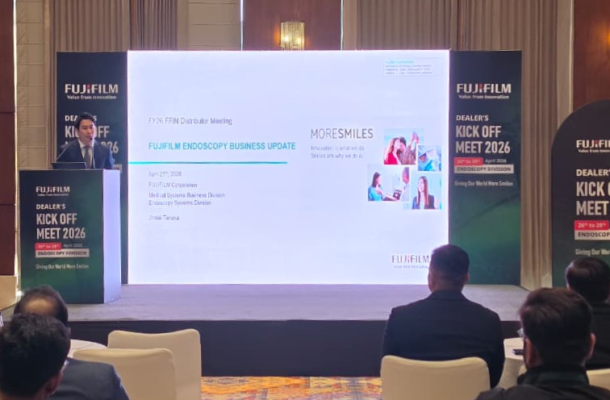
Tanaka traveled to India to attend an agency meeting and spoke at KICK OFF MEET 2026.
Asaba: What qualities and attitudes do you expect from students who aspire to work at Fujifilm?
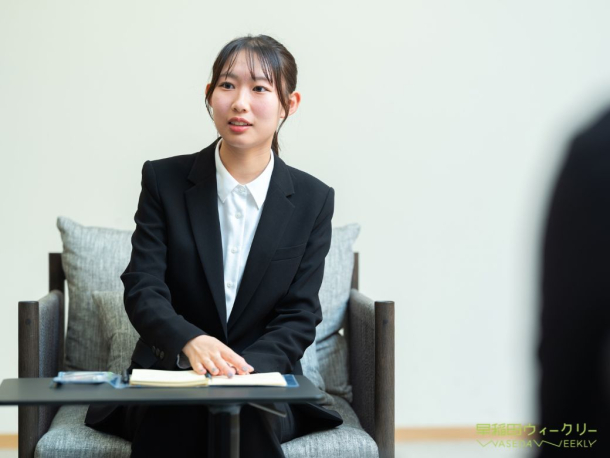
Kidoguchi: What we're looking for in both the technical and administrative generalist positions we're recruiting for is someone who possesses "Grow," "Think," "Passion," and "Courage." Therefore, in the selection process, we place more emphasis on the process—whether they have a strong desire to solve problems within the organization, think about the reasons behind them, and devise their own solutions—than on their achievements or titles. We are looking for someone who can take on organizational challenges as their own responsibility and take initiative to solve them.
We also place great importance on "flexibility to accept different values and changes." Fujifilm has a high percentage of sales overseas, and we work with people who have diverse values, so it's necessary to be able to accept others' perspectives and find common ground without being fixated on how things "should be." With that flexibility, you can view change as an opportunity and succeed globally in any business.

Asaba: Finally, do you have a message for the students?
Kidoguchi: Job hunting is a valuable time to confront your own life and find what you want to do, so don't narrow down your industry or company too much, and look at a wide range of companies that interest you. What's important is not just the facts about the systems and working styles, but "how you yourself feel about those facts." Please try to put it into words. I hope that you all can find a place where you feel, "I want to be a part of this organization!"
Tanaka: I highly recommend traveling abroad while you're still a student. I visited nearly 20 countries during my student days. Even after joining the company, I continue to travel, mainly in Europe and South America. Many companies are expanding globally, so I believe that overseas experiences and values will definitely be valuable in the future.
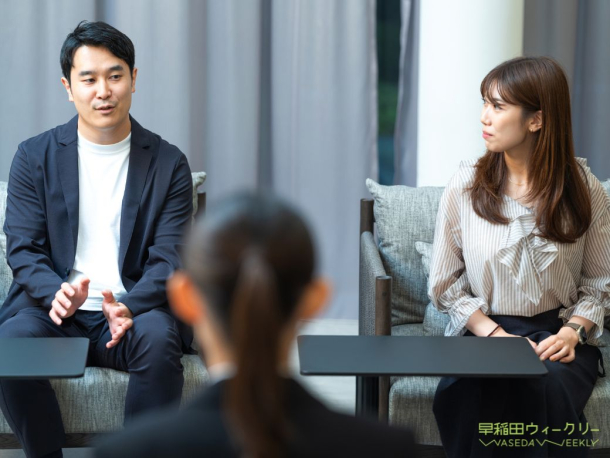
Interview and text: Kaori Sasuga
Photography: Kota Nunokawa
The value of continuing to take on challenges and new perspectives I learned through company visits
Maho Asaba, 2nd year student, School of Creative Science and Engineering
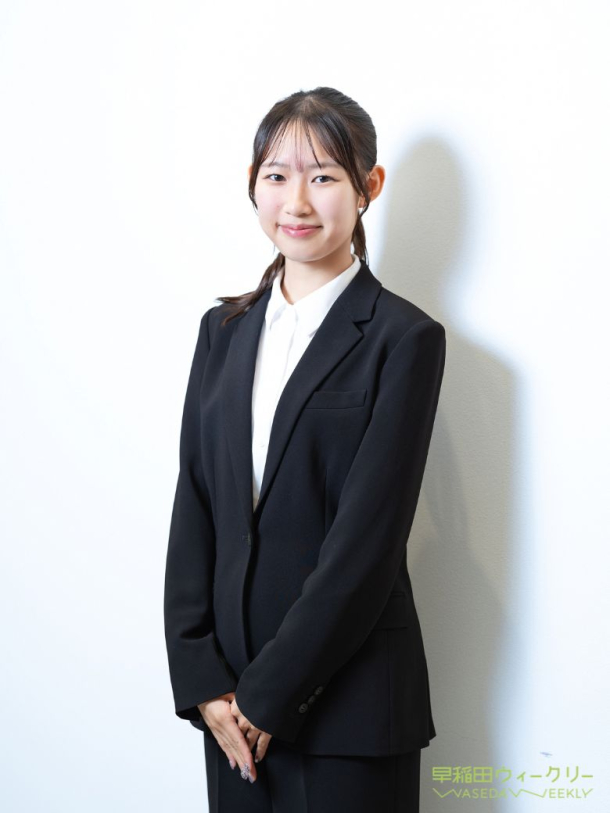
Through this visit, I was able to learn about Fujifilm's strength in expanding overseas in line with the needs of the times without fear of change. From the words I heard in the interview, "Maintaining the status quo is close to decline," I realized how deeply rooted their attitude of continuously challenging themselves across fields and their culture of entrusting big projects to young people are. And in this ever-changing era, I learned the importance of not being bound by fixed ideas and proactively changing.
Regarding job hunting, I gained a new perspective from the idea that when visiting companies, not only should you record the facts you see and hear, but also write down what you felt at the time, which can be used to compare companies.
![[Save version] Map of the four main campuses](https://www.waseda.jp/inst/weekly/assets/uploads/2026/06/110d605cfac40346aad1d2df464a6586-940x705-1-1-610x457.jpg)