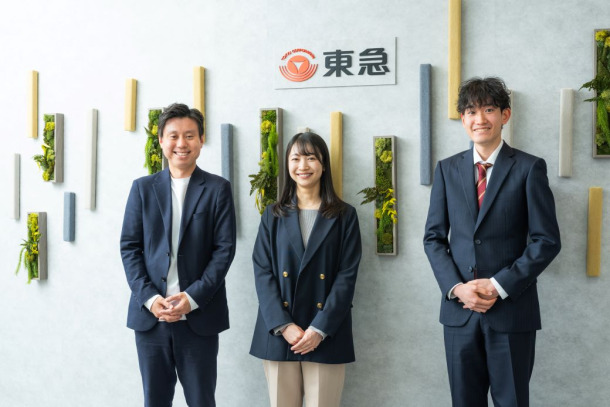
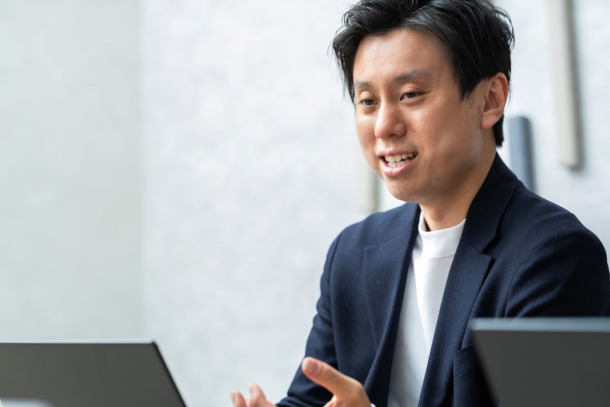
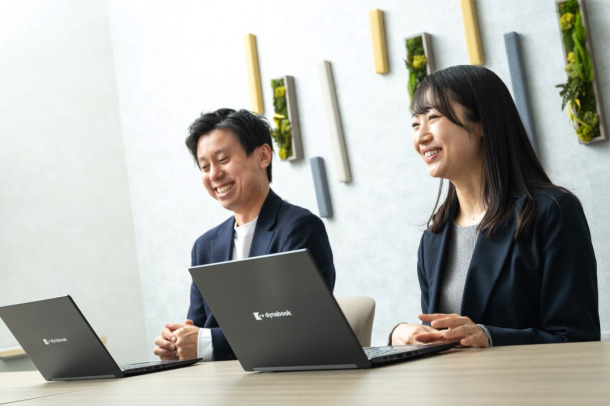
From left to right: employees Takei and Kawaguchi, and student staff member Terui. At Tokyu Corporation headquarters.
Creativity to generate value necessary for the city and the ability to take on challenges and move forward with diverse people are essential.
In job hunting, what kind of talent do employers look for, and what do they pay attention to in students? Also, what are the impressions of people who have actually joined the company? These are questions that many students are curious about. So, this time, Terui, a reporter for "Waseda Weekly" (SJC student staff), interviewed the HR recruitment staff and young employees of Tokyu Corporation to answer questions about job hunting.
Tokyu Corporation, which operates various businesses such as transportation infrastructure and urban development, mainly along the Tokyu railway lines, is involved in "community building." Terui felt that the company has an environment where even young employees can easily express their opinions and a corporate culture that encourages taking on challenges.
Tokyu Corporation
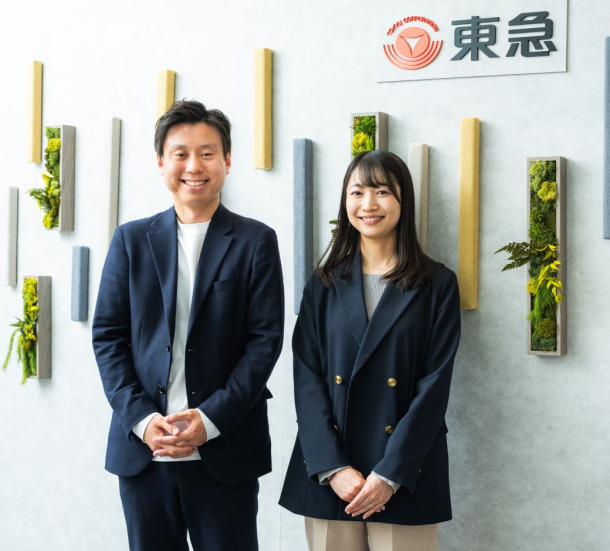
Human Resources Strategy Office, Career Development Group, Recruitment Center
Shun Takei (graduated from the School of Law in 2013)
Real Estate Management Division, Business Promotion Group 1, Office Planning Section
Erika Kawaguchi (graduated from the School of Law in 2019)
Tokyu's approach to community development involves sincerely engaging with local residents and developing the entire town together.
Terui: What are some of the unique strengths of Tokyu Corporation (hereinafter referred to as Tokyu), given its wide range of businesses?
Takei: The key is that we can develop the entire town over a long timescale, focusing on the areas along our railway lines. Although we are often perceived as a "railway company," our origins lie in being a "town development company" that developed suburban residential areas. As part of our town development efforts, we lay railway lines and combine multiple businesses such as real estate, lifestyle services, and hotels and resorts in addition to transportation, designing not just urban development, but people's lives themselves. We reinvest our diverse profits back into the community, growing sustainably together with the town and working to solve social issues.
Leveraging the expertise we've accumulated over 100 years in areas along our railway lines such as Denenchofu, Tama Den-en Toshi, Futako-Tamagawa, and Shibuya, we are now expanding our urban development projects overseas, including Binh Duong New City in Vietnam and Yanchep in Australia.
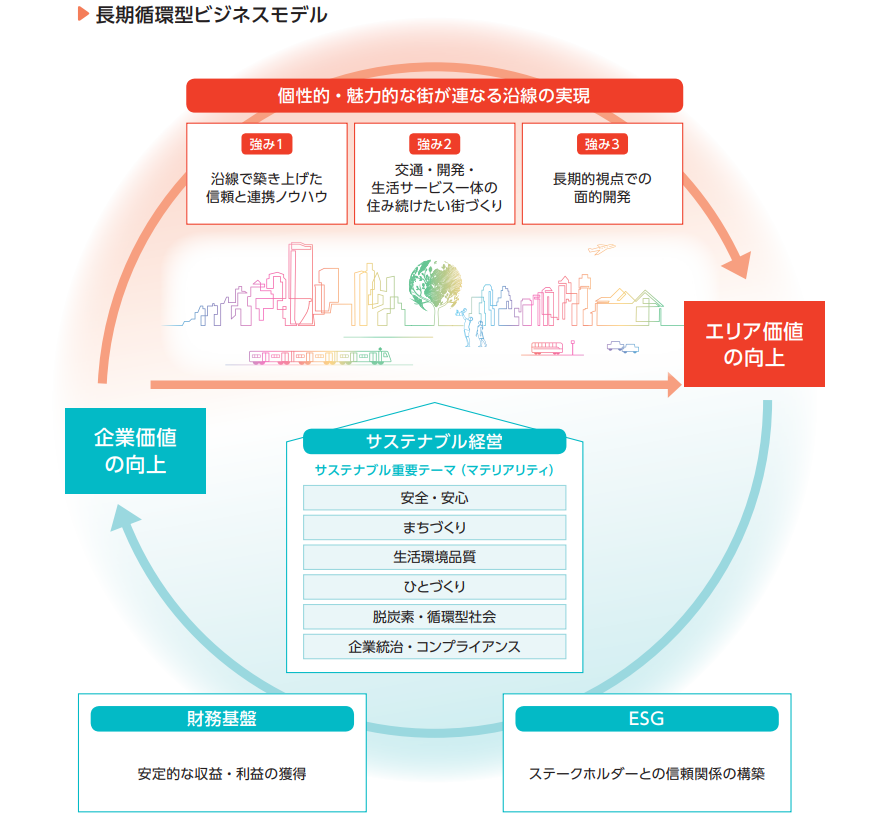
*Click to enlarge
Terui: Please tell us about the corporate culture that supports Tokyu's unique approach to urban development.
Takei: In a word, I think our company embodies both "sincerity" and a "spirit of challenge." Community development cannot be advanced without building careful dialogue with a diverse range of stakeholders, including local residents, government officials, and businesses. That's why our fundamental approach is to sincerely engage with stakeholders, understand their feelings, build trust, and work together to create value.
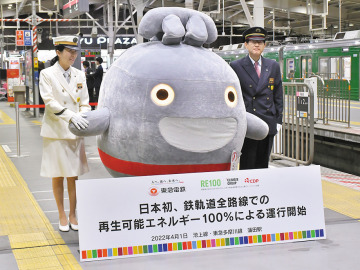
On the other hand, the company is by no means conservative, and there is an atmosphere within the company of "let's take on challenges even if there is no precedent." In the railway business, in 2020, it became the first major private railway company to complete the installation of platform doors and fixed platform fences with sensors at all stations, and in 2022, it became the first company in Japan to operate all lines using virtually 100% renewable energy, continuing to take on pioneering initiatives in the industry. Furthermore, in the Shibuya Station area redevelopment project currently underway, which is being called a "once-in-a-century" project, the company is taking on an unprecedented large-scale real estate development.
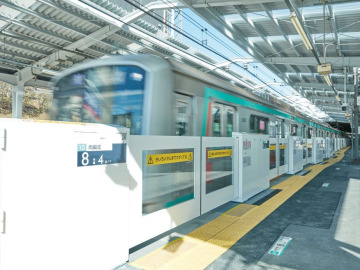
Left: Platform of a Tokyu Line station with platform screen doors installed.
Right: Photo taken when Tokyu Railway began operating on 100% renewable energy-derived electricity across all its lines.
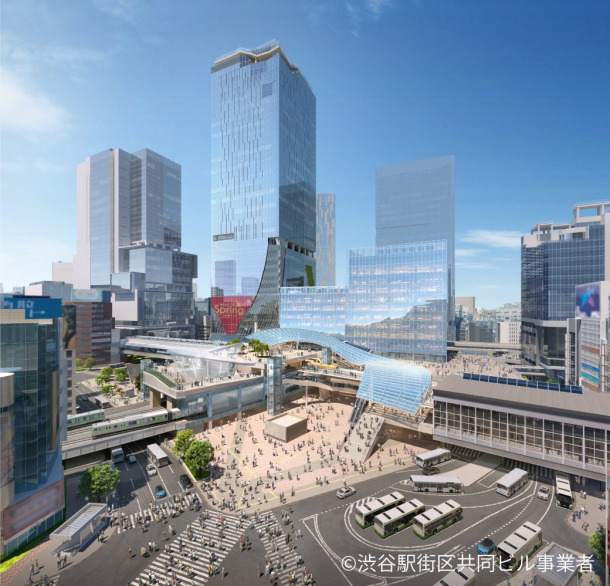
Shibuya Scramble Square Phase II (Central Building and West Building) and other redevelopment projects around Shibuya Station are underway.
Kawaguchi: In fact, I have the impression that there are many members in the company who are interested in change and new things. When a young employee suggests "I want to incorporate the latest trends," they are rarely rejected. Rather, there are many superiors and senior colleagues who are positive and supportive, and I feel that there is a culture that encourages taking on challenges.
What we look for in hiring is a passion for community development and the ability to drive it forward.
Terui: You joined the company as a general employee. What aspects of Tokyu attracted you?
Kawaguchi: I've always had a wide range of interests since my student days, and I enjoy working together with others to create things, so the railway industry, where I can be involved in various tasks and accomplish big things as part of a team, became my top choice. While researching the industry, I was drawn to Tokyu's challenging spirit and the passion of its employees, and I became determined to join Tokyu! Also, seeing senior female employees succeeding helped me envision my future, which was a big factor.

In preparation for the job interview, I actually walked along the lines of competing private railway companies to see the characteristics and differences of the towns with my own eyes. Through that experience, I made sure to convey my genuine enthusiasm for wanting to work for Tokyu.
Terui: What kind of career path have you followed since joining the company?
Kawaguchi: My initial assignment was in the Personnel Division, where I was in charge of recruiting new graduates. While learning about various businesses, I became interested in the real estate business and requested a transfer to the Real Estate Management Department. Currently, I am in charge of office leasing sales for properties managed by our company, such as "Shibuya Hikarie." I feel a great sense of accomplishment when a contract is finalized or when I can successfully negotiate and finalize the terms.
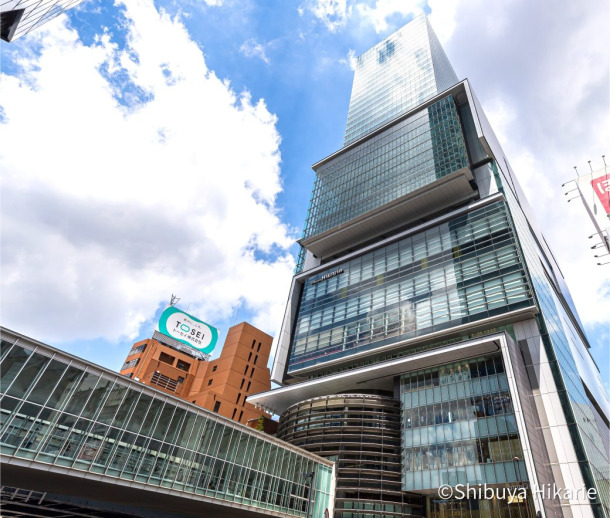
Shibuya Hikarie
Terui: So this is a company where you can communicate your career vision. Could you tell me what you particularly emphasize when hiring new graduates?
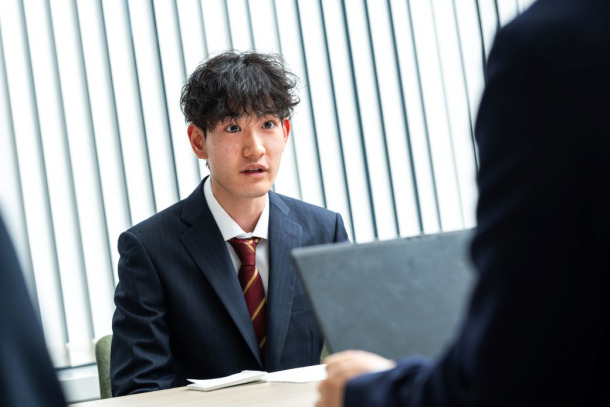
Takei: It's about the motivation behind wanting to do urban development at Tokyu. In addition, in urban development where there are no right answers, it's essential to have the flexibility to embrace change positively, continuously create the value necessary for the city, and the willingness to take on challenges and move forward with diverse stakeholders.
And most importantly, what matters most is the perseverance to see a town development project through to the end, a process that takes decades. Since the town is built through each individual completing their own phase and passing the baton to the next person, we are looking for people who can see things through to the very end.
There are two types of recruitment: the "General Course," which offers the possibility of being assigned to any department, and the "Guaranteed Initial Placement Course," which guarantees an initial placement in the career path you wish to pursue. Many people who want to utilize their expertise from their student days may choose the latter, but since both are general positions, please understand that the initial placement is not the end goal, and there is a possibility of being transferred to any department.
Kawaguchi: As a general employee, we gain experience in a wide range of tasks, so one of the interesting things about Tokyu is that all 40 of us who joined at the same time get together, we're all involved in almost completely different jobs. No two people have the same career path.
Terui: Finally, do you have a message for the students?
Takei: Because there is no single right answer in job hunting, I would like you to think about "what kind of future excites you" and "what kind of society you want to create." Tokyu's urban development is a job where you can experience firsthand how cities change, lifestyles change, and the future changes over a long timescale. I would like to work with people who find the possibility of influencing the future of cities 50 or 100 years from now exciting.
Kawaguchi: Job hunting is a valuable period to learn about various companies and their business models. Approach it positively and use it as an opportunity to broaden your horizons by learning about many companies. We look forward to welcoming those who find Tokyu appealing during that process.
Interview and text: Kaori Sasuga
Photography: Kota Nunokawa
We want to focus on whether there is an environment where employees can take on challenges and have opportunities for growth.
Yuichiro Terui, 2nd year student, School of Commerce
At Tokyu Corporation, I felt that there is an environment where even young employees can easily express their opinions, and that there is a corporate culture that encourages taking on challenges. Also, because they operate a diverse range of businesses such as railways, real estate, and lifestyle services, the opportunity to challenge myself in various roles through internal transfers was very appealing.
Through this discussion, I realized that when evaluating companies, it's important to consider not only the job content but also the environment and opportunities for growth that are available for employees to take on challenges. I want to be more mindful of the perspective of creating an environment where employees can grow while gaining experience through diverse tasks.
![[Save version] Map of the four main campuses](https://www.waseda.jp/inst/weekly/assets/uploads/2026/06/110d605cfac40346aad1d2df464a6586-940x705-1-1-610x457.jpg)