"Alcohol is not merely a luxury item; it also conveys history and culture."
Seichi Oishi, 4th year student, School of Political Science and Economics
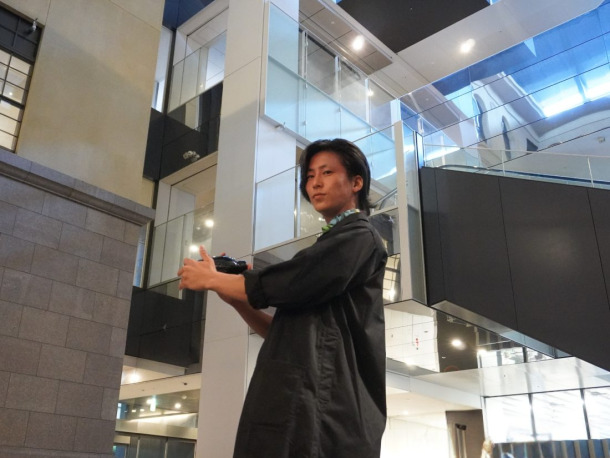
At Building 3 on Waseda Campus. Holding the shaker, the champion prize of the "Moon Shine Cocktail Competition 2025".
Oishi, who became seriously interested in alcoholic beverages around the age of 21, works part-time as a bartender at "THE HISAKA," a bar in Takadanobaba. In October 2024, he took a six-month leave of absence from school to participate in a four-month internship in alcohol production at Ine to Agave Co., Ltd. Furthermore, at the "Moon Shine Cocktail Competition 2025 (hereinafter, MSCC2025)," a cocktail competition hosted by Whiskey&CO. Inc., which has a distillery in Mishima City, Shizuoka Prefecture, he won first place as a student, beating out six professional bartender finalists! In addition, Oishi is active in combating the "decline in alcohol consumption among young people," including organizing alcohol seminars for students over 20 and under 25. We asked him about the circumstances that led him to participate in the internship, his thoughts on winning the competition, and his future prospects.
—Why did you become interested in alcohol?
Ever since I was little, I loved sweets and desserts that contained liquor, like rum raisins. But my mother told me, "You can't eat too much because it contains alcohol." So I decided that I would eat as much as I wanted once I was old enough to drink, and I patiently waited until I was 20. After turning 20, I didn't want to drink just to get drunk, so I enjoyed alcohol by buying good whiskey with the money I earned from my part-time job.
My interest in cocktails began when I compared cocktails made by a bartender at a local bar with cocktails I made myself. I discovered the fascinating difference in taste depending on who makes the drink, even with the same ingredients and proportions, and I started going to bars regularly as a customer.
—What led you to start working part-time as a bartender?
I've been hearing a lot lately about young people drinking less alcohol, so I started this with the hope of stopping that trend. If I'm working here, it lowers the barrier for my friends to go to bars, and I think it will make young people more interested in alcohol. I also think that as a result, the alcohol industry will prosper, and I'll be able to continue enjoying delicious drinks myself (laughs).
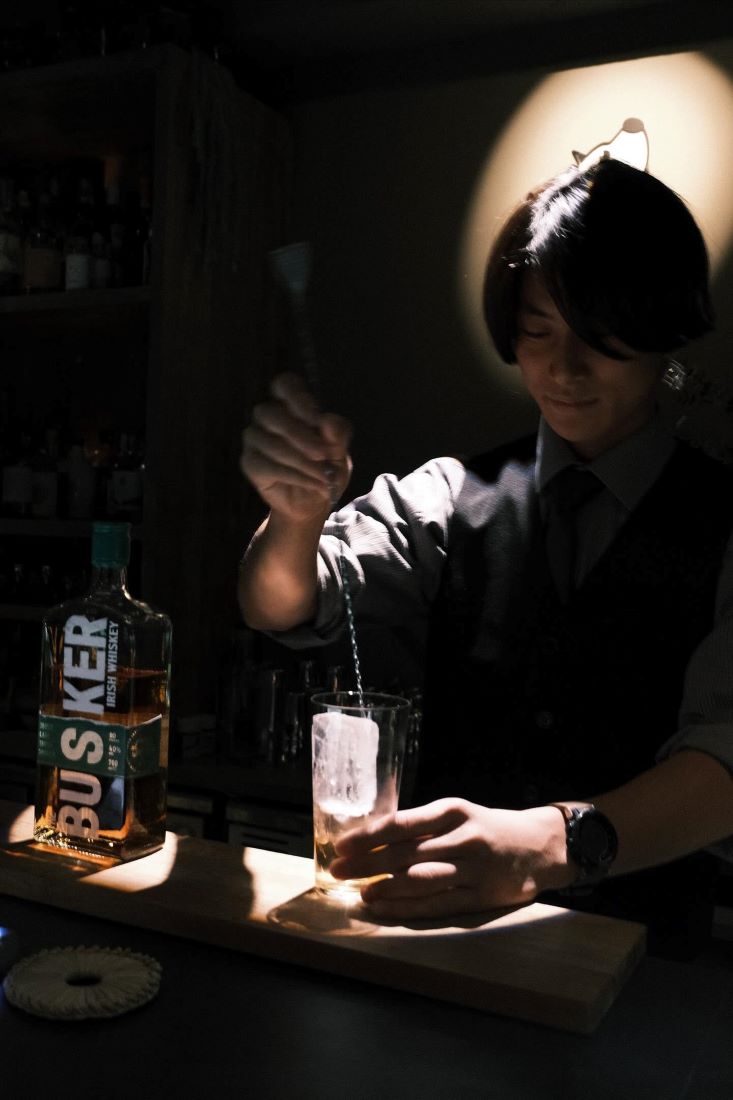
Oishi when he started working at the bar in July 2024.
—Could you tell us why you decided to participate in an internship in alcoholic beverage manufacturing, and what was the most memorable thing about the internship?
When I work at a bar, I often get questions from customers about the process of making alcohol. However, I felt that simply explaining things I'd found on the internet wouldn't add any value for the customers, so I wanted to be able to talk about it based on my own experience. At first, I considered doing an internship abroad, but I felt uncomfortable going overseas without being able to explain Japanese sake, so I decided to learn about sake brewing in Japan first.
During my second year of university, I learned about Ine to Agave Co., Ltd., a company in Akita Prefecture that was challenging itself to create new types of sake using sake brewing techniques. There was also an internship program offered by the Akita Prefectural Government as part of a regional revitalization project, so I decided to participate.
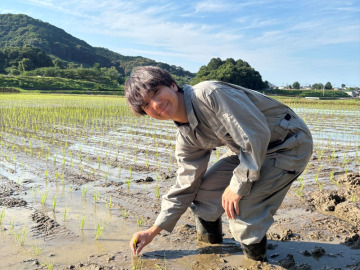
During my internship, I was involved in almost every step of sake brewing, from washing and steaming the rice to making koji and managing the fermentation. What was particularly memorable was being able to experience making koji, a task usually only handled by skilled brewers. Spreading out the steamed rice to cool and then adjusting the temperature to the optimal level while sprinkling koji mold on it was as fun as playing a game. I also enjoyed the analysis work to check the degree of fermentation. Measuring the alcohol content using the difference in specific gravity between sugar and alcohol felt like a science experiment, which I loved.
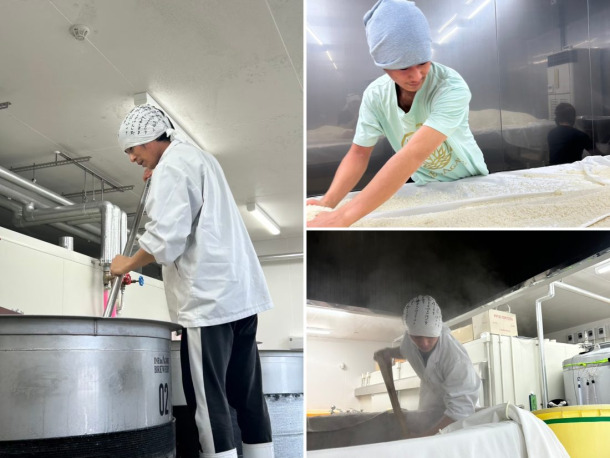
The process of stirring the ingredients with a paddle to ensure uniform fermentation (left), adjusting the temperature of the steamed rice in the koji room (upper right), and removing the steamed rice from the steamer used to steam rice, beans, etc. (lower right).
—After completing your internship, you won the MSCC2025 competition. What challenges did you face, and what did you learn from this experience?
The company exam was tough. As a bartender at my part-time job, I needed to pass it in order to serve original cocktails that weren't on the menu. Even if I won the competition, it wouldn't mean anything if I couldn't serve the cocktail to customers at the bar, so I practiced a lot to pass. There were only about two weeks between passing the exam and the competition, but I had the theme for the cocktail I wanted to make in the competition decided in my head the whole time, so I focused on bringing that to life.
This competition evaluates how well you express the appeal of alcohol. In the final round, you create two cocktails in about 16 minutes while giving a presentation about the concept and the thoughts you put into each cocktail. Not only the taste and technique are evaluated, but also your presentation skills and the element of surprise, so I paid close attention to creating the right atmosphere, checking the venue's sound system and consulting about the lighting effects. As a result of thorough preparation and attention to detail, I was able to win, which has given me a great deal of confidence.
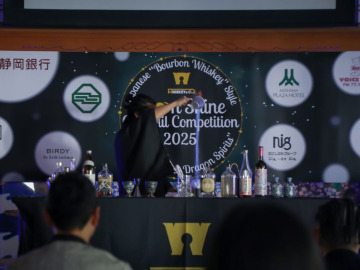
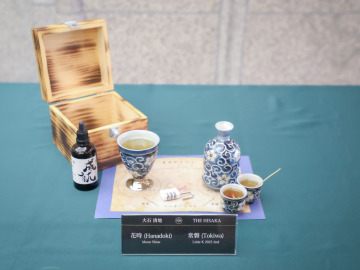
Photo on the left: A scene from the final round of the MSCC2025 competition, where Oishi is making a cocktail while giving a presentation. The competition is open not only to professional bartenders but also to the general public.
Photo on the right: The winning cocktail at MSCC2025. A short cocktail called "Hanadoki" (left), based on bourbon whiskey with a ripe fruit aroma, and a hot cocktail called "Tokiwa" (right), focusing on the spicy scent of unaged whiskey. These cocktails incorporate the story of Mishima Taisha's deities' daughters, Iwanaga-hime and Konohanasakuya-hime.
-What are you studying at university?
I belong to the interdisciplinary seminar led by Associate Professor Bernat MARTI-OROVAL (Faculty of Political Science and Economics), where I mainly study modern religious thought. We often discuss themes such as "What is modernity?" and "What is religion?", and I find it appealing because I can deepen my understanding according to my own interests.
For Bachelor's Thesis, I would like to delve into the "de-religiousization" of alcohol. Since ancient times, alcohol has been considered a link between gods and humans, but now, with the advancement of science, the mechanisms of fermentation and alcohol production have been clarified, and it has become possible to control the brewing process by human hands. In this context, I feel that alcohol is gradually moving away from its religious connotations, so I would like to pursue research on this topic.
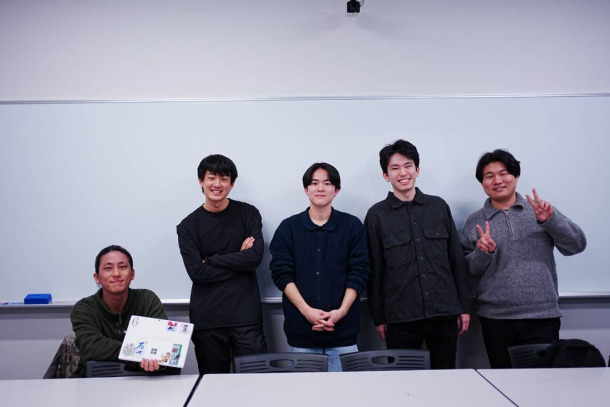
A group photo with the seminar members. Oishi is on the far left.
-Finally, please tell us about your future prospects.
I want to continue holding alcohol seminars for people aged 20 to 25, which are aimed at combating the trend of young people drinking less. The seminars are offered at participating establishments, where each person can sample 5 to 10 different types of alcohol for about 3,000 yen. In addition, we also include activities such as tours of gin distilleries and writing down the flavors of cocktails on drawing paper to put them into words. I believe these seminars provide young people with an opportunity to deepen their understanding of alcohol.
Academically, I'm considering graduate school and am also interested in teaching at a university in the future. While research on alcohol often focuses on its health effects, I want to also consider its cultural value. Alcohol is not just a luxury item, but also a means of conveying history and culture. I want to delve into that value from an academic perspective and share it with others. I also want to continue to pursue two main goals: conveying the appeal of alcohol to customers through cocktail making and customer service.
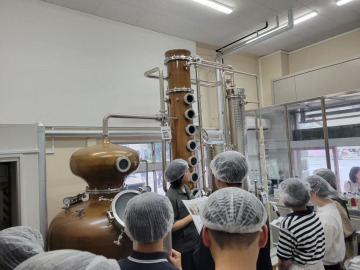
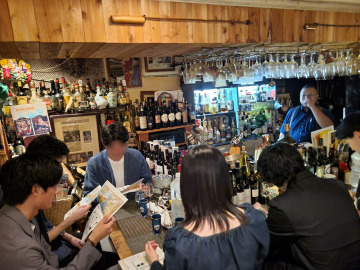
Scenes from the seminar. Left: Participants touring a gin distillery at "Ethical Spirits Tokyo Riverside." Right: Participants learning about sherry, a wine made in Spain, at the "Sherry Museum."
931st
Interview, text, and photography by: Waseda Weekly Reporter
Rinka Nishimura, 4th year student, School of Human Sciences
【Profile】
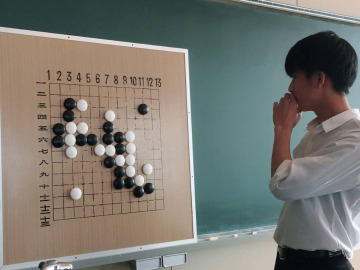
A photo from when he was in the Go club in high school.
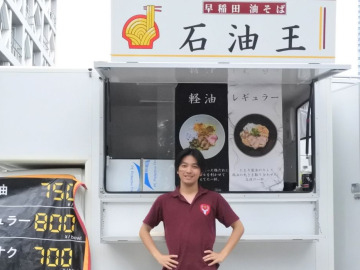
Originally from Shizuoka Prefecture. Graduated from Shizuoka Prefectural Hamamatsu Kita High School. Besides drinking, his hobbies include Go and futsal. In addition to working as a bartender, he also works part-time managing and refereeing a futsal court for children.
Instagram: @o_se_chi_7
![[Save version] Map of the four main campuses](https://www.waseda.jp/inst/weekly/assets/uploads/2026/06/110d605cfac40346aad1d2df464a6586-940x705-1-1-610x457.jpg)