Waseda WeeklyWaseda Weekly

News

News

The journey of Waseda University student actors traversing diverse performing arts.

"By deliberately shifting the focus of my expression, I can discover my core self that cannot be changed."

Kanta Sasagawa, 3rd year student School of Culture, Media and Society

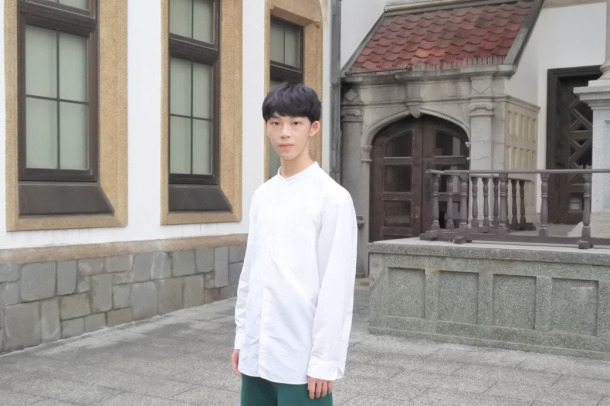
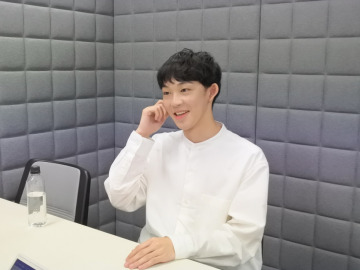
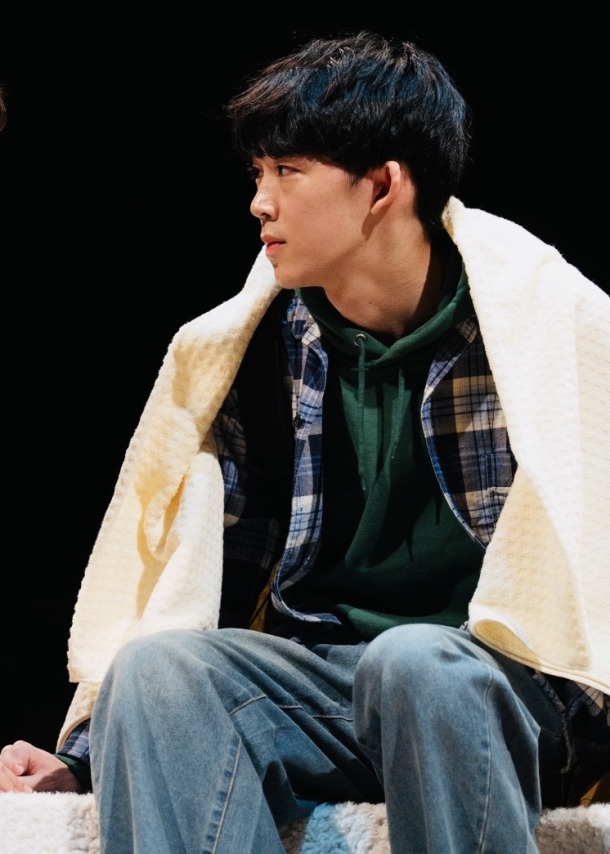
Kanta Sasagawa is an actor who has gained experience in diverse theatrical productions, including musicals and Kabuki, since childhood, and uses his wide range of physical expression to work in theater and dance. One day he's in a musical, another day he's in a dialogue-driven play or a dance piece. We delved into Sasagawa's campus life, exploring his reasons for not narrowing his focus to one area, its connection to his studies at Waseda University, and his future prospects.

—Could you tell us what inspired you to become involved in performing arts?

When I was in kindergarten, my father, who loved ABBA's music (*1), took me to see the musical "Mamma Mia!", which sparked my love for theater. In the first grade of elementary school, I participated in the Yokohama Citizens' Musical. It was there that I discovered how fun it is to both watch and perform in musicals, and my interest in them began. I also appeared in operas and Kabuki, which I consider a strange twist of fate, stemming from my connection with the Citizens' Musical. In particular, in Kabuki, I was relentlessly drilled in all kinds of movements, including the "sliding footwork," and I pursued a pure interest in the performing arts.

*1 A world-renowned Swedish pop group formed in 1972.

—I heard you majored in performing arts in high school. Why did you choose Waseda University after that?

I enrolled as a first-generation student at Kanagawa Sogo High School because I wanted to learn about unfamiliar fields, and I found its arts education to be quite cutting-edge, with everything being fascinating. While tracing the history of Japanese theater, I learned about underground theater (*2) and translated plays (*3) in small theaters, which were completely different from the art I had been involved with in large theaters, through both lectures and practical exercises. My previous understanding of opera and kabuki was once again overwritten. I also took a dance class and was suddenly told to "feel the sound of your internal organs" (laughs). In contemporary dance classes, I learned improvisational dance without choreography, which broadened my definition of "dance."

*2 A theatrical movement that flourished in Japan during the 1960s and 70s. It was experimental and possessed a unique worldview. "Angura" is an abbreviation of "underground."
*3 A play in which the original language of the play is translated into the host language and performed. One of the pioneers of this style was Shoyo Tsubouchi, an important figure in the early days of Waseda University.

From pantomime to Kyogen (traditional Japanese comic theater), I took every subject available in high school, not just the required courses. I felt I had fully enjoyed studying performing arts academically. I wanted to challenge myself to see how far I could go in performing arts as a career, but I also wanted to go to university in a non-arts-related field, purely to satisfy my intellectual curiosity. Around that time, I visited the Tsubouchi Memorial Theatre Museum, which I had been interested in for a while, and became interested in Waseda University. My interest in the curriculum led me to enroll in School of Culture, Media and Society.

My graduation performance in my third year of high school was a one-man show called "The Needle." I created a 60-minute one-man show.

—What are you studying at university?

I belong to the Department of Representation and Media Studies, and I am deepening my learning with a focus on myself, particularly in areas such as "media theory" and "curation" (*4), which are about "how to perceive the world." While the objective aspect of how I appear to the audience can be changed through stage arts rehearsals, I believe that the subjective aspect of how I "see" can only be changed through study. For example, various pieces of information are presented flatly on the front page of a newspaper, but on a website, there is information that you can only access by clicking. Learning about these differences in how information is conveyed through various filters in "media theory" gave me the opportunity to think about the line and distance between performer and audience, which is something I am very interested in when I perform.

*4 This involves conceiving the concept for an exhibition, such as an art exhibition, and editing how the artworks and artists are presented.

I was particularly struck by a comment I heard in a "Media Studies" class: "The body is a medium, isn't it?" It made me realize, "Wow, media studies talks about things at that level...!" The idea that our bodies, not just conventional information media like newspapers and television, are also a form of medium for receiving the world and interacting with others, resonated with me, as I communicate something through performance on a daily basis.

—What kind of activities have you been involved in since entering university?

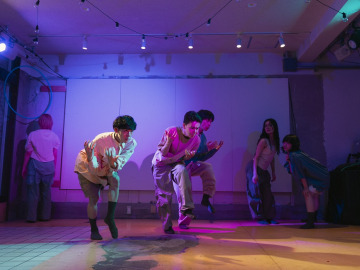
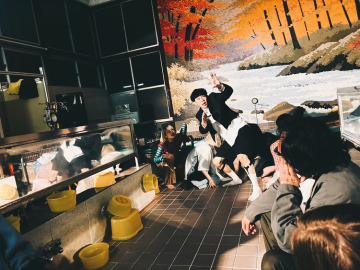
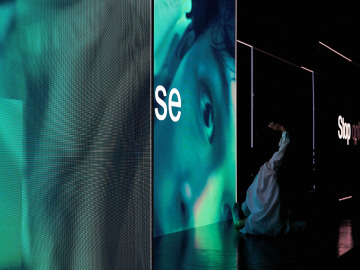
I love physical expression, so I am active in a wide range of fields, including theater and dance. I have been fortunate enough to have various work opportunities, such as joining a dance company, collaborating with audiovisual artists who make full use of music and video, creating immersive theater in a school setting, and performing in two-person musicals.

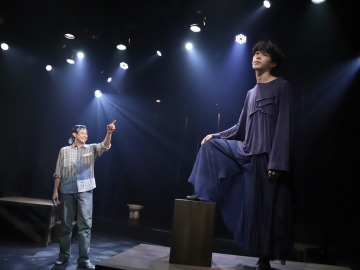
Photo on the left: Sasagawa performing in the musical "Moi Millie" (Photo by Yukika Matsunaga)
Photo on the right: Dance company "Kimitsunekoka Center". Sasagawa is second from the left (Photo by Miyu Araki)

Each theater company has its own unique project-based approach, so the types of plays performed and the audience tend to be somewhat fixed. However, I don't belong to one place. This month I'm doing a dialogue-driven play, next month a two-person play, and the month after that a musical. I'm constantly challenging myself with different things, heading towards chaos. But I feel that it's precisely because I change my approach each time and deliberately blur my focus that my core identity is becoming clearer. Each job feels like a cross-cultural exchange, and I feel like I'm traveling to many different countries.

—How do you manage to perform in such a diverse range of stage genres?

It's because I never got tired of any of them. Even within the broad category of "theater," the sense of distance from the audience is completely different between large theaters and small theaters, and the form of communication changes drastically accordingly. I have a temperament that allows me to enjoy those differences, so I never felt like giving any of them up. My past experiences may be the foundation for enjoying my current activities, which feel like a journey.

Photo on the left: "Zajizu Modern Bathhouse Theatre." The show was performed in a closed, old-fashioned public bathhouse. The audience seats were made out of bath buckets.
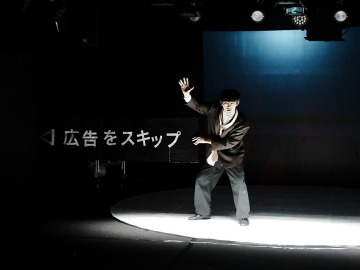
Photo on the right: A World Unchosen In collaboration with an audiovisual artist, he delivered a performance accompanied by futuristic music and visuals. The footage from Sasagawa's camera was projected onto the screen in real time (Photo: Hiro Shirato).

--Please tell us about your future prospects.

For the time being, I plan to hone my acting skills while also working on creative projects in fields other than theater, such as video and podcasts. I believe that acting is not about following instructions, but about actively making suggestions in the creation of a work, so in the future, I would like to be an actor who has that kind of "creative perspective." Of course, I have loved creating theater since high school, so after further exploring my exploration as an actor, I aim to challenge myself on the production side of theater, such as writing scripts and directing.

"THE GAME OF POLYAMORY LIFE" (Photography: Mayuka Sato)

In a world where generative AI and virtual reality are advancing, and where time and cost-effectiveness are constantly being emphasized, there's something undeniably cool about deliberately investing immense effort to perform fiction with full energy in front of an audience. I can't help but feel that the value of theatrical experience is increasing more than ever.

I want to be a performer who has such a strong sense of "realness" that the audience can feel the sweat and fatigue right in front of them.

931st

Interview, text, and photography by: Waseda Weekly Reporter
Suhon Kanai, 3rd year, School of Law

Gigi 1: "HUG!!!" (Organizer: Rin Kawai) will be performed from July 2nd to 5th, 2026 at Waseda Shogekijo Drama-kan Theater. (From Sasagawa's Instagram)

【Profile】

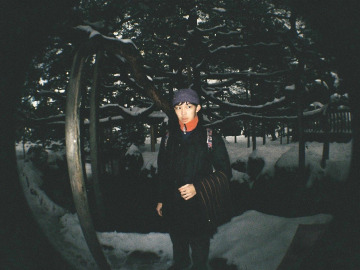
A photo taken while traveling

Born in Kanagawa Prefecture. Graduated from Kanagawa Prefectural Kanagawa Sogo High School, Department of Performing Arts. Belongs to the Drama Club (officially recognized student club) and Professor Dominique Chen 's (Faculty of Letters, Arts and Sciences) Fermentation Media Research Seminar. Favorite Waseda cuisine is the Miki Lunch from "Kitchen Miki". Hobbies include walking, browsing bookstores, and listening to podcasts.

Instagram: @kantabile_sasa
X: @Kantabile_sasa
Sasagawa's website: https://sites.google.com/view/sasagawa-kanta/home
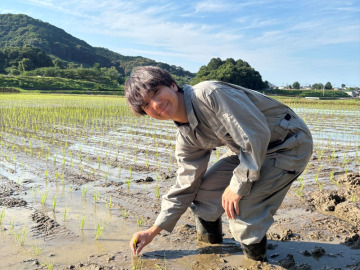
Waseda Weekly is the official web magazine for Waseda University Student Affairs Division. It is updated daily on weekdays during the academic term! It features introductions to active Waseda students and alumni, as well as information student club Waseda cuisine, and more.

Page Top
WASEDA University

早稲田大学オフィシャルサイト(https://www.waseda.jp/inst/weekly/)は、以下のWebブラウザでご覧いただくことを推奨いたします。

推奨環境以外でのご利用や、推奨環境であっても設定によっては、ご利用できない場合や正しく表示されない場合がございます。より快適にご利用いただくため、お使いのブラウザを最新版に更新してご覧ください。

このままご覧いただく方は、「このまま進む」ボタンをクリックし、次ページに進んでください。

Continue

対応ブラウザについて

close