Waseda WeeklyWaseda Weekly

News

News

Tackling environmental issues and education! Connecting academia and society with a scientific perspective.

"I want to be a bridge between environmental issues and people."

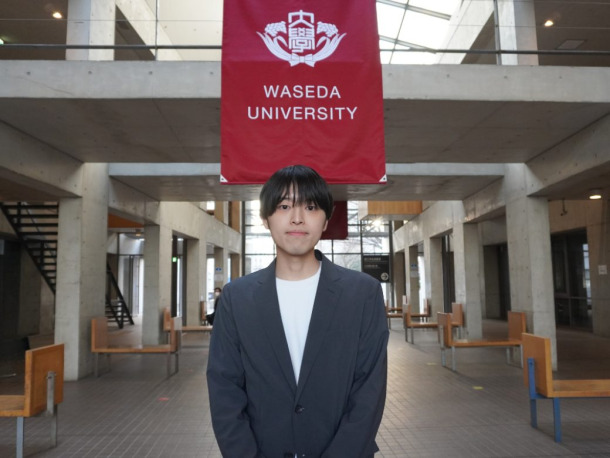
Sota Yano, 1st year master's student,  Graduate School of Creative Science and Engineering

At Building 55, Nishi-Waseda Campus

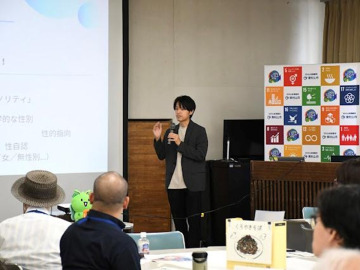
Sota Yano, inspired by his experience in Waseda University's Environmental Rodriguez (an officially recognized student club), is now actively involved in personal activities such as organizing environmental events. He conducts environmental education activities for all generations, including visiting elementary schools to give lectures and lecturing at corporate training sessions. We spoke with Yano about what sparked his interest in environmental issues, his research at university, and his future prospects.

—Could you tell us why you chose to enroll in the Department of Resources and Environmental Engineering at the School of Creative Science and Engineering, Waseda University?

Since junior high school, I've wanted to attend Waseda University because it has an image of being a vibrant place where you can freely study what you love, has a strong research program, and has many students club and societies. My decision to choose the Department of Resources and Environmental Engineering was largely influenced by my high school earth science teacher. He was very kind and funny, and he conducted classes while communicating with students, which made me even more interested in nature, which I had loved since I was little. Looking at rocks and geological strata not only allows you to learn about the history of the Earth, but it's also exciting to understand the principles of the environment we live in without even realizing it. My teacher recommended this department to me because it's exactly where I could learn about that kind of earth science knowledge.

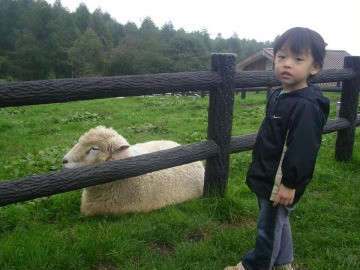
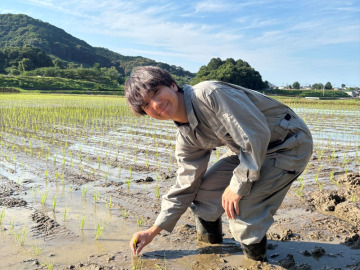
This photo was taken when he visited a farm with his family during his childhood. The visit apparently sparked his interest in nature.

—What sparked your interest in environmental issues?

My interest in environmental issues began after I enrolled in university when I joined the student club called Environmental Rodrigues. Many upperclassmen from my department had been members for generations, and I felt that the overall atmosphere of student club suited me, so I decided to join.  Environmental Rodrigues takes diverse approaches to environmental issues, divided into six projects: Satoyama(rural landscapes), Ocean, Regional Revitalization, Education, Product Development, and Plastics. Of these, I was particularly drawn to "Education." I believe that while there are limits to what one person can do to solve environmental problems, taking an educational approach can increase the number of people who want to solve them, making it the most effective approach.

When I first joined, it was during the COVID-19 pandemic, so most educational events were held online. However, we gradually became able to hold events in person, and we were even able to hold an environmental education event for children in Sabae City, Fukui Prefecture. Seeing the children's feedback made me very happy, and I felt that the activities were worthwhile.

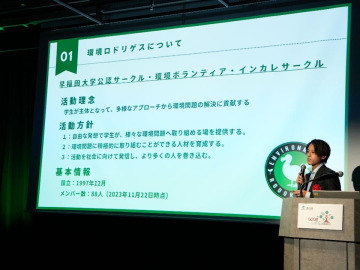
Photo on the left: "The award winner at Environmental Rodrigues"  The awards ceremony forThe 11th Ministry of the Environment Good Life Award. He gave a presentation as the representative of the organization.
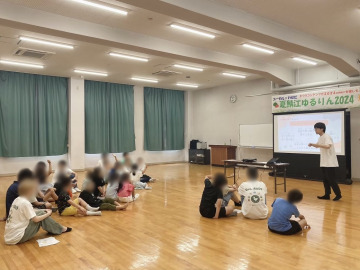
Photo on the right: Scenes from an event held in Sabae City

--What kind of activities are you involved in on your own?

We conduct environmental education activities for all generations, including visiting elementary schools for lessons, lecturing at corporate training sessions, and organizing events for the public.

I often get introduced to opportunities by people I meet through student club activities, but I also plan my own activities to suit the target audience. For example, in a visiting lesson at an elementary school, I explained that tiny plastic particles called microplastics lurk all around us, and that we end up ingesting them as a result of the food chain—a phenomenon known in technical terms as "biomagnification."

The content was difficult for children to understand and hard to convey through words alone, so I focused on letting them learn through play. I divided the children into small fish, medium fish, and large fish roles, and the small fish gathered bait, which the medium fish then took in a game of rock-paper-scissors, and the large fish then took that as well. Through this game, they competed to see who would end up with the most bait, allowing them to experience the phenomenon firsthand. I was really impressed by the surprised looks on the children's faces when I told them that the same thing might be happening with plastic. The teachers also gave positive feedback, which made me feel like it was a success.

In corporate training sessions, I was responsible for everything from environmental education to information literacy education. I often hear claims like, "Microplastics are dangerous, so we should stop using plastic products immediately," but in reality, there are many more diverse and varied opinions. Furthermore, a scientific perspective reveals the feasibility, necessity, and balance with other environmental impacts, including climate change. Therefore, I emphasized that we should not be overly afraid of environmental problems but rather make decisions based on scientifically accurate information.

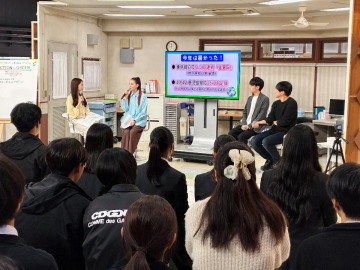
Photo on the left: In July 2025, at an event held at Higashimurayama City Hall in Tokyo, he served as both lecturer and facilitator.
Photo on the right: He appeared as a lecturer at the "Square to Make the Earth Smile 2025 Autumn" event (TBS Television). He is second from the right.

—What kind of research are you doing at university?

I belong to the Tokuhiro Itsubo Laboratory (Faculty of Science and Engineering) and conduct research on LCA (Life Cycle Assessment). LCA is a method for quantitatively evaluating the environmental impact generated throughout a series of processes for products and services, from raw material procurement to manufacturing, transportation, use, and disposal/recycling.

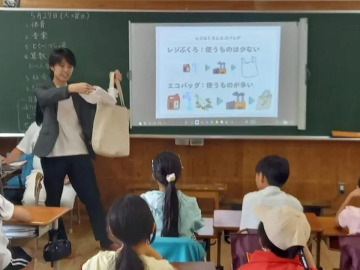
For example, the environmental impact of a single plastic shopping bag throughout its entire lifecycle is said to be 50 to 150 times greater than that of a single reusable shopping bag (assuming a cotton tote bag) in terms of its impact on climate change. This suggests that for a reusable shopping bag to be truly "eco-friendly," it needs to be used at least 50 to 150 times. Using LCA in this way allows us to understand environmental problems numerically rather than subjectively, enabling us to grasp the current situation and set goals for solutions.

Before learning about Life Cycle Assessment (LCA), my environmental education activities often focused on conveying environmental problems and their solutions as a set of knowledge. However, after learning about LCA, I realized there are pitfalls, such as those related to eco-bags, and now I strive to communicate in a way that encourages people to think about their own approach to environmental issues.

Photo on the left: During a visiting lesson at Myojo Gakuen Elementary School, he conducted a lesson about the difference in environmental impact between plastic shopping bags and eco-bags.
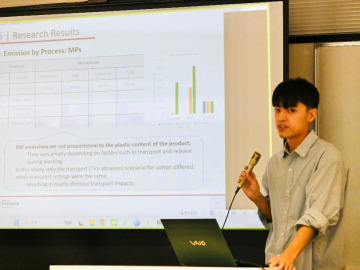
Photo on the right: A research presentation at the Itsubo Laboratory seminar camp held in September 2025.

—Are there any strengths that come from being a student?

I feel that one of the strengths of being a student is the ability to flexibly collaborate with people from various social backgrounds through these activities. If you belong to a company, there are certain limitations both physically and in terms of your position as a working adult, but as a student, you can participate in a wide range of activities in many different settings.

On the other hand, I sometimes get compliments like, "Wow, you're amazing for a university student," which leaves me with mixed feelings. I'm acutely aware that in order to be evaluated objectively and on an equal footing, I need to deepen my learning even further and improve the quality of my activities even more.

—What activities would you particularly like to focus on in the future?

This is science communication. Science communication is the activity of clearly communicating scientific research findings, their appeal, and challenges to people. I aim to become a science communicator who does this across various sectors, including government, citizens, and corporations.

Currently, research on environmental issues is somewhat insular in certain areas, and there seems to be a division between different viewpoints. For example, even if research is thriving, it often doesn't translate into policy, and it can be difficult for the public to understand.

What's needed in this context is a bridge-like figure who can stand between environmental issues and various perspectives. For example, Sakana-kun is someone who combines high-level expertise in fish with clear and entertaining explanations, and he's also someone who skillfully connects the academic world of fish with society. It might be easier to understand if you think of me as an environmentally specialized version of Sakana-kun. I want to establish that position in the field of environmental issues and build a future where academia and society can move forward in step together.

No. 922

Interview, text, and photography by: Waseda Weekly Reporter (SJC Student Staff)
Hinari Ukiya, , March 2026 graduate of the School of Culture, Media and Society

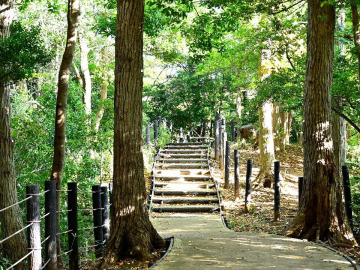
Landscape photographs taken by Yano

【profile】
Born in Tokyo. Graduated from Waseda Jitsugyo High School. His hobby is photography, and he sometimes travels far away to take pictures. Recently, he has been focusing on local scenery that has often been overlooked as his subject. He started writing on note in September 2025. He is eager to organize her thoughts by putting them into words and to explore more easily understandable expressions.
Instagram: ynst_pl5
Official website: https://lit.link/edulite

Waseda Weekly is the official web magazine for Waseda University Student Affairs Division. It is updated daily on weekdays during the academic term! It features introductions to active Waseda students and alumni, as well as information student club Waseda cuisine, and more.

Page Top
WASEDA University

早稲田大学オフィシャルサイト(https://www.waseda.jp/inst/weekly/)は、以下のWebブラウザでご覧いただくことを推奨いたします。

推奨環境以外でのご利用や、推奨環境であっても設定によっては、ご利用できない場合や正しく表示されない場合がございます。より快適にご利用いただくため、お使いのブラウザを最新版に更新してご覧ください。

このままご覧いただく方は、「このまま進む」ボタンをクリックし、次ページに進んでください。

Continue

対応ブラウザについて

close