Waseda WeeklyWaseda Weekly

Features

A must-read for new students! A complete guide to Waseda University Student Center building, the hub of student club activities.

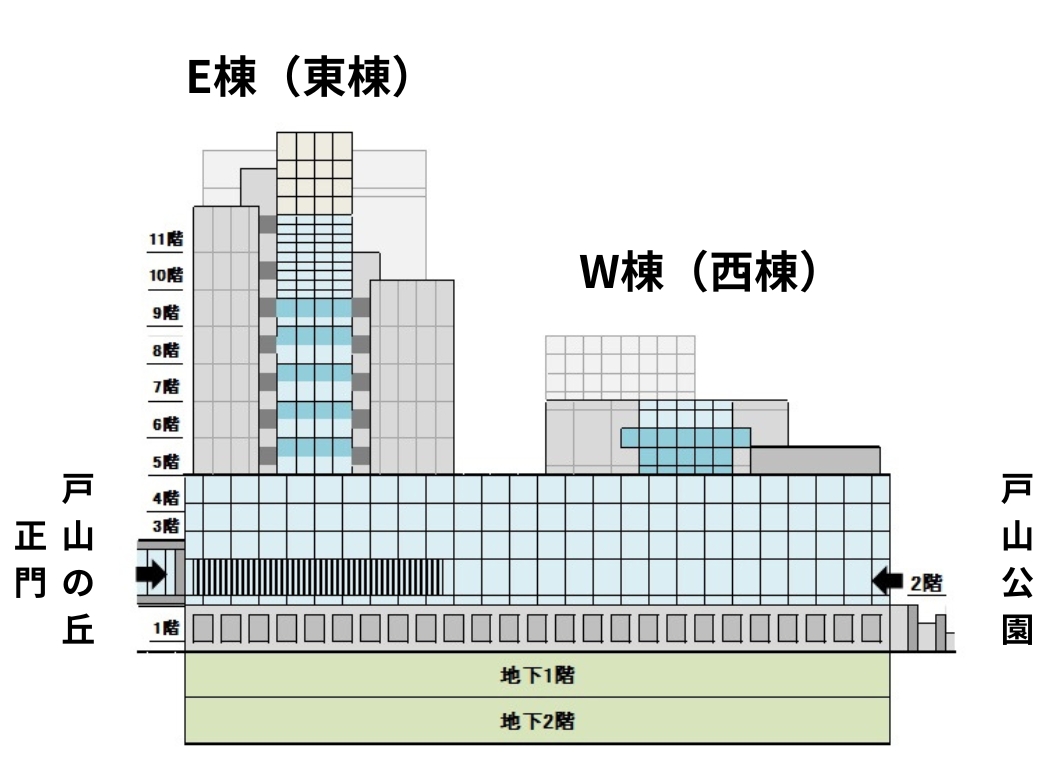
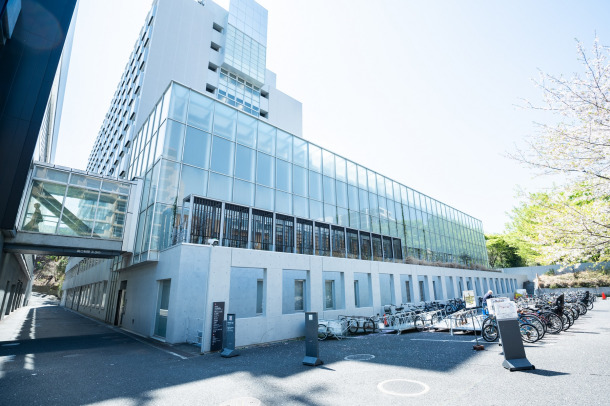
Toyama Campus Waseda University Student Center (Building 30) is an 11-story building with two basement levels, and is connected to Waseda Arena (Building 37) by a walkway on the second floor.

Currently, Waseda University has about 500 license student club. The "other campus" that supports Extracurricular activity, which focuses on student club activities, is located at Toyama Campus and consists of two wings, the W wing (west wing) and the E wing (east wing). This is  Waseda University Student Center. The buildings include Student Affairs Section, Scholarships and Financial Assistance Section, Career Center, Center for Gender and Sexuality. In addition to the student support offices, the center has practice facilities for various activities such as music, dance, drama, fine arts, and traditional culture, as well as a multipurpose hall for lectures, concerts, and film screenings. This place, where many students come and go every day and where culture and exchange are born, is truly a facility for students and the hub of Waseda's Extracurricular activity. In this issue, we will introduce the entire facility!

INDEX

▼ Waseda University Student Center Elevation Drawing
▼ [1st and 2nd floors] Entrance hall on the 2nd floor, offices such as Student Affairs Section
▼ [Basement 1 & 2]Music floor, Noh stage, and multi-purpose hall with a capacity of 200 people
▼ [3rd to 11th floors] Pay attention to Building W (West Building) and Building E (East Building)! The upper floors of Building E are mainly for club rooms

Waseda University Student Center Elevation Drawing

Waseda University Student Center Elevation Drawing (Click to enlarge)

[1st and 2nd floors] Entrance hall on the 2nd floor, offices such as Student Affairs Section

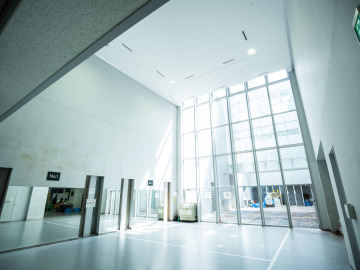
2nd floor: Entrance (atrium), information center, lounge, 7-Eleven

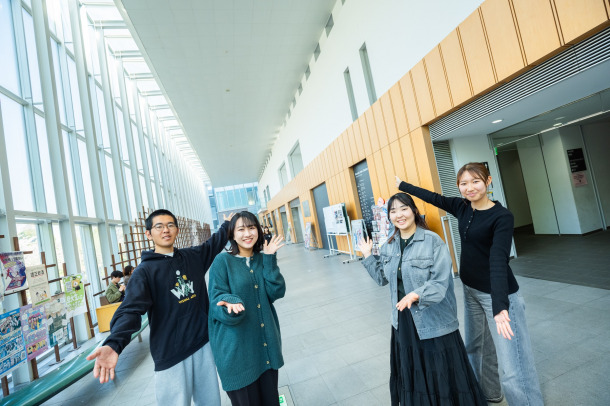
Student Affairs Section. From left: Kazuki Inotsume (2nd year, School of International Liberal Studies), Uta Yoshida (4th year, School of Education), Rinka Nishimura (4th year, School of Human Sciences), and Maho Asaba (2nd year, School of Creative Science and Engineering). In the 2nd floor atrium.

The main entrance to Waseda University Student Center is on the second floor, on the west side of Toyama Campus (towards Toyama Park). However, many students enter via the main gate, over Toyama Hill, and through the connecting corridor to Building 37 (Waseda Arena, etc.). The union building is open from 8:00 to 22:00, Monday through Sunday, and it is common to see a line of students waiting to enter before 8:00. Except for the summer break and the New Year holidays, it is closed once a month. It is open almost all year round, and is a place where students can freely and actively engage in various activities.

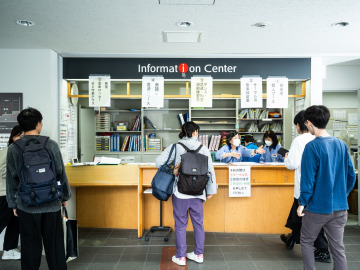
Upon entering the main entrance, you'll find yourself in a large, open atrium. The atrium is lined with benches, and you'll see students waiting for each other or spending their time on their own. The information center, located immediately to the right of the entrance, provides general information about the building, accepts reservations for various facilities, and lends out keys and other items. Please note that you will need to present your student ID when borrowing items.

Asaba

My friend who's in a dance student club apparently sometimes lines up at the entrance before the facility even opens to make same-day reservations at the information center!

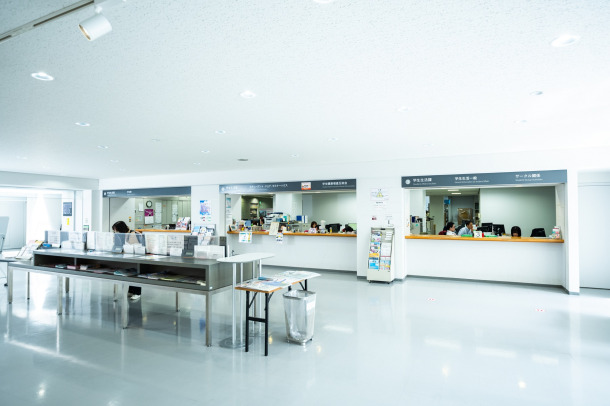
Photo on the left: Information center. Reservation slots for each facility are basically time-limited, so it gets crowded during breaks as people return and borrow keys. The training center (B2F) is right in front of it. User registration There are also machines that collect the fees that are required at that time.
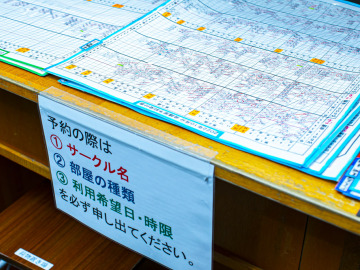
Photo on the right: Facility reservations can be made in advance or on the day, with a reservation lottery held in the beginning of the previous month. Reservations and the lottery take place in the conference room of Waseda University Student Center

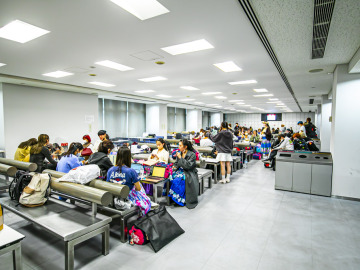
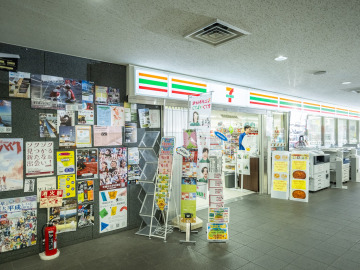
Other facilities include a lounge, mailboxes and lockers for officially recognized student club, and a 7-Eleven across the street. The lounge is used by many students for socializing before and after practice, for individual use, and by those heading to or returning from classes.

Photo on the left: A view of the lounge. Many students can be seen having lunch here during lunchtime.
Photo on the right:A Seven-Eleven with a famous store manager who used to be a professional musician . Four copy machines are lined up in front of the store.

The first floor Student Affairs Section, Scholarships and Financial Assistance Section, Gender and Sexuality Center, free photocopying service, photo booth, umbrella stand, Japanese-style tea room, and practice rooms including a wooden-floored room.

Student Affairs Section counter (1st floor)

Descending the stairs from the entrance hall on the second floor, you'll find the Student Affairs Section counters. Counter ① is for "Student Dormitories," which is frequently visited by RA (Resident Assistants) from each student dormitory; counter ② handles "Seminar House," "Student Jobs," "Various Compensation Programs," and the "Waseda University Student Health Promotion Mutual Aid Association," where you can apply for medical expense benefits; and counter ③ handles "General Student Life," "student club Activities," and "Lost and Found." The office is open from 10am to 4pm on weekdays, and the shutters are closed outside of these hours.

Nishimura

I often go to counter number 2 when I'm working at Student Affairs Section to apply for medical expense reimbursement. It's convenient because there are application counters at campuses other than Waseda and Toyama Campus. Getting reimbursed for out-of-pocket medical expenses is definitely a great deal!

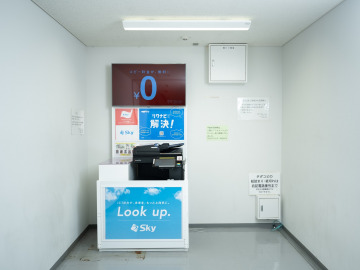
Scholarships and Financial Assistance Section and Gender and Sexuality Center are located nearby, and there are also photo booths and Tadacopy, where you can copy, scan, and print for free. If it suddenly starts raining and you need an umbrella, the umbrella sharing service "Aikasa" (near the entrance on the first floor) is also convenient.

Photo on the left: A free copying booth. During exam periods, the paper can become worthless.
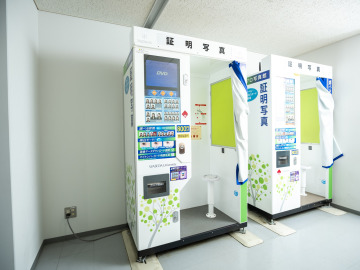
Photo on the right: There are two photo booths for ID use. They are frequently used when registering to use the training center.

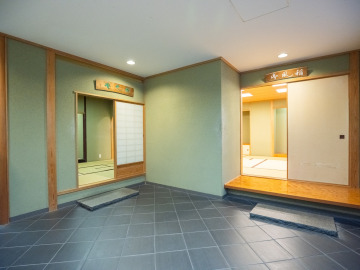
The first floor also has practice rooms that can be used by student club, and one of the most distinctive is the Japanese-style tea room (106 on the first floor). It consists of two rooms, a large room (Inafutei) and a small room (Inashian), and is mainly used by Japanese culture student club, primarily the Tea Ceremony Research Society (an officially recognized student club). When practicing, they set up not only the tea ceremony utensils such as tea bowls, kettles, and tea utensils, but also the hanging scrolls themselves, making it a truly authentic experience.

Photo on the left: Japanese-style tea rooms. The small room on the left (Toshian) and the large room on the right (Tofutei).
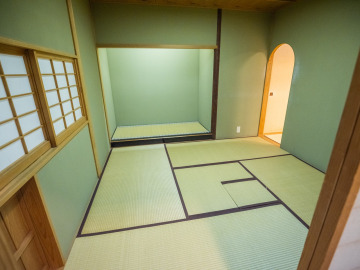
Photo on the right: Inside the small room. Removing the hearth mat in the center reveals an electric hearth.

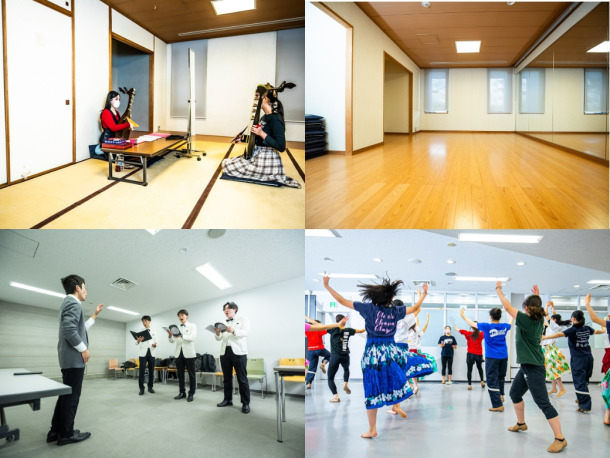
In addition, there are a total of eight practice rooms, mainly Japanese-style rooms, so you can occasionally hear various sounds such as biwa, shamisen, and dance music leaking in.

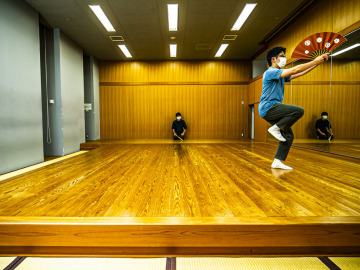
Starting from the top left and going clockwise: a practice session of the Biwa student club Bishamon (an officially recognized student club) in the Japanese-style room (1st floor, room 108), a practice session of the dance and martial arts practice room (1st floor, room E111), and a practice session of the Glee Club (an officially recognized student club) in the light music practice room (1st floor, room W104).

[Basement 1 & 2] Music floor, Noh stage, and multi-purpose hall with a capacity of 200 people

Basement 1st floor: Music practice rooms, individual practice booths, Noh stage, wooden-floored room

Music performance practice room (B101, basement 1st floor)

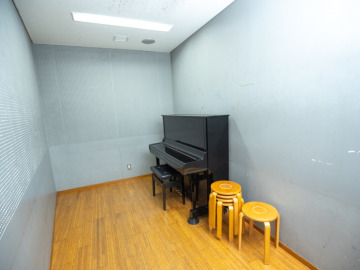
The floor is quite lively, as most of the rooms are music practice rooms (20 rooms) and club rooms for music-related student club (12 rooms). When instruments are being moved in and out of the rooms, they can sometimes be lined up all over the hallway.

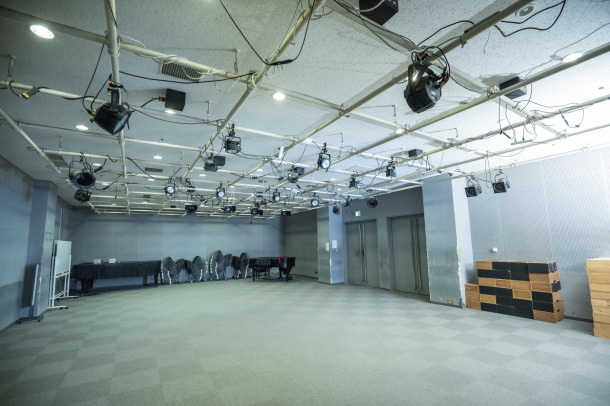
The practice rooms also have individual booths, so they can be used by individuals even if you're not part of student club. In addition, the largest practice room for musical performances on the first basement floor is equipped with a grand piano and an upright piano, as well as lighting, so you can hold full-fledged musical performances there.

Photo on the left: Music practice booth (B113, 1st basement floor). Some booths have pianos.
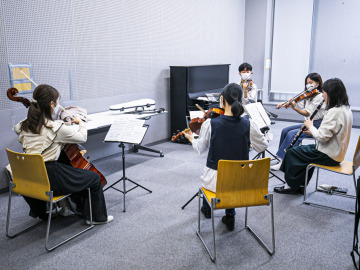
Photo on the right: In the music practice room (B105, 1st basement floor) Waseda University Symphony Orchestra Practice session of the (officially recognized student club)

Within this music floor, there is a room with a full-fledged Noh stage (B107 on the first basement floor). It is used for rehearsals by Waseda University's Hosho-kaiKanze-kaiKonparu-kai, and Kyogen Research Society (all officially recognized student club), ensuring that classical performing arts are passed down through generations.

Photo on the left: Noh stage (B107, basement floor). A scene from a Kyogen research group practice session.
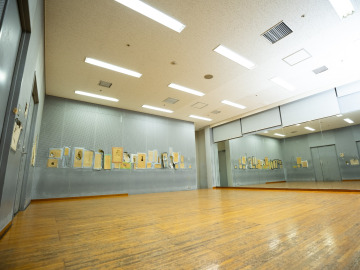
Photo on the right: Wooden floor (B108, 1st basement floor)

Basement 2nd floor: Multipurpose hall, signboard production area (terrace), dance practice space, training center

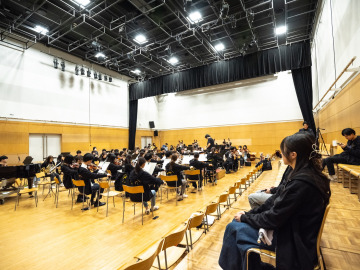
Photo on the left: The multipurpose hall with a unit stage (B201, 2nd basement floor). Waseda University Symphony Orchestra A scene from a (recognized student club) ensemble practice.
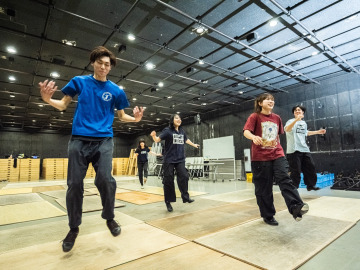
Photo on the right: Rehearsal room for theatrical performances (B202). TAP-LOVERS Practice session of the (officially recognized student club)

Located on the lowest floor of Waseda University Student Center, the 250-square-meter, two-story multi-purpose hall can accommodate 200 people and is suitable for concerts, film screenings, and other events. The two rehearsal rooms for theatrical performances (B202 and B203 on the second basement floor) allow for flexible stage setups using platforms and stage boxes, and are equipped with excellent lighting and sound systems. These rooms can be used for performances for up to one week.

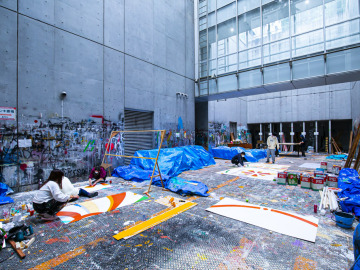
Additionally, the outdoor atrium terrace on the second basement floor is available for rent as a workspace for creating signs and other materials. For large signs that require significant time, continuous use for up to one week is possible. Furthermore, the open space in front of the terrace can be divided into two sections and rented out as a dance practice space.

Yoshida

The open-air terrace feels like a production company's lab. Every time I pass by, I'm drawn in by the activities of student groups and can't help but stop. It's a hub for interaction before WASEDASAI!

Photo on the left: The area for creating signs and other materials, located on the second basement floor. In case of rain, the indoor space in front (dance practice space) can be used by laying down a blue tarp.
Photo on the right: Dance practice space on the second basement floor (No. 1 is in the foreground, No. 2 is in the background)

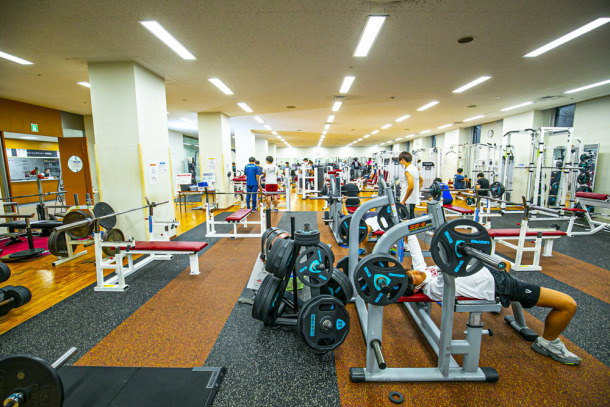
Waseda University Student Center also has a training center. It is equipped with training equipment comparable to that of a private fitness club, and also has changing rooms and showers (for a fee). The registration fee is 4,500 yen per year, and you can easily use it between classes or before and after student club activities. Please check here for details.

Training Center on the 2nd Basement Floor

[3rd to 11th floors] Pay attention to Building W (West Building) and Building E (East Building)! The upper floors of Building E are mainly for club rooms

Career Center on the third floor is visited by students who want to think about their career design or seek advice on job hunting.

Reference: Solve your job-hunting anxieties here! Learn about the support available at Career Center (Published January 2025)

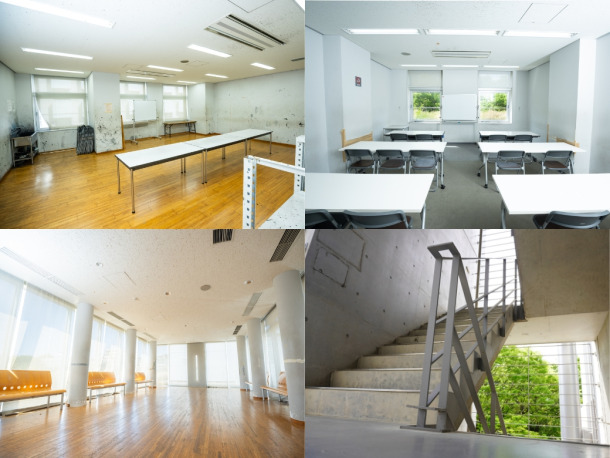
Also, Waseda University Student Center consists of W Building (West) and E Building (East), and the two buildings are not connected from the 4th floor upwards, so be careful which building you are going to when you take the elevator. The 4th floor of W Building has conference rooms (5 rooms) and art practice rooms (2 rooms), the 5th floor is all conference rooms (8 rooms), and the top floor, the 6th floor, which can be accessed from the outside staircase on the 5th floor, has one practice room with a wooden floor and a great view (W6F).

Starting from the top left and going clockwise: Art practice room (4th floor W402), conference room (5th floor W505), exterior staircase from the 5th to the 6th floor of Building W, wooden floor area (6th floor W6F)

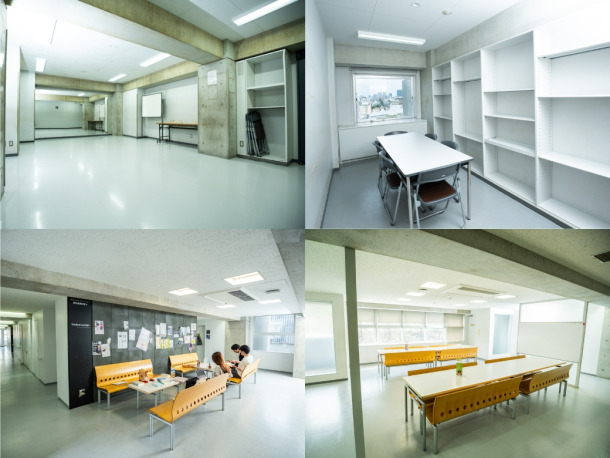
On the other hand, Building E consists almost entirely of club rooms (16 to 35 rooms per floor) from the second floor to the top floor (11th floor), with several meeting rooms and practice rooms scattered throughout each floor. In addition, there are meeting spaces and refreshment lounges on every floor, which are used by many students.

Yoshida

I got lost so many times trying to find my way between Building W and Building E... This is a common point that I want new students to know right away! The Refresh Lounge is a versatile space where you can chat, hold meetings, or take online classes. It's especially memorable during long breaks when students are coming and going looking for an empty seat!

Starting from the top left and going clockwise: Drama practice room (4th floor, E418), light music practice room (E1016), meeting space (E building, 4th floor), and refresh lounge (E building, 5th floor).

If you're curious about what's inside the club rooms, check out the special feature in Waseda Weekly, "Infiltrating the Club Rooms of Interesting student club: A Place to Relax? A Workshop? We'll Also Show You Their 'Treasures'!" (Published November 2022).

Inotsume

I belong to two student club, one for mountain climbing and the other for cycling, and I often go to the club rooms! I make full use of them for meetings, storage, hanging out, and taking on-demand classes during my free time.

We go undercover to investigate the club rooms of interesting student club. Is it a place to relax? Is it a workshop? We'll also show you their "treasures"!

So, what did you think? Did we manage to convey the appeal of Waseda University Student Center Building, the hub for Extracurricular activity at Waseda University? New students will get used to it in no time! Please make the most of it.

[Next Feature Preview] "Global Citizenship Center (GCC) Feature" to be released on Thursday, May 7th

Tags

Waseda Weekly is the official web magazine for Waseda University Student Affairs Division. It is updated daily on weekdays during the academic term! It features introductions to active Waseda students and alumni, as well as information student club Waseda cuisine, and more.

Page Top
WASEDA University

早稲田大学オフィシャルサイト(https://www.waseda.jp/inst/weekly/)は、以下のWebブラウザでご覧いただくことを推奨いたします。

推奨環境以外でのご利用や、推奨環境であっても設定によっては、ご利用できない場合や正しく表示されない場合がございます。より快適にご利用いただくため、お使いのブラウザを最新版に更新してご覧ください。

このままご覧いただく方は、「このまま進む」ボタンをクリックし、次ページに進んでください。

Continue

対応ブラウザについて

close