
- Featured Article
Changing Lives with Study Abroad: David Bennett’s Career Journey from Classical Japanese to Cutting-edge AI
Thu 22 Jan 26
Thu 22 Jan 26
Waseda University, which upholds the goal of achieving a 100% study abroad rate among its students, has maintained an exchange program with North America for over sixty years, and in that time has welcomed more than 6,000 North American students to study in its halls. Many of these students have then gone on to draw on their study abroad experience to excel in various fields around the world.
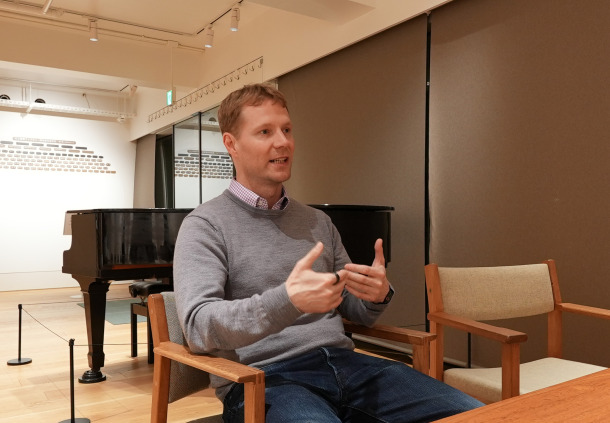
One such individual is David Bennett, a Canadian businessman and tech entrepreneur with a perhaps unexpected background in classical Japanese literature, an interest he discovered during his time studying abroad at Waseda. We spoke with Bennett about his time as an exchange student at Waseda in the 2000s, his subsequent career spanning from classical Japanese literature to cutting-edge AI computing, and his thoughts on how current students should best approach their studies and future careers.

David Bennett

From a Chance Arrival to Academic Pursuits
David Bennett’s first introduction to Japan came about somewhat randomly. “Most people have a reason to go to Japan, but to be honest, I didn’t. My interest in Japan and the Japanese language came after I came here,” he says.
Born in Jamaica and raised in Canada, he was driven to visit a country where he had no personal ties. Japan fit the bill, and when he had the opportunity to study in Yokohama, Japan for a year-long exchange in 1997, he took it. Once he arrived, he quickly fell in love with the Japanese language. He explains, “I’m super interested in programming and I’m quite analytical, and I found the Japanese language quite interesting because of the word endings and the way the language is constructed.
During his undergraduate studies at the University of Toronto, he decided to study abroad again due to the great experience he had in high school. This led him to Waseda University, which has a longstanding exchange agreement with the University of Toronto.
While at Waseda, in addition to his studies, he took part in club activities such as soccer and embarked on a memorable homestay experience in Akita, where he was exposed to one of Japan’s notoriously tricky regional dialects. Through these experiences he was able to form lasting friendships and firmly establish himself within the enduring Waseda community. “Throughout my life,” he says, “I’ve continued to run into graduates from Waseda. You really have a community here that I think is pretty incredible.”
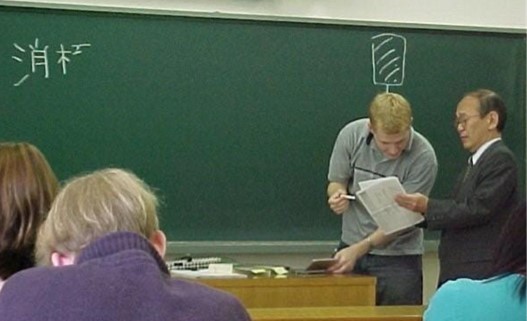
Reflecting on his study abroad experiences, he says, “I think when you go on an exchange program, you assume that you’re going to learn about another country, and you do, but when you’re there, people ask about yourself and your home country, and you’re forced to look internally and learn about your own country, so you can explain it and be a good representative.”
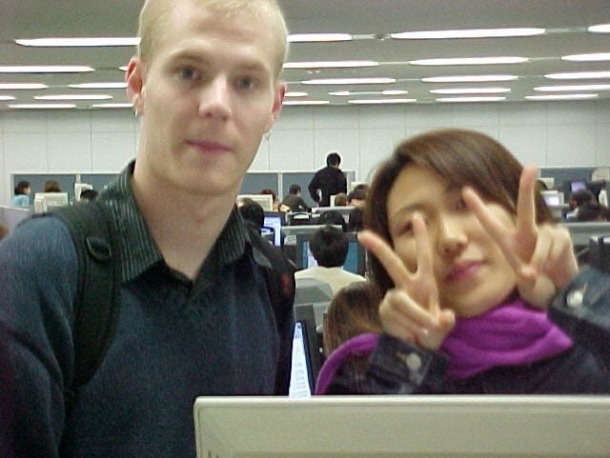
He continues, “What I found was that, in addition to the obvious things you learn about another country and its language, and how to understand other cultures, the introspective part of it—where you learn about your own culture, your own country, and yourself—is probably equally as important.”

Building a Global Tech Career
Returning to Canada after his year abroad at Waseda, Bennett completed his bachelor’s in East Asian Studies and went on to earn a master’s degree in Classical Japanese Language and Literature.
He made his way back to Japan, taking part in the Japan National Scholars Program, and then working as a Coordinator for International Relations (CIR) in Kagawa Prefecture. Bennett joined AMD, then a lesser-known semiconductor company, as a contractor. He had long been interested in computers and technology, but, as he states, “Not as my main project—as a side project.”
At one point, he was set to pursue a PhD at Columbia University in the United States, but life circumstances intervened. “I had my first kid, and I thought, before I go back and earn my PhD, I probably should go make some money,” he says. Thus, he remained in Japan, and that “side project” quickly grew into a major career shift, as he climbed the ladder at AMD and assumed further responsibilities, which ultimately sent him overseas to Canada, the United States, and Singapore.
Eventually, he was recruited by Lenovo to return to Japan to lead the company’s Japan operations as President of Lenovo Japan and CEO of NEC Personal Computers—a very different career and position from the one in academia he had initially envisioned for himself years prior.
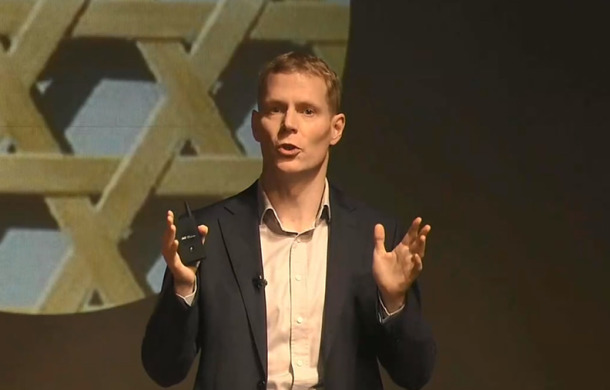
Bennett delivering a keynote address as President of Lenovo Japan
After five years leading Lenovo, Bennett transitioned into the field of AI and joined Tenstorrent, a startup focused on high-performance AI computing based in Austin, Texas, as Chief Customer Officer. This career shift was inspired by his own curiosity and desire for continued learning: “I wanted to go somewhere where I could experience and learn more about AI,” he explains. Now, having left Tenstorrent, he is ready to embark on the next chapter of his career in 2026.
Despite his career transition into technology and AI, Bennett remains connected to the Japanese language and academia, returning to Japan a few times each year to teach a course at Yamagata University as a visiting professor.
And in 2020, he published a book in Japanese, “Curious Japanese from a Foreign Executive in Japan” (Gaishikei-shachō ga deatta, fushigi-sugiru nihongo), documenting his observations of the language’s many quirks and difficulties from his perspective as the president of a foreign company based in Japan. Based on notes he had diligently kept ever since starting his Japanese learning journey in high school, having this book not only be published but also made available in Waseda University’s Japanese Language Students’ Reading Room represents a full-circle moment for Bennett.

“Curious Japanese from a Foreign Executive in Japan” published by KADOKAWA in 2020

Guidance for Students Charting Their Path
When asked what advice he has for today’s students, Bennett encourages them to study what interests them instead of focusing too much on their career at this stage. “I have a really clear belief,” he says, “that you need to study what you like, so if you find something you enjoy, study it. If you study something just for the purpose of a job, I think you will find it more challenging.”

In terms of building a career, he says, “What’s most important isn’t necessarily what you study, but how you study and how you can contribute to society.” In other words, the value of your education comes less from the specific subject you choose and more from the skills, mindset, and sense of purpose you develop along the way. In his own case, his initial interest and passion for Japanese was brought on by its analytical and logical nature, and this ultimately helped shape both his academic and professional paths.
Having experience and knowledge in areas unrelated to one’s current line of work can also be beneficial in unexpected ways. Bennett shares an example from his time as president of Lenovo Japan, in which he met with the late Nobuyuki Idei, former President of Sony and Honorary Doctorate and graduate of the Waseda School of Political Science and Economics. “For about three hours, we didn’t discuss work at all—we talked about classical Japanese literature. That extra educational experience that I had created a connection.”
Bennett also elaborates on the value of studying abroad. “It’s not just about learning about the place that you’re going,” he says. “It gives you a chance to learn more about yourself and become a more well-rounded person.” Even short programs can have a profound impact, and he encourages everyone, including his own children, to gain as much international experience as they can.
Finally, he has words for students who may be facing self-doubt: “In my career and in life, whenever something new comes up, I tend to think I can’t do it at first, or I wonder if I’m the right person for the job. But what I’ve learned through experience is that everyone feels the same way. That’s just natural. The question isn’t whether you can do it right now, but whether you will be able to accomplish it if you put in effort over time. If the answer is yes, then you should tackle whatever it is with confidence and courage.”

This interview was conducted at the Waseda International House of Literature (The Haruki Murakami Library) on Waseda Campus
PROFILE
David Bennett is a Canadian business leader and tech entrepreneur whose career has bridged Japan, global technology, and AI. After beginning in public service in Japan through the Japan National Scholars Program and as a Coordinator for International Relations, he entered the tech industry with AMD. He later served as President of Lenovo Japan and CEO of NEC Personal Computers, and most recently held an executive position at the AI computing startup Tenstorrent. He currently serves on the Boards of Directors of Sanrio Company Ltd. and D4 Enterprise.