Student of Center for Japanese Language
It was Monday evening, and the clock ticked past dinnertime. Students young and old gathered at tables set with ingredients for omusubi, or Japanese rice balls. Some guests were from China. Others hailed from the United States and spoke little Japanese. About half were members of Waseda’s Life Redesign College (LRC), a program for middle-aged and older adults interested in exploring different approaches to the second half of life. They had one thing in common: Everyone was hungry.
The occasion was ”Handmade, Hand-Tied Bonds,” an omusubi workshop organized by Waseda University’s Intercultural Communication Center. Leading the event was Saiko Miyazaki, a self-described omusubi artisan and founder of Omusubi Sun Lab, where she teaches participants the value of the humble rice ball. After all, few things foster connection more readily than a shared meal. As Ms.Miyazaki prepared the rice, her voice softened. There is a name for this process: ogami-arai; to wash as though in prayer. With the tenderness of someone bathing an infant, she rinsed the grains, releasing pale clouds of starch into the water. Yasashiku, she said. Gently.
Ms.Miyazaki’s beginner-friendly lessons are inspired by the late Hatsume Sato, who established HirosakiIsukia, a refuge for those experiencing distress. In life, Sato welcomed visitors with warm omusubi, miso soup, and pickled vegetables, treating food not simply as nourishment but as a form of care.
When Ms.Miyazaki visited Sato , she was struck by what she called the “extraordinary deliciousness” of the meal they shared. Its power came not from elaborate preparation but from the thoughtfulness with which it had been made.
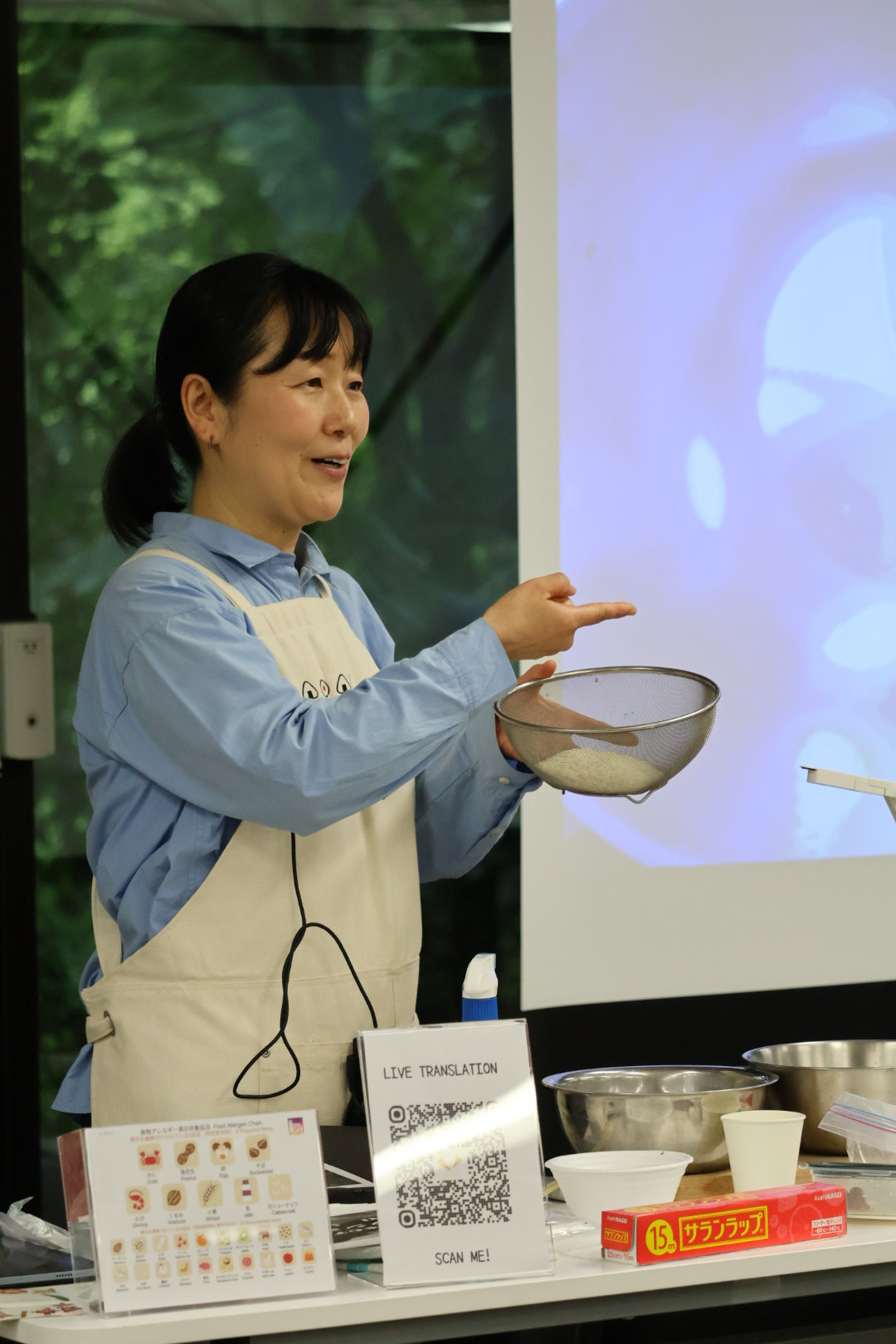
Photo by ICC
“I realized that while I could never master complex French cuisine or elaborate international dishes, I could certainly learn to make a rice ball,” Ms. Miyazaki said. “That simple, grounded realization is what started everything for me.”
Omusubi gave her an accessible method of hospitality: a food that almost anyone can make and offer to others.
That care also extends to the rice and its environment.
For the event, participants used naturally cultivated Kamenoo rice grown at Yatsugatake Southern Foot Farm in Oizumi, Yamanashi Prefecture. The farmer who grew it, a Wasedaalumnus known as Yamaki-san, returned to his alma mater for the workshop. Yamaki cultivates rice without pesticides or chemical fertilizers. When offered a microphone, he declined; his booming voice carried easily across the room.
In his work, Yamaki feels “an immense ecological responsibility.” The farm draws on water filtered naturally through the region’s volcanic rock, and Yamaki regards protecting that water as a personal duty. “Everything is interconnected,” he explained. The ingredients on each table—Yamaki’s rice, sheets of nori, tuna mayonnaise, and dried plum—had arrived by different routes and passed through many hands. It would take just a few minutes to form the omusubi.
At one table sat Shunji-san, a retired salaryman and self-proclaimed rice connoisseur. His eyes widened when the freshly steamed Kamenoo arrived, and he admitted that he would happily eat the rice plain.
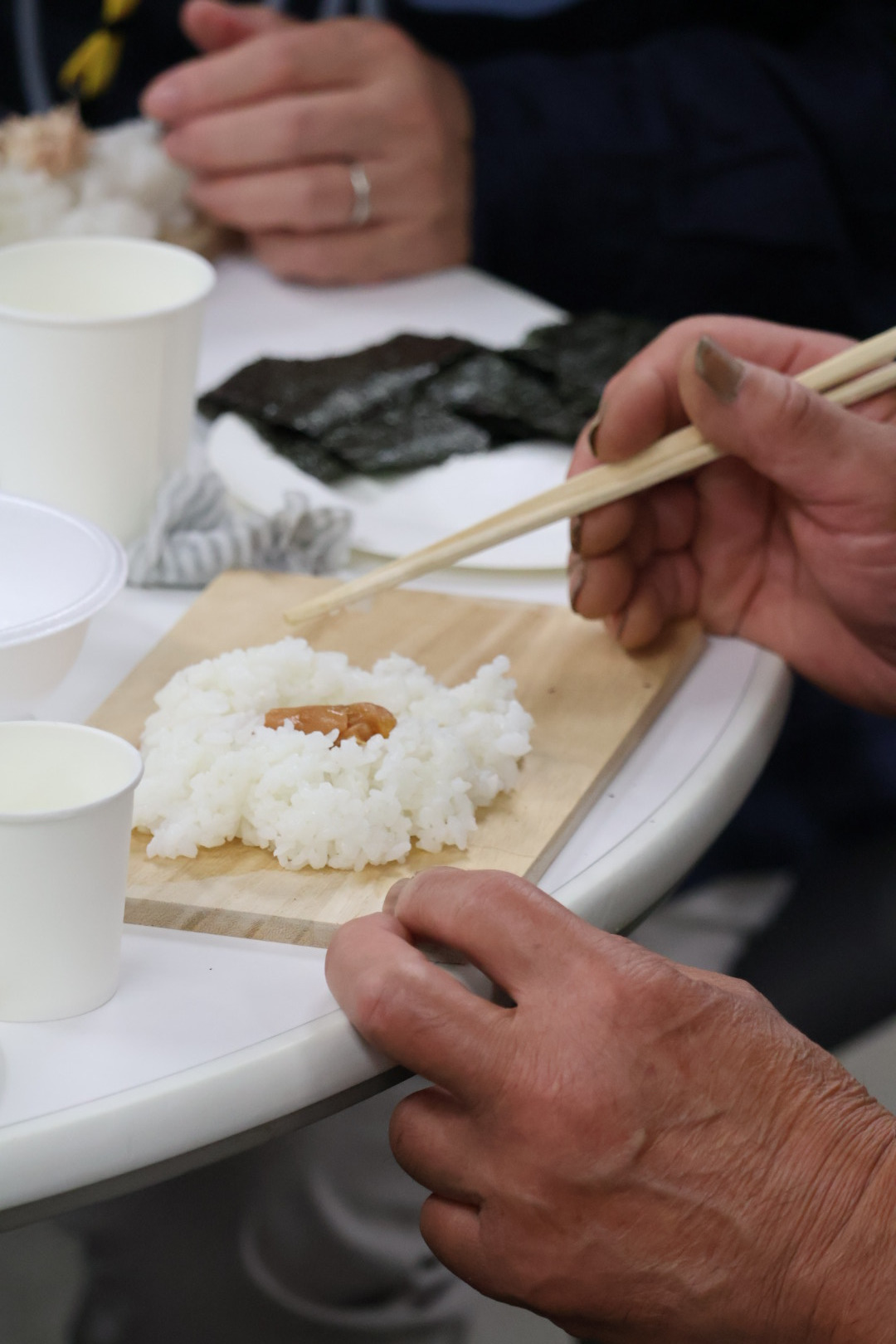
Photo by ICC
Beside him was Yoshiko-san, whom he introduced to undergraduate students as his senpai. While Shunji chose the tuna-mayonnaise filling, Yoshiko opted for a single plum, tucking it into the bed of white grain. Taking a pinch of salt, she rubbed her palms together and began to shape the rice with decades of practiced ease.
With the right guidance, making omusubi may be easier than navigating the plastic film on store-bought versions. Miss a step, and the impeccably portioned sheet of seaweed tears into an unsightly mess. Perfection, however, is hardly the point.
The delight is in the process. Leung-san, a participant from Hong Kong who arrived in Japan last year, likened her creation to a “rice baseball” before wrapping it in dark nori.
“Don’t hold the rice too tightly,” Yoshiko instructed. “Let it breathe.”
The name omusubi is associated with the verb musubu, meaning to tie, bind, or connect. For Ms.Miyazaki, each rice ball embodies those ideas. Omusubi, she feels, represent “the binding together of human hearts.”
Each rice ball carried traces of labor that the diners could not fully see: the cultivation of the grain, the protection of the water, the preparation of the fillings, and the hands that brought them together.
Perhaps what makes food so comforting is the immediacy it brings. With one bite, the senses are grounded. Crisp, umami-rich nori gives way to sweet, fragrant rice; creamy tuna mayonnaise coats the palate; and tangy plum melts on the tongue.
Once the last omusubi had been shaped, a small amount of rice remained in the pot. “It would be a waste,” Shunji remarked. When no one else moved, he shrugged, dipped his fingers into the salt, and savored the rice whole.
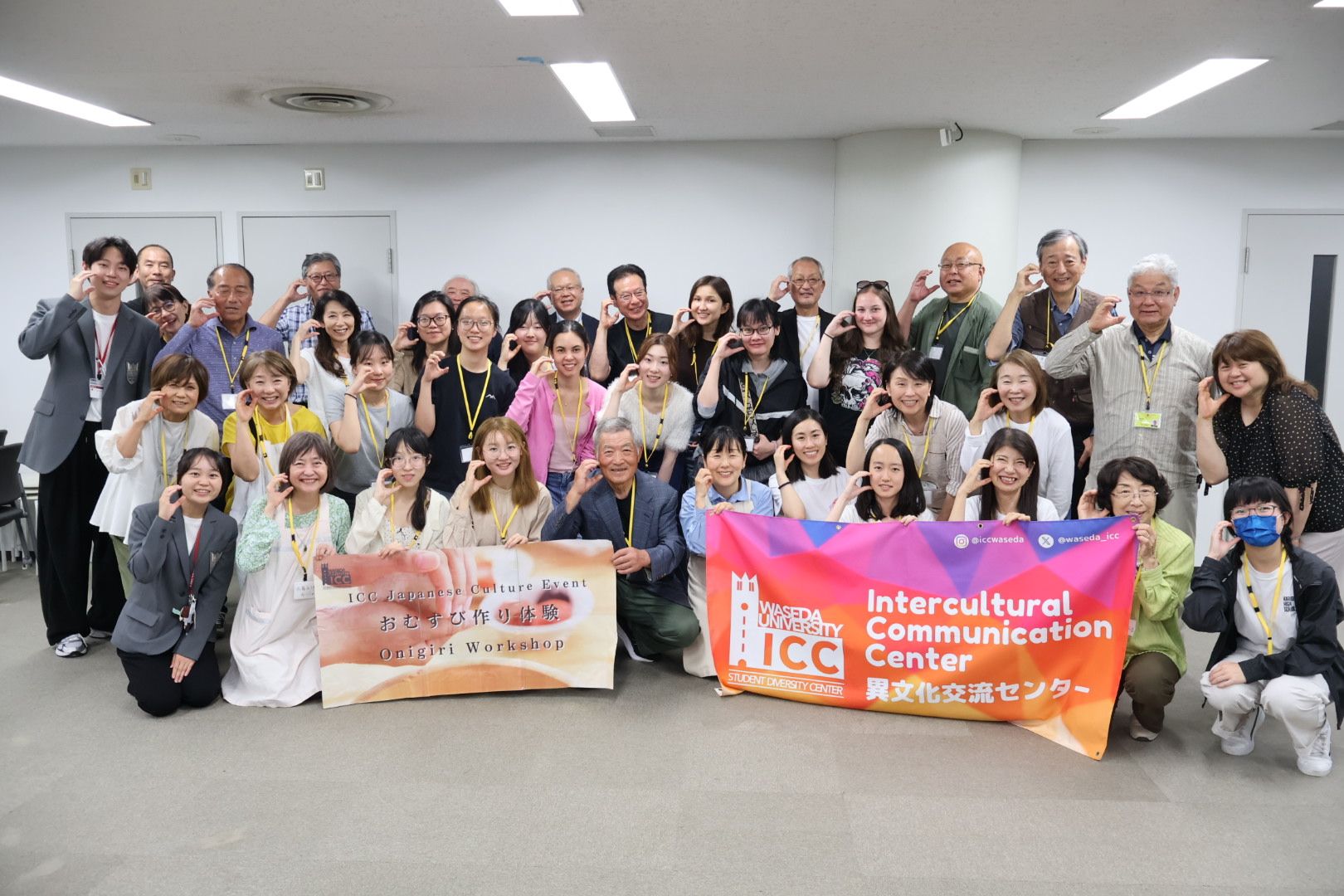
Photo by ICC