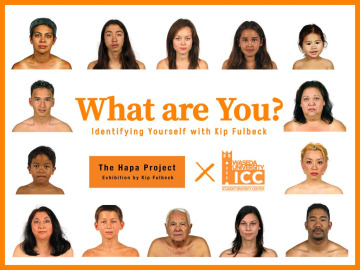
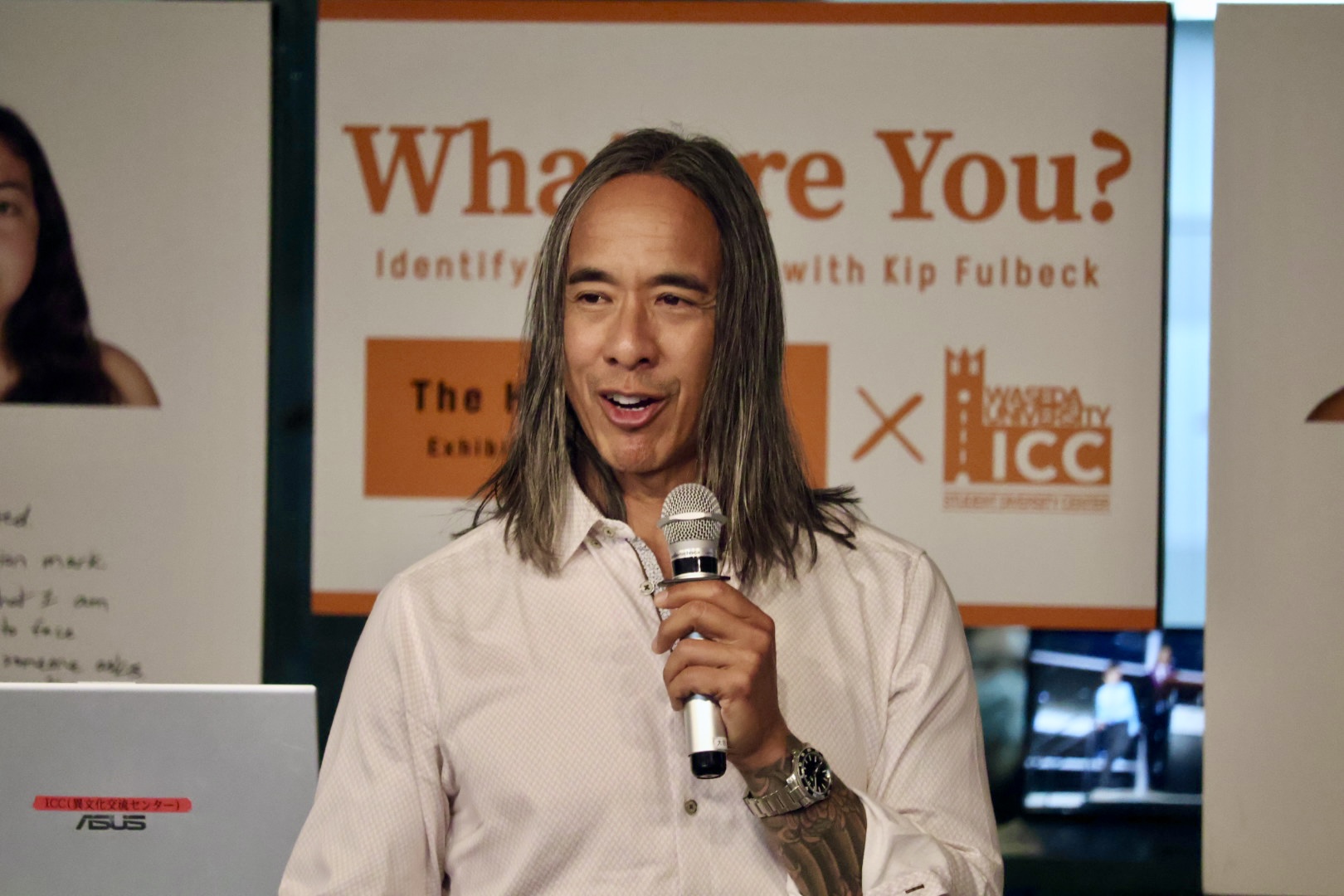
I was drawn to the event ” What are You? ~Identifying Yourself with Kip Fulbeck~” because it offered me an opportunity to think about my identity within a community of people who are also asking the same thing. His presentation on his multiracial identity art project Hapa (meaning “half”), which photographs people of mixed roots and asks them to respond to the question “what are you?” was illuminating as a sociological method and artistic expression. Those who participated in his project hold Asian and/ or Pacific Islander heritage along with some other racial or national identity – subject to scrutiny by wider society or confusion over what they are.
This set off some iffy-ness in me about my identity. On the contrary to the participants’ experiences, my identity is too homogenous, too defined and too privileged. My ethnicity is straightforward, my nationality is straightforward. I can answer both with one word. My life experience is straightforward – I have only lived in one country throughout childhood, stayed with my immediate family, and benefited from the standard education system. I realised I was too comfortable within the well-off majority, which isn’t representative of the diversity of identities in my country.
The professor said that only we can define our own identity but, how can I do that when my identity feels so clear cut and close to the official narrative of a high quality of living? For participants of his project, they struggled with questions about their identity growing up. In a way, they had no choice but to think about it. Compared to that, I didn’t have to struggle with what I was born as. This gap made me feel unqualified to participate in the conversation. However, I think my views on it have changed a little since the event as I interacted with the project exhibit and my group mates during the event.
-
- ICC photo
-
- ICC photo
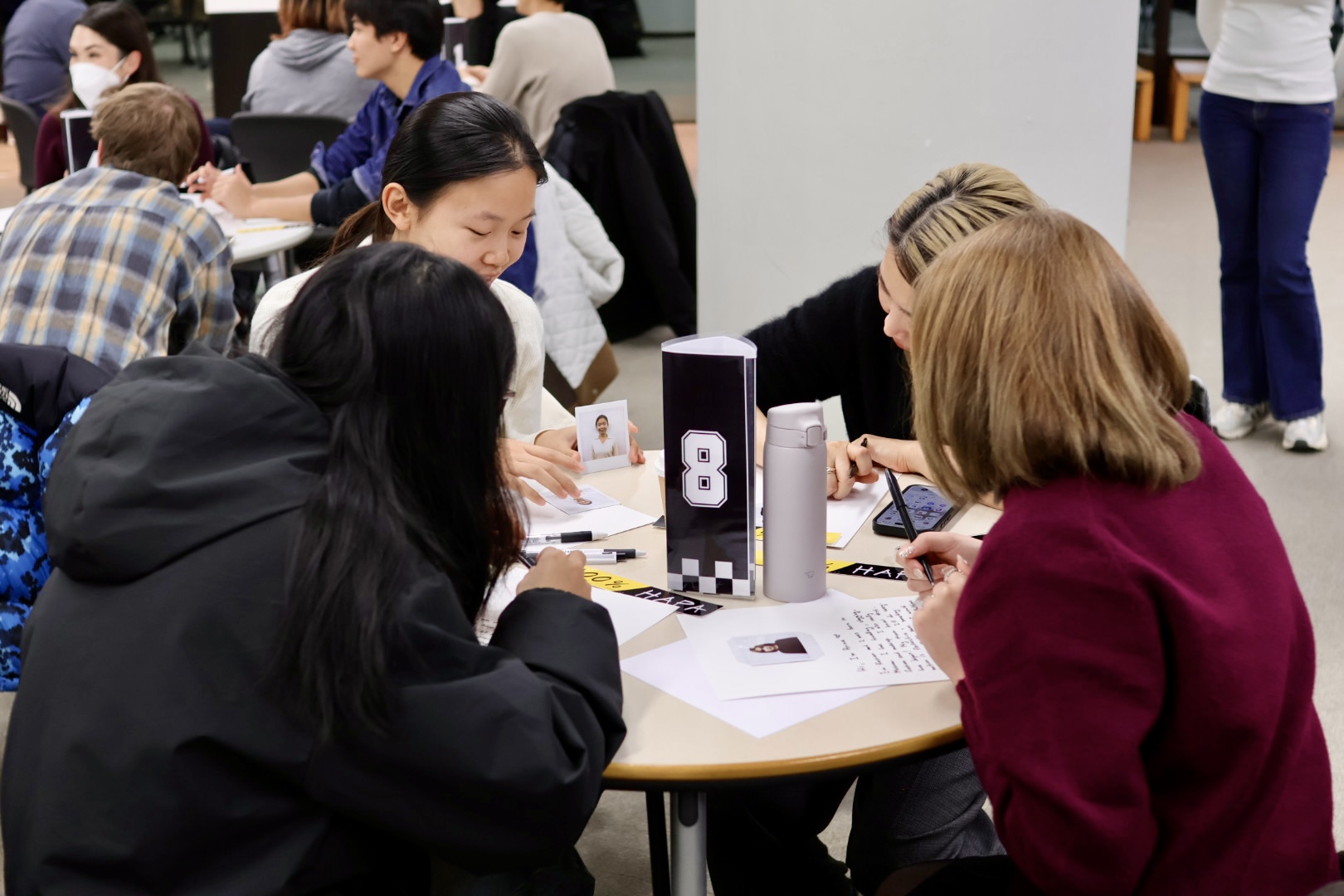
Maybe I don’t have to identify myself through what I was born with (race, nationality) at all. A participant of his project wrote “spam and potatoes”. I had a good chuckle over it. I’ve never met this person but he sounds jolly to be with. I can imagine that he likes spam and potatoes so much that they are integral to his identity. He could be of whatever race and still identify with his favourite food. So, couldn’t I do the same? I can associate myself with my hobbies, interests, and lifestyle. My mom likes to say that I have a duality because of my dichotomous interests from traditional art to metal music, literature to martial arts and outdoor sports, gardens to gaming. It’s true that I don’t take to introducing myself with my race and nationality unless I’m asked. So, that could be a possibility. Why let race and nationality define me and colour my interaction with others when I didn’t choose them? I’d much rather present myself in a way of my choosing and form connections with others based on organic commonalities.
A second thing I figured out was that identity isn’t fixed, so there’s no need to be too hung up on my identity up till now. Even if I’m not “half” by birth, I can become “half” by enriching my life with multiple perspectives and immersing myself in wider communities. The first type of half is something we have no control over – used to describe ourselves to others. The second type of half is an attitude that seeks to understand things beyond what we already know – for our own intrinsic curiosity and potential. Something to this effect was shared by my group mate who felt that even though she isn’t a half personally, she was half by extension of all the interpersonal and intercultural connections she has made in her life. Her family relationship by marriage is one that crosses racial and national boundaries – unbounded by sensibilities of homogeneity and familiarity. Can’t I view myself in a similar way too? The choices that I make expose me to new sides of myself, progressively refracting my identity.
Honestly speaking, most of us don’t experience sudden, life changing events. Instead, it is the seemingly trivial everyday encounters that shift our perspective bit by bit as we think through them. Keeping an open eye and ear on my surroundings certainly helped me to be more aware of frameworks to think through identity or any other problem in society. Also, I initially had doubts on whether I could qualify to talk about identity, my identity at that, because I wasn’t sure if I was the target group of the “half” experience. But, I’m glad that I was proven wrong and could come to terms with the contradictions within myself. So, I would say to anyone considering joining more events in university to take the plunge! The experience may not have any lasting impact in the grand scheme of things, but it may be a building block to something more as well.
ICC photo