Stella
Graduate School of Asia-Pacific Studies
What does it take to make someone tell you what they really think?
That question sat at the center of the three-day, two-night trilateral student camp I recently joined, bringing together students from China, Japan, and Korea. Before I arrived, I imagined the program would be a mix of cultural exchange and casual fun. It turned out to be something far more demanding, and far more rewarding.
The camp wove two threads together throughout the three days: study and play, which were equally full. On the “study” side, we split into groups and each chose a topic among complex issues such as history education, political participation, and territorial disputes. We researched it in depth, then took turns role-playing as representatives of the other two countries, building toward a final presentation of our group’s findings on the last day. On the “play” side, we had original card games designed by the organizers, various kinds of sports, a barbecue, and late-night dorm conversations. It was, in every sense, the university youth I had once only imagined from a distance.
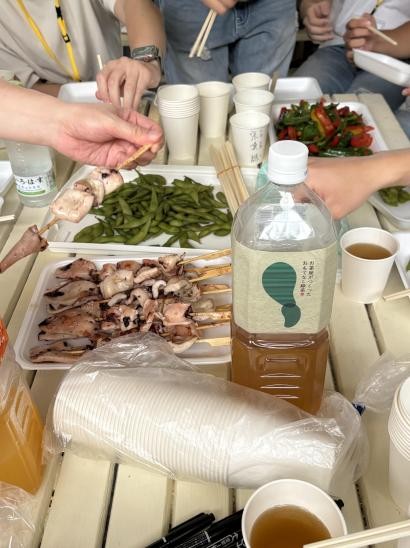
The barbecue – Photo by author
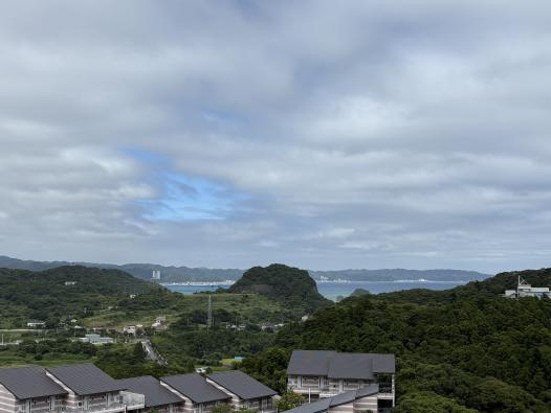
The beautiful view from the rooftop -Photo by author
Before the project work even began, something happened on day one that stayed with me. Each group was asked to set its own rules for how to get people to actually say their 本音 (honne), their true feelings, rather than the polite surface version. One of my groupmates proposed a rule that struck me as almost counterintuitive: don’t read the air. In a culture where reading unspoken social cues is often assumed as a virtue, deliberately suspending that instinct felt strange at first. But over the following days, I understood exactly why it mattered. The organizers added a rule of their own that I found just as meaningful: when a topic feels too difficult to answer, don’t retreat from it. Try, instead, to express what you can.
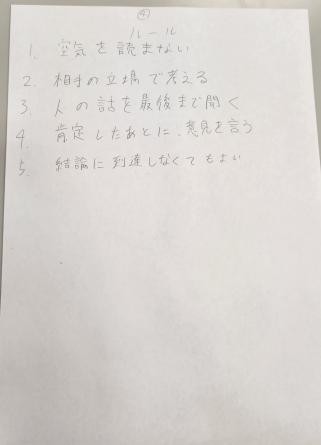
The rules our group made -Photo by author
That combination of rules created something I rarely encounter in daily life: a space where people felt safe enough to voice honest opinions about genuinely sensitive questions. In ordinary conversation, we tend to brake before we get anywhere near deep, potentially uncomfortable topics, out of fear of awkwardness or conflict. Here, because we all shared the goal of completing a group presentation together, we had real reason to open up about the historical and political questions between our three countries that we were curious about, yet rarely dared to raise elsewhere.
The role-play exercise made this especially vivid: as a Chinese student, speaking from Japan’s or Korea’s position turned out to be much harder than I expected, since it meant setting aside assumptions I had taken as given and reconstructing an argument from premises that were not my own. That difficulty carried straight into our group project, which examined each country’s relationship with the United States. The two of us from China and our Japanese and Korean groupmates held genuinely different views on the current state of US-China relations, and at first this gap felt like something we would simply have to talk around. Instead, we turned it into the question our presentation was built on: what exactly does this difference in perception look like, and where does it come from? Reframing our own disagreement as the object of study, rather than an obstacle to get past, ended up being the most interesting part of what we presented, and the clearest proof that struggling through the difficulty was worth it.
If I had to name a second gift from this camp, it would be what one student staff member, herself a participant in last year’s program, called the possibility of lasting friendship. Conversations that stay at the level of hobbies and small talk rarely survive once people go their separate ways. It is the deeper conversations that let you find people whose values genuinely align with yours. As an international relations student, I study topics that rarely come up in everyday conversation, not exactly the stuff of small talk. During this camp, for the first time, I met a Japanese friend who was genuinely curious about my research, and I found myself explaining it in Japanese as best I could, while she shared the fascinating details of her own field in return. Since coming home, we have been recommending books to each other on LINE, and we were already planning to join another event together.
Three days is a short time. But it was long enough to learn that honesty takes deliberate effort to build, that seeing an issue from another country’s standpoint is harder and more valuable than it sounds, and that the friendships worth keeping are usually the ones built on the conversations we almost talked ourselves out of having.
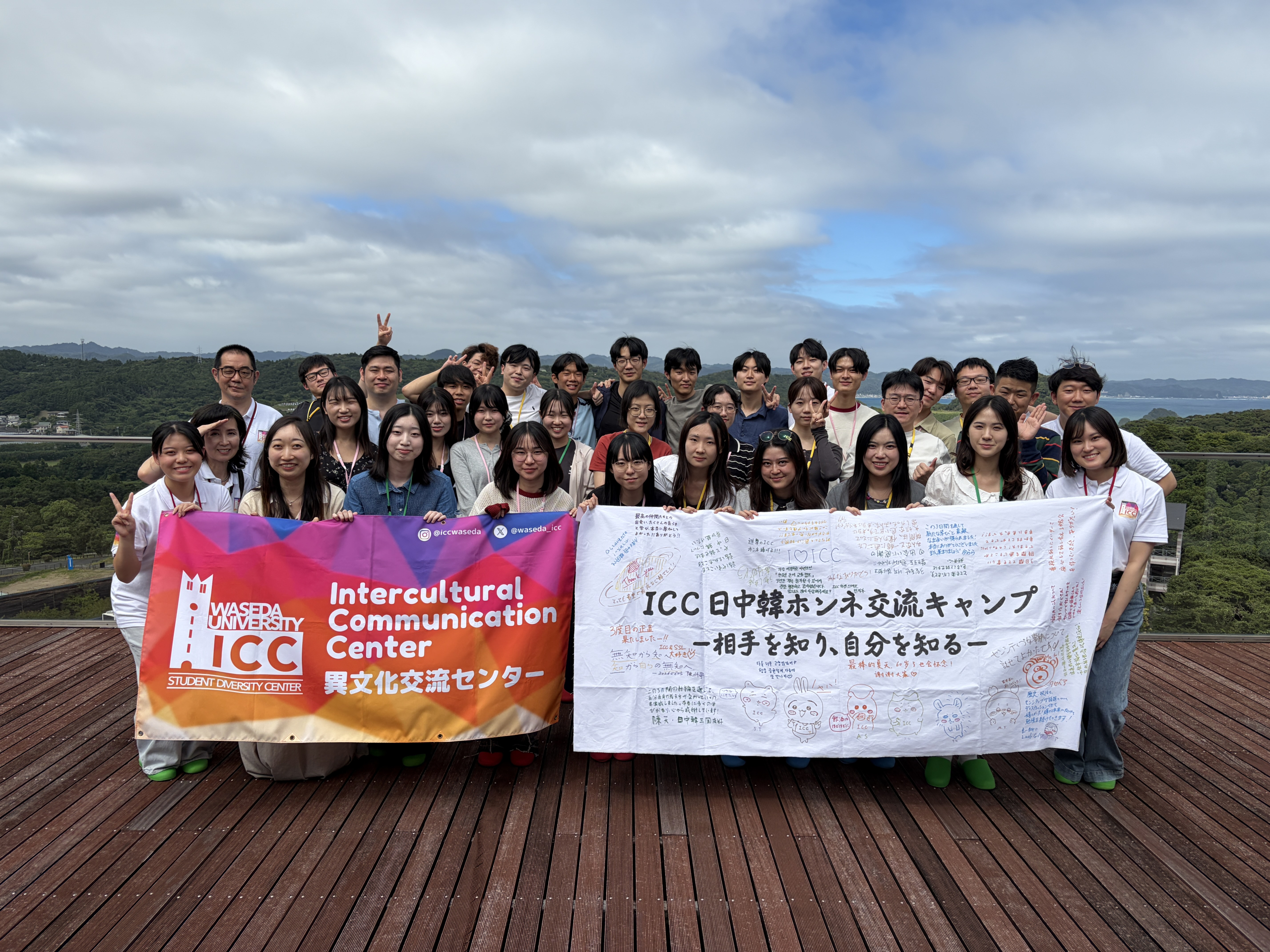
Photo by ICC