Maru
When I think about a self-introduction, I realise it is never just a summary of facts. It is not a checklist of achievements, a list of schools attended, or a timeline of countries lived in. When I graduated from high school and gradually gained more experience and knowledge, I began to understand that condensing a life into a few sentences is not about categories, it is about character and values.
Having lived in many countries, I have had to adapt to different languages, customs, and ways of thinking. Each place has shaped me, but none of them fully defines me. When you cross borders often enough, nationality begins to feel less like an identity and more like an administrative detail. It may appear on a passport, but it does not capture your worldview or your principles.
So how do I introduce myself?
Not simply by where I was born. Not only by what I study or the job title I hold. A self-introduction can be more human than that. It can include what I enjoy doing on a quiet afternoon, the food that brings back memories, the dreams that wake me up early in the morning, and even the fears that challenge me to grow. These details may seem small, but they often reveal more about a person than labels ever could.

Photo by author
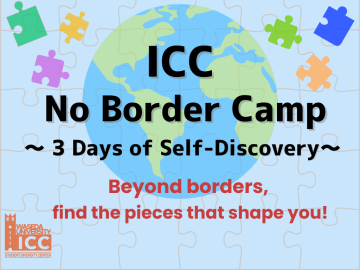
Before attending the “ICC No-Border Camp,” I found myself asking: If I had a reset button, who would I choose to be? What would I regret not doing? I realised I would regret limiting myself because of assumptions, whether my own or those imposed by others. So I made a decision: to accept everyone, make friends with everyone, and approach each conversation with openness instead of caution.
Bias and prejudice make introductions smaller than they should be. If we judge by appearance, accent, passport, or stereotypes, we might place people into mental boxes, perhaps because it feels efficient. But labelling someone through our limited lens prevents genuine connection. It reduces a complex human being to a simplified category.
At the “ICC No-Border Camp,” the idea is simple yet powerful: there is no border that separates us. Borders may exist on maps, but they do not define human worth. When we remove the emphasis on nationality, we begin to see individuals beyond flags.

Photo by ICC
If I must introduce myself in one sentence, perhaps it is this:
“I am just another citizen of the Earth, and I am your neighbour.
I hope we can get along well!”