
From the Dean
Creating a Future of Well-being through Human Sciences
Yumi Matsubara
Ph.D., Dean, Graduate School of Human Sciences, Waseda University
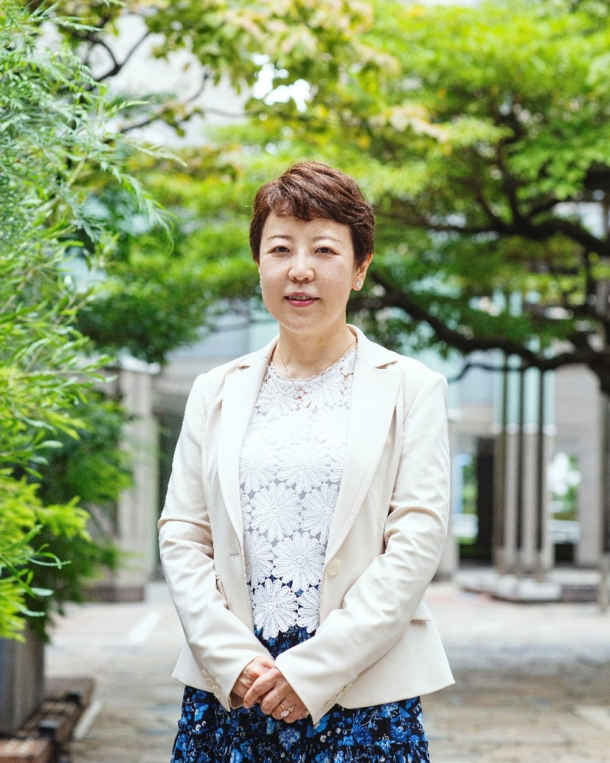
Here in Tokorozawa, surrounded by rich natural landscapes of forests and lakes, the Graduate School of Human Sciences has pursued research that transcends traditional disciplinary boundaries. By placing human beings at the center of inquiry, we have sought to address complex social challenges and enhance human well-being, enabling people to live better lives.
Nearly forty years have passed since the School of Human Sciences was established. Yet can we say that Japan and the world are moving toward a future in which people can live better lives? At a time of deepening conflict and division, we seem to be witnessing a growing tendency toward a logic that might be described as “might makes right.”
It is precisely at such a time that I believe Human Sciences, with its focus on each individual human being, is needed more than ever.
In considering well-being, it is important that each person be able to choose a way of life they have reason to value and have the opportunity to realize it. This requires creating environments in which people can fulfill their potential and choose how they wish to live, regardless of age, gender, disability, or other circumstances.
To create such environments, we need to understand not only human beings themselves, but also the technologies, societies, institutions, and environments that surround them from multiple perspectives. Everyone makes mistakes. Rather than attributing such mistakes solely to individual responsibility, Human Sciences asks why people make mistakes and how they can be prevented. By examining human cognition, psychology, education, technology, organizations, and institutions, we can seek to redesign machines, organizations, and systems. This is one way in which Human Sciences can contribute to society.
At the same time, what is desirable for human beings is not necessarily desirable for the global environment. We therefore need to consider human well-being in relation to nature and the environment of our planet. The increasing frequency of disasters associated with extreme weather, for example, calls for solutions on a global scale.
There are questions that no single academic discipline can answer. Human Sciences brings together knowledge from different fields to address such questions through scientific inquiry. In times such as these, I believe the role of Human Sciences is becoming more important than ever.
I hope that the Graduate School of Human Sciences will be a place where each of you can deepen your own questions, encounter different forms of knowledge, create new knowledge, and connect it to society.
What does it mean to be human? What does it mean to live well?
Together with you, I hope to continue asking these questions and creating a new future.
(September 21, 2026)