- Featured Article
Identifying the Original Owner of a Donated Photo Album: The Masami Kokubo Collection
The Photographs and the Process of Investigating Its Provenance
Tue 04 Aug 26
The Photographs and the Process of Investigating Its Provenance
Tue 04 Aug 26
On July 25, 2024, the Waseda University History Museum (Director: Prof. Manabe Masayuki, Faculty of Letters, Arts and Sciences) accepted the donation of a photograph album. According to the donor, the album had been entrusted to them for donation by a friend residing in the United States. The donor also explained that neither they nor their friend had any direct relationship with the album’s original owner.
Following conservation treatment, the archivist examined the album’s photographs, handwritten captions, and related materials. Based on this investigation, we concluded that the album had originally belonged to Masami Kokubo (小久保正美), and accordingly designated it “The Masami Kokubo Album, Donated in FY2024.” This article presents all of the photographs contained in the album and documents the process through which we identified its original owner.
When quoting text or images from this article, please cite the source as follows:
- Author: Waseda University History Museum
- Title: Identifying the Original Owner of a Donated Photo Album: The Masami Kokubo Collection
- Website: Waseda University History Museum
- Date of publication: August 4, 2026
- Last Updated: September 2, 2026
- URL: https://www.waseda.jp/culture/archives/news-en/2026/08/04/7620/
The photographs and their captions
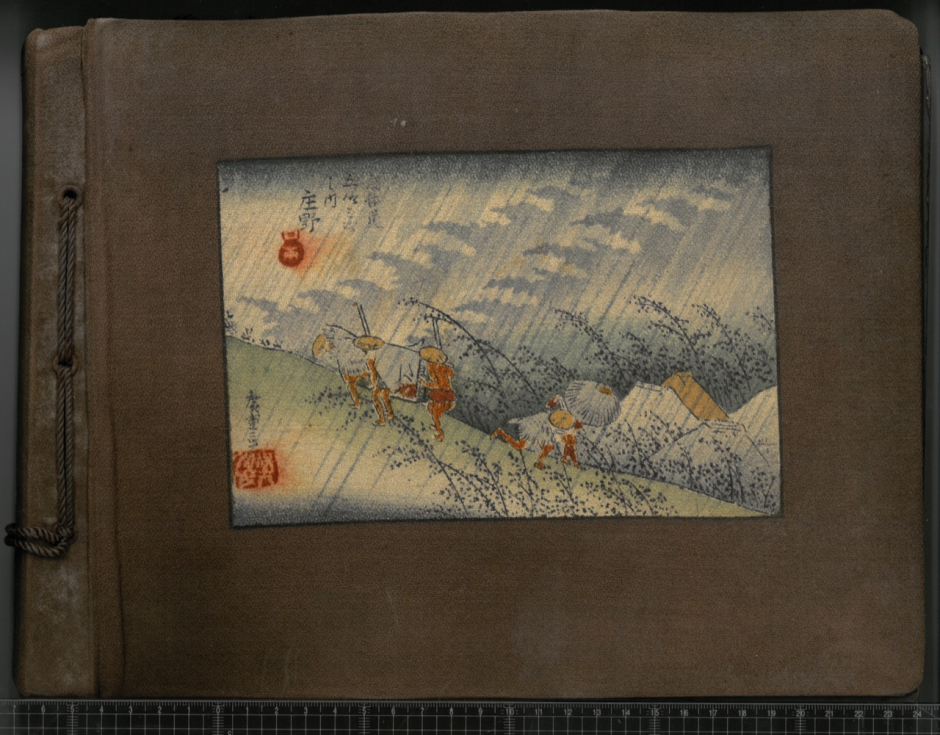
The cover of the fabric with the drawing of "53 Stations of the Tokaido Road: Shono; Hiroshige Painting"
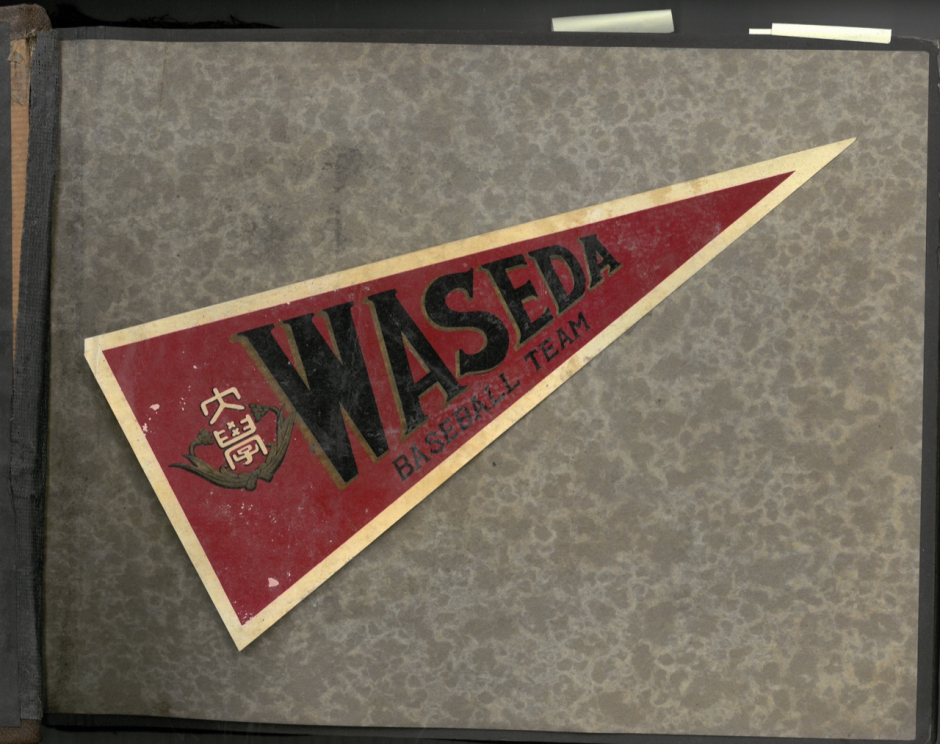
"WASEDA BASEBALL TEAM"
"真夏の戸塚にて". No photos.
"郷土熊谷にて". No photos.
Assuming that the caption was written by the previous owner, we can assume that the previous owner was from Kumagaya.
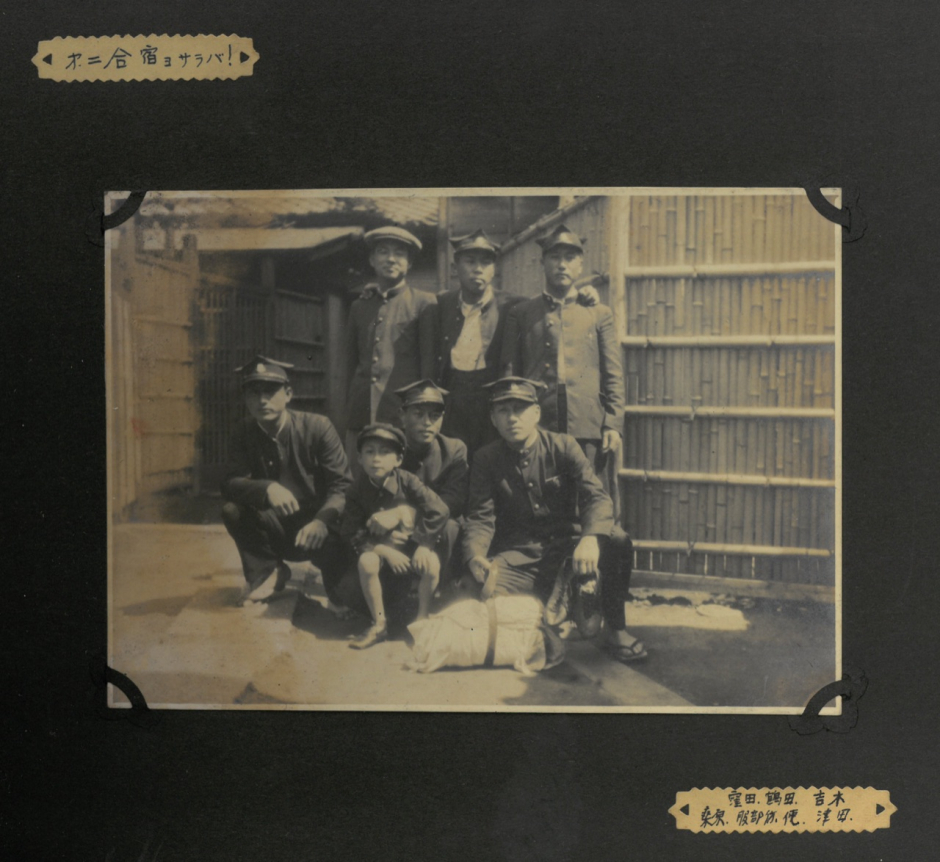
"第二合宿ヨサラバ!", "窪田.鶴田.吉木./桑原.服部坊〔カ〕.俺.津田"
A photo of “me” appears. Assuming that the order of the last names listed in the caption corresponds to the positions of the people in the photo, it can be inferred that “me” is the person in the center of the bottom row holding a child.
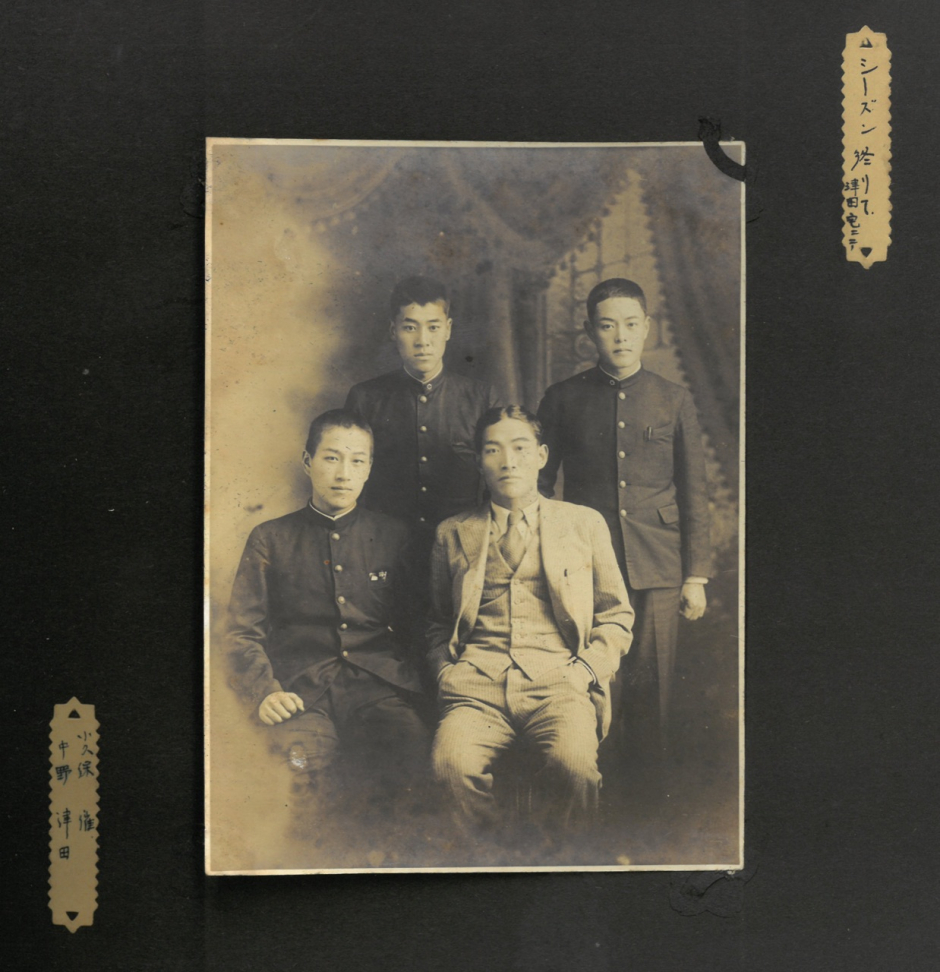
"シーズン終わて.津田宅ニテ", "小久保 催/中野 津田"
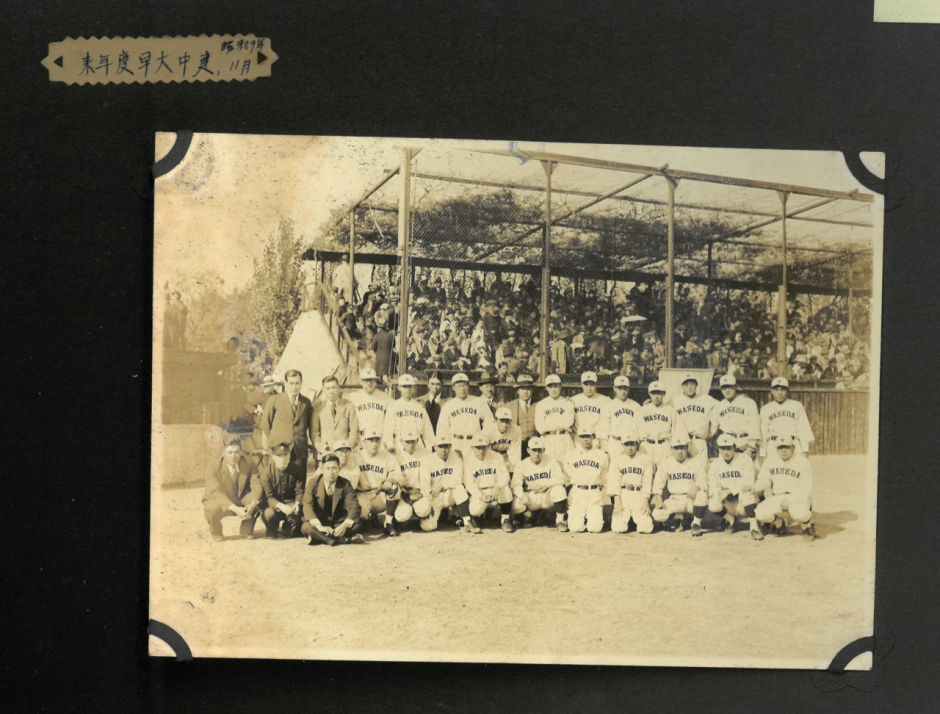
"来年度早大中建.昭和9年11月"
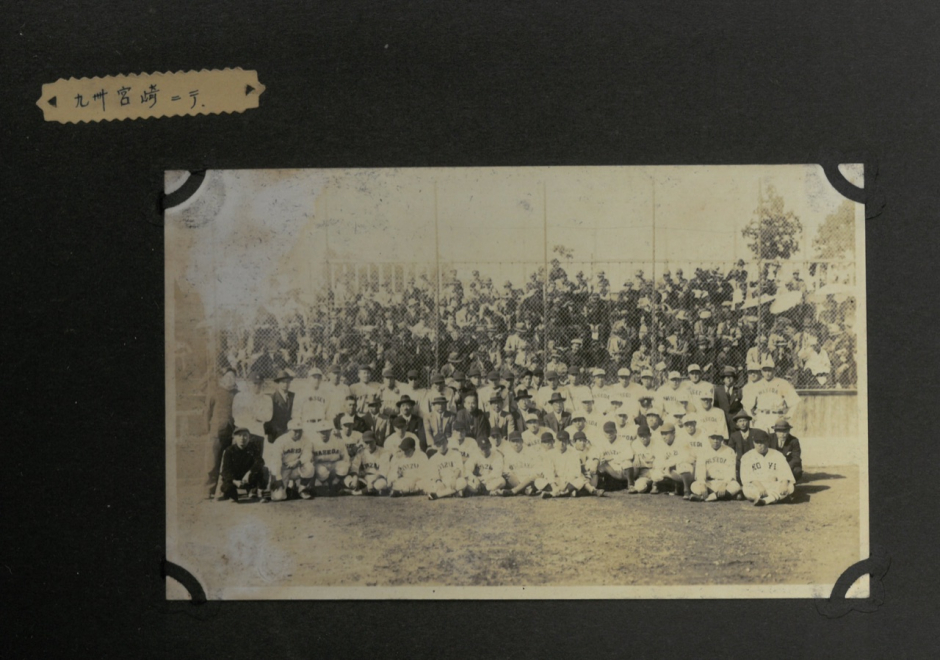
"九州宮崎ニテ."
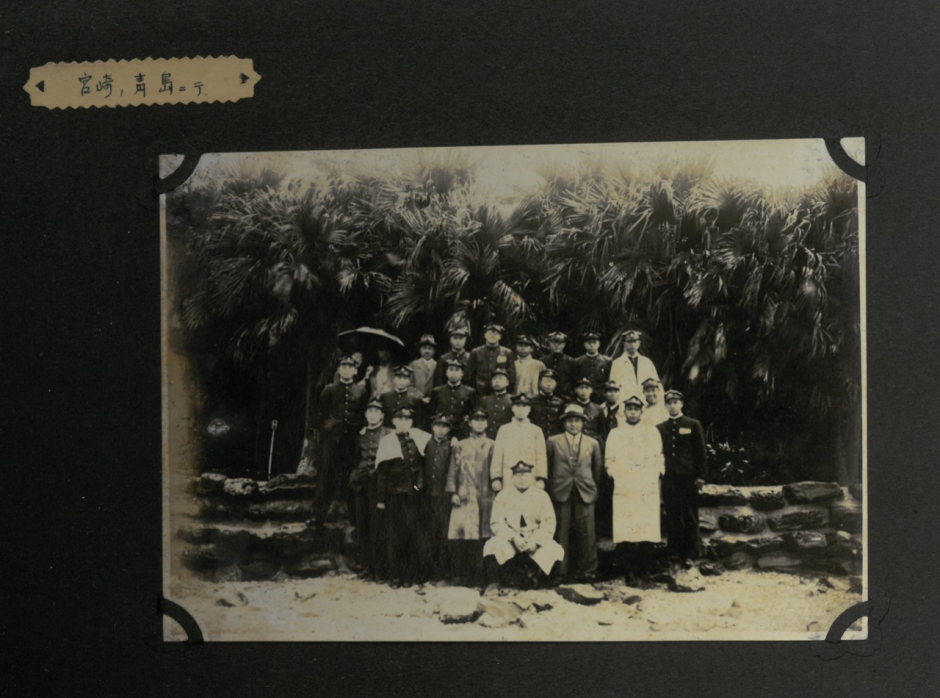
"宮崎ノ青嶋ニテ"
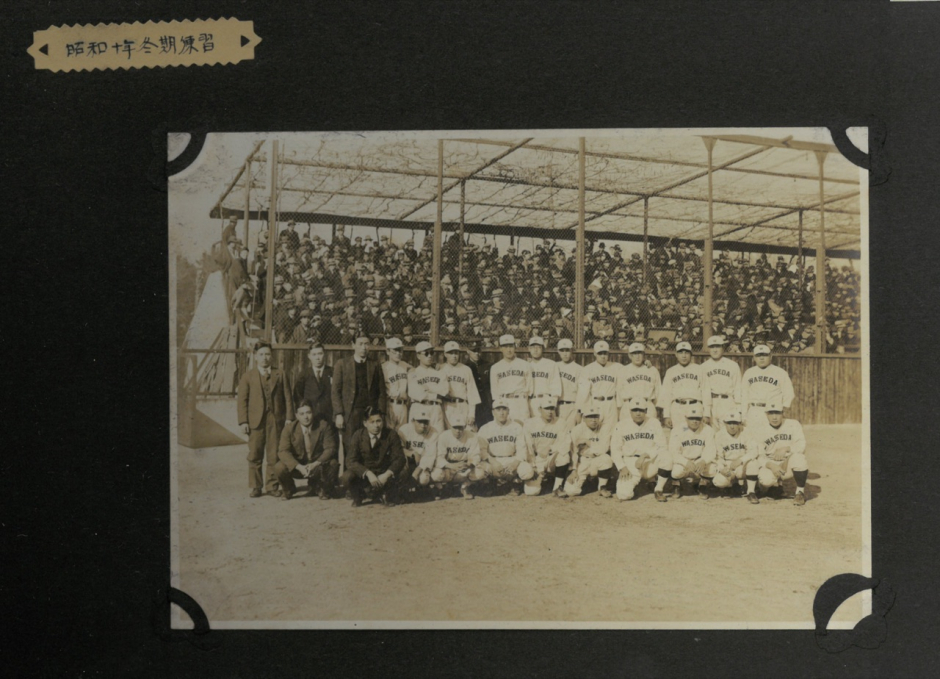
"昭和十年冬季練習"
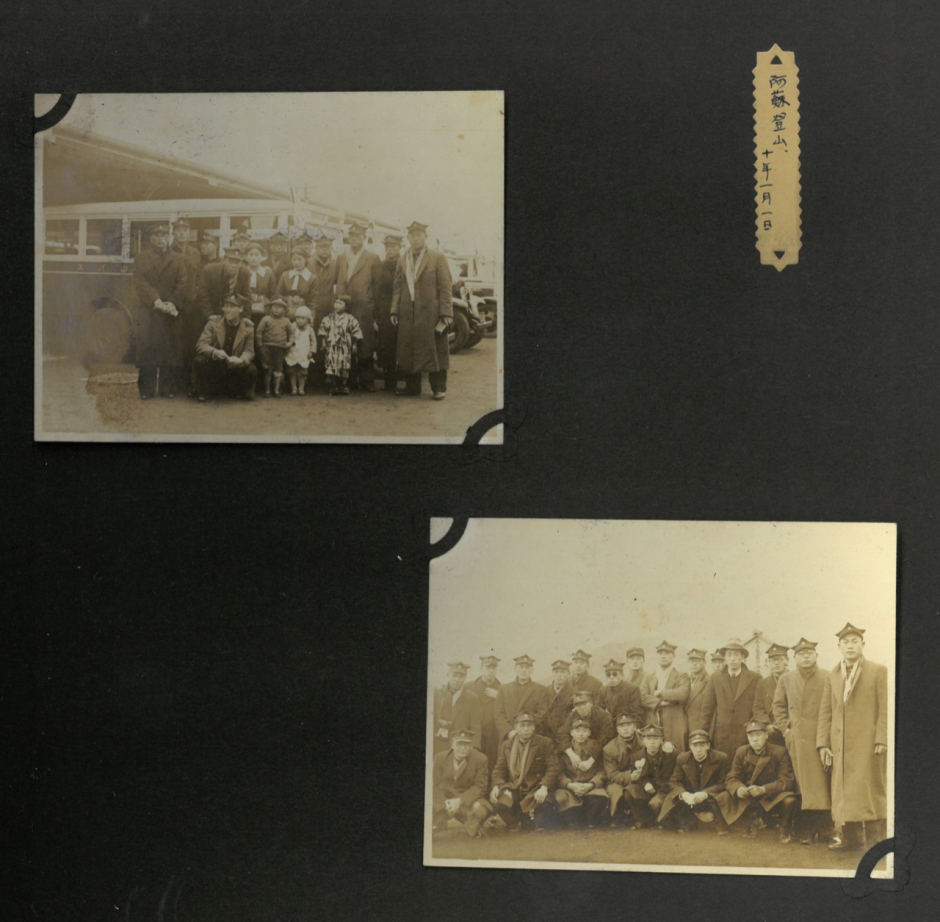
"阿蘇登山.十年一月一日"
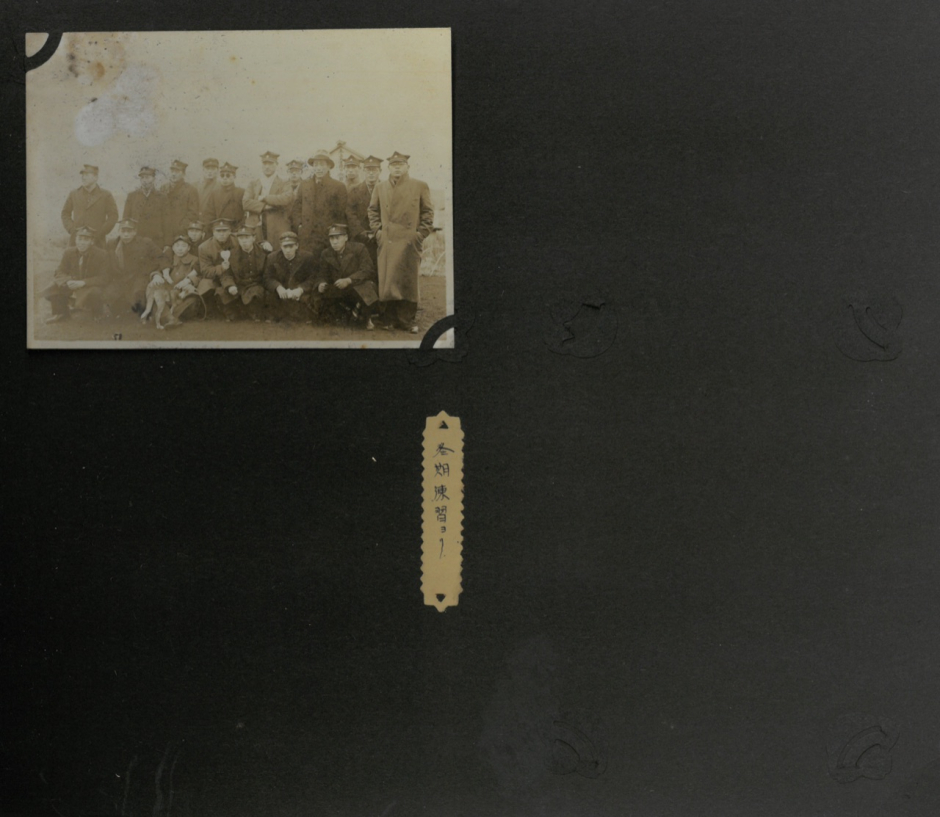
"冬季練習ヨリ". There is a section for attaching one photo, but there is no photo.
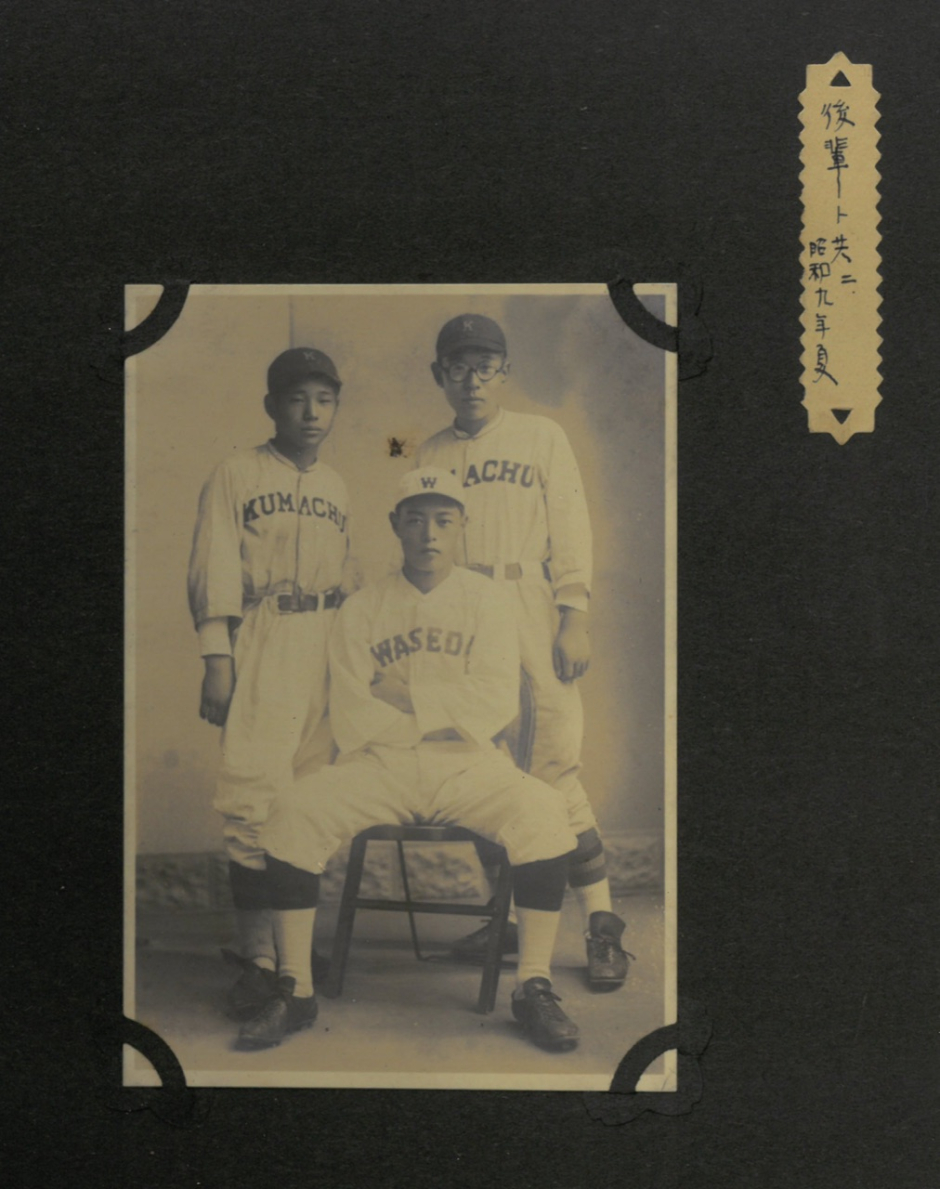
"後輩ト共ニ.昭和九年夏". The uniforms of the two people in the back, who appear to be underclassmen, read “KUMACHU.” The person sitting in the center is presumed to be the original owner.
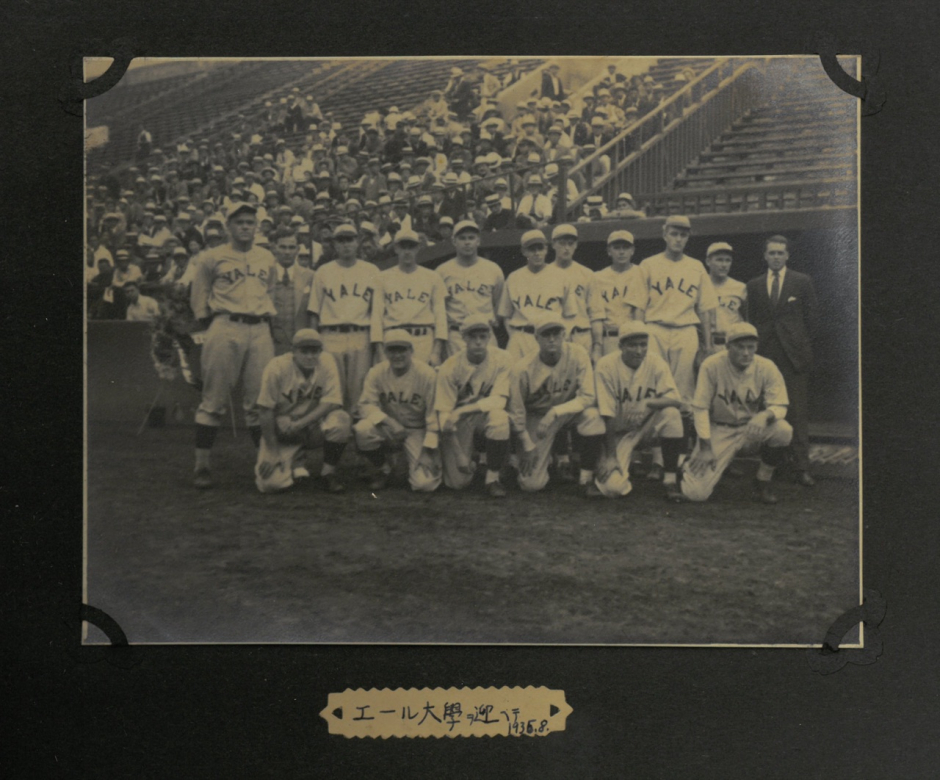
"エール大学ヲ迎ヘテ 193[5].8.". It looks as if the “5” was rewritten as a “6.”
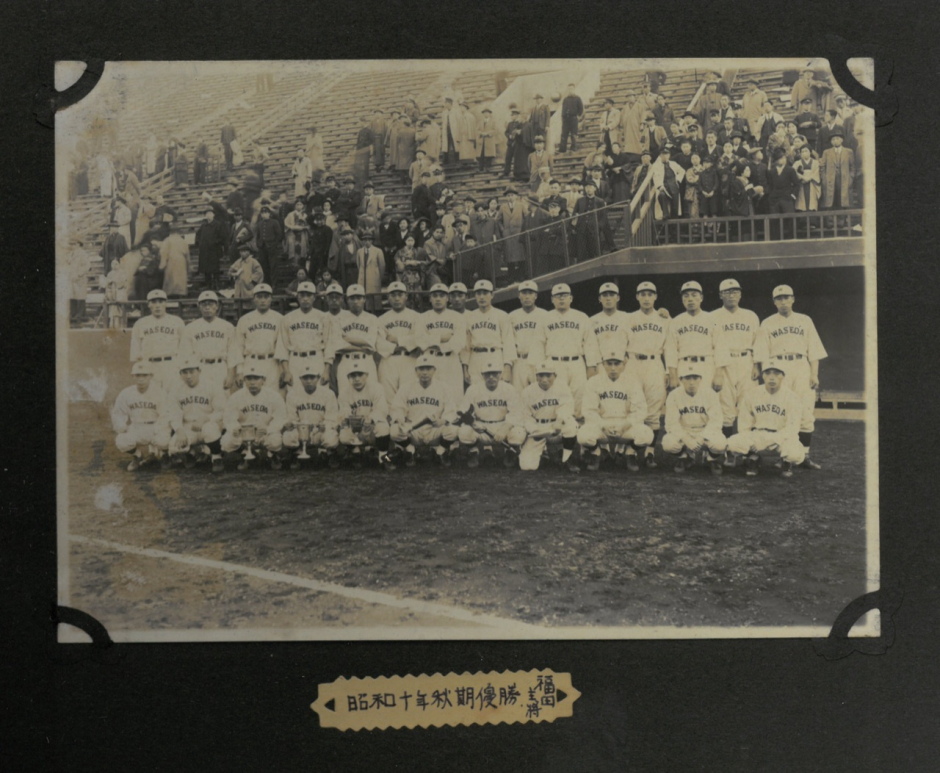
"昭和十年秋期優勝.福田主将"
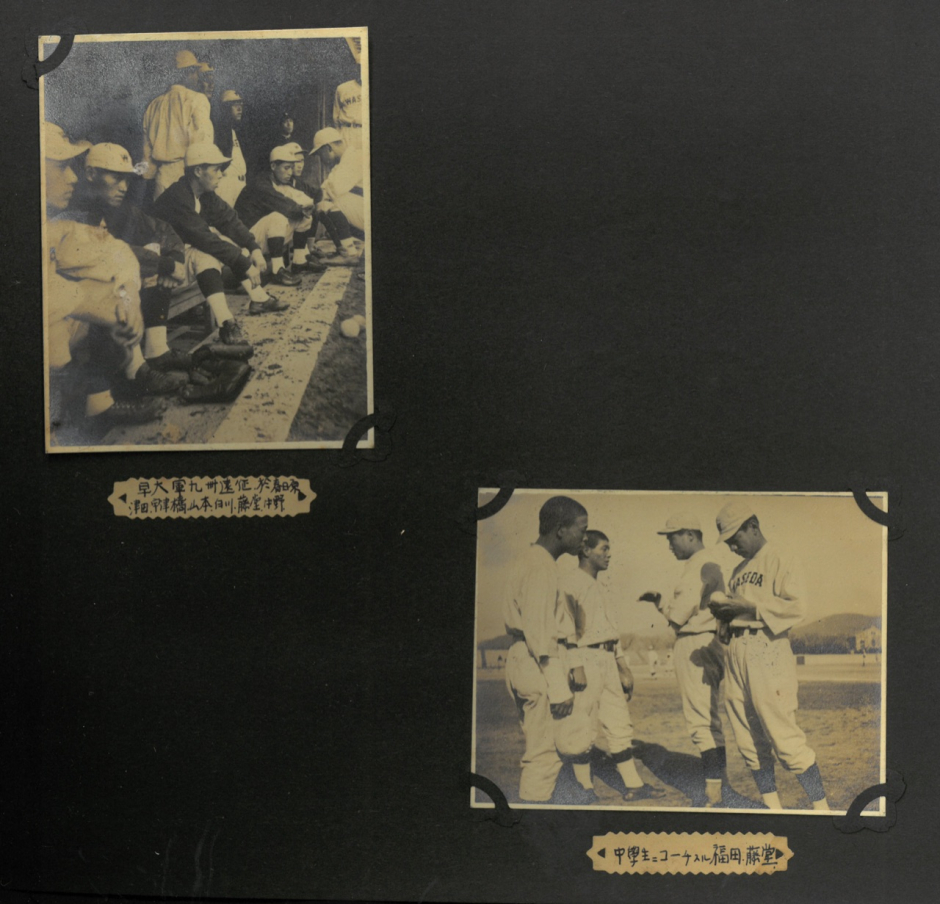
"早大軍九州速征.於春日原 津田、宇津橘、山本、白川、藤堂、中野", "中学生ニコーチスル福田、藤堂"
The previous owner may have been associated with the baseball team around 1934–35 [Shōwa 9–10]. Furthermore, since the two individuals who appear to be the “junior teammates” in the photo titled “With Junior Teammates” are wearing “KUMACHU” uniforms, the previous owner may have been a graduate of Kumagaya Junior High School.
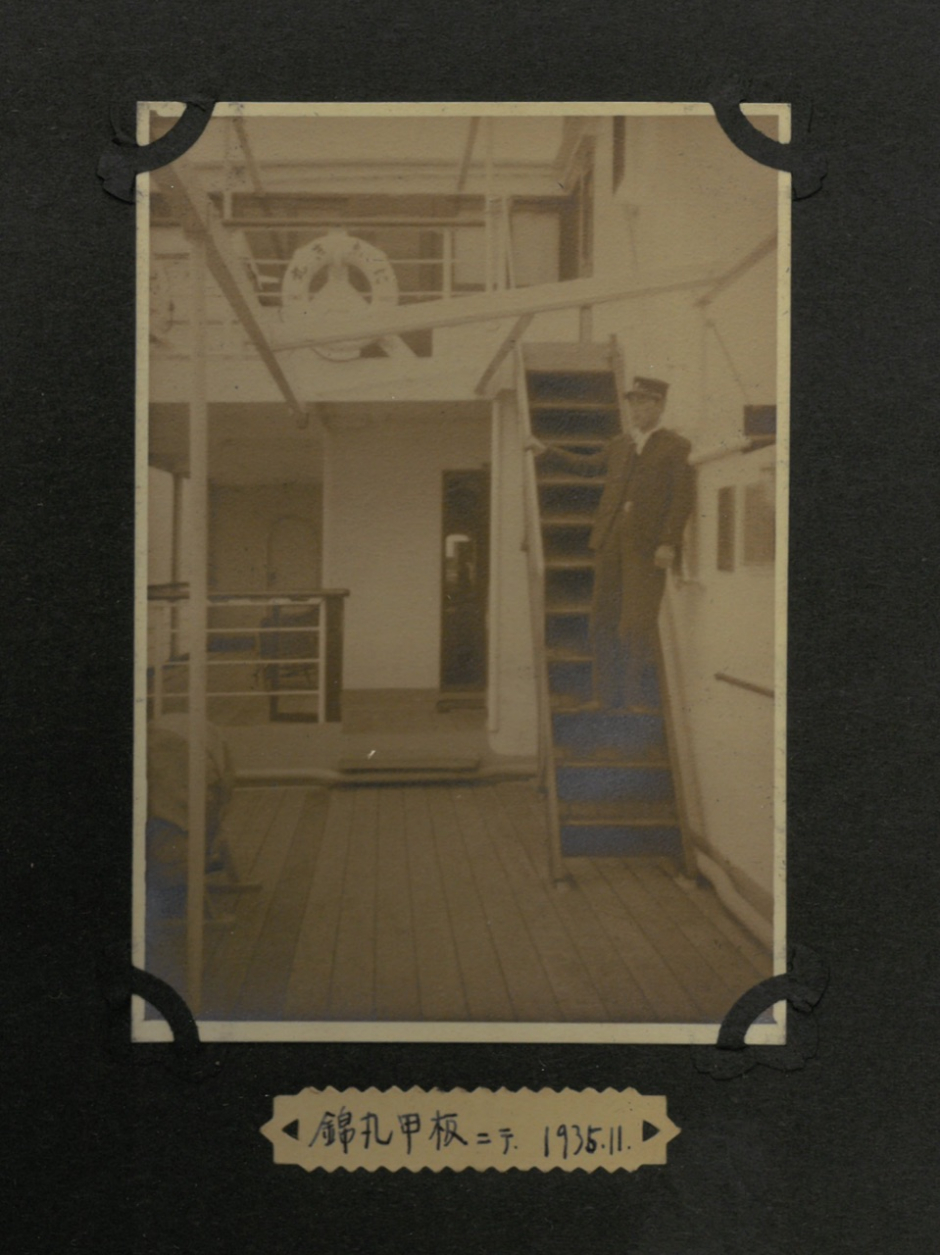
"錦丸甲板ニテ.193[5].11.". The “5” looks as if it has been rewritten as a “6.” The word “Nishikimaru” is written on the swim ring.
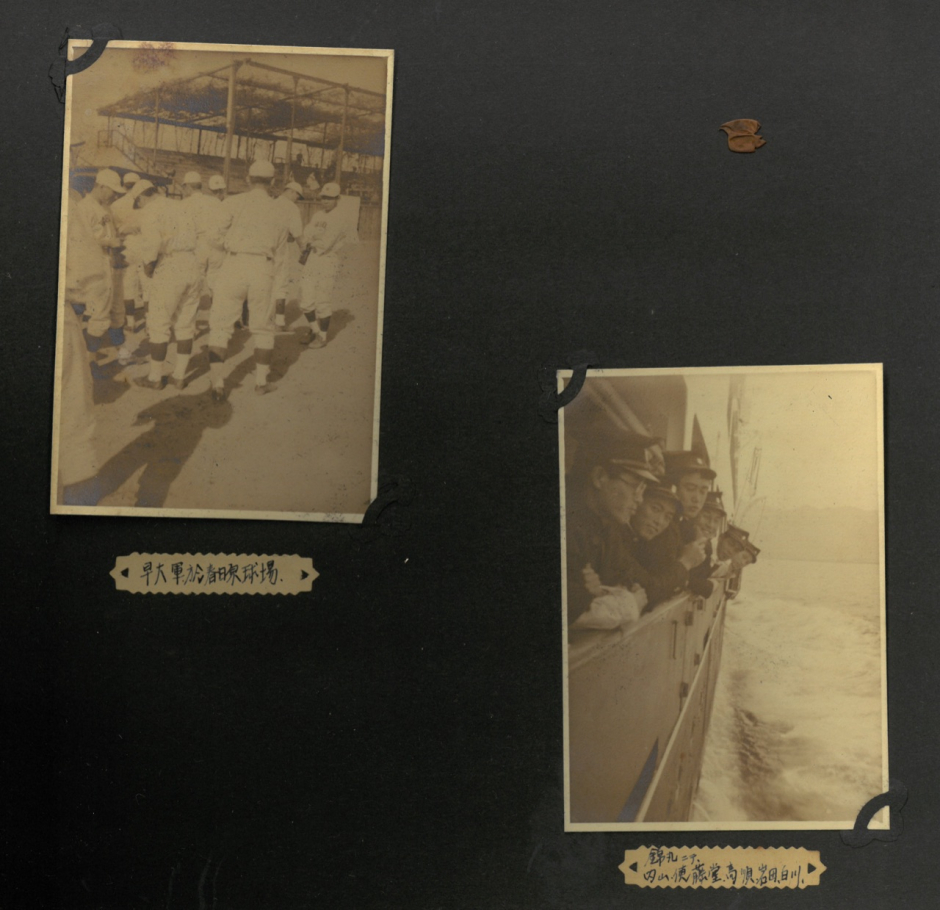
"早大軍於春日原球場.", "錦丸ニテ.内山.俺.藤堂.高須.岩田.白川."
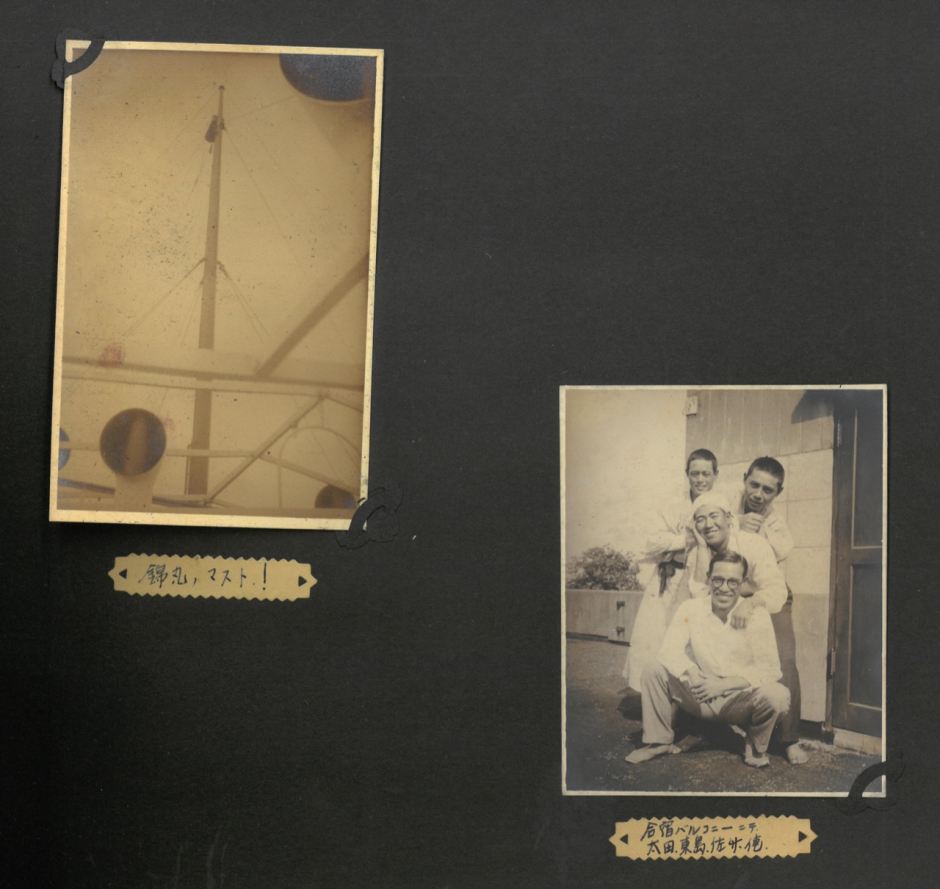
"錦丸,マスト!", "合宿バルコニーニテ.太田.東島.佐藤?.俺."
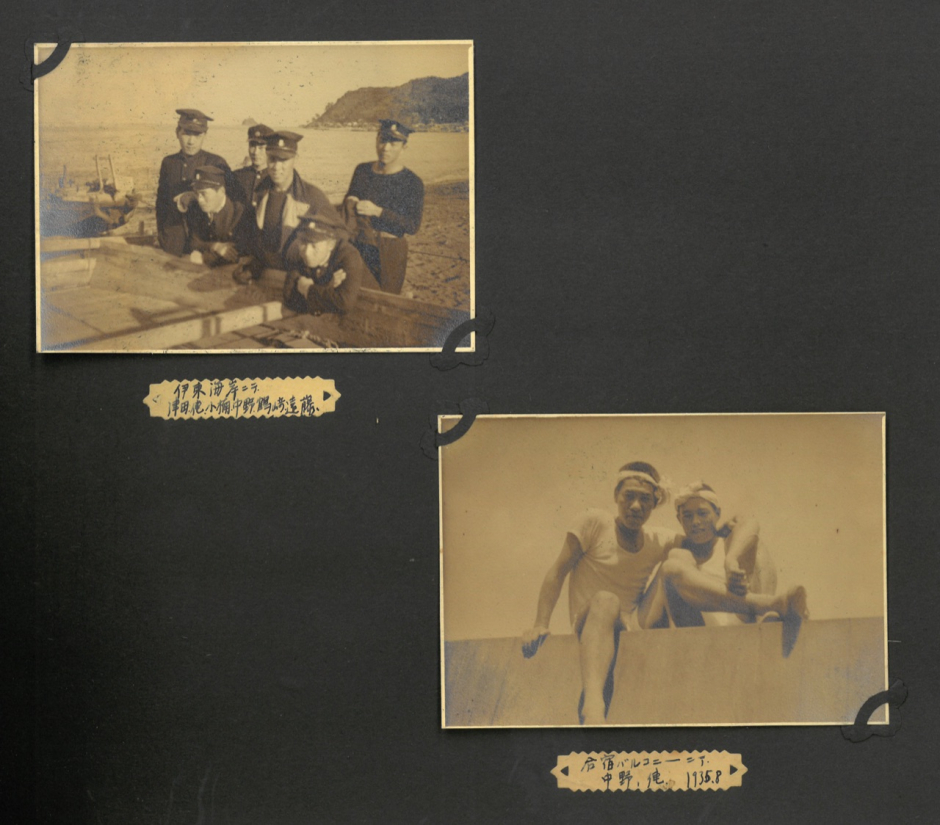
"伊東海岸ニテ.津田.俺.小楠.中野.鶴崎.遠藤.", "合宿バルコニーニテ.中野.俺 193[5].8". The “5” looks as if it has been rewritten as a “6.”
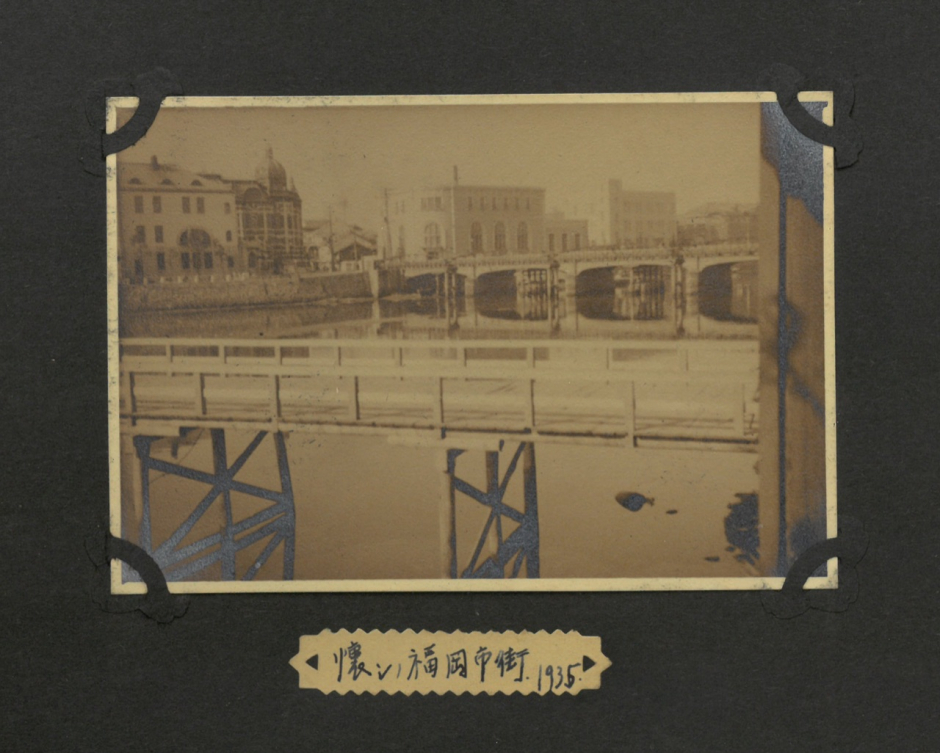
"懐シノ福岡市街.193[5].". It looks as if the “5” was changed to a “6,” or perhaps the “1” was changed to a “5.”
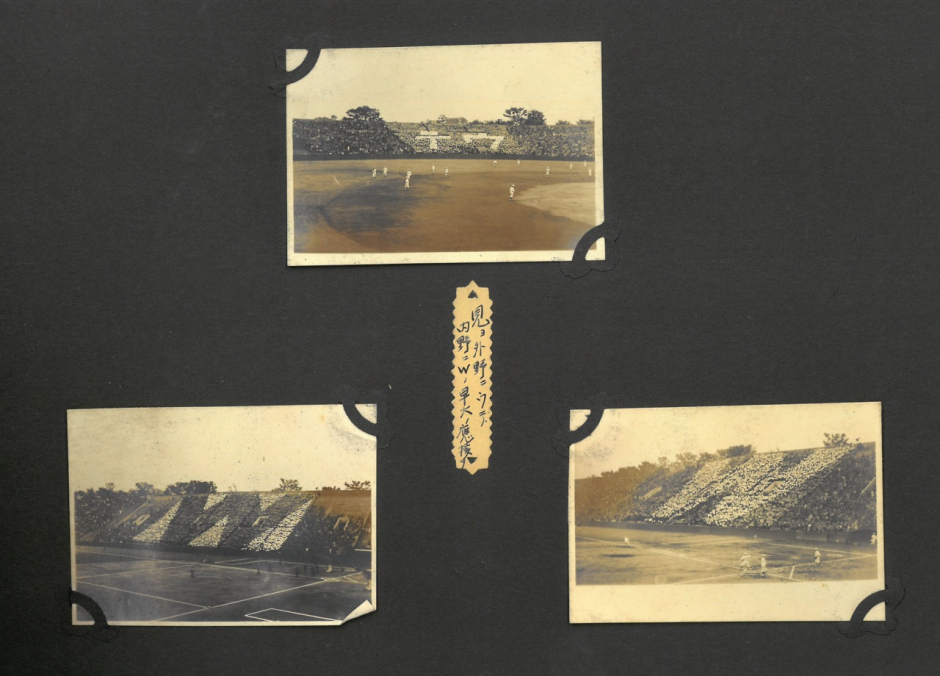
"見ヨ外野ニウテ.内野ニWノ早大ノ応援ヲ"
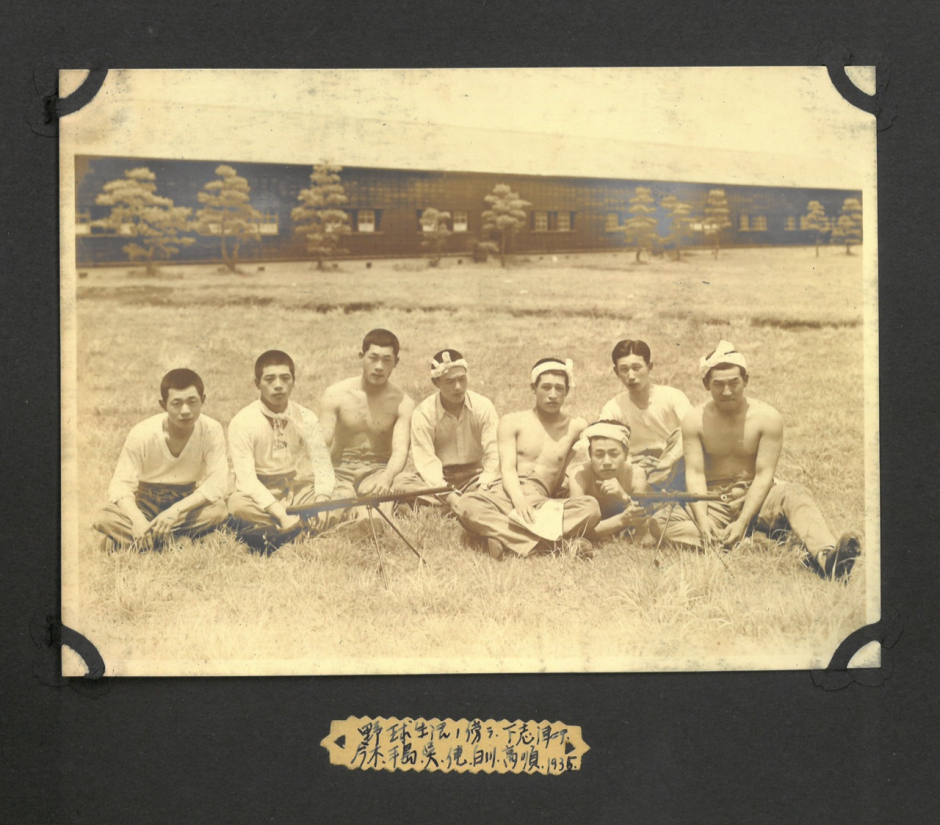
"野球生活ノ傍ラ.下志津ニテ今木.手島.呉.俺.白川.高須.193[5]", It looks as if the “5” has been rewritten as a “6.”
Shimoshizu (下志津) is located in what is now Wakaba Ward, Chiba City, Chiba Prefecture, and was home to the Shimoshizu Army Aviation School before World War II.
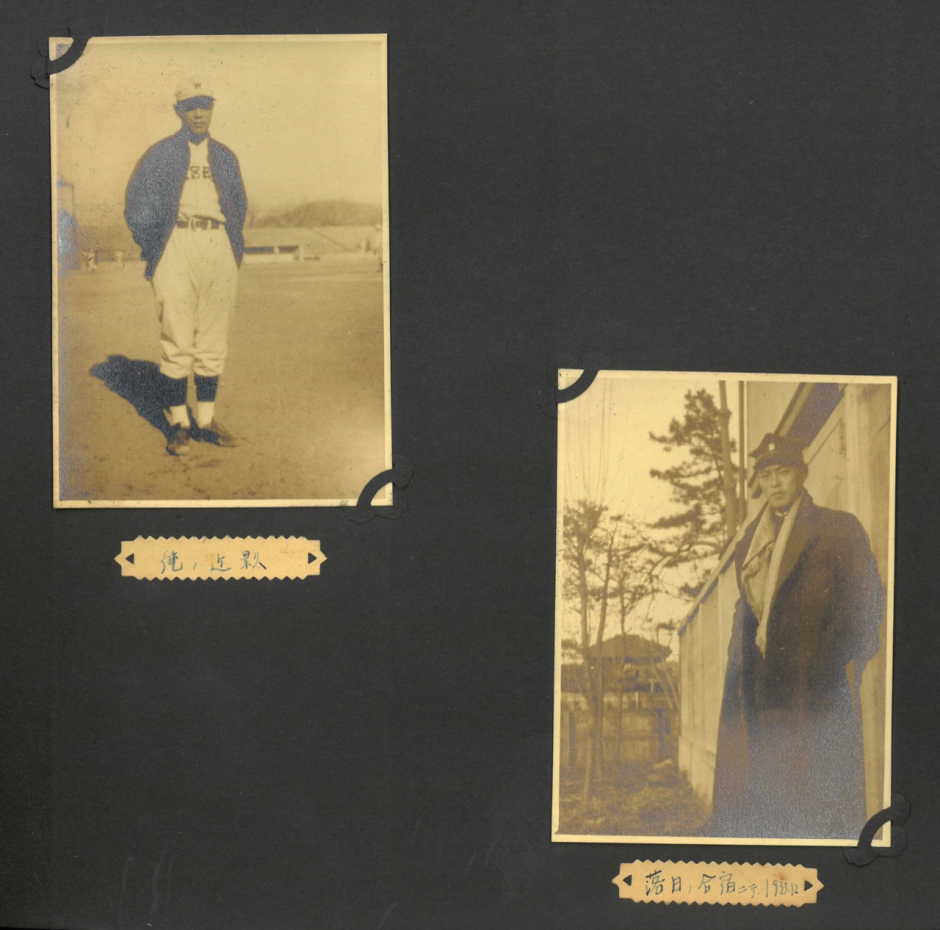
"俺ノ近影", "落日ノ合宿ニテ.1935.12"
Both are presumed to be photographs of the original owners.
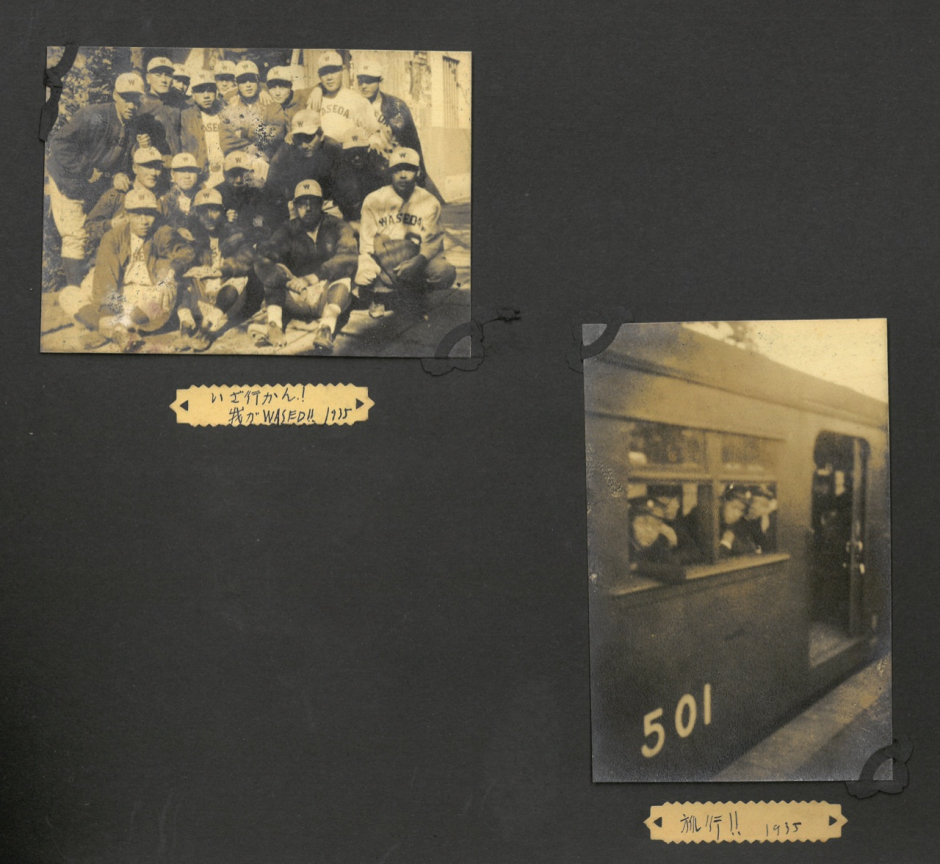
"いざ行かん! 我がWASEDA!! 1935", "旅行!! 1935"
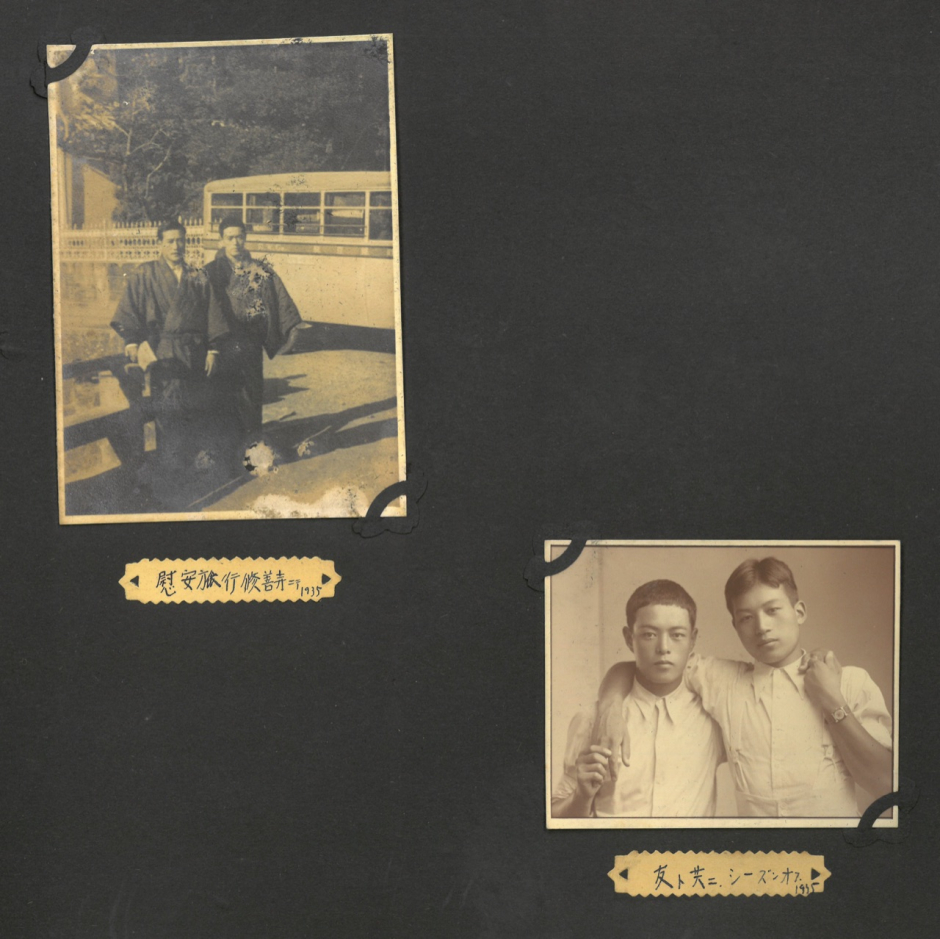
"慰安旅行修善寺ニテ 1935", "友ト共ニ.シーズンオフ.1935"
Investigating the Album's Provenance
At the Waseda University History Museum Archives, we place great importance not only on archival materials themselves but also on their provenance—that is, where they came from and how they have been transmitted over time.
Provenance encompasses information such as when, by whom, and for what purpose records were created; whom or what they document; and how they came to be donated or transferred to the archives. It also includes documentation of how the records have been arranged, preserved, and used since their creation, as well as how they will continue to be managed and made accessible in the future. Although such information is not part of the archival materials themselves, it constitutes essential documentation about those materials.
To preserve this contextual information, archives adhere to two fundamental archival principles: the principle of provenance, which keeps records created by the same individual or organization together, and the principle of original order, which preserves the creator’s original arrangement of the records whenever possible. By preserving archival materials together with their provenance, archivists are able to understand them more accurately and ensure that they can be passed on to future generations in a trustworthy and meaningful context.
Unfortunately, very little provenance information accompanied the photograph album donated to the Museum. As a result, only limited evidence remained regarding when and by whom the photographs were taken, who compiled the album, who owned it, and how it eventually came into the Museum’s care.
Nevertheless, careful examination of the album itself revealed important clues. The handwritten captions accompanying the photographs, together with the sequence in which the photographs were arranged, preserved valuable evidence about the album’s creator and the circumstances in which it was compiled. Interpreting such evidence embedded within archival materials is itself an essential part of archival research.
Our examination of the album established the following preliminary findings:
- The original owner may have been from Kumagaya, Saitama Prefecture. He may have attended Kumagaya Middle School (the former secondary school).
- He appears to have been associated with the Waseda University baseball team around 1934–1935.
- The album contains several photographs of a person referred to in the captions simply as "I" (俺), who is presumed to be the album's compiler.
Our investigation therefore began with historical records relating to the Waseda University baseball team.
A full-text search of Fifty Years of the Waseda University Baseball Club (1950), edited by Hoshu Tobita (飛田穂洲編『早稲田大学野球部五十年史』) and available through the National Diet Library Digital Collections, produced only one occurrence of the term “Kumagaya Middle School.”
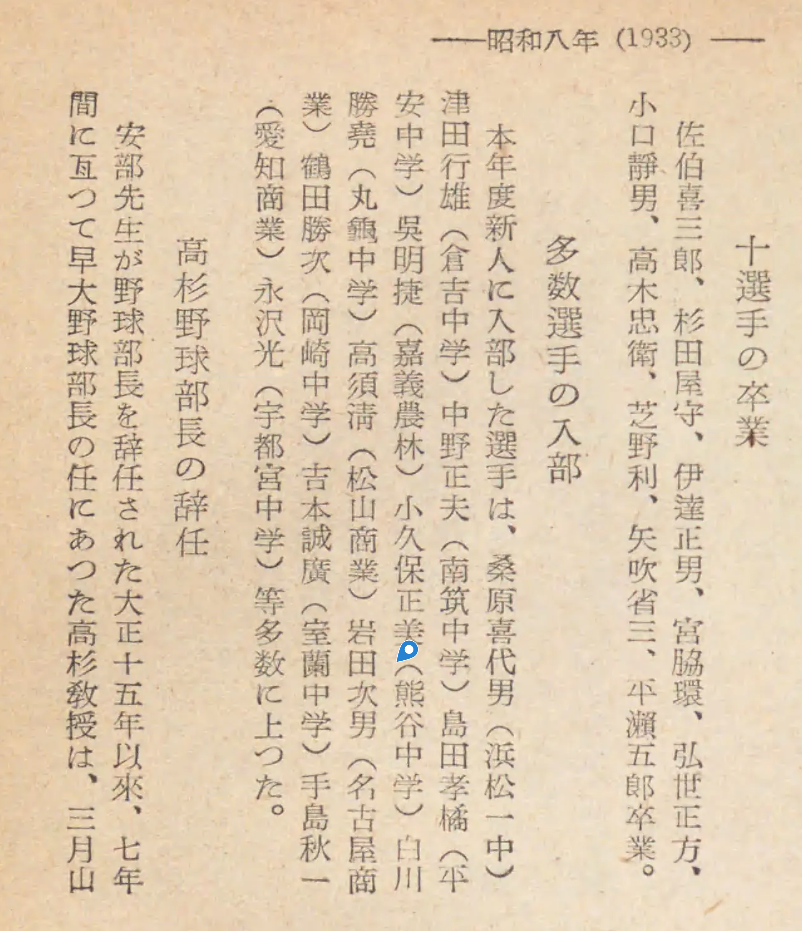
Page 343
The reference appears in the section describing the baseball club’s activities in 1933, under the heading “New Players Joining the Team,” where Masami Kokubo fro, Kumagaya Middle School (小久保正美) is listed among the incoming players. No other references to Kumagaya Middle School appear in the volume.
Furthermore, several surnames appearing in the album’s captions—including Kuwahara, Tsuda, Nakano, Go, Shirakawa, Takasu, Iwata, Tsuruta, and Teshima—also appear in the baseball club records. Taken together, this evidence made Masami Kokubo the strongest candidate for the album’s original owner.
Our next step was to consult Waseda University’s alumni directories, as introduced in our FAQ article, “[FAQ] Can you help me research my family history?”
A search of the 1958 Alumni Directory (会員名簿, published by the Waseda University Alumni Association and available through the National Diet Library Digital Collections) yielded the following entry:
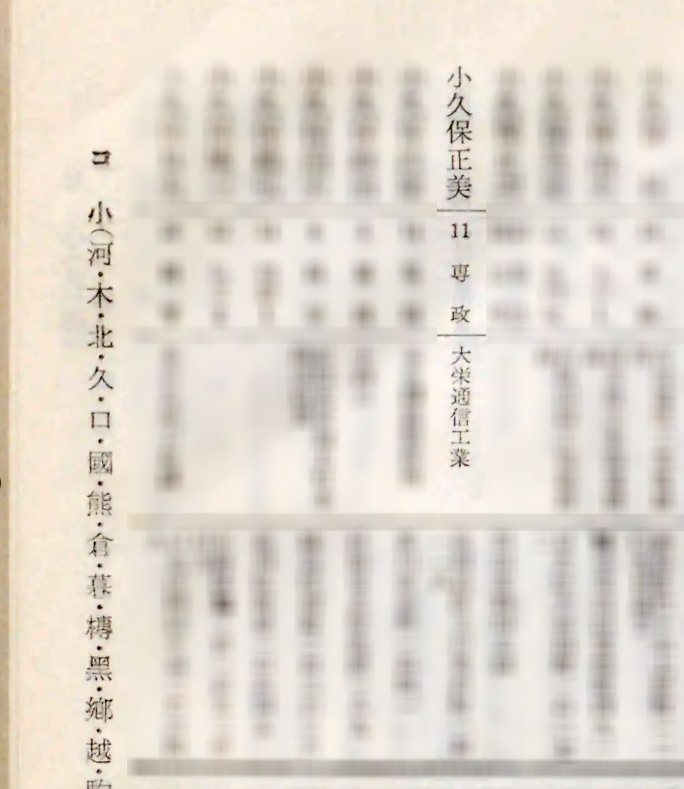
Page 401
Masami Kokubo — Class of 1936 — Senmon-bu Department, Political Science and Economics — Daiei Tsushin Kogyo Co., Ltd. (小久保正美 11 専政 大栄通信工業)
From this entry, we learned that Kokubo graduated in 1936 from the Department of Political Science and Economics in Waseda University’s former Professional School, and that he was employed by Daiei Tsushin Kogyo Co., Ltd. when the directory was compiled in 1958.
Fortunately, the History Museum has already received a donation of the 1936 graduation album of the Political Science and Economics of Senmon-bu Department (not yet open to the public). This album contains a portrait photograph of Masami Kokubo.
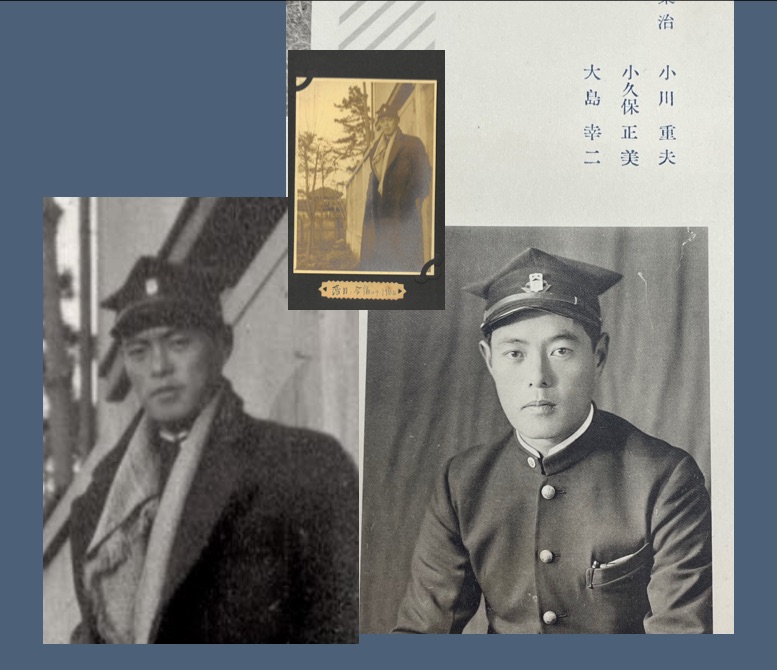
Left: An image of “At the Sunset Retreat. December 1935” with adjusted saturation and contrast; Center: The original version of “At the Sunset Retreat. December 1935”; Right: A portrait from the 1936 yearbook of the Political Science and Economics Department of the Senmon-bu Division
Comparison of that portrait with the individual identified as “I” in the album photograph captioned “At the Sunset Training Camp. December 1935” strongly suggests that they depict the same individual.
Based on the evidence outlined above, the Archives of the Waseda University History Museum concluded that the original owner of the photograph album donated in July 2024 was Masami Kokubo.
Research into Kokubo’s postwar life, as well as into how the album eventually came into the possession of an individual living in the United States, is ongoing.
Finally, in the photograph captioned “野球生活ノ傍ラ.下志津ニテ今木.手島.呉.俺.白川.高須.193[5]” the individual standing immediately to the left of the person identified as “Me” is believed to be Wu Ming-chieh (呉明捷). According to Fifty Years of the Waseda University Baseball Club, Wu joined the team after graduating from Kagi Agricultural and Forestry School (present-day National Chiayi University, Taiwan).
Sano Tomonori, Assistant Professor of Waseda University History Museum
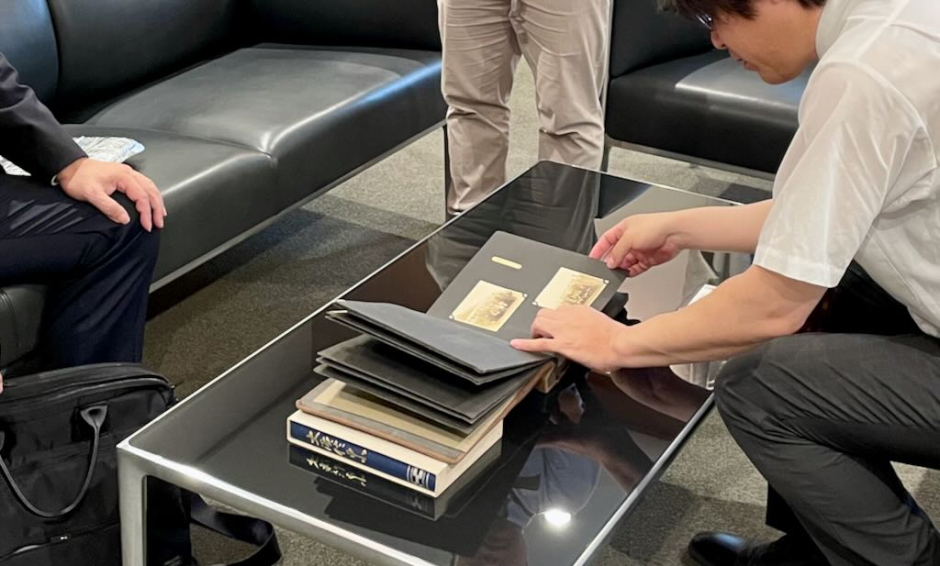
Prof. Manabe Masayuki receiving the donated materials from the donor.
His Path After Graduation
An article entitled “Masami Kokubo of Fuji Kako Co., Ltd.” appears in Part I, “Visits to Company Presidents,” of Sakamichi (坂道; A Slope) (1988), written by Shoichi Iwano (岩野正一).
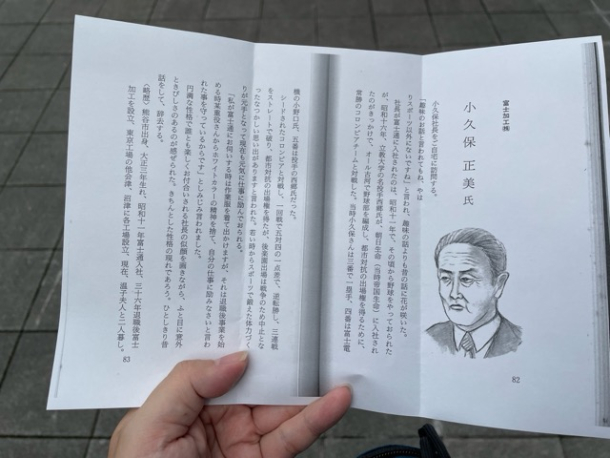
The article includes a portrait sketch of Kokubo, then in his mid-seventies, along with an interview and a brief biographical profile. According to the profile, Masami Kokubo was born in Kumagaya City (熊谷市) in 1914 [Taisho 3] and joined Fujitsu (富士通) in 1936 [Showa 11]. The year in which he joined the company supports our museum’s conclusion that he graduated in 1936 from the Department of Politics and Economics in the Specialized Division.
According to the interview, Kokubo had been an avid baseball player from a young age. In 1941 [Showa 16], playing first base for All Furukawa (オール古河), he took part in the qualifying rounds of the Intercity Baseball Tournament. His team defeated the formidable Columbia (?; コロンビア) to earn a place in the tournament proper, but the tournament was canceled because of the war. The author comments that the physical strength Kokubo developed through sports in his youth appeared to continue to serve him well in his work.
In 1961 [Showa 36], Kokubo left Fujitsu and founded Fuji Kako (富士加工). He subsequently established factories not only in Tokyo but also in Aizu (会津) and Numazu (沼津). According to the author, who appears to have known Kokubo for many years, Kokubo was an amiable and sociable man who nevertheless conveyed a certain proper firmness and strictness.
Sano Tomonori, Assistant Professor of Waseda University History Museum
(Added September 1, 2026)