How the Student Initiative ‘LeArchaeology’ Is Redefining What Archaeology Is For
Mon, Mar 9, 2026-
Tags
For most people, a pottery shard dug from the earth is just a fragment of the past. For Miku Yokoyama, a PhD student in Waseda University’s Graduate School of Letters, Arts, and Sciences’ Archaeology course, it is a window into the formation of early civilizations and, increasingly, a tool for teaching the next generation why that past still matters. The challenge, however, is getting that message out of the academic sphere and into the communities most connected to them.
The answer? “LeArchaeology,” a student-run association co-founded by Miku and Risa Fukuda, who was a PhD student at the time of its founding, that directly conveys academic research and the appeal of archaeology to local communities, especially the younger generations who will carry the future. The organization LeArchaeology currently operates as a general incorporated association.
Building LeArchaeology
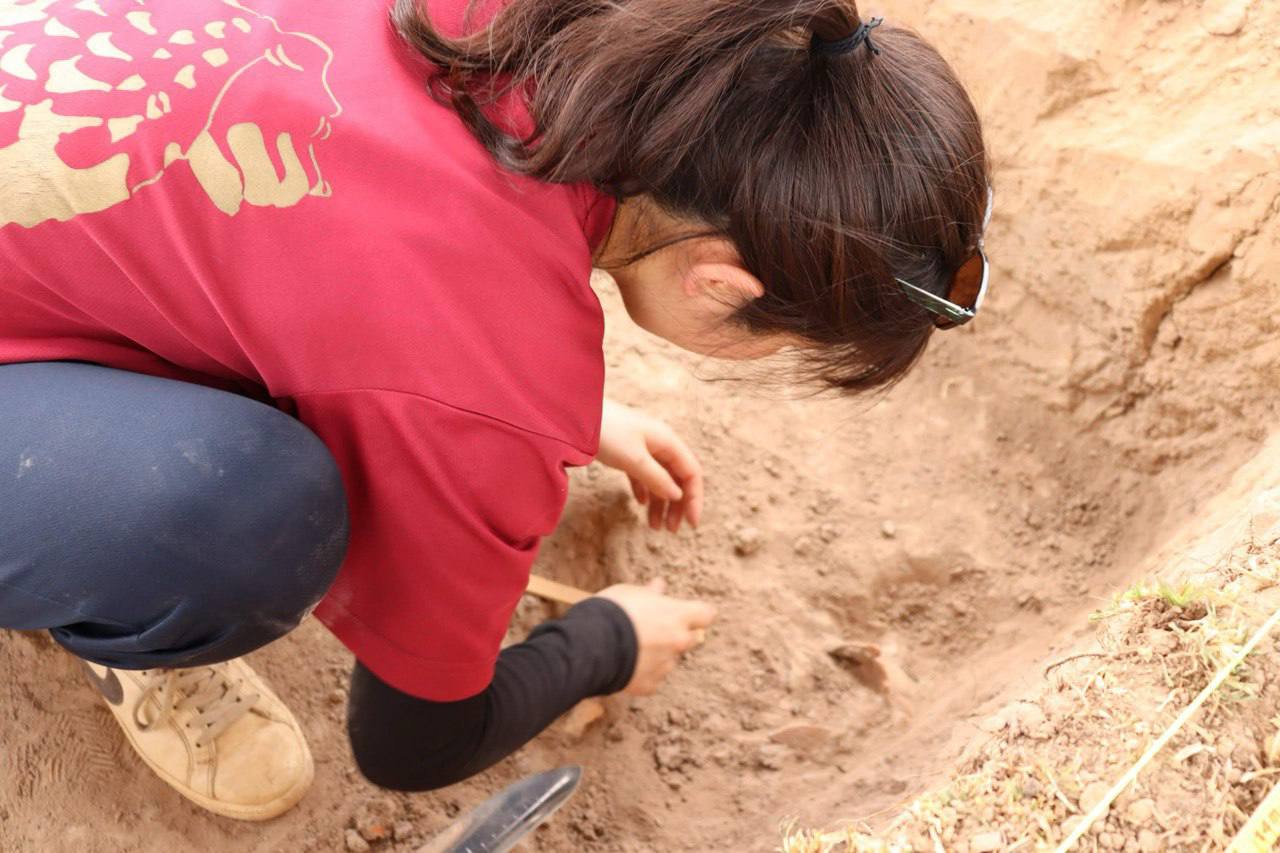
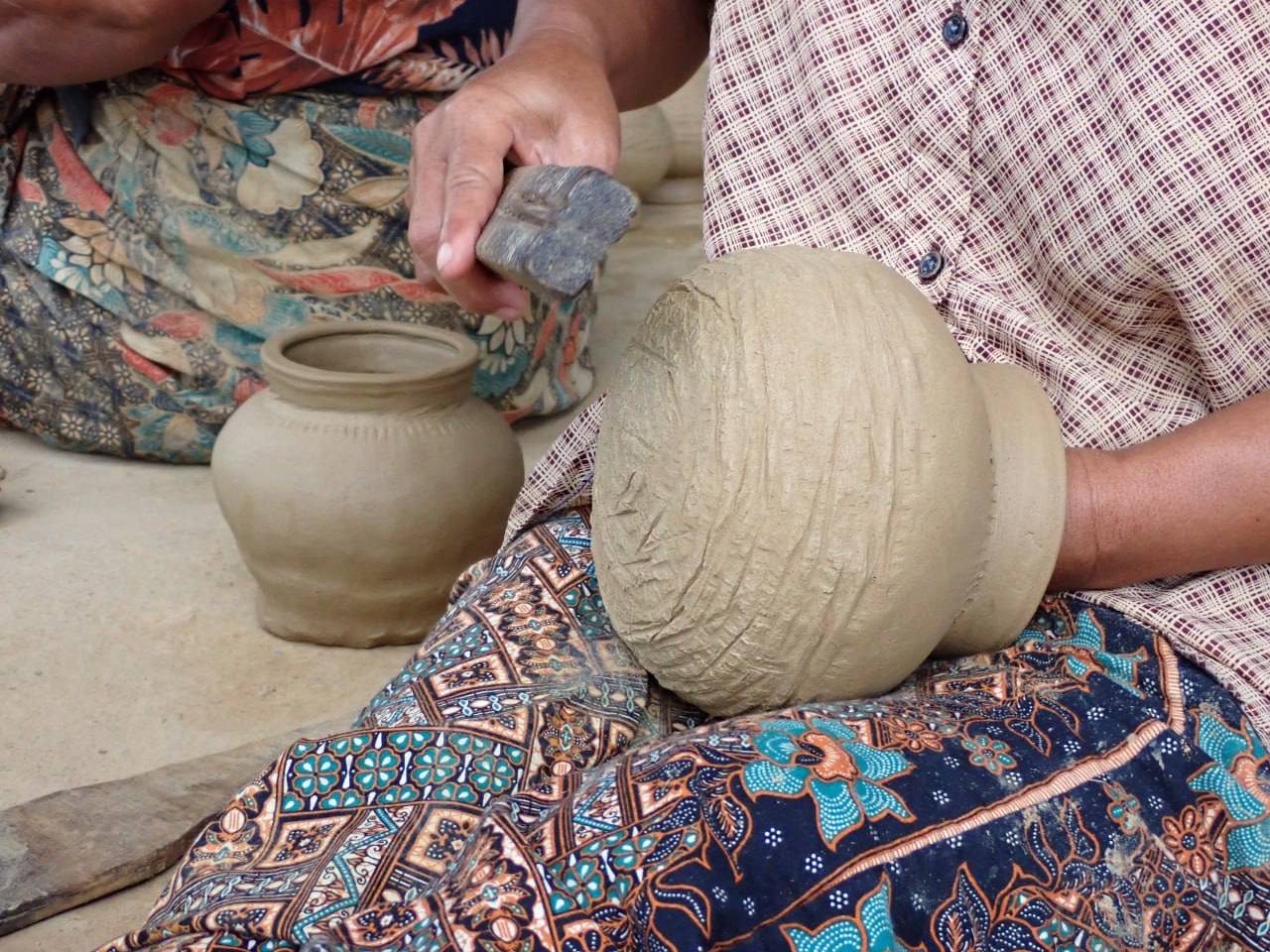
To understand why LeArchaeology exists, it helps to first understand what Miku studies. Her doctoral research traces the early development of the Cambodian state through material culture, focusing on pottery from the prehistoric to the Angkorian period. Her fieldwork combines archaeological site surveys with ethnographic interviews with living potters across Cambodia’s provinces, bridging what was made centuries ago with craft traditions that survive today. Her work takes her to World Heritage Sites such as Sambor Prei Kuk and the archaeological site of Angkor Borei. She also connects with artisan communities in Kampot and beyond, whose pottery-making traditions keep alive what archaeologists can otherwise only piece together from fragments in the ground.
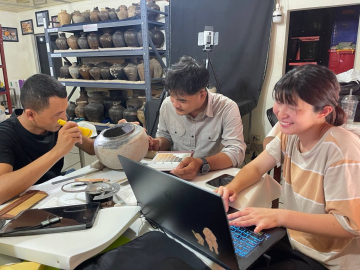
Yet, for all the insights her research unearths, the findings rarely travel beyond academic circles, and Miku is quick to push back on the idea that archaeology belongs only in the academy. She has also been frequently told that archeology is impractical. “On the contrary,” she says, “archeology illuminates the full breadth of human life.” Therefore, in 2024, she and Risa fused “Learn” and “Archaeology” to create “LeArchaeology,” with the straightforward aim of dispelling the misconception while showcasing the critical thinking, problem-solving, and cross-cultural understanding skills cultivated through archeology. Their work, especially in schools in Japan, centers on “exploratory learning” (探究) where sessions are designed around an “Archaeology × [topic]” framework. They pair archaeology with whatever students are curious about, including medicine, fashion, disaster prevention, space, and so on.
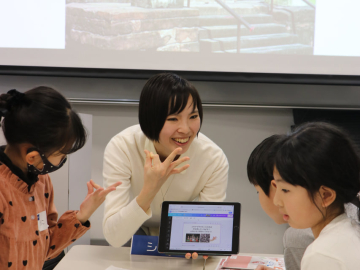
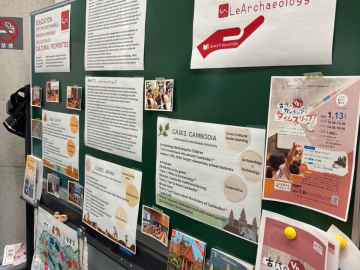
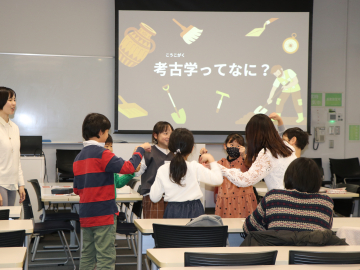
Turning that conviction into an organization, however, required resources and mentorship. Although graduate students are at the core, LeArchaeology was established with support from professors and senior members of her seminar. Miku also credits its success to the Waseda-EDGE Gap Fund Project*, an entrepreneurship education program offered by the University’s Center for Entrepreneurship*, which gave her and Risa a structured environment to develop their concept over six months under faculty guidance. Neither had a background in business, and learning to think about sustainability, funding, and organizational management alongside their doctoral research was a steep learning curve. It paid off as the team placed second in the program’s final presentation, securing funding to establish the association and run its first trial events. They also went on to win the Rizapuro Inc. Award at the subsequent Waseda-EDGE Demo Day*. Together, these form a through-line of institutional support and serve as a reminder that at Waseda, student initiatives toward communities, schools, and the public do not go unsupported.
*Sites available only in Japanese
Miku and LeArchaeology in Cambodia
Running LeArchaeology alongside doctoral research is not without tension. The focused, slow-burning nature of PhD work sits uneasily alongside the multi-tasking demands of running an organization. However, Miku does not frame the two as competing obligations. For her, the workshops are research by another means as she considers it a space where the value of her findings is tested in real time by the people she is trying to reach. She notes that participants’ reactions and questions have become their own measure of the worth of her research.
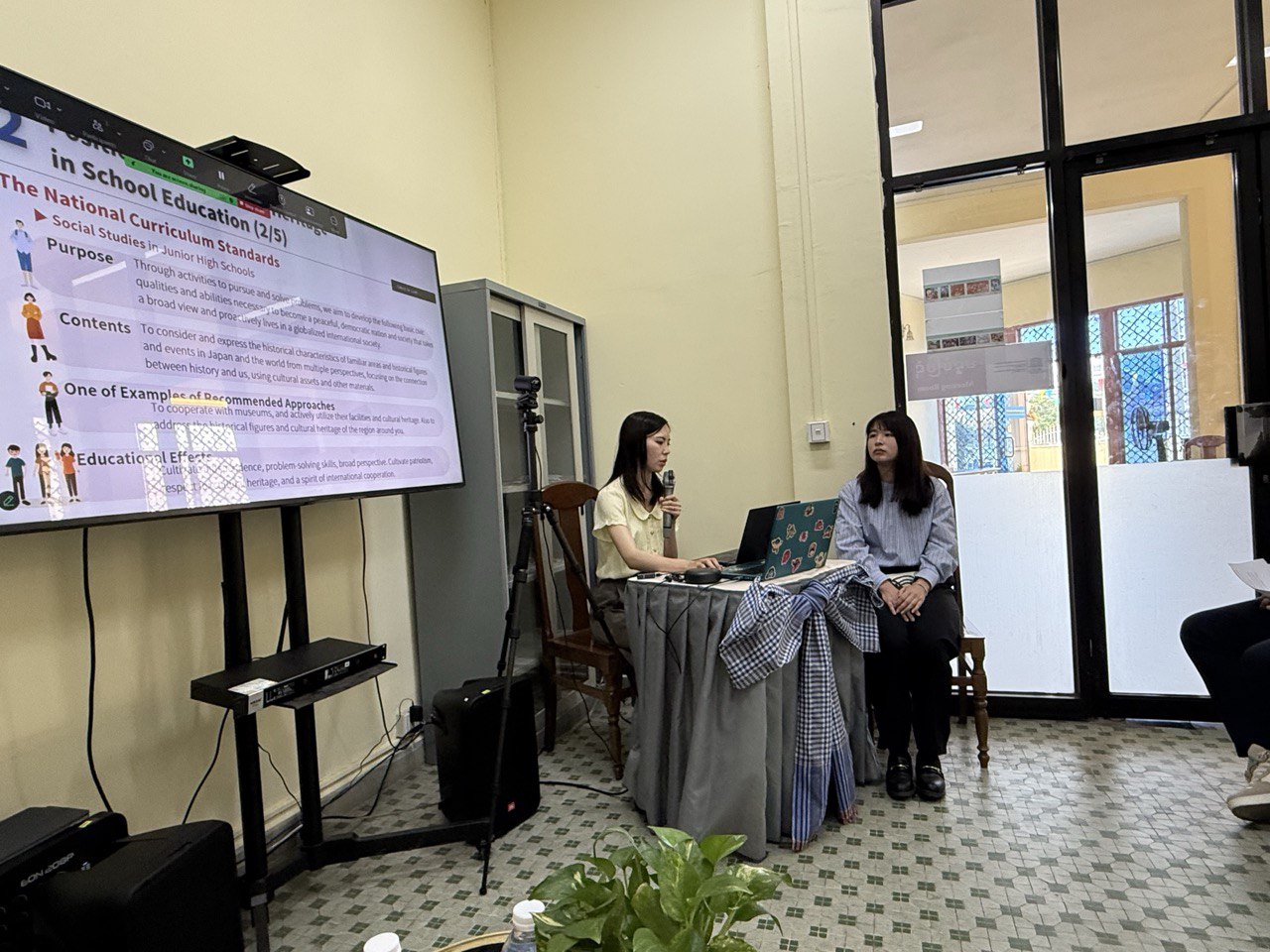
Miku and Risa giving a presentation at the National Commission for UNESCO in Phnom Penh for the project “UNESCO Digital Cultural Heritage Education.”
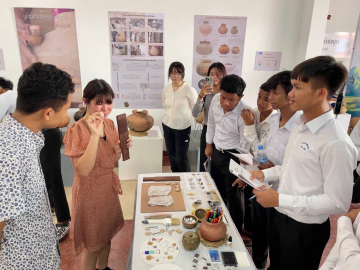
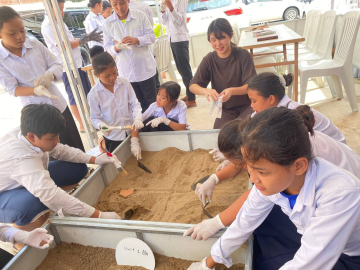
The Cambodia project is where that argument finds its clearest proof. This connection between past and present, between Miku’s fieldwork and the communities it concerns, became the foundation for a UNESCO-backed exhibition she co-organized through LeArchaeology in collaboration with Cambodia’s Ministry of Culture and Fine Arts and the Cambodian UNESCO National Commission. What began as a symposium at the Royal University of Fine Arts in Phnom Penh in March 2024, centered on Pre-Angkor pottery culture and featuring live demonstrations by artisans from four provinces, grew into a full children’s education exhibition that November. It was a productive first step, but the audience was largely academic. The November exhibition was different.
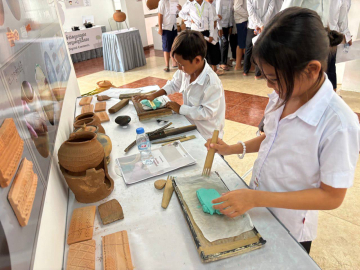
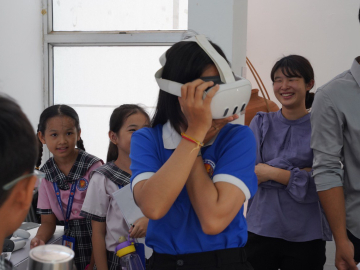
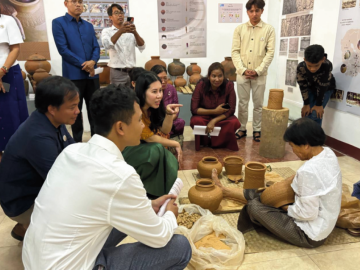
Titled “Traditional Pottery-Making in Cambodia” and held from November 7 to 14, it was designed for children. Students from elementary through high school visited across the week, including students from schools for the deaf. Ten interactive corners let them simulate an excavation, examine ancient and contemporary pottery side by side, explore 3D-scanned artifacts through VR, shape clay with their own hands, and read event-specific manga that explains how to handle an archaeological finding. The exhibitions continued to grow in reach as, in December, a follow-up exhibition titled “Ancestors’ Handiwork,” organized by the Ministry of Culture and Fine Arts, opened at the same venue and drew the Minister of Culture to its opening ceremony.
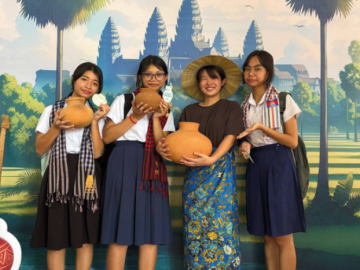
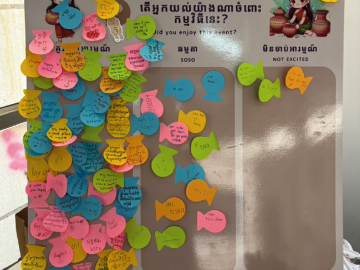
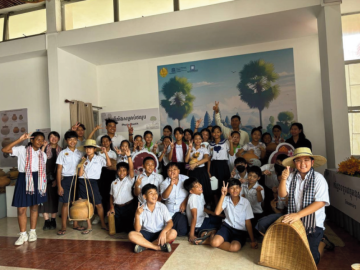
The results speak for themselves. A pre-visit survey found that 47% of visitors had little to no knowledge of Cambodian pottery before they arrived. After the exhibition, 81% said they enjoyed it and learned something new. “Those numbers are not just a measure of the exhibition’s success,” Miku confides, explaining that they’re the proof of a conviction she has carried throughout her research that research only has meaning within society (研究は社会の中でこそ意味を持つ).
What’s Next
For Miku, the Cambodia project is less a milestone and more of a model. Looking ahead, she hopes to expand LeArchaeology’s reach and build a broader base of supporters and audiences. She also envisions LeArcheology becoming a platform for early-career researchers, a space where those pursuing academic or educational careers can get involved, practice communicating their research to the public, and take their first steps toward outreach as part of their own professional development.
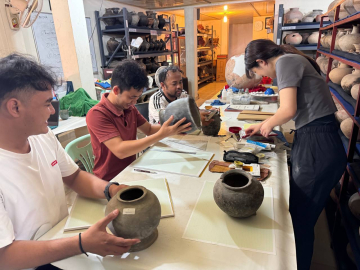
Reflecting on the journey so far, the biggest thing Miku has taken away is also the simplest: research only finds its full shape when it leaves the academic sphere. “Going out and engaging in dialogue,” Miku says, “was the first time my research felt three-dimensional to me.”
Her advice for fellow researchers who want to follow a similar path is simple: throw yourself into what you love and trust that Waseda’s communities will meet you there.
About the Author: Srey Sokuncharia (Ria)
Hi everyone! I am a PhD candidate at Waseda University’s Graduate School of Creative Science and Engineering, originally from Phnom Penh, Cambodia, and I am graduating this spring (2026). My research focuses on peri-urban development and flood adaptation in Southeast Asian cities, with Phnom Penh as my case study. Alongside my doctoral research and my work as a Student Contributor, I also contribute to urban design and planning projects at Nikken Sekkei, one of Japan’s leading architectural and engineering firms.
Writing this article about Miku and LeArchaeology felt personal because Waseda has supported me in many of the same ways it has supported her. Scholarships and research grants gave me the financial footing to focus on my work, while my supervisor, steering committee, and collaborative research opportunities pushed it further than I could have on my own. The Gender and Sexuality Center and Career Center also gave me something harder to quantify: spaces for self-discovery and growth. As I prepare to graduate, I leave with deep gratitude for an institution that supported not just my research, but me as a whole person.