WIAS and our partner institute, ZUKO (Zukunftskolleg at the University of Konstanz, Germany), have been implementing a bilateral exchange program to foster research collaboration. Here is the latest report from Assistant Professor LI Jialong, the third WIAS researcher to utilize the program. In this update, he reports his research achievements and daily life during his stay at the University of Konstanz.
ZUKO and WIAS Network Research Visits program report AY2025: vol. 2 (Assistant Professor LI Jialong)
Findings and outcomes
Through my research stay at the University of Konstanz, I successfully implemented foundational methods and conducted initial experiments for my project: “Integrating constraints defined by mathematical logic into the generation process of Large Language Models (LLMs) to enhance safety in robotic control.” Analyzing the insights gained from these experiments has provided a clear and strategic roadmap for the future development of this research.
A particularly profound takeaway was the realization that legal norms and statutes do not exist in isolation when addressing how to ensure LLM compliance with legal frameworks. Rather, they must be understood and implemented within the context of interactions with external systems and social frameworks. For instance, individual laws are intricately linked to other regulations, social customs, and ethical judgments; their true meaning and scope of application are only fully defined within this complex context.
The highlight of my stay was the opportunity to engage in interdisciplinary discussion with researchers from mathematical logic, law, and human-computer interaction. Together, we explored questions such as which laws are conducive to mathematical modeling and which possess a high dependency on social context that makes formalization challenging. I am certain that such a nuanced research experience was made possible only by the unique, interdisciplinary environment of the University of Konstanz and the Zukunftskolleg.
Daily Life
Life in Konstanz was characterized by a sense of tranquility and a disciplined rhythm, providing an ideal environment for deep concentration. My daily routine was consistent: I arrived at the university around 7:00 AM and dedicated myself to my research until 7:00 PM. I was particularly struck by the diligence of the students at the University of Konstanz. Each morning, I would join many others stepping off the bus and walking toward the hilltop campus through the dense morning mist. My office faced the library, and seeing students still engrossed in their studies late into the evening served as a constant source of quiet encouragement.
The local environment also offered wonderful opportunities for mental refreshment. On occasion, I would take a bus into the city for lunch and spend time by Lake Bodensee, reading or enjoying the breeze. The clarity of the lake water and the presence of swans and other birds made the proximity to nature a palpable part of daily life. Walking home at night, the expansive sky was often filled with stars—a serene and memorable conclusion to a productive day.
Furthermore, my stay coincided with the Berlinale (Berlin International Film Festival). I had the privilege of viewing numerous politically and socially significant works, as well as experimental films by emerging directors—pieces rarely shown in commercial cinemas. Hearing the directors discuss their creative philosophies firsthand after the screenings was an incredibly stimulating experience. Overall, this stay was immensely rewarding, not only for my professional research but also for my personal life.
-
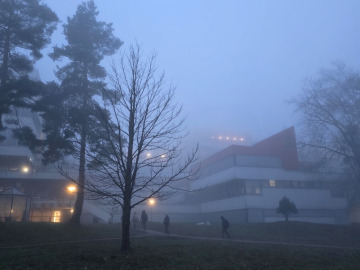
- A quiet, misty morning: dedicated students making their way to the hilltop campus./静かな霧の朝、大学へ向かう勤勉な学生
-
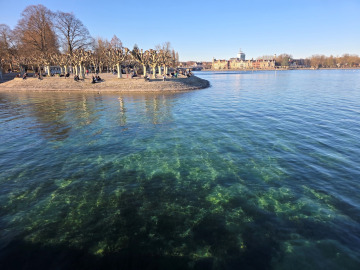
- A clear and peaceful afternoon by Lake Bodensee in Konstanz./澄んだ水面が印象的な昼休憩の風景
-
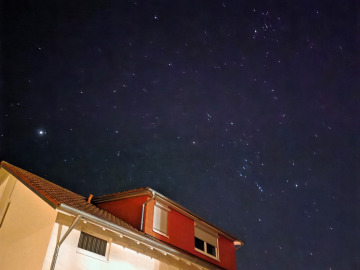
- A striking starry sky, captured while walking home after a day of research./帰り道に見上げた、印象的な星空
-
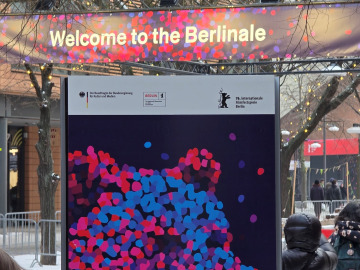
- A moment from the Berlinale, one of the most iconic international film festivals in the world./ベルリン国際映画祭の様子
<< Previous article: ZUKO and WIAS Network Research Visits program report AY 2025, vol. 1 (Assistant Professor LI Jialong)