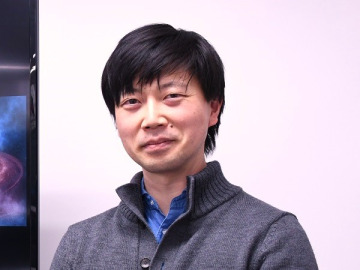
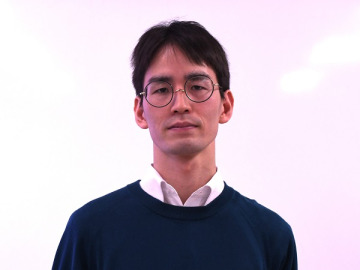
SHINOMOTO Sou, Assistant Professor
Motivation for Pursuing Research in International Relations and Political Science
There was no single, decisive moment that set me on the path toward studying international relations (international politics) and political science. Rather, it was a series of choices—often made without deep reflection and sometimes by a process of elimination—that gradually accumulated and, before I realized it, brought me to where I am today. Once I began engaging seriously in research, however, I found myself strongly drawn to the distinctive intellectual appeal of the world of politics, where rationality and irrationality intersect in complex ways. I was also fascinated by the discipline’s inherently pluralistic nature, which synthesizes qualitative and quantitative approaches to build cumulative knowledge. In graduate school, while conducting qualitative analyses centered on the collection and interpretation of diplomatic documents, I also studied a broad range of quantitative methods, such as statistical analysis, thereby laying the foundation for my current research.
Through these experiences, I gradually developed a strong interest in the theme of the “political dynamics surrounding military organizations.” It is widely recognized that the existence and activities of military organizations can exert significant influence on both domestic and international politics. However, despite this importance, the nature of relationships between military organizations and other social and political actors—particularly ordinary citizens—has often been discussed in largely impressionistic terms, not only in Japan but also internationally. This left me with a strong sense of unease. Over time, this unease crystallized into a research interest and came to form the core of my academic inquiry. Guided by this concern, I have consistently focused on this theme since completing my doctoral studies.
Research Focus and Key Findings
In recent years, I have focused on what is known as the “trust gap”—the phenomenon whereby public trust in military organizations tends to be relatively high across many countries, while trust in the civilian authorities and parliaments responsible for exercising democratic control over those organizations is comparatively lower. Using survey experiments as my primary research method, I have sought to empirically examine both the causes and the consequences of this trust gap. In brief, survey experiments are opinion surveys that incorporate experimental elements. During the survey, participants are randomly assigned to one of several groups, each of which is exposed to different stimuli or treatments, such as texts, images, or audio materials. Participants’ attitudes and opinions are then measured, and differences across groups are analyzed. This design makes it possible to causally assess how specific information influences people’s attitudes and opinions.
Using this method, I have primarily explored two questions, both aimed at understanding the causes of the trust gap. First, how do people update their trust in civilian actors, including political leaders, and military actors in response to the outcomes of events involving military organizations? Second, how does the public’s perception of the multi-layered structure between political leaders and military organizations, as symbolized by civilian control, shape these processes of trust formation? Most previous studies have relied on what are known as “performance theories,” which assume a relatively straightforward causal relationship between event outcomes and public trust. They have also often employed observational data analyses comparing survey data collected at widely separated points in time, which constrains the ability to precisely capture causal mechanisms. In contrast, I drew on attribution theory, developed earlier in social psychology, which conceptualizes how humans think about causes and causal relationships. By incorporating this as a theoretical foundation, I was able to advance existing performance theories. Furthermore, by focusing on the multi-layered structure of the objects of evaluation, I extended the analytical framework. Using this theoretical framework, I conducted three survey experiments in Japan—an established democracy with a substantial armed force, where citizens have a relatively principled understanding of civilian control. Conducting the experiments multiple times allowed me to verify the reproducibility and robustness of the findings.
Analysis of the experimental data revealed that exposure to information about the consequences of events involving a military organization had effects of roughly the same magnitude on trust evaluations of both civilian and military actors. However, the mechanisms of trust updating differed significantly depending on whether the outcomes were successful or failed. Moreover, even when information about the multi-layered institutional structure linking political leaders and military organizations was presented prior to the outcome information, it generally had little influence on how trust was formed. However, interestingly, in some cases—contrary to theoretical expectations—such structural information amplified the effect of outcome information on trust in the military. These findings empirically illuminate how citizens make retrospective evaluations and carry important implications for understanding the dynamics of democratic societies under security crises.
Future Research Directions
Going forward, I aim to examine the consequences of the trust gap—specifically, the relationship between citizens’ trust and the influence that experts, including current and former members of military organizations, can exert in society. In this project, I focus on content-based conflicts and overlaps in public statements issued by civilian and military actors who enjoy different levels of trust among citizens. Drawing on insights from persuasion research in social psychology, I develop a theoretical framework to analyze how these dynamics shape public judgment. In particular, I highlight the possibility that, even when backed by high levels of trust, public statements may under certain circumstances produce counterproductive effects. This project seeks to elucidate the mechanisms underlying such outcomes. Parts of this research agenda have already been launched as an international collaborative project, and I am working toward publishing the results as research articles in the near future.
Looking ahead from a broader perspective, I see several aspirations for my future work. In international relations and political science, it is essential to fully account for contextual diversity—such as cultural and institutional variation—to ensure the external validity of our findings, and this challenge applies equally to my own research. I also believe that there remains substantial room for the field to meaningfully incorporate methods and insights from other disciplines, including psychology and economics, in ways that go beyond superficial borrowing. At the same time, such interdisciplinary inquiry clearly has its limits when pursued by an individual researcher alone. With these considerations in mind, I aim to further advance international collaboration with scholars from diverse academic backgrounds and to contribute to opening new theoretical and empirical frontiers.