International Conference and Fieldwork Workshop:
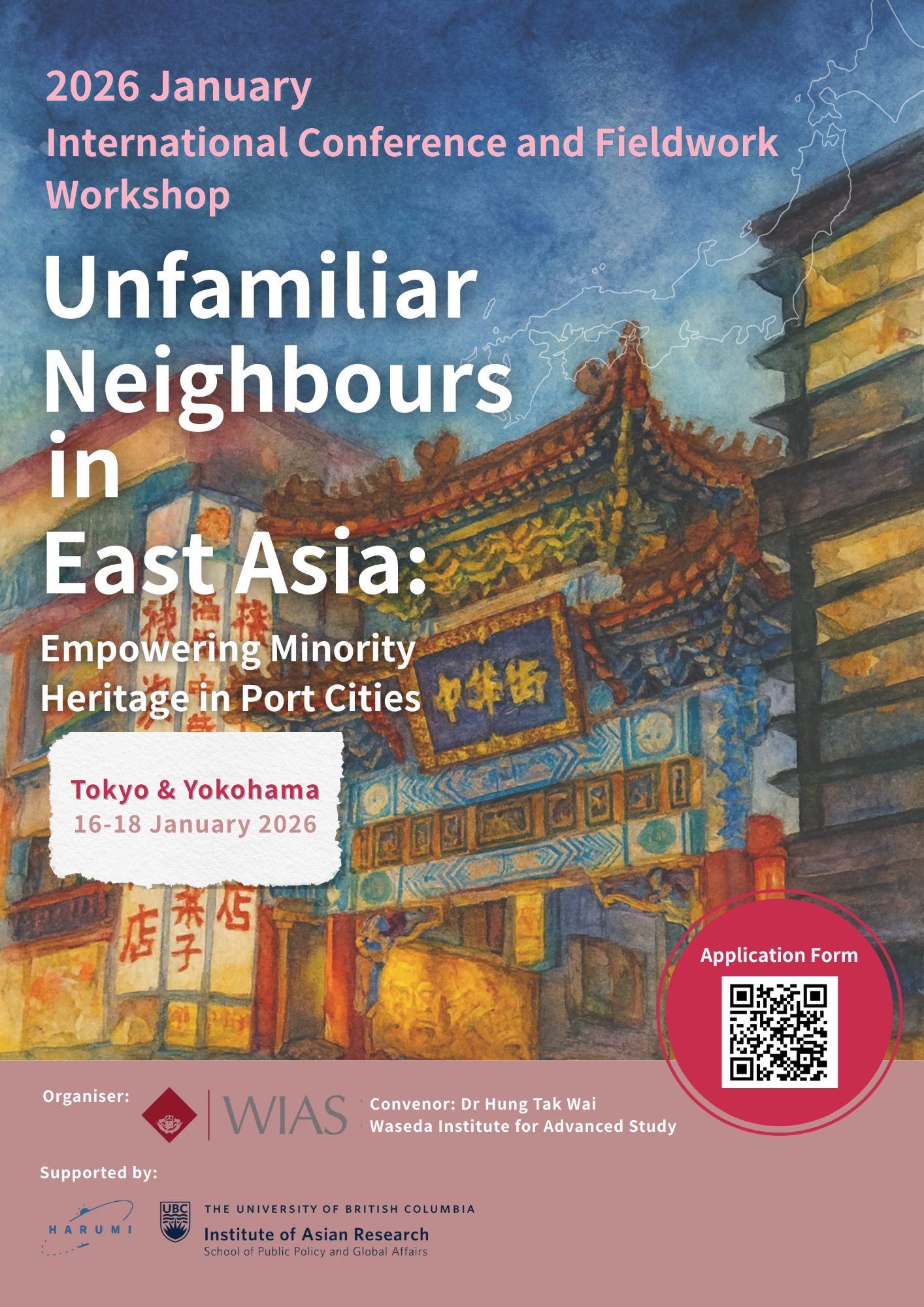
Unfamiliar Neighbours: Empowering Minority Heritage in East Asian Port Cities (Section One: Jan. 16-18, Section Two: Jan. 24-28)
*Program has been updated.
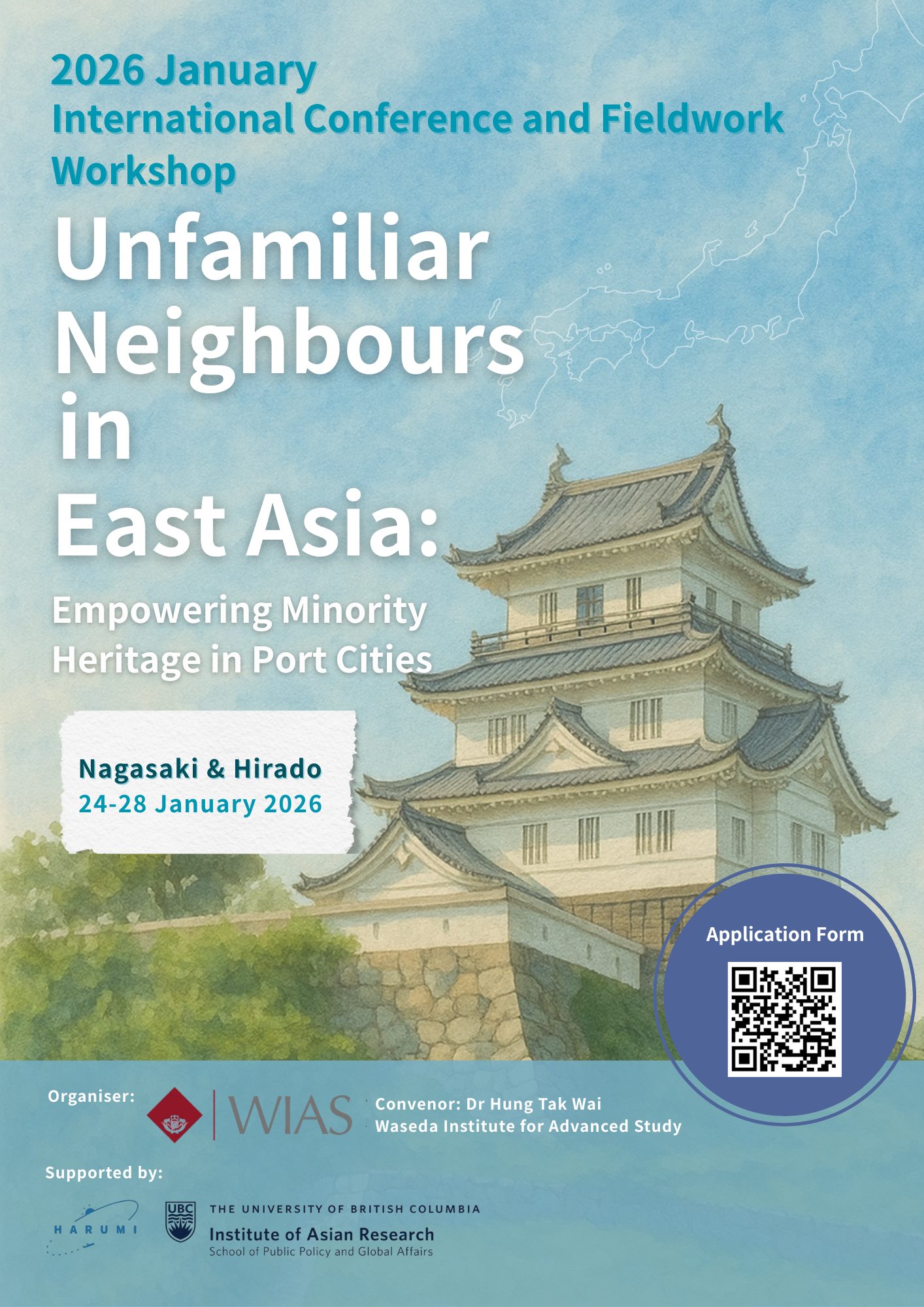
Posters (Section One , Section Two)
Overview
The international conference “Unfamiliar Neighbours” seeks to re-centre the experiences of communities often situated at the margins of national history—whether defined by ethnicity, religion, language, gender, class, or citizenship—within the cultural heritage of East Asia’s port cities. Our core proposition is to challenge the traditional view of heritage as a static inheritance curated solely by state apparatuses or expert institutions. Instead, we foreground heritage-making as a living, continuously negotiated “Practice.”
We ask: How do minority groups create, safeguard, and reinterpret their spaces, rituals, archives, and memories? How do these interpretations sustain social pluralism, activate local agency, and re-connect port cities across the maritime world? Port cities such as Tokyo-Yokohama, Nagasaki, and Hirado have long been sites of encounter and improvisation. Here, guilds, clan associations, temple and church networks, and burial societies stitched together dense cross-border relationships. These networks not only complemented imperial and national projects but often confounded and transcended their boundaries. Our recent collaborative research highlights how these “unfamiliar neighbours” acted as critical “Cultural Brokers”: foreign temples doubling as diplomatic nodes; cemeteries and ancestral halls anchoring migrant belonging; and religious sites of the “Other” negotiating visibility under alternating regimes of tolerance and surveillance.
By tracing these practices, we aim to move beyond “extractive” or merely “celebratory” heritage narratives toward what we term “Participatory Diversity.” This is a form of pluralism rooted not just in intellectual dialogue, but in engagement with daily life. The conference deliberately pairs academic debate with site-based inquiry. Panels at Waseda University will establish conceptual and methodological frames—discussing heritage as practice, minority governance beyond Western-centric DEI templates, archives-in-motion and “portable” heritages, and the ethics of researching vulnerable or politically sensitive groups.
Subsequently, field workshops in Yokohama, Nagasaki, and Hirado will test these frames on the ground. Participants will walk historic precincts, read epigraphy in situ, engage with caretakers of temples, churches, and cemeteries, and discuss how policy, tourism, and UNESCO-style recognition intersect with community priorities. In each locale, we will examine the tension between “Authorised Narratives” and “Vernacular Memory,” exploring how to document without freezing, safeguard without dispossessing, and publicise without commodifying.
This hybrid conference will take place from January 16th to 18th, comprising online and onsite sessions, along with fieldwork in Yokohama Chinatown and the Foreign General Cemetery. It brings together presenters from academia, heritage practice, policymaking, and community leadership. Following this, a parallel conference and field workshop will be held in Nagasaki and Hirado from January 24th to 28th. We invite all participants to enter these crevices of history, to see the neighbours who were once unfamiliar but have always been present, and to rethink the future landscape of East Asian maritime heritage.
Program
Section One
Jan. 16 – Conference (Online; 7 Panels)
Jan. 17 – Fieldwork: Yokohama Guandi Temple, Tianhou Temple, Chinese Cemetery
Jan. 18 – Conference (In-person; Venue: Room #502, Bldg. 26, Waseda Campus, Waseda University)
Section Two
Jan. 24 – Fieldwork: Chinese temples and Cemeteries @ Hakata
Jan. 25 – Fieldwork: Dutch Heritages, Catholic Heritages @ Nagasaki
Jan. 26 – Fieldwork: Chinese Piracy and Matsura Family related Heritages @ Nagasaki & Hirado
Jan. 27, 28 – Fieldwork: Dutch Heritages, Catholic Heritages @ Hirado ;
Heritage Workshop @ Dutch Trading Post (Hirado) Museum
Please click here to see the details.
Date
Section One: January 16-18, 2026
Section Two: January 24-28, 2026
Venue
Conference (In-person) on Jan. 18:
Room #502, Bldg. 26, Waseda Campus, Waseda University
Prospected Audience
Research members, Faculty members, General Participants
Language
English
Organizer
Waseda Institute for Advanced Studies (WIAS)
Co-organizer
Convenor
HUNG Tak Wai (Assistant Professor, WIAS)
Call for Papers
To apply, please complete the Google form (accessible via links in the documents below or the QR Codes in the posters) and provide the necessary details.
Section One (Tokyo & Yokohama, Jan 16-18, 2026)
Section Two (Nagasaki & Hirado, Jan 24-28, 2026)