<<Previous article: ZUKO and WIAS Network Research Visits program report AY 2026, vol. 1 (Assistant Professor PACHCIAREK Pawel)
WIAS and ZUKO (Zukunftskolleg at the University of Konstanz, Germany), our partner institute, have been implementing a bilateral exchange program to foster research collaboration. Here is the second report from Assistant Professor PACHCIAREK Pawel, , the fourth researcher to utilize the program for a stay at ZUKO. In this update, he reports his research achievements during his stay at the University of Konstanz.
ZUKO and WIAS Network Research Visits program report AY 2026, vol. 2 (Assistant Professor PACHCIAREK Pawel)
My three-month research stay at the Zukunftskolleg, University of Konstanz, allowed me to consolidate the theoretical framework of my current research on Yayoi Kusama’s literary works in relation to performance, protest, and socially engaged art. Over the course of the fellowship, the central argument of my current manuscript gradually crystallized. Rather than changing the direction of the project, the stay helped me define its central questions more precisely and establish a clearer structure for the next stage of the research.
The principal outcome of the stay has been the consolidation of an argument that treats Kusama’s literary works not as interpretations of her performances, but as another site in which performative strategies continue through language. Her novels and poetry are therefore not secondary commentaries on her visual art. They reformulate questions first articulated through bodily action, public intervention, repetition, and self-erasure within the different conditions of literary form. This argument now provides the basis for the article I am preparing, while the work completed in Konstanz has also opened several possible directions for future publications on literature, performance, and political aesthetics.
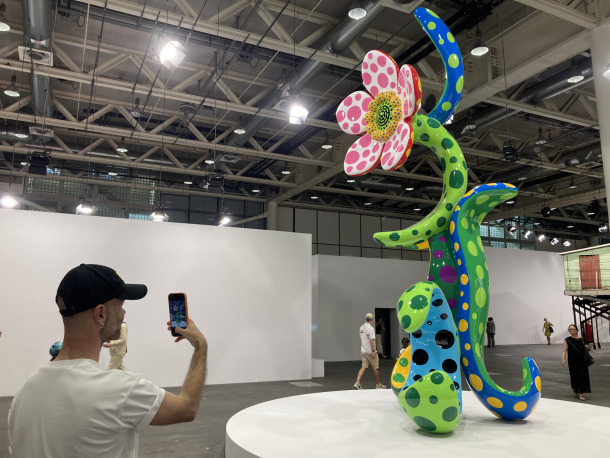
アート・バーゼルにて、草間彌生の作品と。/ With a work by Yayoi Kusama at Art Basel.
A major strength of the Zukunftskolleg is its active international academic network. Although Konstanz is a relatively small university town, the institute brings together researchers from a wide range of disciplines and institutions. Through regular participation in the Zukunftskolleg Jour Fixe, as well as workshops, seminars, and lectures, I was able to discuss my research in a setting where international exchange was part of everyday academic work rather than limited to occasional conferences.
Presenting the project to scholars working in different disciplinary traditions repeatedly required me to reconsider how its central argument should be formulated. Discussions with literary scholars, art historians, philosophers, sociologists, and researchers from other fields helped me distinguish between questions specific to Kusama’s practice and those that address broader issues concerning literature, performance, political form, and socially engaged art. During the fellowship, I exchanged ideas with researchers affiliated with institutions in Germany, Switzerland, France, Finland, Poland, and other parts of Europe. These conversations were particularly useful in clarifying the theoretical scope of the project without losing the specificity of its primary materials.
-
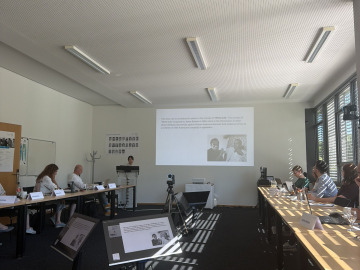
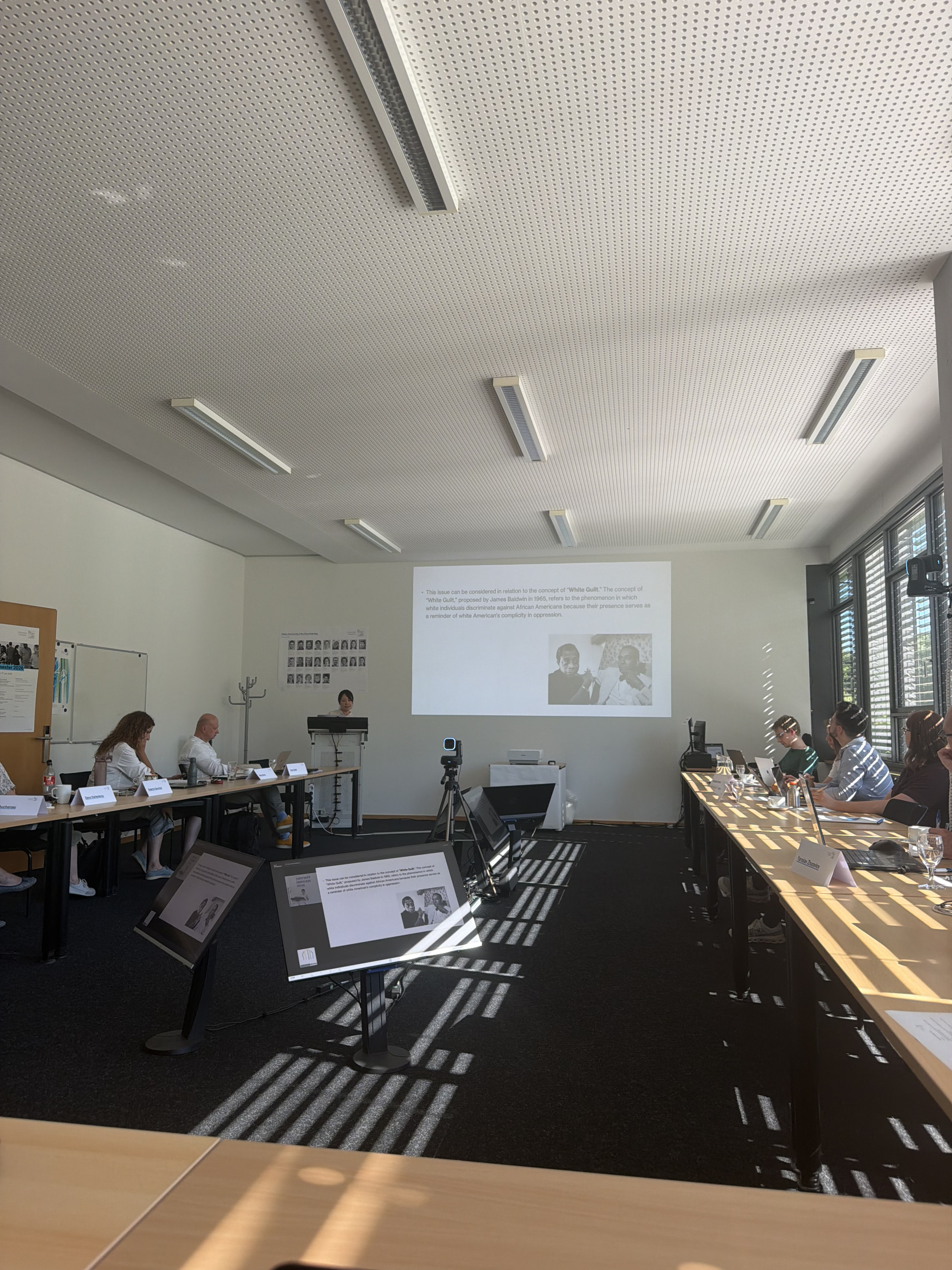
- Zukunftskollegでの講演会。/ A lecture at the Zukunftskolleg.
-
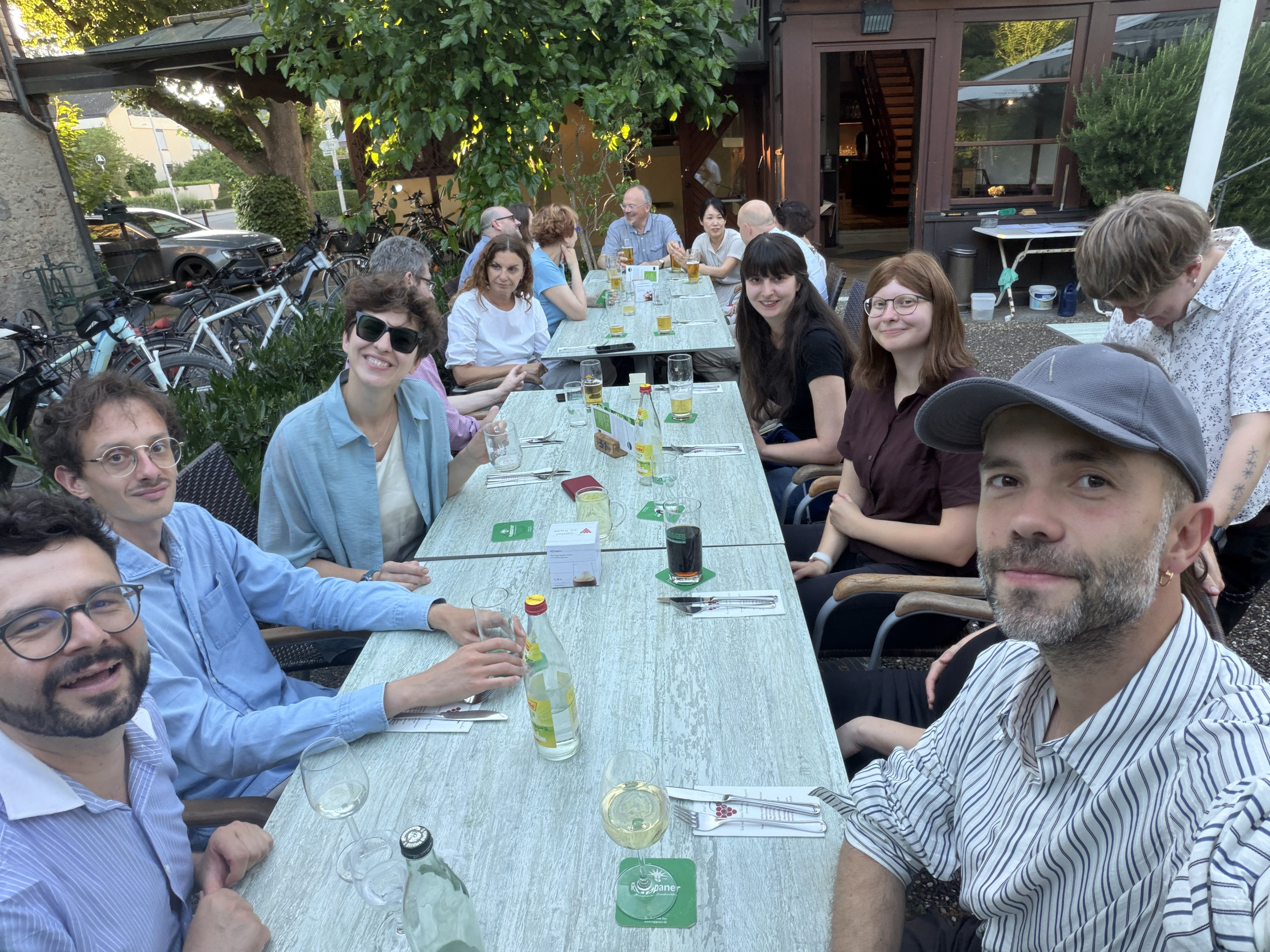
- コンスタンツで出会った教授や研究者たちと。/ With professors and researchers I met in Konstanz.
Konstanz also provided a convenient base from which to participate in academic and artistic events elsewhere in Europe while continuing my daily research at the Zukunftskolleg. During the fellowship, I attended conferences, workshops, and other research-related events in Germany, Switzerland, Italy, and Poland. I also attended the pre-opening of the Venice Biennale and visited Art Basel.
These events provided a current institutional context for questions already central to my research: the relationship between artistic practice and political intervention, the position of protest within major cultural institutions, and the ways in which socially engaged art is presented, negotiated, or neutralized by exhibition structures. Following these discussions as they unfolded helped me connect my historical work on Kusama’s performances and literary practice with contemporary debates concerning art institutions and political representation.
-
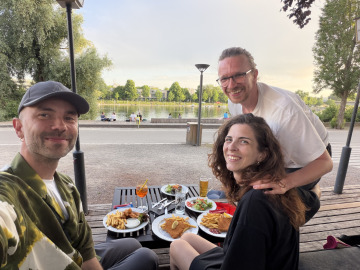
- ライン川を望みながら、コンスタンツ大学の友人たちとシュヴァーベン地方の料理を囲んで。/ Enjoying Swabian food with friends from the University of Konstanz by the Rhine.
-
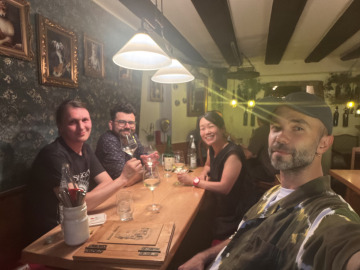
- Zukunftskollegや他機関の研究者、文化関係者と。/ With researchers and cultural professionals from the Zukunftskolleg and other institutions.
-
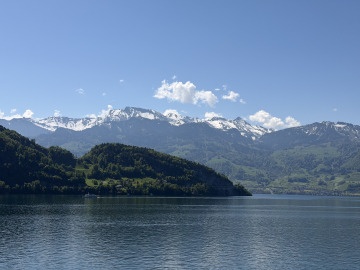
- フィッツナウから望むルツェルン湖。/ Lake Lucerne viewed from Vitznau.
-
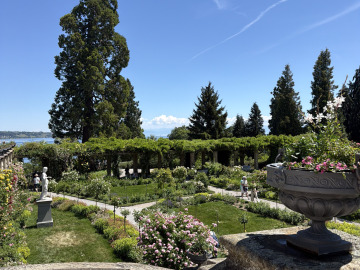
- マイナウ島のイタリアン・ローズ・ガーデン。/ The Italian Rose Garden on Mainau Island.
The fellowship has also created concrete possibilities for further collaboration. One direct outcome of the stay is the planned preparation of a joint application to the DAAD–Waseda Partnership Programme with colleagues from the Zukunftskolleg. The application would build on the contacts established through the existing exchange between WIAS and the Zukunftskolleg and develop them into a more sustained programme of academic cooperation. I also intend to continue the relationships formed during the stay through future workshops, research exchanges, and publications.
The stay did not alter the subject of my research. It changed the level at which its central argument could be formulated. The article now in preparation has a clearer structure and a more precisely defined theoretical scope, while the discussions and institutional contacts established in Konstanz have provided a basis for the next phase of the project and for future cooperation between WIAS and the Zukunftskolleg.
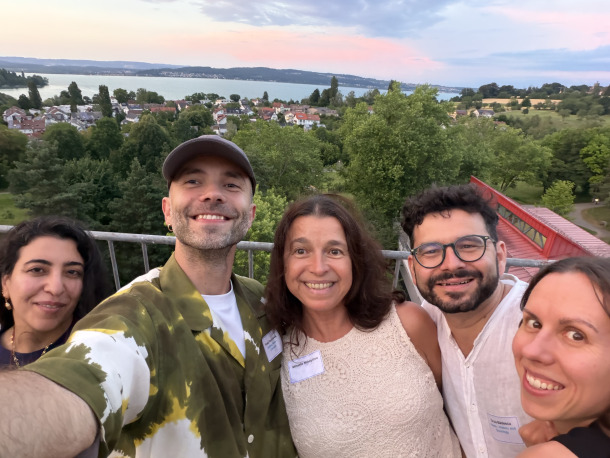
Zukunftskollegの研究者およびスタッフと。/ With researchers and staff from the Zukunftskolleg.